 NexSms官方博客
Conclusion
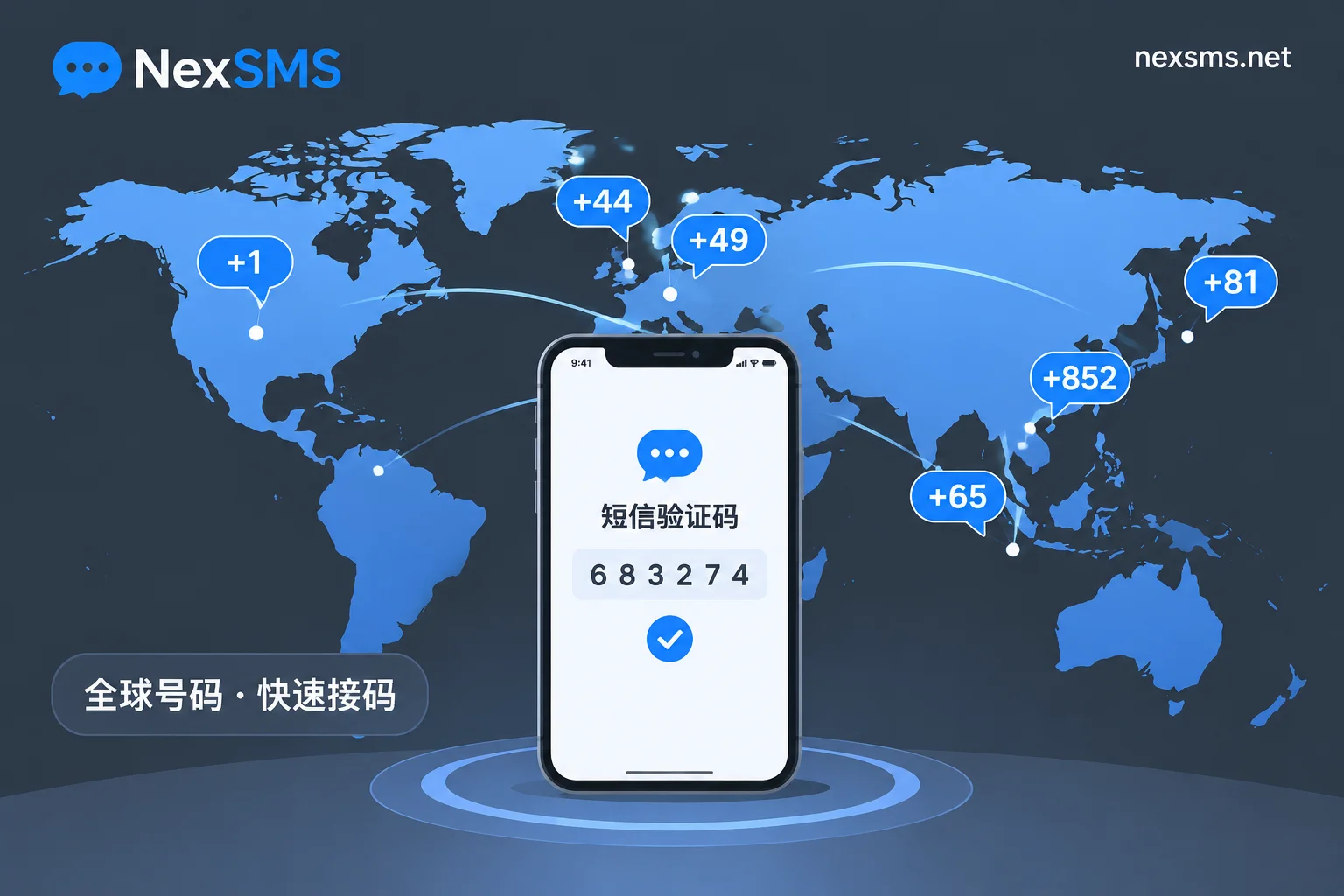
International dialing codes are assigned under the ITU's E.164 standard, and every country and region in the world has its own code. Which codes a virtual number service can offer depends on which countries' number inventory the provider holds. Coverage generally ranges from a few dozen to over two hundred countries and regions, with inventory most concentrated in these categories:
- North America: +1, shared by the United States, Canada, and parts of the Caribbean
- UK and Western Europe: +44 UK, +49 Germany, +33 France, +34 Spain, +39 Italy, +31 Netherlands, etc.
- Asia-Pacific: +852 Hong Kong, China, +65 Singapore, +81 Japan, +82 South Korea, +61 Australia, +60 Malaysia, +63 Philippines, +66 Thailand, +84 Vietnam, +886 Taiwan, China, etc.
- Latin America, South Asia, and the Middle East: +55 Brazil, +52 Mexico, +91 India, +971 UAE, etc.
That said, whether you can actually receive a verification code usually has little to do with the dialing code itself. Three things matter more: whether the target platform accepts numbers from that country, whether the number is a VoIP virtual number, and whether you will need to receive codes with it again later. Below, we briefly explain the structure of dialing codes, then how to choose.
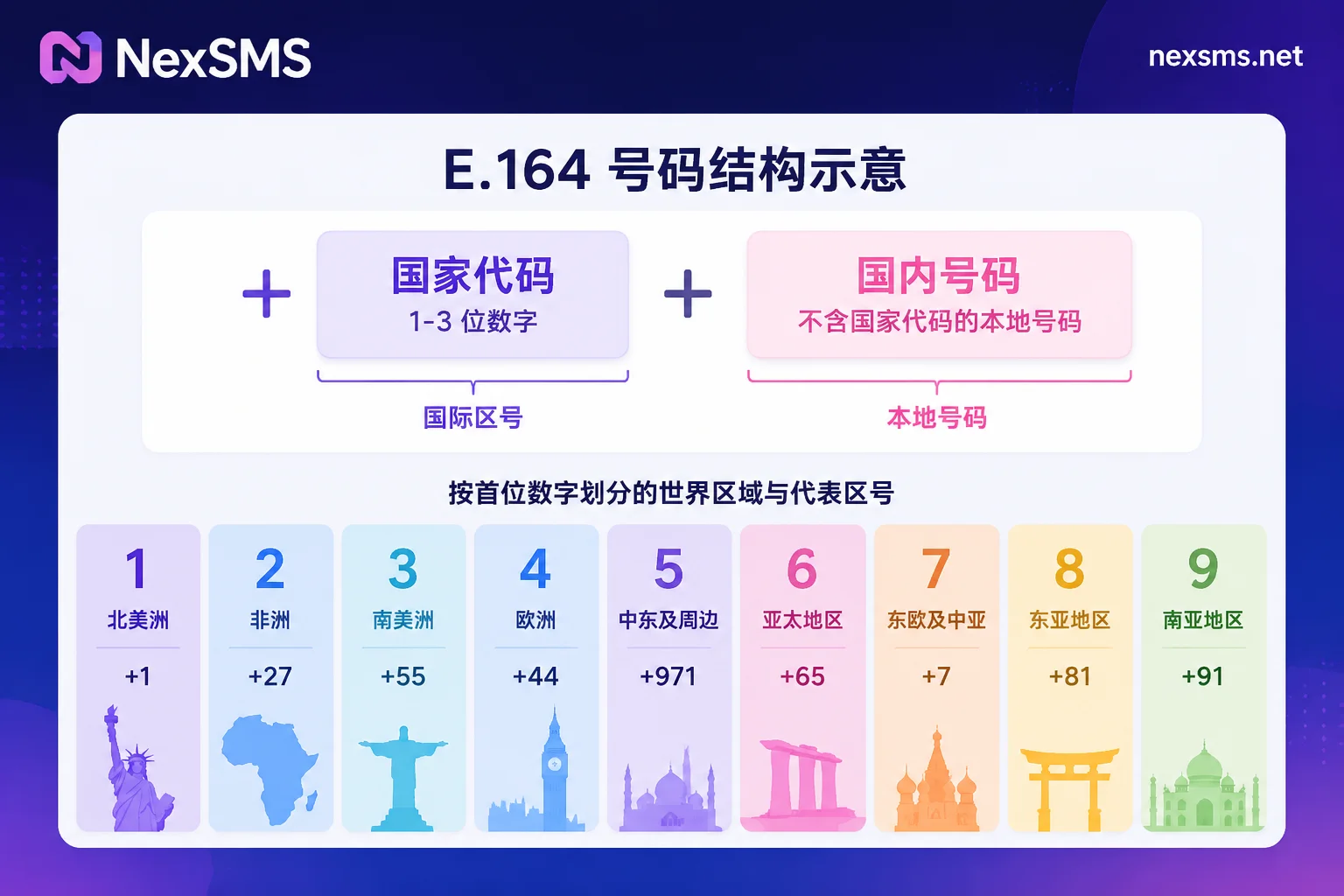
How to Read a Dialing Code: E.164 Format and the Nine Zones
The international number format defined by E.164 is: +country code (1 to 3 digits) + national significant number, with a total length of no more than 15 digits. The first digit of the country code corresponds to a major zone:
| Leading Digit | Zone | Examples |
|---|---|---|
| 1 | North American Numbering Plan | +1 United States, Canada |
| 2 | Mostly Africa | +27 South Africa, +234 Nigeria |
| 3, 4 | Europe | +44, +49, +33, +46 |
| 5 | Central and South America | +55, +52, +54 |
| 6 | Southeast Asia and Oceania | +65, +60, +63, +61 |
| 8 | East Asia, etc. | +81, +82, +852, +886 |
| 9 | Middle East, South Asia, etc. | +91, +971 |
Once you know this pattern, you can roughly tell which region an unfamiliar dialing code belongs to.
Why Common Dialing Codes Cluster in the US and UK
Number supply varies greatly from country to country. The telecommunications markets in the United States, Canada (+1), and the UK (+44) are relatively open and have abundant number resources, so inventory for these is usually the most plentiful in SMS-receiving services, with the widest choice.
Japan (+81), South Korea (+82), Singapore (+65), and some EU countries have strict real-name and local address requirements for obtaining a SIM card. These countries have less supply of genuine carrier numbers, and prices are generally higher. If you need a code from this type of country, check inventory first and then plan the next steps.
Four Steps for Choosing a Dialing Code
1. First confirm which countries the target platform supports
Many overseas platforms are only available in certain countries and regions, and some only accept numbers from specific countries. So check the platform's help center for supported regions before deciding on a dialing code. Rules vary widely between platforms; a number that works for WhatsApp may not work for OpenAI or Google. If you are registering for social media, you can refer to which country's number to choose when registering for overseas social media.
2. Then look at the line type — this step often matters more than the dialing code
Before sending a verification code, many platforms use carrier lookups to identify whether a number is a VoIP virtual number or a genuine mobile carrier number. Financial, social, and major tech platforms often reject VoIP numbers outright. In that case, even if you chose the right dialing code, you will not receive the code, because the platform never sent the SMS. For the specific reasons, see what is a VoIP phone number and why it often cannot receive verification codes.
If the target platform scrutinizes line type strictly, it is best to choose a local number from a genuine carrier, meaning a physical SIM card or eSIM number.
3. Choose the number's duration based on whether you will need to receive codes again
- One-time verification only, such as low-risk one-off registration: a short-term number is enough, used once and then discarded, at low cost.
- Receiving codes again later, such as rebinding, two-factor verification at login, or important accounts used long term: it is better to use a long-term number that can be renewed and can receive codes repeatedly during its validity period. Short-term numbers usually cannot receive codes again after they expire; when the platform later requires verification, you may be unable to log in to the account.
4. Keep the number's country and your usage environment as consistent as possible
Platform risk-control systems compare the number's country of origin with the location of the access IP and the device language. For example, using a +1 US number while the network and device environment are clearly in another country makes additional verification or blocking more likely. It is best to choose a country that matches your actual usage scenario. Here we only recommend staying genuinely consistent; we do not recommend faking identity or bypassing a platform's real-name requirements.
Several Formatting Issues When Entering a Number
Many verification failures are actually caused by entering the number incorrectly:
- Remove the leading 0 from the national number. A UK number 07xxx in international format is +44 7xxx, not +44 07xxx. Many European and Asia-Pacific countries follow this rule.
- +1 does not necessarily mean the United States. The United States, Canada, and parts of the Caribbean all use +1; which one it is depends on the following three-digit area code. If a platform's dropdown lists "United States" and "Canada" separately, choose correctly.
- Do not repeat the dialing code. If the platform has already selected the country separately, enter only the national number portion in the number field.
If the format is correct but you still cannot receive the code, you can follow the methods in what to do when cross-border SMS verification codes are not received to first determine whether the platform sent the SMS, then troubleshoot item by item.
How to Choose on NexSMS
Once you have confirmed the target platform and whether you need to receive codes again, you can choose a number on NexSMS by target platform and country, and verification codes are displayed on the web page in real time. Short-term numbers are suitable for one-time verification. Long-term premium numbers are local numbers from genuine carriers, with physical cards and eSIM, can be renewed, and can receive codes unlimited times during the validity period, but they must be renewed before expiration to continue using them. For the differences between the two types of numbers and renewal conditions, see feature description. Dialing codes and current inventory for each country can be viewed on the country pages, for example the US number page; pages for other countries follow the same structure.
Inventory and prices change, so please refer to the real-time display on the official website. In addition, whether you can pass verification on a given platform is ultimately determined by that platform's rules at the time.


Comments(0)