 NexSms官方博客
When registering for overseas AI tools, cross-border e-commerce stores, or social media accounts, many people first search for "free SMS verification code receiving platform" on search engines, hoping to solve the phone number verification problem at zero cost. However, by 2026, many users find that when they open a public SMS receiving webpage, copy a number into the registration form, they either wait endlessly for the SMS or directly get an error message like "this number is already in use" or "this phone number cannot be used for verification."
Even worse, even if they occasionally manage to register successfully, within a few days the account gets banned due to abnormal risk control, or even directly hijacked by a stranger through "password recovery via phone number."
Why is the free lunch getting harder to eat? Under the platform risk control environment of 2026, how can SMS verification code receiving platforms be used safely? This article starts from the operational logic of public number pools and helps you draw clear security boundaries between free public numbers and dedicated paid numbers.
I. Why Do Free Public Number Pools Frequently Fail in 2026?
Most SMS receiving websites on the market that advertise "completely free" operate on the underlying model of shared public number pools. The platform lists a batch of numbers on the webpage, any visitor worldwide can copy these numbers to receive SMS, and the received SMS content is also displayed in real-time on the public page.
This model faces two core dilemmas in 2026:
1. Five Layers of Risk Control Overlap, Public Number Segments Have Long Been Blacklisted
Mainstream overseas platforms (such as Google, OpenAI, WhatsApp, Telegram, TikTok, etc.) have upgraded their SMS risk control systems to millisecond-level multi-layer detection mechanisms. Before the verification code is sent, the system will sequentially execute:
- HLR and line type query: Identify whether the number belongs to a virtual operator (VoIP) or a known public SMS receiving number segment.
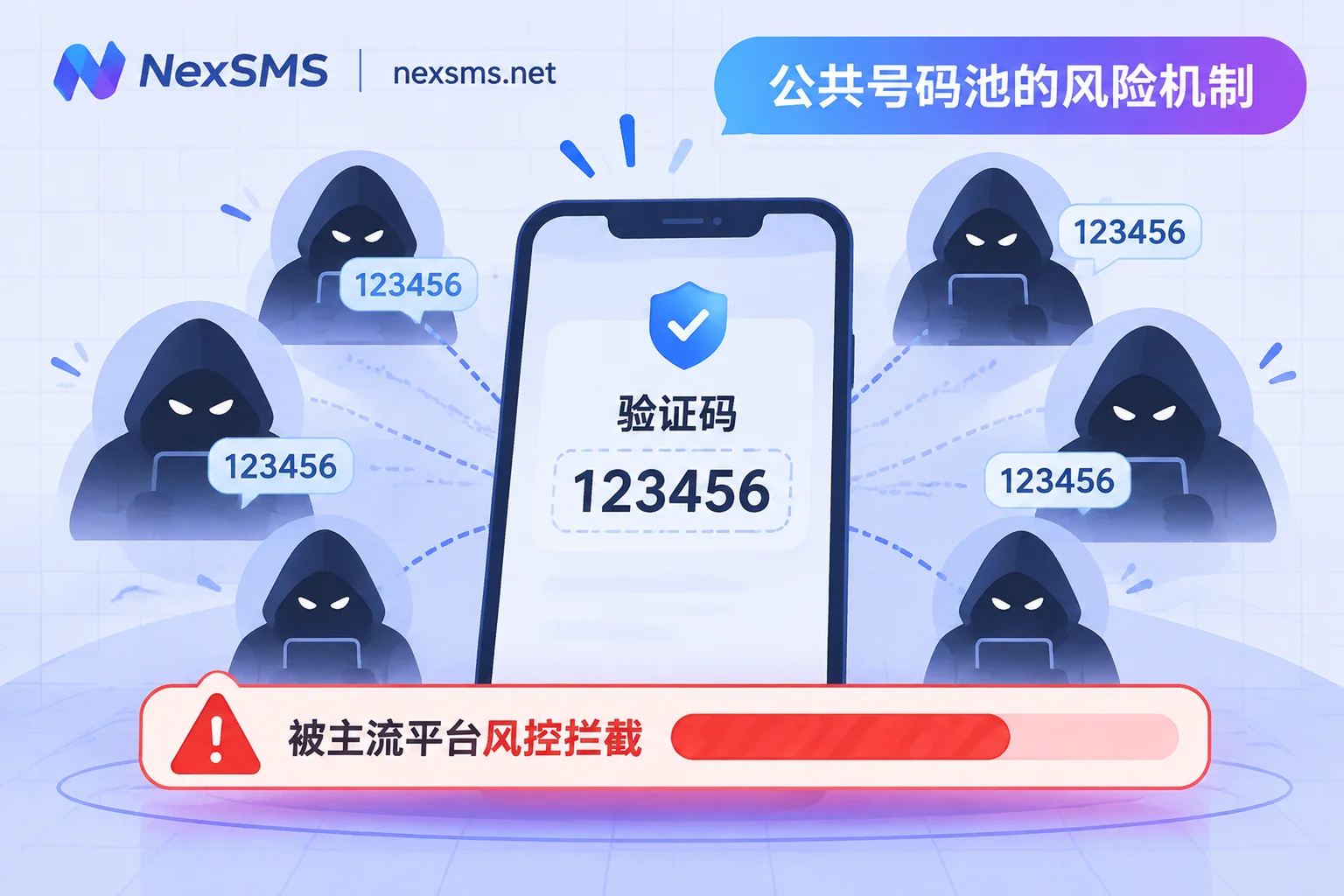
- Usage frequency and behavior analysis: The same free number is used by dozens or hundreds of people in a short time to request verification codes for different or the same platforms, triggering high-frequency abuse interception.
- Number segment reputation database comparison: Once a number is repeatedly used for registration by multiple people, the entire number segment will be marked as a high-risk blacklist.
Therefore, when you use a well-known public number to pass verification on mainstream platforms, you likely won't even get past the threshold for verification code delivery (further reading: 2026 Overseas App SMS Verification Error Troubleshooting: Why Do OpenAI Codex, Claude, and Google Always Say "Number Unavailable"?).
2. Inbox Transparent Across the Entire Network, Accounts Are Like "Running Naked"
Compared to not receiving the code, receiving the code and binding successfully is sometimes more dangerous. Because the SMS inbox of a public number is visible to everyone.
If you use such a number to register an account with personal privacy, financial transactions, or long-term operational value, anyone who knows this number can simply click "Forgot Password / SMS Verification Code Login" on the login page and see the reset code or login link on the public page, easily taking over your account.
II. Drawing Security Boundaries: How to Choose Among Three Types of SMS Receiving Solutions?
Since free public numbers have many hidden risks, does that mean they have no value at all? Not exactly. The key is to place numbers of different natures into completely matching business scenarios.
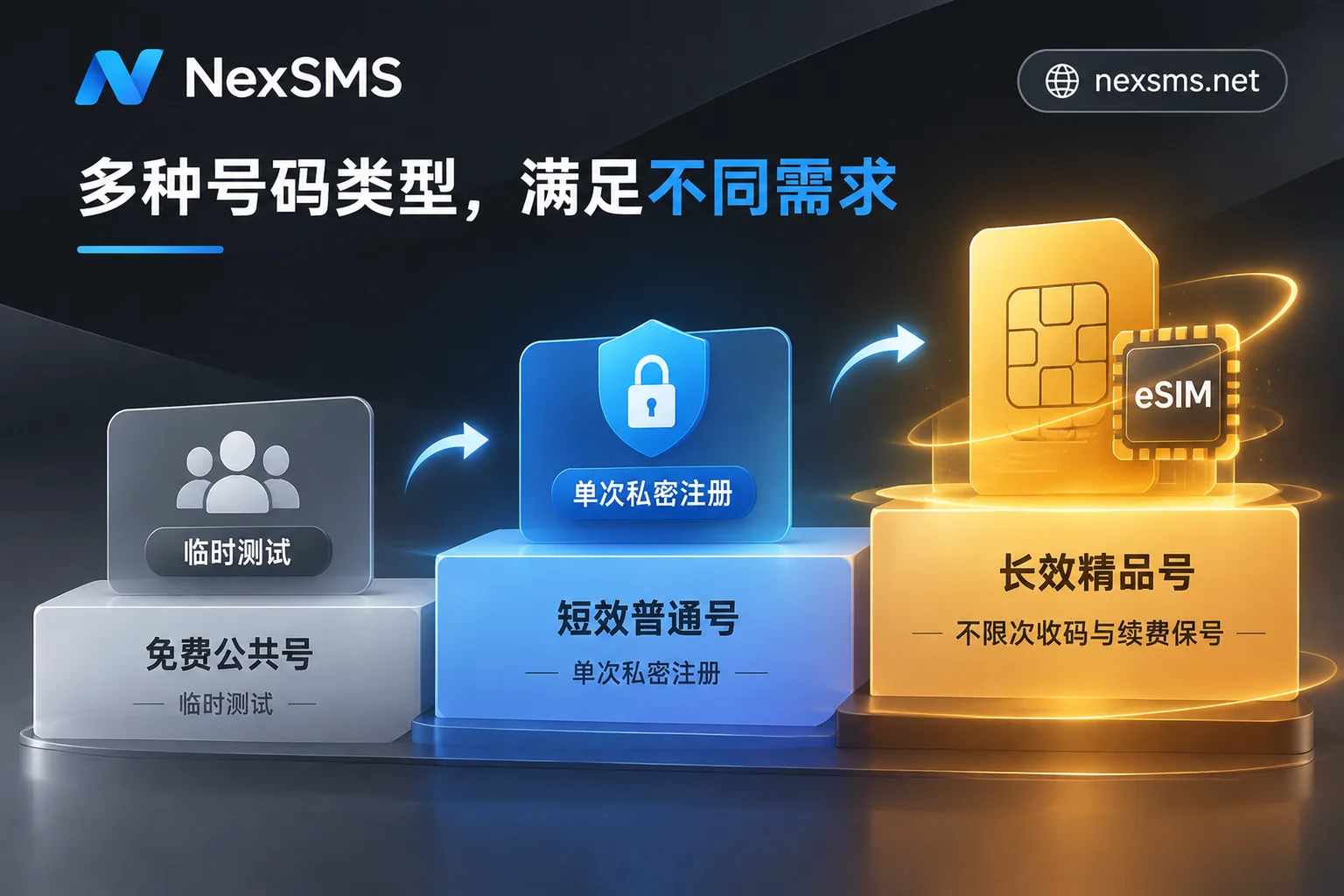
In NexSMS SMS Verification Code Receiving Platform, we clearly divide numbers into three tiers based on privacy level and holding period, helping users avoid pitfalls precisely:
1. Free Public Numbers: Only for Temporary Testing with Zero Privacy
If you just want to temporarily browse an unknown small information site, test an insignificant webpage form, and don't care at all if the account is lost at any time, you can use NexSMS Free Public Numbers.
- Mechanism explanation: The official website lists several US public numbers (log in to NexSMS User Dashboard to view real-time verification codes).
- Security red line: The received verification code is visible to everyone. Please absolutely do not use it for any important accounts, main social media accounts, AI productivity tools, or platforms involving funds.
2. Short-term Ordinary Numbers: Cost-effective Choice for One-time Registration and Private Verification
When you don't want others to see your verification code and only need to complete a one-time new account registration or temporary verification, you should stay away from public number pools and switch to dedicated Short-term Ordinary Numbers.
- Mechanism explanation: Charged per use, short validity period. Within the validity period, a number only receives the verification code for the target application once, and the verification code is only displayed in real-time in your personal web dashboard, preventing others from prying.
- Usage boundary: Short-term ordinary numbers cannot be renewed, nor can the same number be used to receive SMS again. It is very suitable for lightweight scenarios where you verify once and leave, and can subsequently log in independently via email or passkey (further reading: Overseas Account Risk Control Upgrade: Stop Using "One-time Numbers" for Secondary Verification of Important Accounts).
3. Long-term Premium Numbers: The "Moat" for High-risk Platforms and Core Assets
For overseas assets that need long-term maintenance—such as OpenAI / Claude accounts bound to payment methods, cross-border e-commerce stores (Amazon, eBay, PayPal), or social media matrices that frequently trigger remote login re-verification (WhatsApp, Telegram, X)—you must use real numbers that can be held long-term (further reading: 2026 Overseas Platform Risk Control Upgrade: How to Avoid Verification Code Failure Risks Through "Number Tiering"?).
- Mechanism explanation: NexSMS's Long-term Premium Numbers use real operator local numbers (based on local physical SIM cards and eSIM, not virtual landing numbers), effectively countering interception of virtual number segments by major platforms.
- Core advantage: Within the validity period, the same number can receive SMS verification codes unlimited times; renewal is supported before expiration to continue holding. Whether dealing with sudden secondary verification, account recovery, or multi-platform compliant binding, it provides solid fallback protection.
III. 2026 Practical SMS Receiving Operation Suggestions: How to Improve Verification Peace of Mind?
In 2026, as established platforms successively shut down and industry reshuffling intensifies, when choosing and operating an SMS verification code receiving platform, it is recommended to follow these four-step checks (further reading: 2026 SMS Verification Code Receiving Platform Practical Guide: Avoid Balance Zeroing and Recycling Traps, Precisely Select Numbers by Business Cycle):
- Check the application instructions first, then get a number
Different platforms have vastly different risk control preferences at different times. Before placing an order, it is recommended to browse SMS receiving instructions by application (currently covering dedicated pages for OpenAI, Claude, Doubao, Google, Apple, Telegram, WhatsApp, X (Twitter), Instagram, Facebook, TikTok, Xiaohongshu, WeChat, Amazon, eBay, PayPal, Gojek, etc.), to understand common verification scenarios, operation steps, and pitfall avoidance tips. - Filter transparently by country and inventory
If you need local number segments in specific regions (such as high-frequency +1 numbers), you can go to the number selection page by country (e.g., US SMS receiving dedicated page) to view area codes and common local verification uses, or directly check starting prices and currently available number counts by application on the price and inventory query page. Number sources change dynamically with inventory, so check prices, inventory, and applicable services clearly before ordering. - Beware of account balance zeroing tricks
Some platforms set high recharge thresholds or hidden terms like "overdue balance automatically zeroed." At NexSMS, recharge supports cryptocurrency (USDT/BTC), Alipay, and WeChat, and account balance never expires (non-transferable). You spend as much as you use, with clear and controllable financial costs. - Parallel developer automation and manual collaboration
For R&D teams that need batch testing or maintain multiple accounts, NexSMS supports integrating number acquisition and SMS receiving into programs via developer API, operating in parallel with real-time web SMS receiving (further reading: 2026 SMS Receiving API Concurrent Calls and Anti-Cross-code Guide: Migrating from Old Interfaces to "Human-Machine Collaboration" High-Availability Architecture). Since the platform does not provide public API documentation, if you need to access the API or encounter any questions during SMS receiving, you can always get one-on-one support through 24/7 Telegram Customer Service.
Objective risk control reminder: No SMS receiving platform can promise 100% verification success for any third-party application. Whether verification ultimately passes is determined jointly by the target platform's risk control rules at that time and your registration environment. Never bind important business to public and transparent free numbers. Reasonably using short-term ordinary numbers and long-term premium numbers is the optimal solution for protecting digital asset security in 2026.