 NexSms官方博客
In the 2026 wave of digital globalization, 'disposable phone numbers' remain a necessity for developers and cross-border operators, but the logic of obtaining verification codes has undergone earth-shaking changes. With the iteration of anti-fraud technologies on various platforms (such as LNP database detection and physical card identification), relying solely on traditional low-cost disposable numbers can no longer support long-term account activity.
Why is 'disposable' no longer a one-time solution?
Recent industry hotspots show that major platforms (such as OpenAI, Google, Meta, etc.) are cleaning up zombie accounts by frequently triggering 're-verification' mechanisms. Many users find that accounts registered with low-cost virtual numbers often become 'dead' when encountering secondary verification because they cannot receive the code.
This is not because platforms are banning all number segments, but because they have higher requirements for the 'lifecycle' of numbers. For temporary trials, short-term numbers are still applicable; but for productivity tools, social accounts, or core businesses, relying on long-term numbers for 'number retention' has become an inevitable trend.
NexSMS Number Tiering Solution
To cope with this complex risk control environment, NexSMS recommends precise number tiering configurations based on business scenarios:
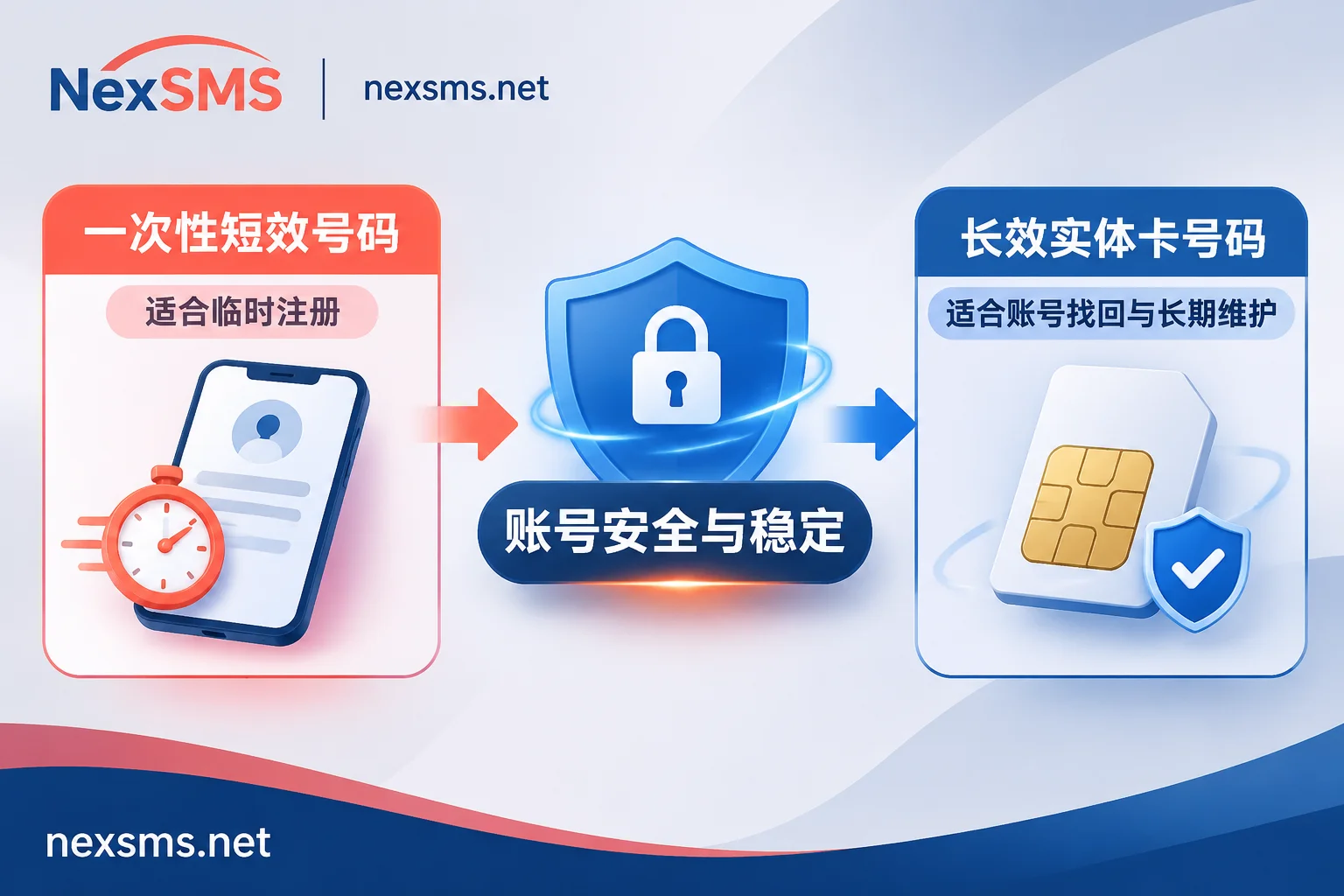
- High-frequency registration scenarios (short-term ordinary numbers): Suitable for batch testing or single registrations. Pay-per-use, fast and efficient. For details, please visit: Short-term Ordinary Numbers Details.
- Core account assets (long-term premium numbers): This is the key to dealing with risk control. Using real carrier local physical cards or eSIMs, supporting renewal before expiration, ensuring 'codes can be received' during secondary verification. View supported plans: Long-term Premium Numbers Details.
How to scientifically select numbers to reduce re-verification risks?
Blindly buying the cheapest numbers is often the culprit for subsequent login failures. The recommended process is as follows:
- Check platform requirements first: Different platforms have different number requirements, such as OpenAI's verification guide or X (Twitter)'s verification advice. These pages compile common risk control warnings for the platform.
- Choose numbers by country: According to your target user group, filter available number segments by country to view specific inventory and unit prices.
- Developer automation: For teams with large demands, it is recommended to integrate the Developer API directly into your system to achieve a fully automated 'number retrieval - code reception - verification' process.
Tips to avoid pitfalls
- Use free public numbers with caution: The free public numbers provided on the official website are only suitable for learning and testing, and must not be used to bind important work or financial accounts.
- Balance preservation: NexSMS account balances do not expire and support various recharge methods (including cryptocurrency, Alipay, etc.). It is recommended to maintain an appropriate balance for emergencies.
When it comes to account security, refined operations are far more important than stacking up account numbers. Visit the NexSMS official website now to plan the most suitable number allocation strategy based on your business volume, ensuring every verification code is delivered accurately.
Further reading: For why your number frequently reports errors, please refer to our in-depth analysis: 2026 Overseas App SMS Verification Error Troubleshooting Guide.