 NexSms官方博客
Since the second half of 2026, many users who frequently use overseas AI tools and cross-border applications have clearly felt that the threshold for overseas app SMS verification is extending to deeper levels. Previously, it might have only been necessary to receive a verification code during initial registration, but now, even old users who log in passwordlessly via third-party accounts suddenly receive pop-ups when accessing core functions, requiring them to complete phone number verification.
At the same time, trying with a domestic phone number or a free virtual number often directly hits red errors such as "This phone number cannot be used for verification," "Numbers from this region are not supported," or "The maximum number of accounts has been reached." Facing increasingly stringent number scrutiny, understanding the real reasons behind platform blocks is far more important than blindly clicking "Resend" at high frequency.
Three High-Frequency Pain Points of Overseas App SMS Verification in Late 2026
Based on recent practical feedback from developer communities and cross-border users, the current scenarios stuck at the SMS verification step are mainly concentrated in the following three representative types of applications:
1. OpenAI: Web Version Works, but Desktop Codex and API Require Phone Verification
Many users are accustomed to logging directly into ChatGPT via "Continue with Google account," and daily conversations indeed do not require binding a phone number. However, according to the latest community feedback in October 2026, when users open the Codex feature in the ChatGPT desktop app or go to the developer dashboard (platform.openai.com) to generate their first API key, the system still forcibly pops up a "Phone number is required" verification block.
More troublesome is that OpenAI not only blocks non-supported region numbers such as +86 but also enforces strict anti-abuse rules: once a phone number is bound, there is no self-service replacement entry, and there is a hard upper limit on the number of accounts a single number can bind. If you randomly find a second-hand number that has been repeatedly used, the page will directly error with "This number is already bound to the maximum number of accounts."
2. Anthropic Claude: Strict Scrutiny of VoIP Virtual Numbers and Cross-Layer Verification
With the iteration of new Claude models, Anthropic has made phone number verification a mandatory checkpoint in registration and daily risk control. Official rules explicitly state that the system refuses to accept VoIP (Internet phone), Google Voice, virtual numbers generated by various free apps, and landline numbers. Regarding the underlying logic of such virtual number rejection, we have also tracked it in detail in the previous article "Telegram Registration Pops Up SMS Fee, Claude Rejects Virtual Numbers: 2026 Overseas Platform SMS Verification Pitfall Avoidance Guide."
3. Google / Gmail: High-Frequency Error "This phone number cannot be used for verification"
When registering for a Google account, after filling in name, birthday, and password, the final step of entering a phone number pops up with "This phone number cannot be used for verification." According to the latest practical analysis in October 2026, this error actually falls into two distinct states: "the number is directly rejected by the system" and "the number is accepted but the SMS is not received for a long time." The former is mostly due to a conflict between the current network environment and the number's attribution, or the number segment having been bound to too many accounts; the latter often involves cross-border carrier routing blocks (refer to "Frequently Not Receiving Verification Codes: Is It Carrier Blocking? First Identify Which Step Is Stuck" for troubleshooting).
Why Are Your Numbers Always Rejected by Overseas Apps?
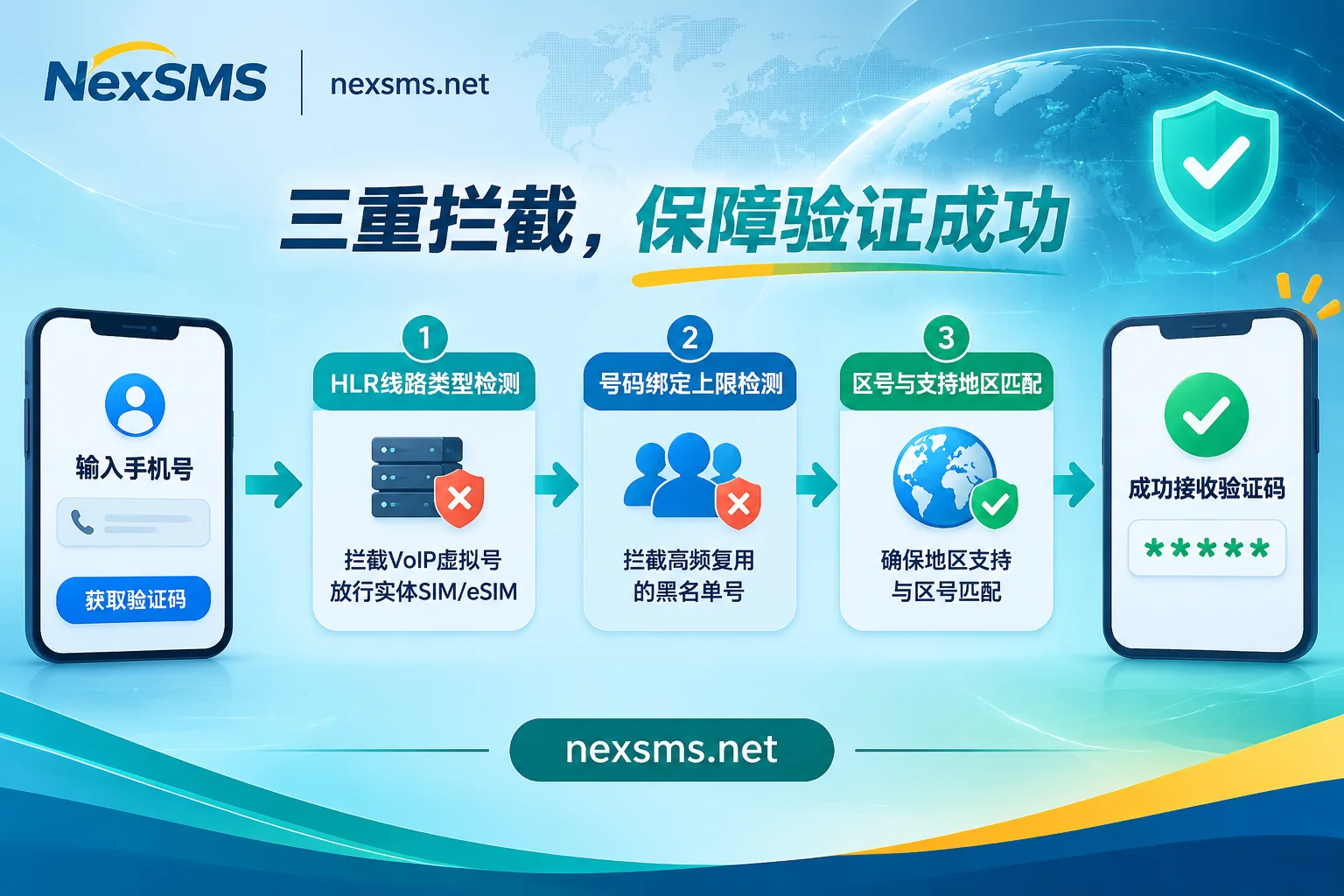
At the moment you click "Get Verification Code," the overseas app's risk control gateway has actually completed a multi-dimensional scan of that phone number in the background:
- Line Type Veto: The platform uses HLR query interfaces to identify the underlying carrier attributes of the number. VoIP virtual number segments without physical SIM card support are often directly blocked before the request is even sent when facing high-risk-control platforms like Google, Claude, and PayPal.
- Number Historical Reputation and Reuse Rate: Numbers in free public numbers or low-quality number pools have been used by hundreds or thousands of people for bulk registration in a short period and have long entered the blacklists of major platforms. Once the binding limit or associated risk control is triggered, not only will the current verification fail, but it may also contaminate your current registration environment.
- Regional Support and Environmental Contradiction: Take OpenAI and Claude as examples; the services themselves have clear restrictions on supported countries. In Google's verification model, if there is a serious logical conflict between the network environment, language/time zone, and the country code of the selected phone number, the system will significantly increase the credit requirements for the phone number, thereby popping up the verification failure message.
Breakthrough Approach: Precisely Select Numbers by "Verification Cycle" and "Target Platform"
Facing the differentiated rules of different platforms, using the same type of number for all scenarios no longer works. In the practical system of NexSMS, the core solution is to separate numbers by lifecycle and underlying attributes and match them accordingly:
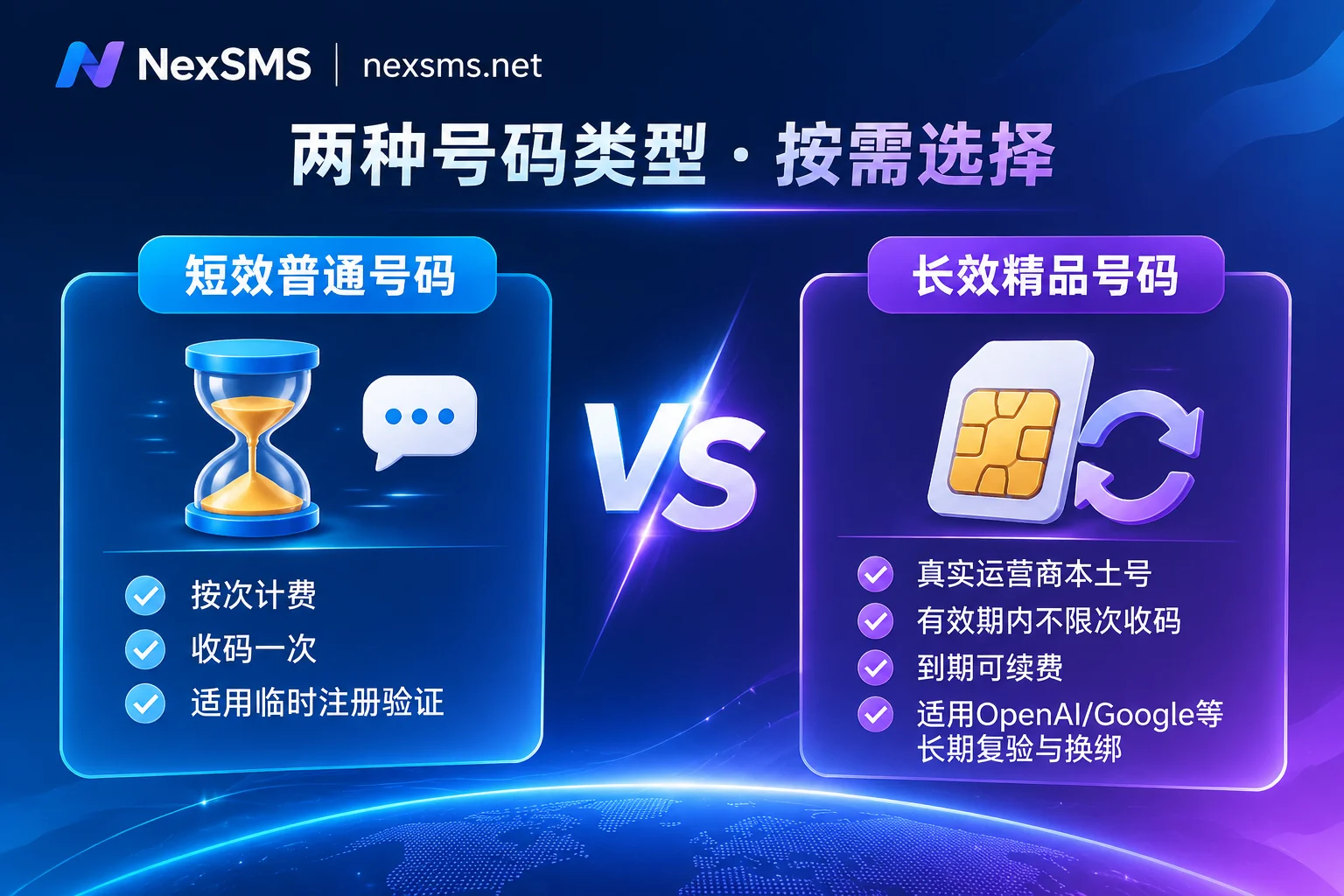
Scenario 1: One-Time Registration and Temporary Verification → Choose Short-Term Ordinary Numbers
If you only need to complete the initial activation of an overseas app, or for temporary test accounts, and there is no subsequent need for frequent device changes or secondary verification, you can choose short-term ordinary numbers.
- Features and Billing: Pay-per-use, short validity period, a number can only receive one verification code within the validity period, and renewal is not supported.
- Usage Boundary: Because it is used once and cannot receive a second code with the same number, it is very suitable for solving single verification blockers at low cost, but never bind it to core asset accounts that will mandatorily require re-verification with the original number in the future.
Scenario 2: Two-Factor Authentication, High-Risk-Control Platforms, and Long-Term Holding → Choose Long-Term Premium Numbers
For situations like OpenAI (number cannot be changed after binding), main cross-border e-commerce stores (Amazon, eBay, PayPal), and main social media accounts that frequently trigger re-verification for remote logins (WhatsApp, Telegram, X), it is strongly recommended to use long-term premium numbers (for the logic of maintaining numbers under two-factor authentication, you can read further "Account Bound with Authenticator, Why Still Keep a Long-Term SMS Number? The Fallback Role of Real Numbers from Risk Control Re-verification").
- Real Local Attributes: NexSMS's long-term premium numbers use real carrier local numbers (sourced from local physical cards and eSIMs, absolutely not virtual landing numbers). This real physical mobile line characteristic can effectively cope with strict VoIP detection.
- Unlimited Code Receiving and Renewal: Within the validity period, the same number can receive SMS verification codes an unlimited number of times, and supports renewal before expiration to continue holding. Whether it is secondary verification months later, account recovery, or multi-platform binding under the same main workflow, it can provide reliable fallback.
Note: If it is purely page testing that does not involve privacy at all, the official website also lists several US free public numbers (real-time verification codes can be viewed after login), but since the received verification codes are visible to everyone, never use them for any important accounts.
Practical Guide: How to Efficiently Complete Overseas App SMS Verification on NexSMS?
To reduce trial-and-error costs, it is recommended to follow these four steps before getting a number:
Step 1: First Check the Target App's Dedicated SMS Receiving Instructions
Do not blindly choose numbers based on feeling. NexSMS has organized independent app SMS receiving solution pages for popular platforms, currently covering mainstream apps such as OpenAI, Claude, Google, Apple, Telegram, WhatsApp, X (Twitter), Instagram, Facebook, TikTok, Amazon, PayPal, Doubao, Xiaohongshu, WeChat, eBay, Gojek, etc. Before ordering, click into the corresponding page to see the platform's common verification scenarios, usage steps, and FAQs.
Step 2: Filter Number Sources by Country and Real-Time Inventory
If a specific country's number segment has strict risk control on the target app, flexibly switching countries often quickly breaks the deadlock. You can go to the number selection by country page (for example, check the US SMS receiving page) to learn about the corresponding international dialing codes and common local verification uses. Since number sources change dynamically with real-time inventory, it is recommended to use the price and inventory query page to cross-filter by target app and country, first checking real-time starting prices, available number counts, and applicable services.
Step 3: Real-Time Web Code Receiving or Developer API Integration
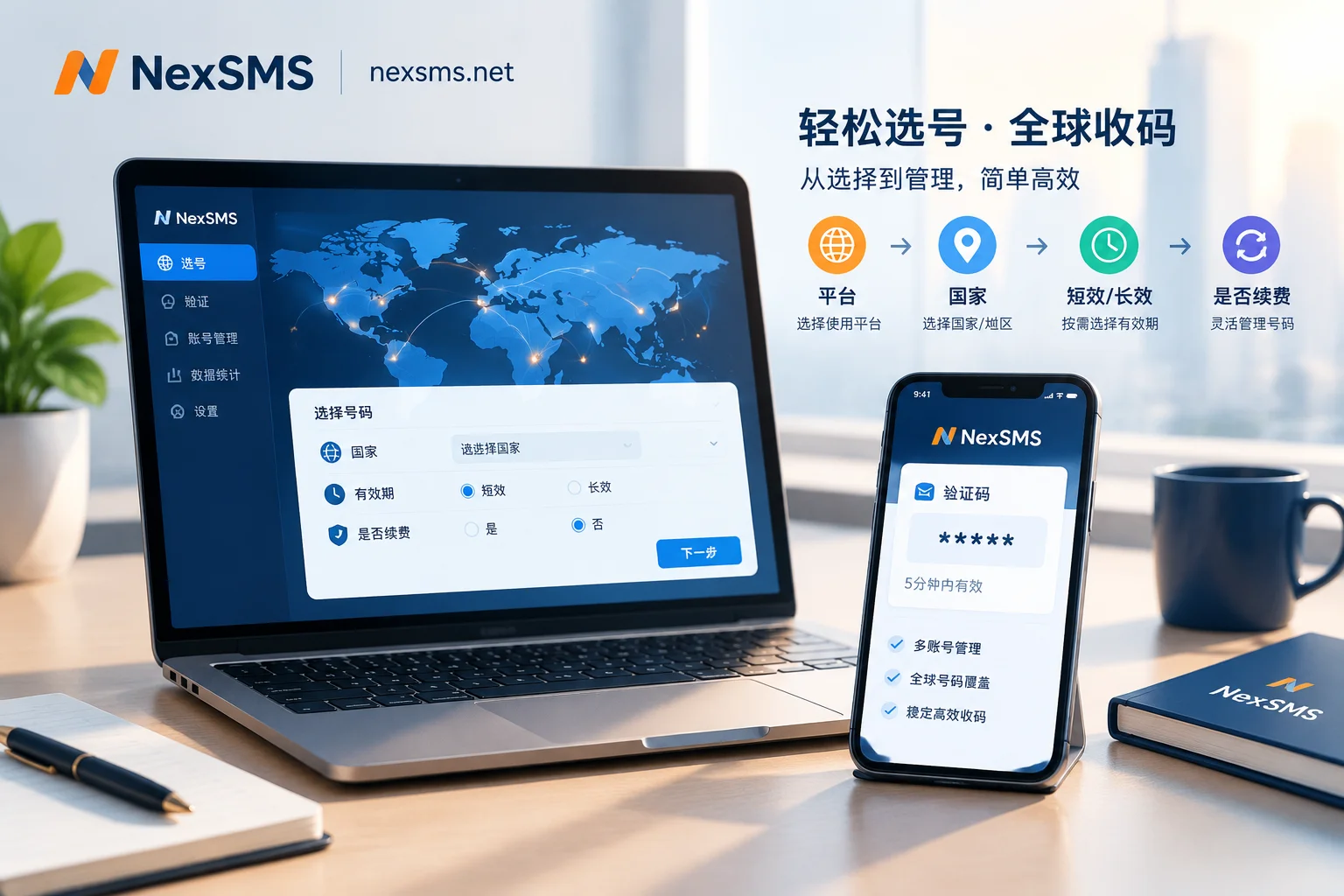
- Individuals and Operations Teams: Go directly to the NexSMS user workbench to log in and place orders. The platform supports Alipay, WeChat, and cryptocurrency (USDT/BTC) top-ups, and account balances never expire (non-transferable), so you don't need to worry about topped-up balances being cleared due to low-frequency use. After getting a number, enter it into the target app, and the verification code will be displayed in real time on the web page.
- Automation Developers: If you need to incorporate the number acquisition and code receiving process into your own automated testing or business programs, NexSMS supports developer API integration and can operate in parallel with web code receiving. To obtain integration methods, you can directly contact 7×24 Telegram customer service.
Step 4: Rational View of Platform Risk Control and Retry Strategies
It should be objectively stated that whether overseas app SMS verification ultimately passes is comprehensively determined by the target platform's real-time risk control rules at that time (such as current operation frequency, device environment, etc.), and no platform can promise 100% verification success. If you encounter a "number rejected" error during operation, it is recommended to prioritize switching to another country's number segment or changing to a long-term premium number, and absolutely avoid high-frequency retries in the same abnormal environment within a short time.
Conclusion
In 2026, overseas app SMS verification is no longer as simple as "finding a random string of digits and filling it in." Whether to unlock the productivity of OpenAI Codex and Claude, or to maintain the long-term security of Google and cross-border e-commerce stores, distinguishing the boundary between one-time verification and long-term re-verification, and using real local carrier numbers to match high-risk-control scenarios, is the worry-free and stable long-term solution. Now go to the NexSMS Application Solution Center and pick a suitable number for your app.


Comments(0)