 NexSms官方博客
In 2026, for users who frequently need to register for overseas applications across regions, maintain cross-border e-commerce stores, or manage social media matrices in multiple countries, holding a few overseas physical SIM cards is no longer a "one-and-done" safety net.
As global telecommunications regulations tighten, many countries have implemented stricter real-name registration and anti-fraud cleanup rules for overseas phone numbers in 2026. From Southeast Asia to Latin America, and to the roaming restrictions of mainstream carriers in Europe and the US, the traditional model of "buying physical SIM cards overseas + maintaining them via roaming" is facing unprecedented compliance and hardware barriers. If your purpose of obtaining an overseas phone number is merely to complete platform registration, rebind accounts, or receive two-factor authentication codes, replacing physical SIM slots with cloud-based online SMS verification is becoming a lighter and more controllable alternative.
I. The 2026 Overseas Phone Number Regulatory Storm: Easy to Buy, Harder to Maintain
In the past, many cross-border practitioners were used to buying unregistered prepaid SIM cards from various countries on e-commerce platforms and bringing them back to China for roaming SMS reception. But in 2026, this path is being rapidly blocked by new telecom regulations in various countries:
- Southeast Asia and Latin America see a wave of "mandatory real-name + biometric verification" suspensions
Take emerging popular destinations for overseas expansion as examples. Vietnam's Ministry of Science and Technology issued Notice No. 08/2026/TT-BKHCN, which officially took effect in April 2026, requiring mobile users to complete information verification through the national population database and the electronic identity authentication app (VNeID). By mid-June, local carriers had implemented one-way suspensions for approximately 18 million numbers that had not confirmed their usage status or completed real-name registration; those not handled in time would face direct two-way suspension and even number recycling. Similarly, Mexico's telecommunications regulator requires all existing and new phone numbers to complete real-name registration with ID binding and liveness detection by mid-2026, and will suspend non-compliant numbers in batches in the second half of the year, directly affecting a large number of cross-border sellers who rely on local numbers to receive store and payment verification codes. - "Remote activation" and credit thresholds for physical SIM cards in Europe and the US
Even turning to European and American markets, obtaining a legitimate postpaid card often requires a US Social Security Number (SSN) or local credit history review. Opting for low-monthly-fee prepaid cards as a fallback not only carries the risk of being purged for long-term non-local roaming (for specific pitfalls of various card types, refer to our previous analysis "Giffgaff Roaming Purge, Tello Order Cancellation and Account Bans: How to Choose Alternatives After Falling into the Pitfalls of 2026 Overseas Phone Number Maintenance Cards?"), but also requires overcoming cumbersome software and hardware obstacles in daily use.
II. Why Bother with Physical SIM Cards Just to Receive an SMS Verification Code?
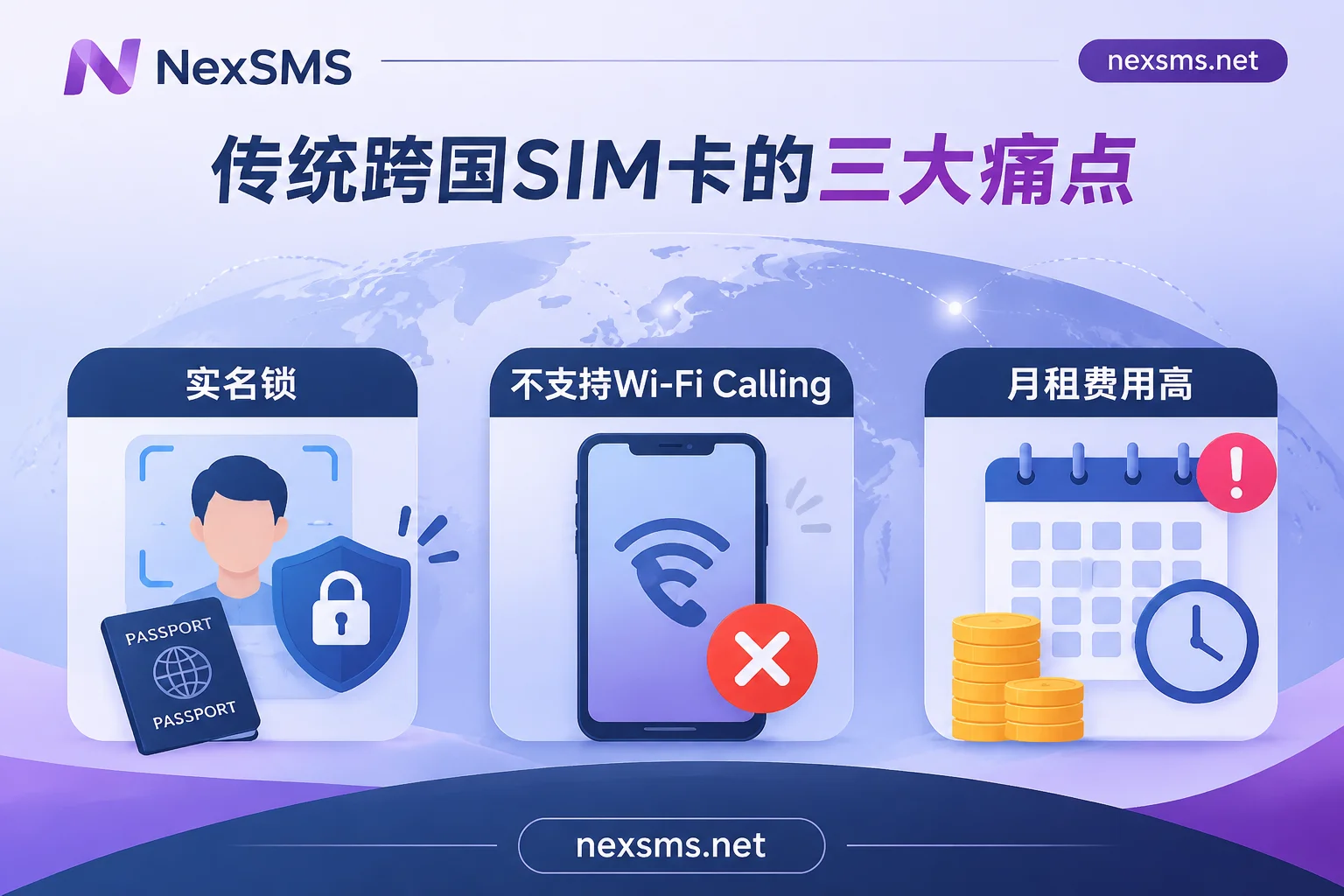
Many individual users and teams, when purchasing overseas phone numbers, easily confuse "local communication needs" with "account verification needs." If your core purpose is merely to receive one or a few SMS verification codes (OTP) on overseas platforms, holding a physical SIM card or tinkering with eSIM often entails three types of hidden costs:
- High hardware and network configuration barriers: Many low-monthly-fee European and American phone cards rely heavily on Wi-Fi Calling for long-term SMS reception in China, and activation often requires filling in a local residential address. However, most domestic Android models do not support this underlying technology, and devices without native eSIM support require additional external SIM card readers and manual APN parameter modifications.
- Card slot and management disaster for multi-country operations: When your business involves US AI tools, Southeast Asian lifestyle services, and European e-commerce platforms simultaneously, you cannot possibly buy a spare phone for each of a dozen countries to keep SIM cards on standby, let alone deal with the cross-border submission of real-name materials caused by sudden policy changes in various countries.
- Sunk costs and plan bundling: Physical SIM cards usually require fixed monthly or quarterly fees plus additional taxes. Even if you only log in once every six months to receive a code, you must continuously top up to maintain the number. Once you forget to renew and the number expires and is reclaimed, the bound core accounts will fall into an unrecoverable situation.
We have also detailed the differences between virtual numbers and real carrier lines in the eyes of platform risk control in "Don't Treat 'Overseas Virtual Numbers' as a Panacea: Conceptual Correction and Scenario-Based Number Selection Guide for Cross-Border SMS Verification in 2026". Stripping away unnecessary voice calls and roaming data packages, and directly calling the SMS verification lines of the corresponding country on demand via the cloud, is clearly more in line with the cost logic of account operations.
III. Choosing Numbers by Scenario: How to Replace Cumbersome Physical SIM Card Management with Cloud-Based SMS Verification?
As an SMS verification platform for receiving SMS verification codes online, NexSMS simplifies complex cross-border number maintenance into a ready-to-use experience of "real-time verification code display on the web." Users do not need to prepare multiple eSIM-capable phones or worry about roaming signals in different locations. They only need to choose between two core number attributes based on the importance and lifecycle of the account (for detailed comparison, see the Product Features page):
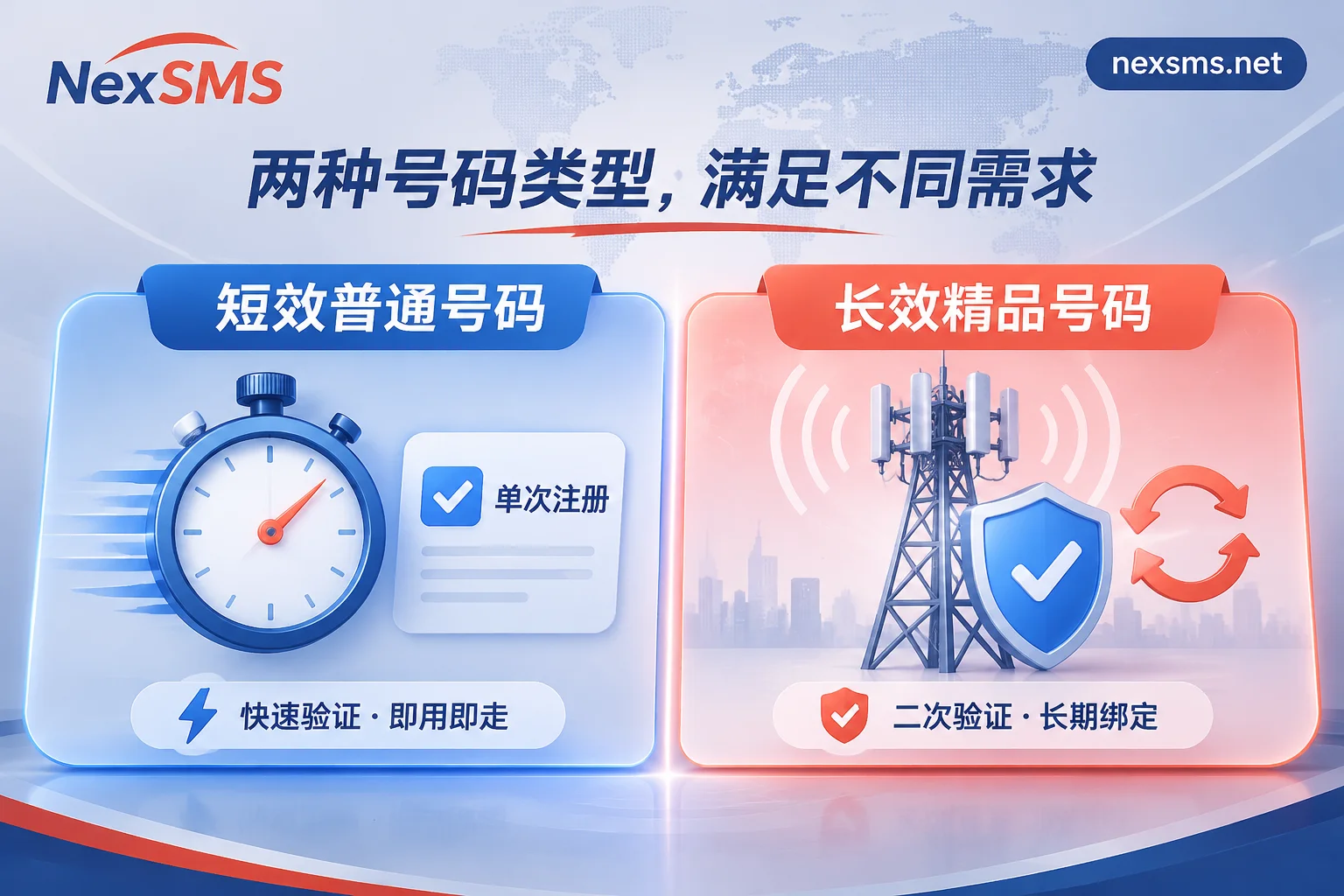
1. Temporary Experience and One-Time Registration: Use "Short-Term Regular Numbers" to Reduce Costs and Improve Efficiency
If you just want to register and experience a newly launched overseas application, do a one-time verification, or do not want to expose your real personal contact information during regular registration, there is no need to bear long-term number maintenance monthly fees.
- Applicable strategy: Choose NexSMS's short-term regular numbers. These numbers adopt a pay-per-use model with a short validity period. A single number retrieval is only for receiving one verification code (cannot be renewed, and the same number cannot be used to receive codes again). Use and discard, without paying for idle time.
2. Core Assets and Two-Factor Authentication Backup: Use "Long-Term Premium Numbers" to Lock in Local Carrier Lines
For main cross-border e-commerce stores, payment accounts bound to receiving methods, primary social media accounts, or frequently used AI workbenches, platforms not only strictly scrutinize number attributes during registration (rejecting high-risk VoIP number segments), but also frequently trigger two-factor authentication during subsequent remote logins, rebinding, or sensitive operations (for why important accounts should not mix temporary numbers, you can read further "Overseas Account Risk Control Upgrade: Stop Using 'Disposable Numbers' for Two-Factor Authentication on Important Accounts").
- Applicable strategy: Configure NexSMS's long-term premium numbers. It is based on real carrier local numbers (originating from local physical SIM cards and eSIM, not virtual landing numbers), supports unlimited SMS verification code reception with the same number during the validity period, and supports renewal before expiration to continue holding. It not only has the attributes of real local carrier lines but also saves you the trouble of physically maintaining a SIM card, making it very suitable for long-term two-factor authentication, account recovery, and multi-platform binding.
Special reminder about free public numbers: NexSMS's official website also provides several US free public numbers (verification codes require login to view). However, since the verification codes received by public numbers are visible to everyone, they are only suitable for pure testing processes with no privacy requirements. Never use them for any important accounts or bindings involving personal assets.
IV. Practical Guide: Three Steps to Choose the Right Overseas Phone Number for Your Business
In practice, the inventory and risk control rules for numbers vary by country and application at any time. To avoid blind orders, it is recommended to follow these three steps to complete number selection and SMS verification:
- Step 1: Filter by country and target application
Businesses in different regions have clear preferences for area codes. You can first browse the Global Country SMS Verification Navigation Page to view the telephone area codes of target countries and common local verification platforms (for example, if you need a +1 number segment, you can directly visit the US SMS Verification Section). Meanwhile, NexSMS has compiled dedicated verification instruction pages for mainstream platforms (see Application Solutions Summary), covering popular applications such as OpenAI, Claude, Doubao, Google, Apple, Telegram, WhatsApp, X (Twitter), Instagram, Facebook, TikTok, Xiaohongshu, WeChat, Amazon, eBay, PayPal, Gojek, etc. For example, before operating AI accounts or social media re-verification, you can first check the OpenAI SMS Verification Guide or X (Twitter) SMS Verification Instructions to understand common verification scenarios and usage steps. - Step 2: Check real-time starting prices and available inventory before ordering
Since global number sources change dynamically with real-time inventory, and whether a platform can currently pass verification depends on its risk control rules at the time, it is recommended to open the Price and Inventory Query Page before operation to check the current starting price and available number quantity by application. After confirming sufficient inventory, log in to the User Dashboard to place an order. The platform supports Alipay, WeChat, and cryptocurrency (USDT/BTC) top-ups, and account balances never expire (non-transferable), making it convenient for teams to flexibly use according to their business rhythm. - Step 3: Receive codes in real-time on the web or integrate with automated programs
For individuals and small-to-medium operations teams, after retrieving a number, simply wait for the verification code to display in real-time on the web page. For developers who need to embed batch number retrieval and SMS reception processes into internal business systems, NexSMS supports both developer API and web-based SMS reception in parallel. Since the platform does not have public API documentation, teams with integration needs or users with any number selection questions can always find 24/7 online Telegram customer service through the Official Contact Page for integration support.
(Note: Specific number prices, available countries and real-time inventory, validity periods of short-term and long-term numbers, number of supported platforms, and refund rules mentioned in this article are subject to the latest information published on the NexSMS official website.)