 NexSms官方博客
In digital cross-border business and everyday online registrations, temporary phone numbers have become a key tool for protecting personal privacy and reducing the risk of exposing your primary number. When you register on foreign websites, test cross-border apps, or conduct lightweight business verification, frequently submitting your real phone number can lead to spam SMS bombardment and even personal data leakage.
Using temporary phone numbers (such as short-term virtual numbers or numbers designated for specific services) can effectively sever the direct binding between your real phone number and external networks. This allows you to receive SMS verification codes (OTP) while safeguarding communication privacy.
Insights from Authoritative Security Standards on SMS and Communication Isolation
Communication security and privacy risks are not unfounded:
- The U.S. Cybersecurity and Infrastructure Security Agency (CISA) emphasizes in its Mobile Communications Best Practices Guide that traditional mobile communications and SMS may face interception and data scraping risks during transmission. It recommends that users with high privacy needs and enterprises strengthen communication isolation and identity defense.
- The National Institute of Standards and Technology (NIST) also points out in SP 800-63 digital identity guidelines that using the primary mobile number indiscriminately as the sole credential for multiple third-party services can significantly increase the risk of account theft or database analysis.
For enterprise operations teams and cross-border business personnel, if employee personal numbers or primary business numbers are exposed in all external testing and short-term registration scenarios, it may not only trigger spam marketing campaigns but also endanger asset security. Therefore, establishing a dedicated 'communication isolation layer' is a necessary compliance practice for modern enterprises.
Compliant Application Scenarios and Comparison of Temporary Phone Number Solutions
When choosing temporary phone number or virtual phone number services, users need to select the appropriate number type based on the business lifecycle:
| Number Type | Applicable Scenarios | Advantages | Risks and Limitations |
|---|---|---|---|
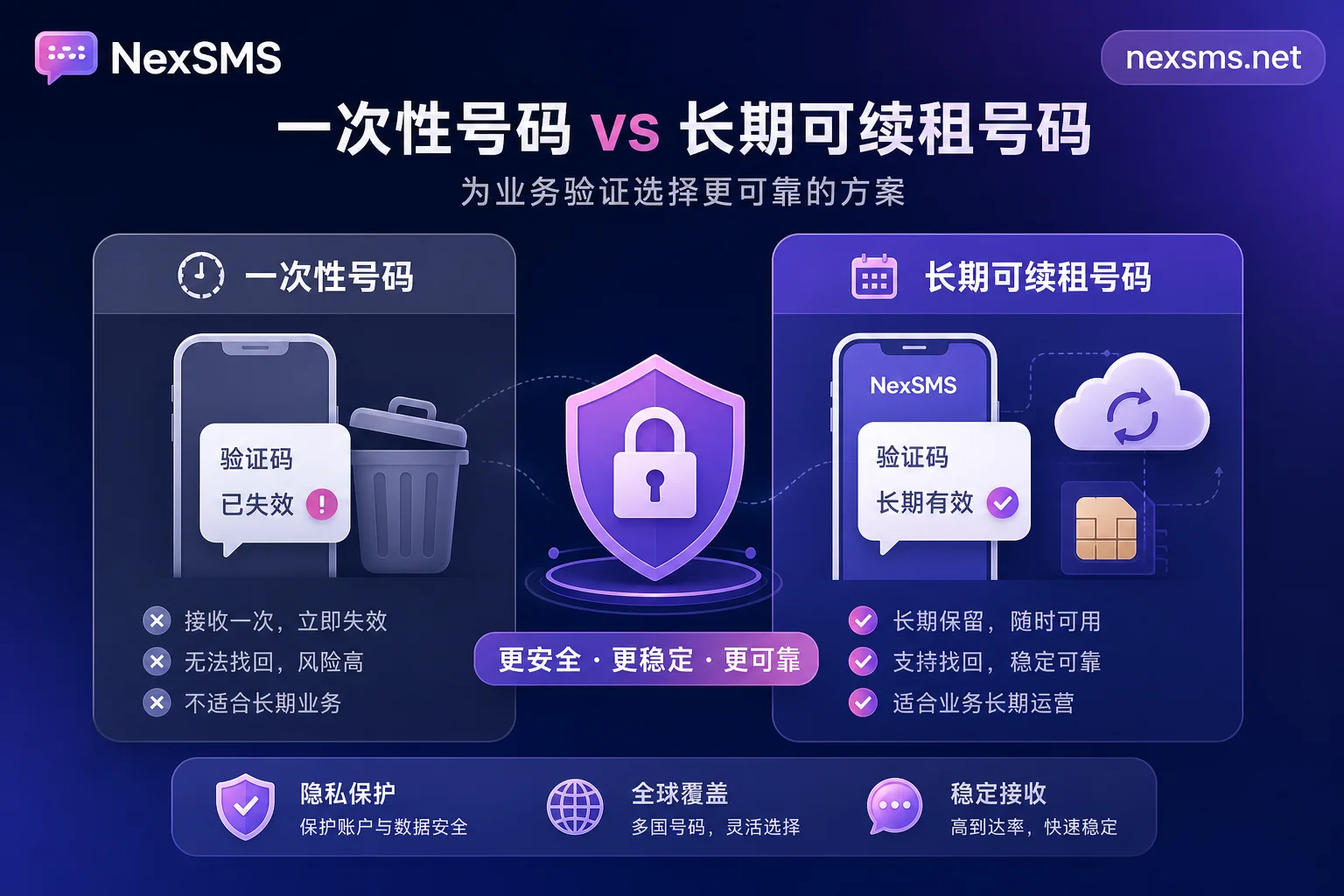
| One-time short-term numbers | Short-term event registration, temporary service trials, lightweight testing | Pay-per-use, low cost, disposable | Cannot receive subsequent two-factor verification; not suitable for core asset accounts |
| Renewable long-term local numbers | Cross-border customer service, long-term business accounts, social media management | Support continuous send/receive, high stability, easy long-term holding | Requires periodic maintenance; higher usage cost than one-time short-term numbers |
Compliance Tip: When using temporary numbers, ensure compliance with the target platform's terms of service and local laws. Temporary numbers are intended for privacy isolation, testing, and compliant cross-border business, and must not be used to circumvent identity verification (KYC), fraudulent registration, or illegal activities.
NexSMS in Number Privacy Isolation: Applications and Integration Scenarios
To meet multi-country business verification and communication isolation needs, choosing a stable and flexible SMS reception platform is crucial.
As a global virtual number and SMS verification code reception platform, the NexSMS official website publicly offers multi-country and multi-platform number selection, web-based SMS code reception, short-term numbers, renewable long-term local numbers, developer APIs, and pay-as-you-go usage. This enables individual users and cross-border teams to flexibly combine communication strategies:
- Lightweight verification: For external tool trials requiring one-time verification, quickly obtain a short-term temporary number for the corresponding country via the web, receive the code, and then release it—eliminating primary number exposure.
- Business operations: For overseas projects requiring long-term management, choose NexSMS's renewable long-term local numbers to ensure stable operations while fully separating business communications from team members' personal numbers.
- Automated testing: Using the platform's developer API, R&D and testing teams can implement automated SMS reception logic on a pay-as-you-go basis, significantly improving product overseas testing efficiency.
Practical Checklist for Secure Use of Temporary Phone Numbers
To ensure account security and communication privacy, it is recommended to follow these steps when using temporary phone numbers:
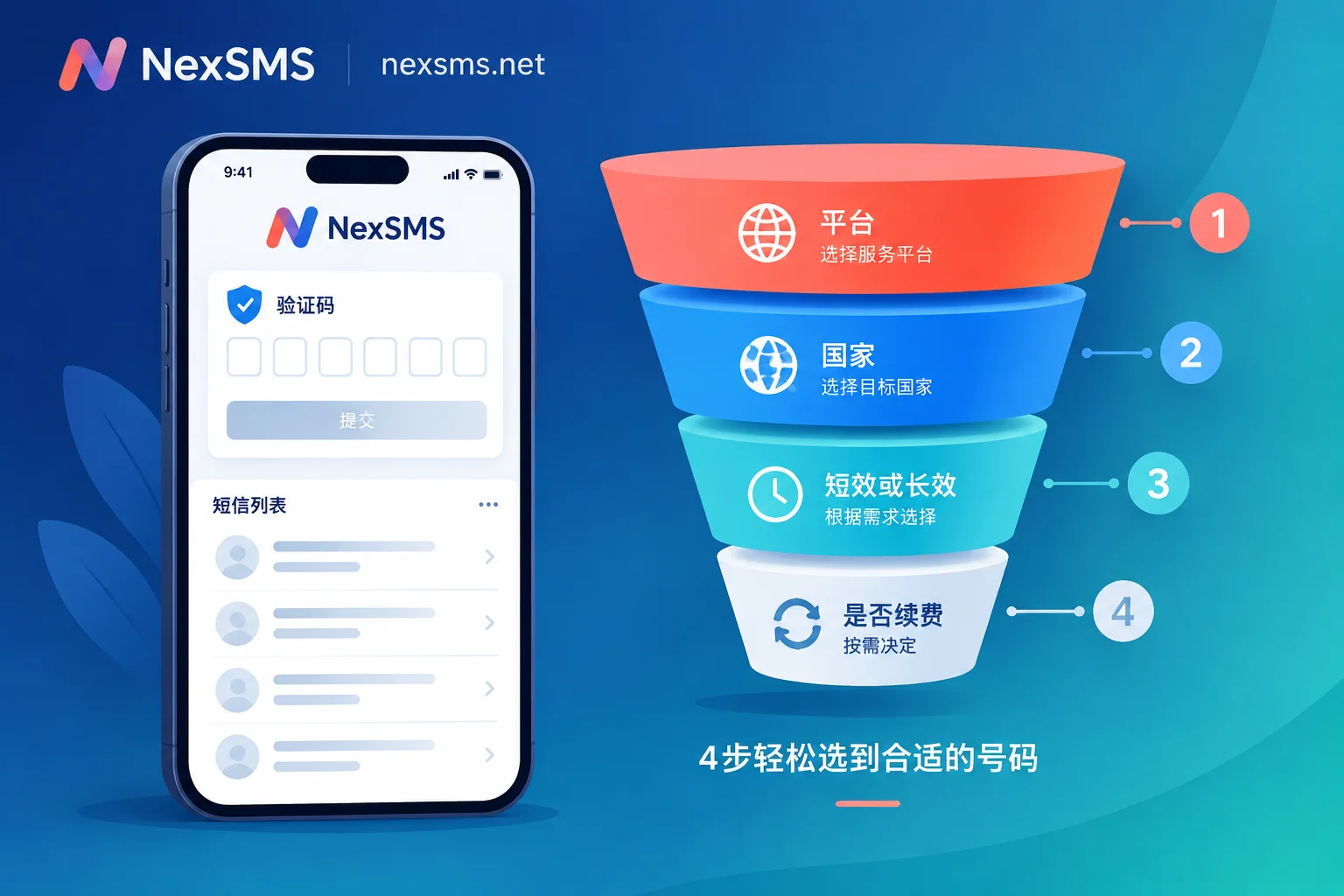
- Assess account importance: For platforms involving funds, assets, or primary accounts, use fixed long-term numbers or bind an Authenticator app to avoid the risk of being unable to recover accounts with one-time numbers.
- Verify country and platform compatibility: Based on the target business region, filter numbers with the appropriate country codes in the control panel to ensure successful delivery of verification codes.
- Prevent phishing and information leakage: Only enter received verification codes on official, legitimate websites; never submit sensitive information on unauthenticated third-party links.
- Regular cleanup and isolation: Establish an internal number management ledger, differentiate test numbers from production numbers, and achieve orderly and compliant communication resource management.
By properly planning the use of temporary phone numbers and long-term virtual numbers, you can easily enhance your digital privacy protection. Feel free to visit the NexSMS official website to experience flexible global number solutions and build an efficient and secure barrier for your cross-border business.


Comments(0)