 NexSms官方博客
Many users have a misconception when using the web version of ChatGPT daily: since you can now register and chat directly with just an email, does that mean ChatGPT phone verification has completely become a thing of the past?
The opposite is true. According to the latest policy updated by the OpenAI Help Center at the end of October 2026, phone number verification has not disappeared; instead, it has become a mandatory threshold for core productivity tools (such as desktop Codex and developer APIs). What's more frustrating for countless paid subscribers and developers is that OpenAI's current rules contain two extremely strict "iron laws": bound phone numbers cannot be changed, and a single number can be used for at most 3 accounts' initial API verification over its lifetime.
If you casually filled in a disposable temporary number when you first triggered verification, months later when you update the client or enable new features, you may permanently lose your entire account because you cannot receive the re-verification SMS. This article will break down the underlying logic of OpenAI phone verification in 2026 and provide a reliable number selection strategy for SMS verification.
I. In 2026, which scenarios will force ChatGPT phone verification?
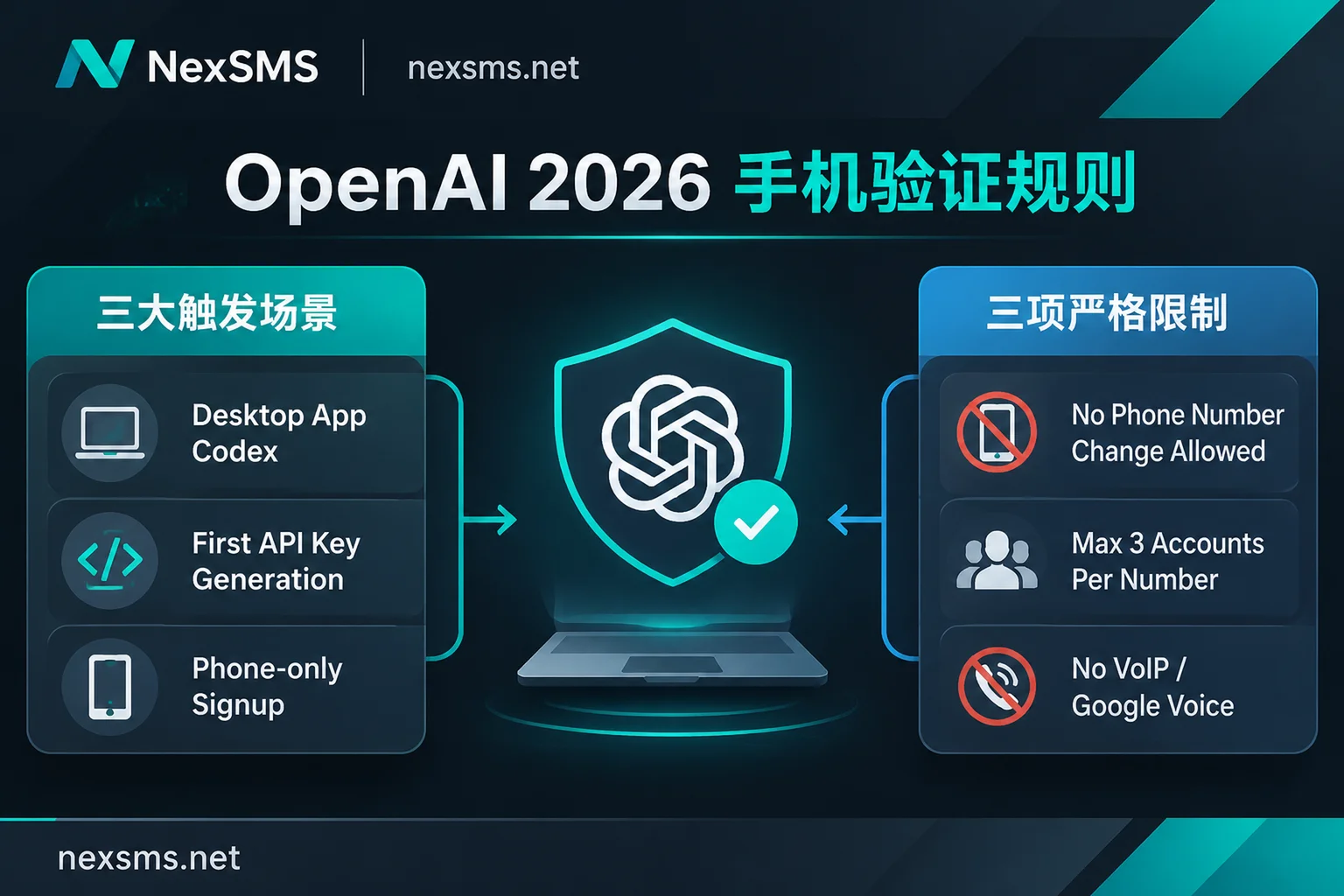
Although ordinary users usually do not need to verify their phone for basic conversations on the web, the system will mandatorily require phone number verification in the following three high-frequency scenarios:
- Accessing Codex in the ChatGPT desktop app: With the popularity of AI programming tools, more and more people use Codex on macOS or Windows desktop. When you try to log in or call related functions in the client, the system will force a pop-up requiring phone verification. Note that email verification codes or TOTP authenticators (such as Google Authenticator) cannot replace this phone verification step.
- First-time API Key generation on the developer platform: When creating an API key for the first time at
platform.openai.com, phone verification is required (subsequent new key generation does not require it again). - Phone-only signups and re-verification in abnormal environments: OpenAI has rolled out phone-only registration tests in more than ten countries including the US, UK, Japan, and India; meanwhile, when an account triggers a security review due to network environment fluctuations or major client version upgrades, it will also be required to re-verify the phone number.
In addition, OpenAI currently only supports sending one-time verification codes via SMS or WhatsApp in specific countries/regions (such as India, Indonesia, Malaysia, UAE, Turkey, Vietnam, etc., 12 countries), and does not support voice calls or email forwarding.
II. The three most common "dead ends": no number change, 3-time limit, and virtual number blocking
In the OpenAI developer community, the most frequent complaints recently are not about "why verification is needed" but about the account lockout problems caused by the verification mechanism. Before preparing a number, you must be clear about the following three official red lines:
1. Once a phone number is bound to an account, the official policy does not support modification or rebinding
OpenAI's official help document (How to change the phone number associated with your account) explicitly confirms: Currently, changing the phone number associated with an account is not supported.
What does this mean? Many long-time users or Plus/Pro subscribers used a temporary number during early verification. When they upgrade the desktop client or enable Codex in 2026, the system will directly send SMS or WhatsApp verification codes to the old number from back then. Once the old number has been disconnected or recycled, users cannot even enter a new number on the interface and can only watch their high-value paid accounts being locked out.
2. A single number can verify at most 3 accounts; account deletion requires a 30-day wait
To curb bulk registration and abuse, OpenAI stipulates that the same phone number can be used for at most 3 phone verifications for initial API Key generation.
- For teams or studios, if an employee has already used their personal phone number to verify their own account, they often cannot use it to verify company or test accounts.
- Even if you completely delete a ChatGPT account that has not violated any rules, the phone number will not be released immediately; the system requires 30 days to remove it from the database, and there is no manual expedited exemption channel during this period. For potential risks of sharing numbers across multiple accounts, you can refer to our previously compiled How many accounts can one phone number register? Platform-specific limits and associated risks.
3. Comprehensive blocking of landlines, VoIP, and Google Voice
OpenAI explicitly states that it does not support landlines, VoIP virtual numbers, Google Voice, and paid premium numbers, because these number segments are often flagged as high fraud risk by risk control systems. If you frequently encounter errors during verification, you can first read Why do OpenAI Codex, Claude, and Google always prompt 'number unavailable'? to troubleshoot number segment and environment issues.
III. Facing the "lifetime binding" mechanism, how to correctly choose an SMS verification solution?
Since OpenAI does not allow changing the bound phone number and may require re-verification at any time for new features (such as desktop Codex), we can no longer choose SMS verification services with the mindset of "just find any number to fool it." Instead, we should conduct tiered number management based on the actual purpose of the account.
As a professional platform providing online SMS verification code receiving services, NexSMS offers two completely different number solutions for different verification lifecycles:
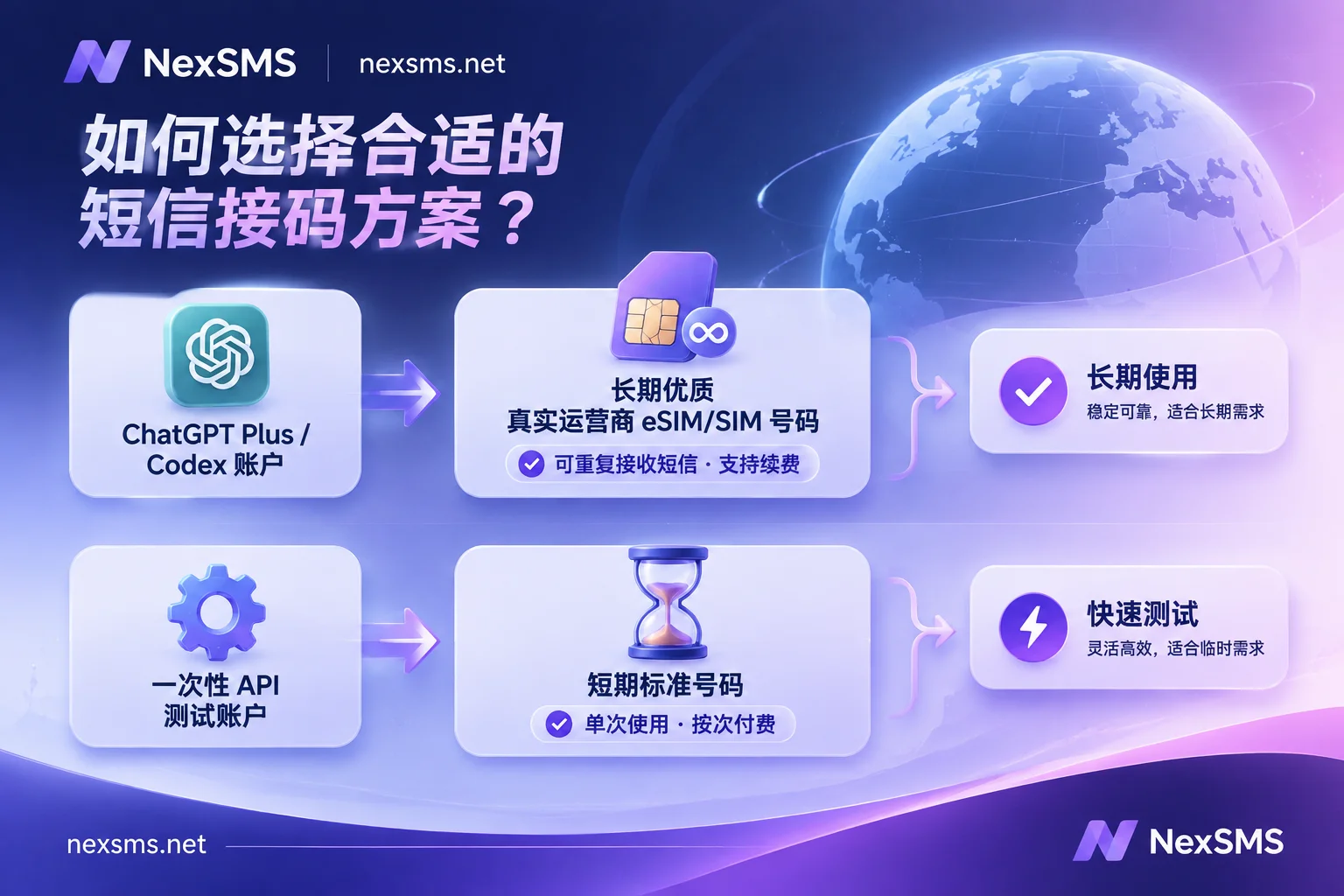
Option A: Main account, Plus/Pro subscription account, and frequently used Codex account → Must choose "long-term premium numbers"
If you are maintaining a main ChatGPT account intended for long-term use, have already bound a credit card to activate Plus/Pro membership, or heavily use Codex on desktop every day, be sure to bind it to a real number that can continue to receive codes in the future.
- Real carrier local number sources: NexSMS's long-term premium numbers all come from local physical SIM cards and eSIMs of real overseas carriers, not virtual landing numbers (VoIP) that are easily rejected by OpenAI's risk control.
- Unlimited code reception within validity period and renewal support: Within the validity period, the same long-term number can receive verification codes unlimited times; and before expiration, manual renewal is supported to continue long-term ownership. Even if OpenAI client upgrades again six months later and pops up a re-verification requirement, you can still calmly receive the code and pass, completely saying goodbye to the nightmare of "account scrapped due to old number unreachable."
- Never use free public numbers: Although the NexSMS website also provides free public numbers for temporary testing experience, the received verification codes are visible to everyone after login, and it is very easy to hit OpenAI's 3-time verification limit. Never use them for any important account.
Option B: One-time API debugging or short-term test account → Can choose "short-term ordinary numbers"
If you just want to temporarily test an open-source project, only need to get through the first API Key generation, and even if the account is discarded later it will not affect core business, then you can use short-term ordinary numbers.
- Short-term numbers are billed per use, have a short validity period, and a number only receives one verification code.
- Special reminder: Short-term ordinary numbers do not support renewal, nor can the same number be used to receive codes again. Therefore, before use, be sure to assess the future re-verification risk of that OpenAI account.
IV. Practical steps: How to complete OpenAI / ChatGPT SMS verification on NexSMS?
Whether you are an individual user or a developer team needing to maintain multiple accounts, you can quickly obtain suitable overseas numbers through the following process:
- Check the dedicated SMS verification instructions and real-time inventory:
Before starting, it is recommended to visit NexSMS's OpenAI dedicated SMS verification solution page to learn about current common verification scenarios, operation steps, and FAQs. Then you can go to the pricing and inventory query page to view current starting prices and available number quantities by application. - Select numbers precisely by country and code reception method:
Enter the global country SMS verification list and select the corresponding country number source based on your network exit location. For example, if you are using a native US network environment, you can directly check the US SMS verification page; if you prefer to receive OpenAI verification codes via WhatsApp, you can also filter numbers in countries that support WhatsApp verification (such as India, Indonesia, Malaysia, etc.), or use the WhatsApp SMS verification solution to register and verify first. - Log in, place an order, and receive codes in real-time on the web:
Open the NexSMS user dashboard and log in. Platform top-ups support Alipay, WeChat, and cryptocurrency (USDT/BTC), and account balances never expire. After filtering and placing an order by country and target application, enter the obtained number into the OpenAI verification interface, and the web page will display the received SMS verification code in real-time. - Developer automation integration (optional):
If your development team needs to integrate the number acquisition and code reception process directly into automated scripts, NexSMS also supports a developer API that can operate in parallel with web-based code reception. To obtain integration methods or if you encounter any operational questions, you can contact the 24/7 online Telegram customer service at any time.
(Note: Since the risk control strategies of major overseas platforms are dynamically adjusted at any time, no SMS verification service promises 100% verification success. Whether it passes is determined by OpenAI's risk control rules at the time and your network environment; please refer to the latest official website for real-time prices, inventory, and refund rules.)
Conclusion
In 2026, ChatGPT phone verification is no longer a simple registration threshold but a long-term security lock deeply bound to desktop Codex and API permissions. Under the official hard rule of "no phone number change," using a number that cannot receive verification codes again for temporary convenience is tantamount to planting a time bomb for your digital assets.
Assess account value in advance, use long-term premium numbers to protect core productivity accounts, and use short-term numbers for temporary testing, so you can always keep your business online amid OpenAI's continuously tightening risk control waves.