 NexSms官方博客
How to choose between real SIM numbers and VoIP numbers for business verification? Judge based on four conditions: whether the line type can be recognized by the platform as a real line, whether the upstream channel is stable and compliant, whether the number can receive secondary SMS, and whether it is exclusive and renewable.
Conclusion First: The Dividing Line Isn't VoIP's Quality, But Whether the Account Needs to Receive a Second Code
For low-risk scenarios where you only need one-time registration verification and no further code retrieval, VoIP numbers are usually sufficient. However, if the account will later involve withdrawals, two-factor authentication, or account recovery, you must choose a real carrier number that can be held long-term and receive secondary SMS. In 2026, this line is stricter than before: TikTok Shop mandates secondary SMS verification during withdrawal, and short-term numbers that cannot receive codes again will block payouts; meanwhile, upstream carrier compliance rules have been tightening in 2025-2026, making low-quality number pools more prone to failure.
Next, we break down four verifiable criteria, each with "signal → action."
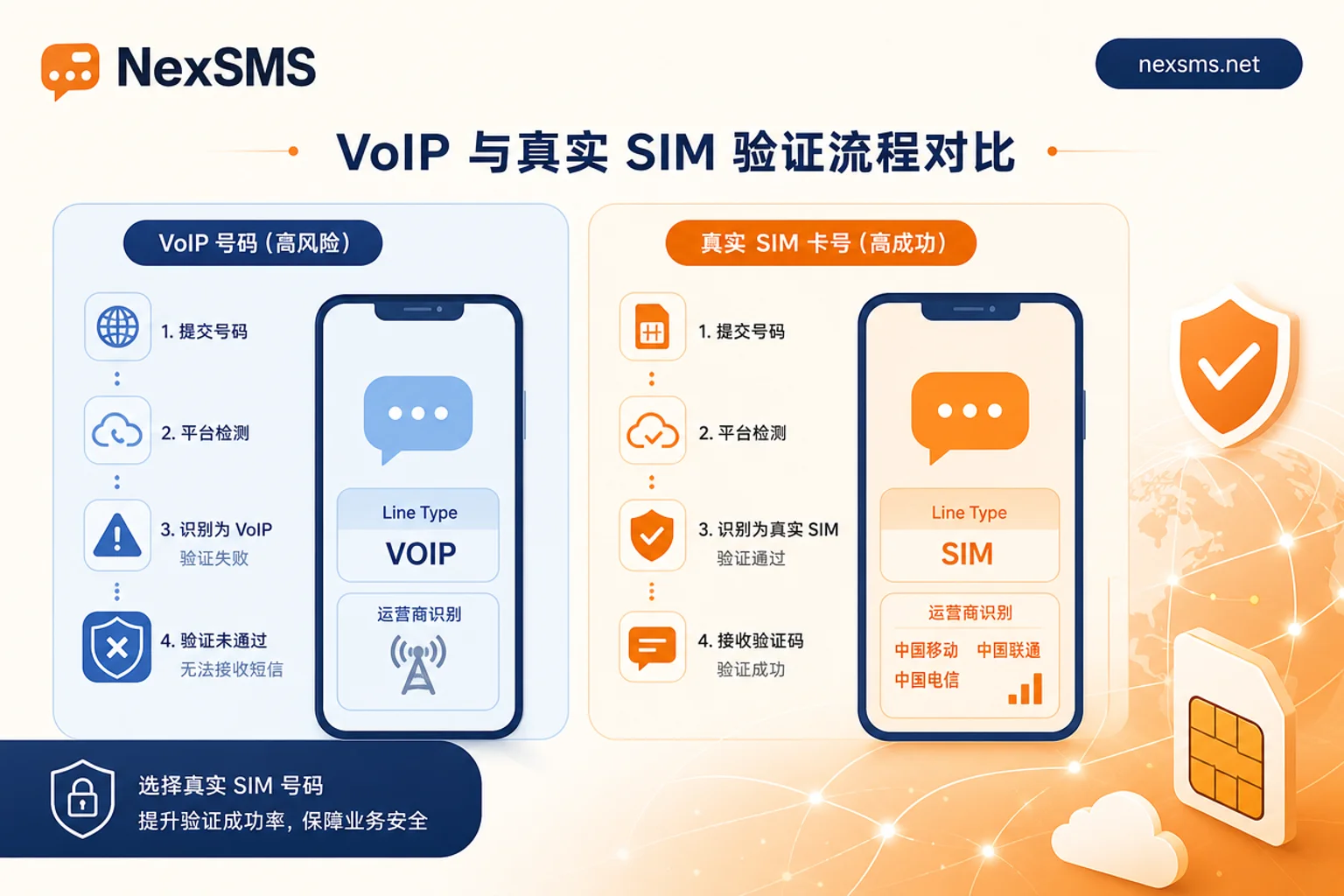
Criterion 1: How Platforms Read Number Attributes—What Line Type and Carrier Lookup Reveal
Platforms don't judge numbers visually; they use number lookup APIs to obtain line type (mobile/landline/VoIP) and carrier identifier, which feeds automated decisions during registration. TikTok uses MCC/MNC and smart number databases to identify line type, automatically blocking common VoIP pools. "Non-VoIP" here isn't an official certification but simply that the lookup result isn't marked as VoIP. Each platform's blacklists, whitelists, and thresholds are internal risk controls and not publicly accessible.
Signal: The number is rejected immediately after submission, without entering the code-sending phase. Action: Switch to a real carrier number instead of retrying the same number.
Criterion 2: Upstream Channel Filtering—Why Low-Reputation Number Pools Silently Drop Messages After Compliance Tightening
The second type of failure isn't platform rejection but SMS being filtered at the carrier channel. According to Twilio's official documentation (updated May 2026), major US carriers have blocked non-registered A2P 10DLC commercial SMS since 2025; Twilio enforces privacy policy and terms URL verification for new A2P 10DLC campaigns from June 30, 2026, returning HTTP 400 if not met, and combats low-quality number rotation. Thus, shared low-quality pools often experience delays or missing verification codes without any error.
Signal: The number is accepted, the page says sent, but no SMS arrives. Action: Determine it's a channel issue, not a number format issue; change number segments or delivery method, not just resend.
Criterion 3: Secondary Reception Capability—Three Hard Thresholds: Withdrawal, Two-Factor Authentication, Account Recovery
"Can it receive another code?" is the most overlooked yet critical criterion. TikTok Shop mandates secondary SMS verification for withdrawals; short-term numbers that cannot receive codes again will block payouts. E-commerce two-factor authentication and account recovery depend on the original number being able to receive messages consistently. More details in Cross-border e-commerce account verification.
Signal: Number validity is measured in minutes or hours, and the number is recycled to the public pool after use. Action: For any binding involving funds or primary account security, switch to a renewable long-term number.
Criterion 4: Exclusivity and Renewal—Who Actually Controls the Number During Its Validity
In shared pools, the same number may be used by multiple people sequentially, causing association risks, code cross-reception, and account loss when the number is recycled. Exclusive, renewable numbers are solely occupied by the user during validity. Carriers are targeting low-quality number rotation, making it harder to maintain stable reception.
Signal: Does the service state number exclusivity, allow proactive renewal, and support long-term binding? Action: For core account binding, choose exclusive renewable numbers.
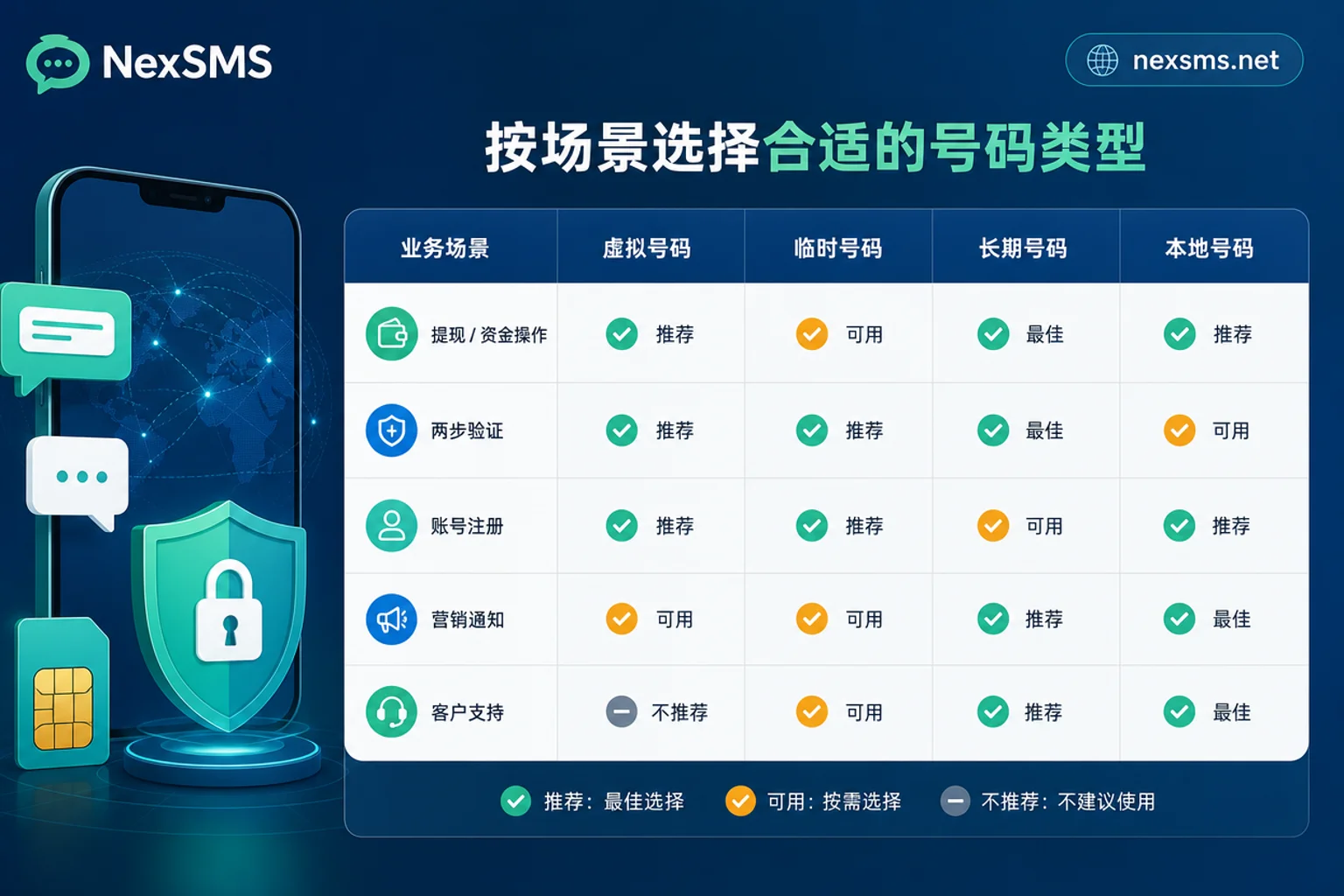
Comparison Table: Which Scenarios Require Real Carrier Numbers vs. VoIP Is Sufficient
Returning to the question of how to choose real SIM vs. VoIP numbers for business verification, the table below compares by scenario:
| Scenario | Number Type Recommendation | Secondary Reception Needed? | Exclusive Renewal Needed? |
|---|---|---|---|
| One-time test registration | VoIP short-term number sufficient | No | No |
| Development debugging | VoIP short-term number | No | No |
| Long-term social account use | Real carrier long-term number | Yes | Yes |
| Cross-border store activation & withdrawal | Real carrier long-term exclusive number | Yes | Yes |
| Background two-factor authentication | Real carrier long-term exclusive number | Yes | Yes |
VoIP numbers are still sufficient for low-risk test registrations; the real dividing line is whether the account will involve funds and secondary verification.
How to Choose Real SIM vs. VoIP Numbers: Three Verification Actions Before Ordering
First, check if the service clearly states line type and carrier, not just a country flag. Second, use a small-value short-term number for a trial registration on the target platform, observing whether it's rejected immediately or times out on code delivery, to distinguish between number segment blocking and channel filtering. Third, confirm validity period, renewability, exclusivity, and how account binding migrates after number expiration. No official blacklist is publicly available; any "guaranteed pass" claims are untrustworthy. Learn more about Which overseas platforms prohibit free SMS receiving platforms.
Why VoIP Numbers Are Rejected During Registration: After Detection, Should You Wait, Change Channels, or Switch Numbers?
Immediate error on submission indicates line type detection; waiting is useless, so switch to a real carrier number. If the number is accepted but no SMS arrives, prioritize channel filtering—try voice verification or change number segments. For short-term numbers already bound to accounts entering funds or 2FA flows, migrate the binding to a long-term exclusive number as soon as the account is still accessible.
Implement with NexSMS: Country Selection, Short-Term vs. Long-Term Division, Web SMS vs. API
Use short-term numbers for low-risk test registrations to control costs; for accounts needing secondary reception, funds, or 2FA, use renewable long-term local numbers with exclusivity; for multi-country operations, choose the number's country of origin based on the target platform's market; for personal low-volume verification, use web SMS; for team batch and ledger management, use API. This is legitimate business number isolation and main number protection usage, with no guarantee of platform approval. Related forms can be referenced in Exclusive virtual numbers vs. shared numbers and Short-term vs. long-term numbers.
Pre-Purchase Self-Checklist
- Does the account need to receive codes again later?
- Does it involve fund withdrawals or two-factor authentication?
- Does it require long-term account recovery?
- Is the number exclusive and renewable?
- Which country is the target platform in?
- Is there an alternative delivery method on failure?
Each point corresponds to the criteria above for direct comparison before ordering. This checklist is the practical application of choosing real SIM vs. VoIP numbers for business verification.
FAQ
What does Non-VoIP number mean?
Non-VoIP means the number's line type is not marked as VoIP in lookup queries, typically a real carrier number like mobile or landline. It's not an official certification but an automatic judgment by platform risk controls based on MCC/MNC and number databases. These numbers are more likely to pass registration and verification, but not guaranteed.
How to check if a number is VoIP?
Use number lookup APIs or services for Carrier Lookup; results show line type (e.g., mobile, landline, or VoIP). However, specific thresholds and number databases used internally by platforms aren't public, so lookup results are for reference only and not the final determinant.
Why are VoIP numbers rejected during registration while some work?
Platform risk controls consider line type, number reputation, usage history, etc. Common VoIP pools are often auto-blocked, but some low-risk scenarios (e.g., one-time testing) may pass. The key is whether the account will later involve funds or secondary verification, not whether VoIP works per se.
Why don't I receive verification codes on VoIP numbers?
Possible reasons include carrier channel filtering (e.g., non-A2P 10DLC registered SMS being blocked by US carriers), low number reputation causing silent drops, or platform-side blocking. If the page says sent but no SMS arrives, suspect channel filtering; try changing number segments or using voice verification.
Which scenarios must use real carrier numbers?
High-risk operations like fund withdrawals (e.g., TikTok Shop withdrawal secondary verification), e-commerce background two-factor authentication (per 2026 industry public info, many platforms enforce 2FA), and account recovery require real carrier numbers that can receive secondary SMS and be renewed long-term, otherwise funds may be blocked or accounts lost.
Can a short-term number be replaced with a long-term number after binding?
Most platforms allow changing the bound phone number in settings, but require receiving a verification code on the current number. If the short-term number has expired, you may not be able to complete the change, so it's advisable to do it within the number's validity or choose a channel that supports rebinding.


This is a fake platform; there was no response after payment.