 NexSms官方博客
Core Takeaway for Multi-Account Number Management: One Number One Role, Assign Roles Before Numbers
The core approach to multi-account number management is one number one role: first categorize numbers into three roles—registration code reception, two-step verification, and platform retained contact number—and then let each number take on only one type of duty. Google's official help document "Verify your account" updated in June 2026 states: to prevent abuse, the system limits the number and frequency of accounts that can be created and verified with a single number. When the limit is reached, it will show "This phone number has been used too many times for verification," requiring a different number. This means that smooth initial registration does not guarantee trouble-free later verification.
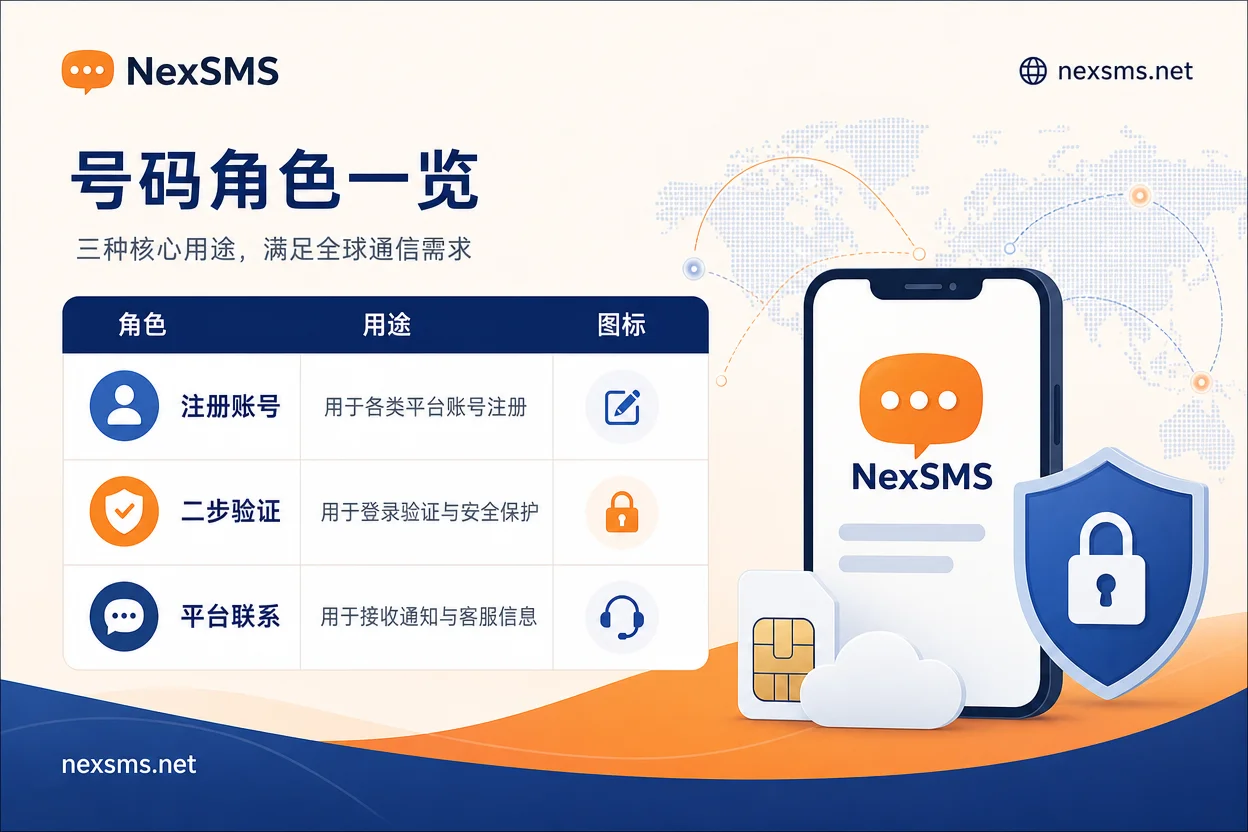
First Distinguish the Three Number Roles: Registration Code Reception, Two-Step Verification, Platform Retained Contact Number
Different roles have entirely different requirements for the phone number's "lifecycle," and mixing them is the main cause of later verification restrictions.
| Role | Usage Frequency | Lifecycle | Cost of Failure |
|---|---|---|---|
| Registration code reception | Once | Short (tens of minutes) | Low: retry with a new number |
| Two-step verification | Every login | Long (needs long-term receiving capability) | High: cannot receive code means cannot log in |
| Platform retained contact number | Annual review/risk control | Extremely long (needs long-term verifiability) | Extremely high: affects account security and compliance |
Registration code reception is a one-time action and can use short-term numbers; two-step verification requires long-term receiving capability; platform retained contact numbers (e.g., Amazon business contact number) need long-term verifiability. For example, Amazon Seller Central's help documentation updated in April 2026 emphasizes that two-step verification is mandatory for all stores, with options for SMS OTP or TOTP authenticator apps, and the INFORM Act requires retaining a valid and verifiable business contact number. Stuffing all three roles into one number turns a one-time risk into a long-term hazard.
Why the Cost of Number Reuse Appears Later: Google Imposes Limits on Verification Count and Frequency per Number
Early registration success can easily mislead you into thinking the number is set-and-forget, but Google's official restrictions remain in effect in the background. When you use the same number to verify a second or third account, or frequently trigger verification on different devices, you may hit risk-control thresholds. Google's Help Center error message is very direct: "This phone number cannot be used for verification." Once restricted, that number cannot be used for verification on Google's side, requiring a different number from another carrier and updating all accounts bound to that number. See Solving 'Google verification code invalid' error. This is why many cross-border operators encounter problems only after six months—the early "seamless" experience masks the backend capacity limits.
Cross-Store Same-Number Association Risk: Amazon's Mandatory Two-Step Verification and Business Contact Number Need Long-Term Verifiability
For multi-store operators, will multiple Amazon stores using the same phone number be associated? The answer is: there is a clear risk (official association rules are not published; this is common operational experience). The April 2026 Amazon Seller Central documentation clearly requires two-step verification for all stores; if multiple stores bind the same phone number, the platform may deem them associated. More practically, the INFORM Act requires merchants to maintain a verifiable business contact number that can receive verification codes or calls long-term; otherwise, during annual reviews or unexpected security checks, they may fail verification, which could affect store status. Therefore, multi-store operations must use "one store one number" and ensure long-term validity.
One Number One Role Assignment Matrix: Which Roles Must Have Dedicated Long-Term Numbers, Which Can Use Short-Term Numbers
Based on the official rules above, here is a directly applicable assignment matrix:
| Role | Number Type | Reusable? | Recommended Hosting Method | Notes |
|---|---|---|---|---|
| Registration code reception | Short-term number | Yes (but mind frequency) | One-time code reception | Suggest using a new number for each registration to avoid frequency limits |
| Two-step verification | Long-term dedicated number | Not reusable | Dedicated renewable local number | One number per account, long-term receivable |
| Platform retained contact number | Long-term dedicated number | Not reusable | Dedicated renewable local number | Can be combined with two-step verification but not shared across stores |
The main number (personal primary number) should not handle multi-account verification, otherwise if it gets flagged, not only business accounts suffer but your personal account as well. Short-term numbers are cheap, but only for one-time registration, not for recovery or long-term 2FA.
Minimal Usable Ledger: How to Fill the Five Columns: Number, Country, Usage, Hosted Account, Expiry Date
The most practical way to manage multi-account numbers is a five-column table. Field meanings and example entries:
| Number | Country | Usage | Hosted Account | Expiry Date |
|---|---|---|---|---|
| +1 555 123 4567 | USA | Two-step verification | google_main / amazon_store_A | 2026-12-31 |
| +44 20 7946 0958 | UK | Platform retained contact number | amazon_store_B | 2026-09-30 |
In the "Usage" column, don't just write "business number"; specify the role (e.g., "two-step verification") and list the hosted accounts. The expiry date is mandatory, otherwise, unexpected disconnection may lead to inability to receive codes later. Recommended review weekly, focusing on numbers expiring within 30 days.
Expiry Review and Handover Actions: Renewal Reminders, Backup Verification Methods, and 'Add First, Remove Later' for Personnel Changes
Numbers are not bought and used forever; you need periodic review. All major platforms require long-term verifiable contact information, so expiry management is a hard requirement.
- 7 days before expiry: Check all long-term numbers' expiry dates, renew early to avoid number recycling.
- Two-step verification: In addition to the bound phone number, enable a TOTP authenticator app as a backup method to avoid single-SMS-channel failure.
- Personnel changes: When an employee leaves, first add a new verification method (e.g., new phone number or authenticator), then remove the old one, ensuring the account remains under control at all times.
This principle also applies to the handover process in Enterprise business number procurement and internal ledger checklist.
Implementing the Assignment Matrix with NexSMS: Country Selection, Short-Term vs Long-Term Roles, Web Code Reception and API
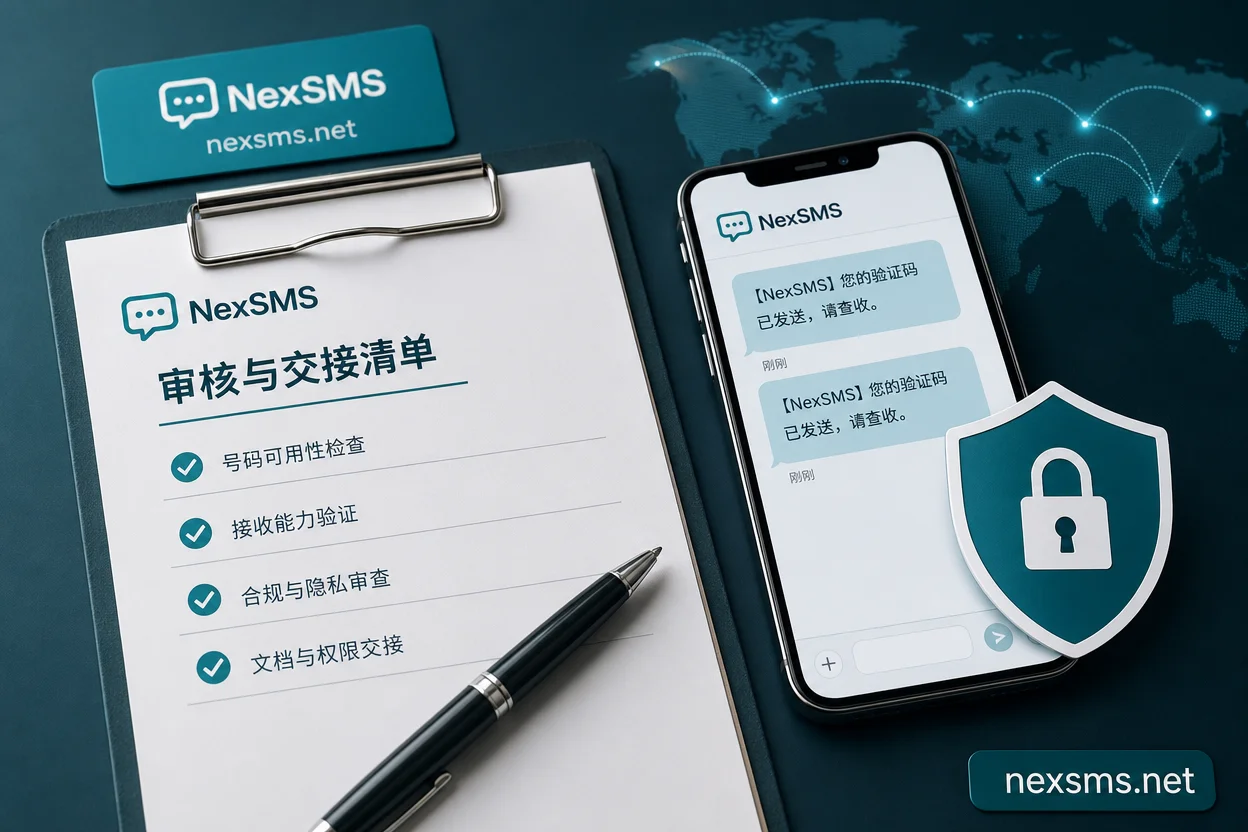
With the matrix and ledger in hand, the next step is selecting number hosting. NexSMS numbers fall into short-term and long-term categories: short-term numbers suit the registration code reception role, pay-per-use, no long-term cost; renewable long-term local numbers suit two-step verification and platform retained contact numbers, ensuring long-term receiving capability. On the NexSMS platform, you can select numbers by country according to the target platform, receive verification codes via unified web interface, or use the API to integrate into an internal ledger system for automatic expiry date recording. When choosing numbers, pay attention to selecting long-term numbers for the target country and confirm the renewal cycle to avoid expiration. For more differences, see Short-term vs long-term numbers and Exclusive virtual numbers vs shared numbers.
Pre-Launch Self-Checklist
Before going live, take 10 minutes to go through:
- [ ] No "one number multiple roles" (no number doing both two-step verification and platform contact)
- [ ] Every two-step verification has a backup method (TOTP or backup phone)
- [ ] Ledger five columns completed, expiry dates accurate
- [ ] No numbers expiring within the next 30 days
- [ ] Employee offboarding handover has been handled with "add first, remove later"
FAQ
How many Google accounts can be verified with one phone number?
Google has not published a specific threshold, only stating that there are limits on the count and frequency. From an operational standpoint, the safe approach is to give each long-term Google account its own number and avoid using the same number to verify multiple new accounts (this is operational experience, not an official rule).
Will multiple Amazon stores using the same phone number be associated?
Amazon has not publicly disclosed its exact rules for association, but with mandatory two-step verification, binding multiple stores to the same phone number is seen as a high-risk signal and may trigger association review (operational experience). It's recommended to use a separate number for each store and ensure long-term verifiability, complying with the INFORM Act.
What to do if the same number has verified too many times?
If you receive a "used too many times" error, stop verifying with that number immediately, wait a while before retrying (Google has not disclosed the cooldown period). If it still fails, replace with a new dedicated number and update verification methods on all bound accounts. Also, add TOTP backups for critical accounts to avoid relying on a single SMS channel.
How to handover business phone numbers after an employee leaves?
First add a new phone number or authenticator app, verify it, then remove the old number, ensuring the account remains under team control. If the old number needs to be kept, convert it to a two-step verification or platform contact role and update the ledger's hosted account and expiry date. Never delete directly to avoid triggering security locks.
What fields should be recorded in a business phone number ledger?
The minimal ledger should include five columns: number, country, usage, hosted account, expiry date. Optionally add "verification method" and "notes" columns for backup methods or handover history. Review weekly, focusing on numbers expiring within 30 days.


Comments(0)