 NexSms官方博客
Let’s start with the conclusion. If an account will be used for future logins, recovery, two-factor authentication, or contains money, data, or clients, do not bind it to a free public SMS number. Free public numbers are only suitable for “try and leave, no loss if lost” scenarios.
Paid private numbers also come in two types, solving different problems:
- Short-term private numbers: Only you can see the verification code, solving the “others can see” problem.
- Long-term numbers: You can continue receiving codes later, solving the “can the account still be verified” problem.
Below, we’ll explain the risks one by one, then discuss how to choose in different situations.
Three security issues with free public numbers
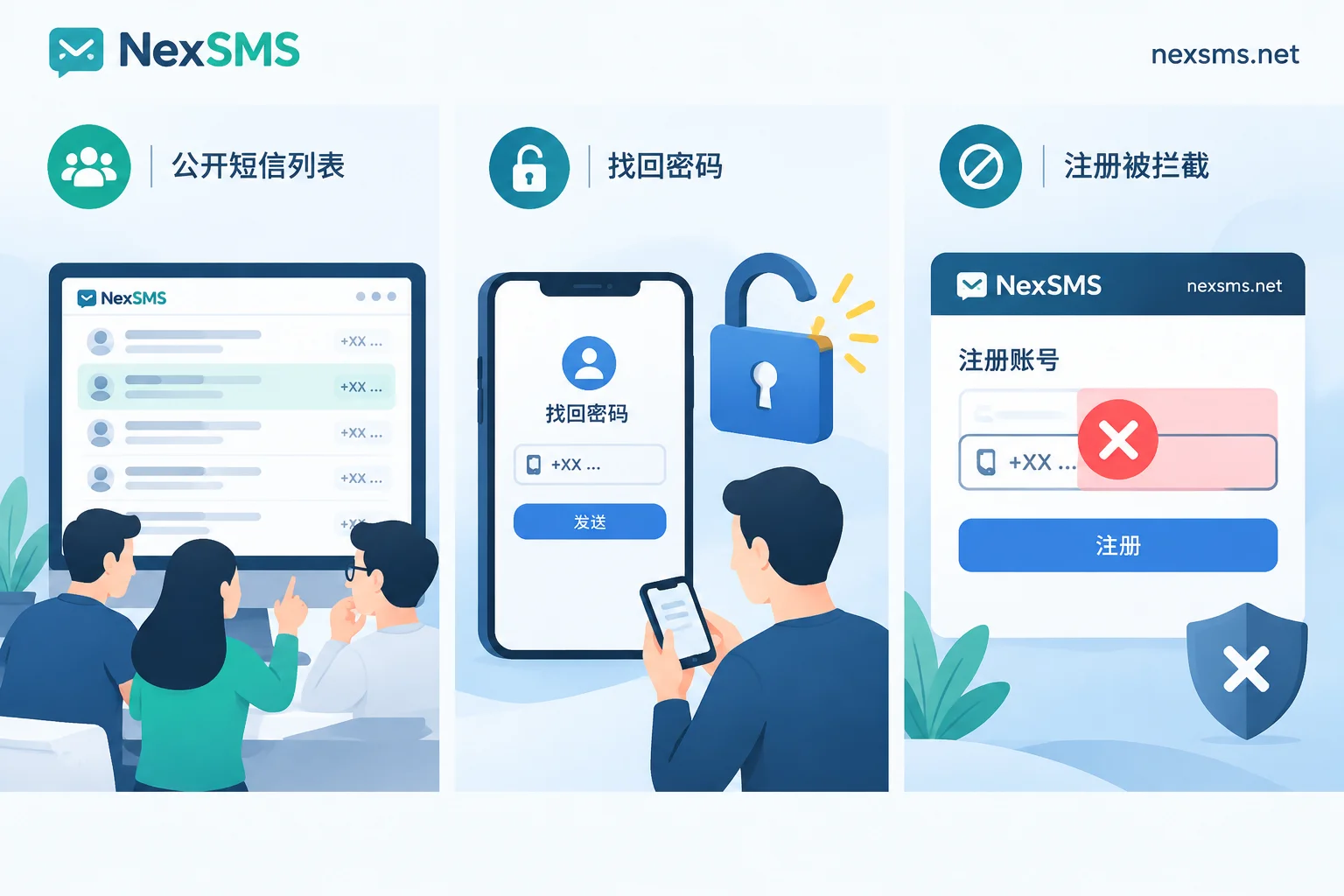
1. Verification codes are publicly visible
The inbox page of free SMS websites is public. Anyone can view it in real time or scrape it programmatically. The SMS verification code, one-time login link, account name, or email fragments are visible to others at the same time as you. If someone else uses the code before you, or notes your account information, they could log in, reset your password, or hijack your logged-in session.
2. Numbers are shared; others can use them to “recover” your account
This is a risk many people overlook. After you register and bind an account with a public number, that number doesn’t belong to you; the next person can use it too. If they initiate a “forgot password via SMS” on the same platform for that number, the verification code will appear on the public page, and anyone can reset your password.
The security industry generally agrees that SMS verification alone cannot confirm whether the person performing an action is the account owner. Once a number is shared by multiple people, this verification chain offers almost no protection. This situation is called account takeover (ATO). Once it happens, the assets and data in the account may be lost forever.
3. Platforms often don’t accept them, and even if they do, they may ban you later
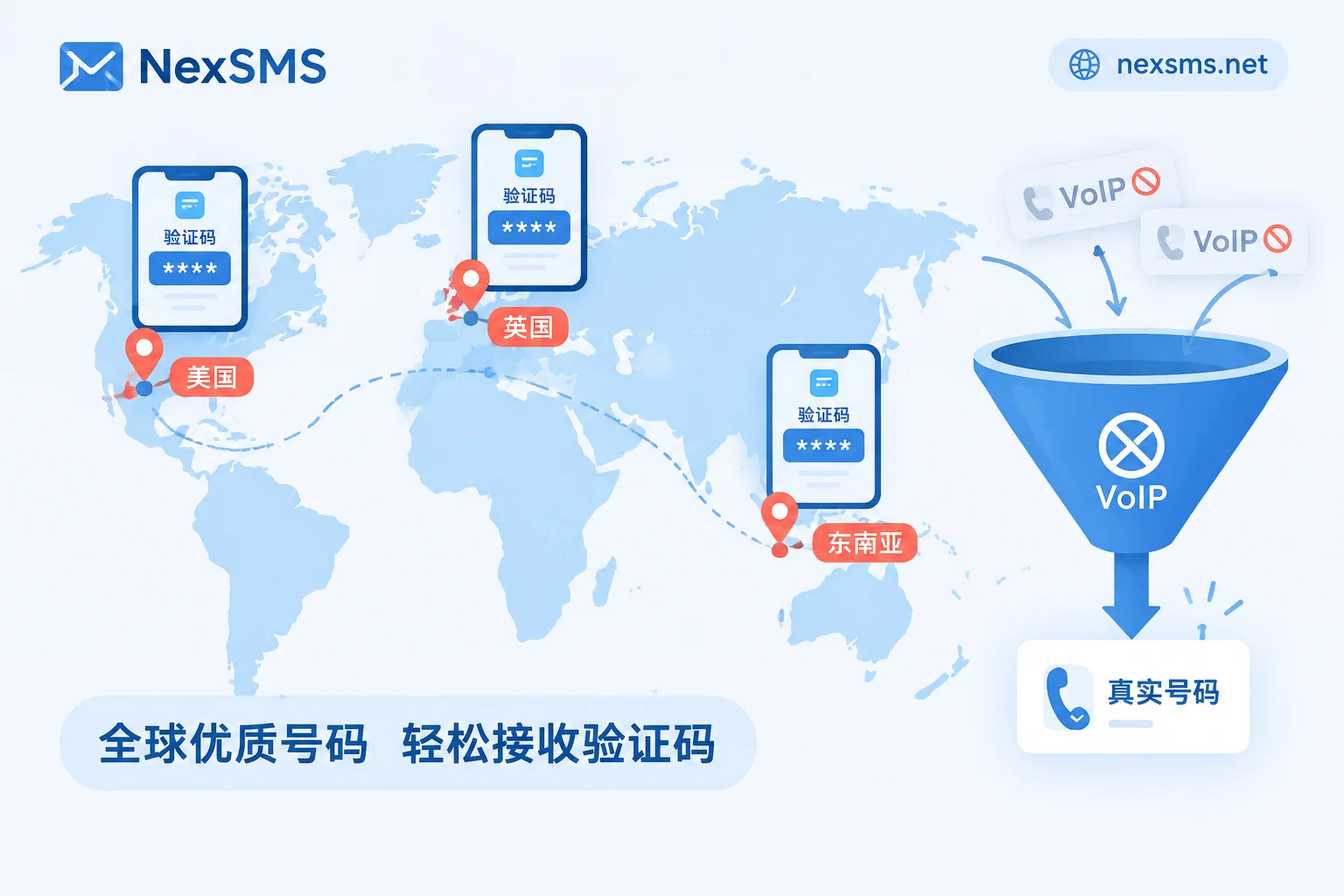
Free public numbers are mostly virtual VoIP numbers and are repeatedly used by many users, so they are often flagged by anti-fraud systems. Many overseas platforms and risk control providers maintain blacklists of public SMS numbers, leading to:
- Immediate “number unavailable” messages;
- Verification codes simply not being sent;
- Successful registration, followed by a ban due to abnormal number association.
So most of the time when you can’t receive codes with a free number, it’s not SMS delay. For details, see Why free public SMS numbers can’t receive verification codes.
What paid private numbers solve and what they don’t
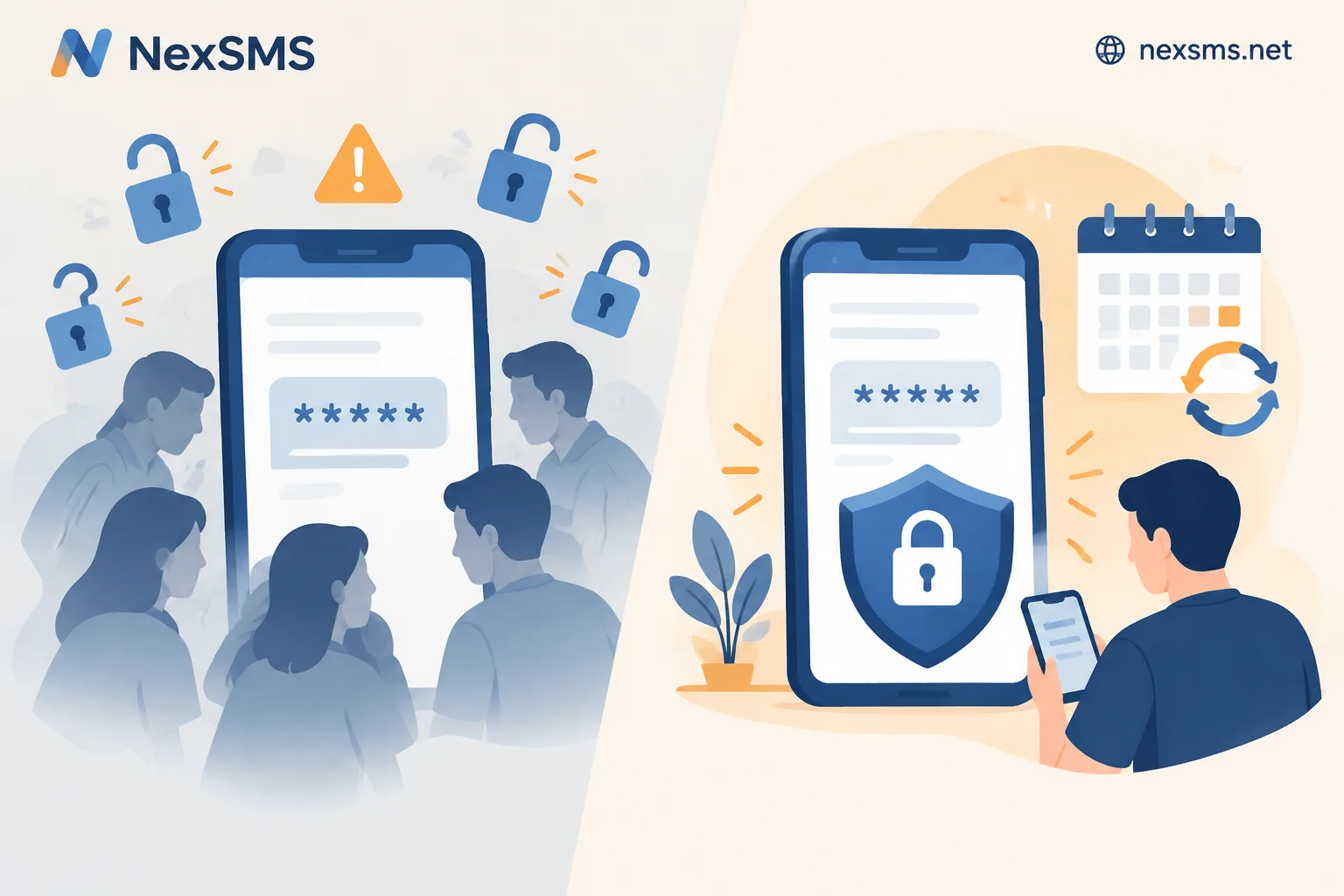
Paid private numbers require you to log into your own account to view them, so only you can see the verification code. The “publicly visible code” problem no longer exists. But short-term and long-term numbers differ greatly in terms of “the future.”
| Comparison | Free public number | Paid short-term number | Paid long-term number |
|---|---|---|---|
| Who can see the code | Anyone | Only you | Only you |
| Can others use the same number to recover your account? | Yes, this risk exists | The number is no longer under your control after use | You have exclusive use during the holding period |
| Platform acceptance | Often blocked | Depends on platform rules and number type | Real carrier numbers have relative advantages, but still depend on platform rules |
| Can receive codes later? | Uncontrollable | Invalid after one verification | Can receive codes multiple times within validity period; must renew on time |
| Suitable scenarios | One-time trial | Single registration, no future SMS recovery | Long-term holding, 2FA, rebinding, re-verification for remote logins |
Short-term numbers are used per instance and have a very short validity period. After verification, they’re done. They’re suitable for temporary testing and low-sensitivity one-time registrations, provided the account won’t rely on SMS recovery or re-verification later.
Long-term numbers are suitable for accounts you want to keep long-term. Many platforms send another verification code when enabling two-factor authentication, changing devices, or logging in from a new location. If you used a short-term number, it would have expired by then, and you couldn’t receive the re-verification code; the account might be stuck at the verification step. Long-term numbers can receive codes repeatedly within their validity period, solving this problem.
Two limitations to be clear about:
- The number is only responsible for receiving verification codes; it does not equal comprehensive account security. Whether you pass a platform’s verification depends on that platform’s risk control rules at the time; no number can guarantee passage.
- Long-term numbers must be renewed before expiration. Once a number expires and is released, you lose the ability to receive codes and thus cannot re-receive. For renewal timing, see How to renew long-term numbers before expiration to avoid disconnection.
Choose numbers by use case
There’s only one way to decide: Will this account need to receive another code in the future?
- Just want to see what a service looks like, no data, no payment binding: Free public numbers can be used. Be aware that the account could be taken by someone else at any time. If you just want to confirm the process, you can try the free public US number page from NexSMS once without registration. But do not use it for any account you need to keep.
- One-time registration, then switch to email or authenticator app login, no longer relying on SMS: A paid short-term number is sufficient, avoiding the publicly visible code problem, and is low cost.
- Long-term use, will enable 2FA, may rebind or log in from other regions later: Choose a long-term number. NexSMS long-term premium numbers are real carrier native numbers (physical SIM or eSIM, not virtual landline numbers), with unlimited code receipt during the validity period and renewable. For differences between short-term and long-term and renewal conditions, see the feature description page.
For why platforms treat different line types differently, see What’s the difference between real carrier native numbers and virtual landline numbers. If you’re still undecided between short-term and long-term, see How to choose between short-term numbers and long-term premium numbers.
When a team manages multiple overseas accounts simultaneously, it’s advisable to assign a fixed long-term number to each important account and record the expiration date. For details, see How cross-border teams collaboratively manage multiple business phone numbers. Numbers are just one part; multi-account login environments and network egress also need separate isolation management.
What to do if you already registered with a free number
If an important account is already bound to a public number, handle it as soon as possible in this order:
- Check login records and devices. Look for unfamiliar devices or sessions in the account security settings, and log them out first.
- Change your password. Especially if you use the same password on more than one site.
- Switch the bound number to one you can control long-term, either your own phone number or a long-term number. The platform may require the old number to receive a code during rebinding, so do this early while the public number can still receive SMS.
- If the platform supports it, switch two-factor authentication to an authenticator app or security key to reduce reliance on SMS.
After these steps, the public number and your account are basically disconnected.
Note: The above content is only for legal verification needs for personal use. It does not involve bypassing real-name or KYC, bulk registration, or receiving codes on behalf of others.


Comments(0)