 NexSms官方博客
A VoIP phone number is a phone number tied to a cloud account, not bound to a particular SIM card or phone line. Calls and text messages travel over the internet first; when they need to interconnect with an ordinary mobile or landline phone, a gateway connects to the traditional telecom network.
For anyone doing overseas registration, number changes, or two-factor authentication, the most important difference to know is this: telecom databases register the line type of such numbers as "VOIP", not "Mobile". Many platforms check this before sending a verification code, and if they find it is VoIP, they may not send the code at all. So when a virtual number does not receive a code, it is often not that the number is broken—it is that the code was never sent.
What is the difference between a VoIP number and an ordinary mobile number?
The U.S. Federal Communications Commission (FCC) defines VoIP as: users make and receive calls through a broadband internet connection, not through a traditional analog telephone line (PSTN). A VoIP number is directly bound to a cloud account or application software, and the same number can be used on a computer, a softphone app on a mobile phone, or a VoIP adapter.
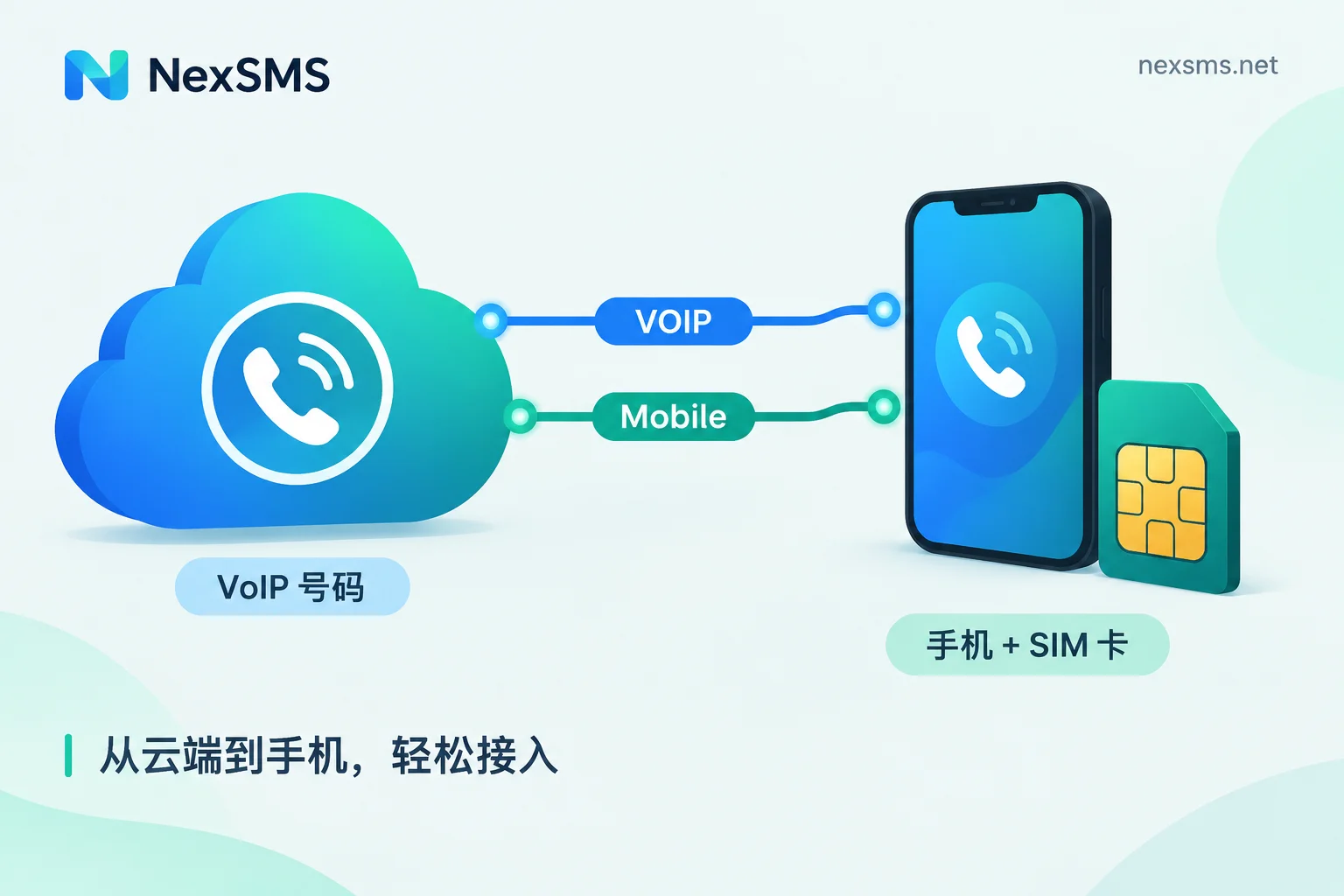
An ordinary mobile number corresponds to a SIM card issued by a carrier (physical card or eSIM), registered on the carrier's cellular network. The differences can be summarized in three points:
- Where the number is attached: A VoIP number is attached to a service provider account; a mobile number is attached to a SIM card.
- How to get the number: A VoIP number can be activated online at low cost, and many can be obtained; a mobile number requires a card issued by a carrier.
- What is registered in the database: Even if a VoIP number can send and receive text messages normally, its line type is still VOIP; a mobile number is registered as Mobile.
The third point is usually unnoticeable, but it directly affects the result at the verification code stage, as detailed below.
How is a VoIP call connected?
VoIP works in two parts: first, a signaling protocol negotiates the call, and then voice data is transmitted.
- Session establishment via signaling. The most commonly used protocol in the industry is SIP (Session Initiation Protocol, developed by the IETF, numbered RFC 3261). It is responsible for initiating calls, negotiating the encoding method used by both parties, maintaining the session during the call, and ending the session when hanging up.
- Encoding and packetization. After the session is established, the speaker's voice is converted into digital data by a codec (such as G.711 or Opus) and cut into individual data packets.
- RTP transmission. These data packets are transmitted bidirectionally over the IP network via the Real-time Transport Protocol (RTP), and the other party restores them into sound upon receipt.
- Gateway interconnection. If the other party uses an ordinary landline or mobile phone, a VoIP gateway converts protocols and media streams between IP packets and traditional telecom networks (PSTN, SS7, IMS, etc.). SMS also goes through similar interconnection when crossing networks.
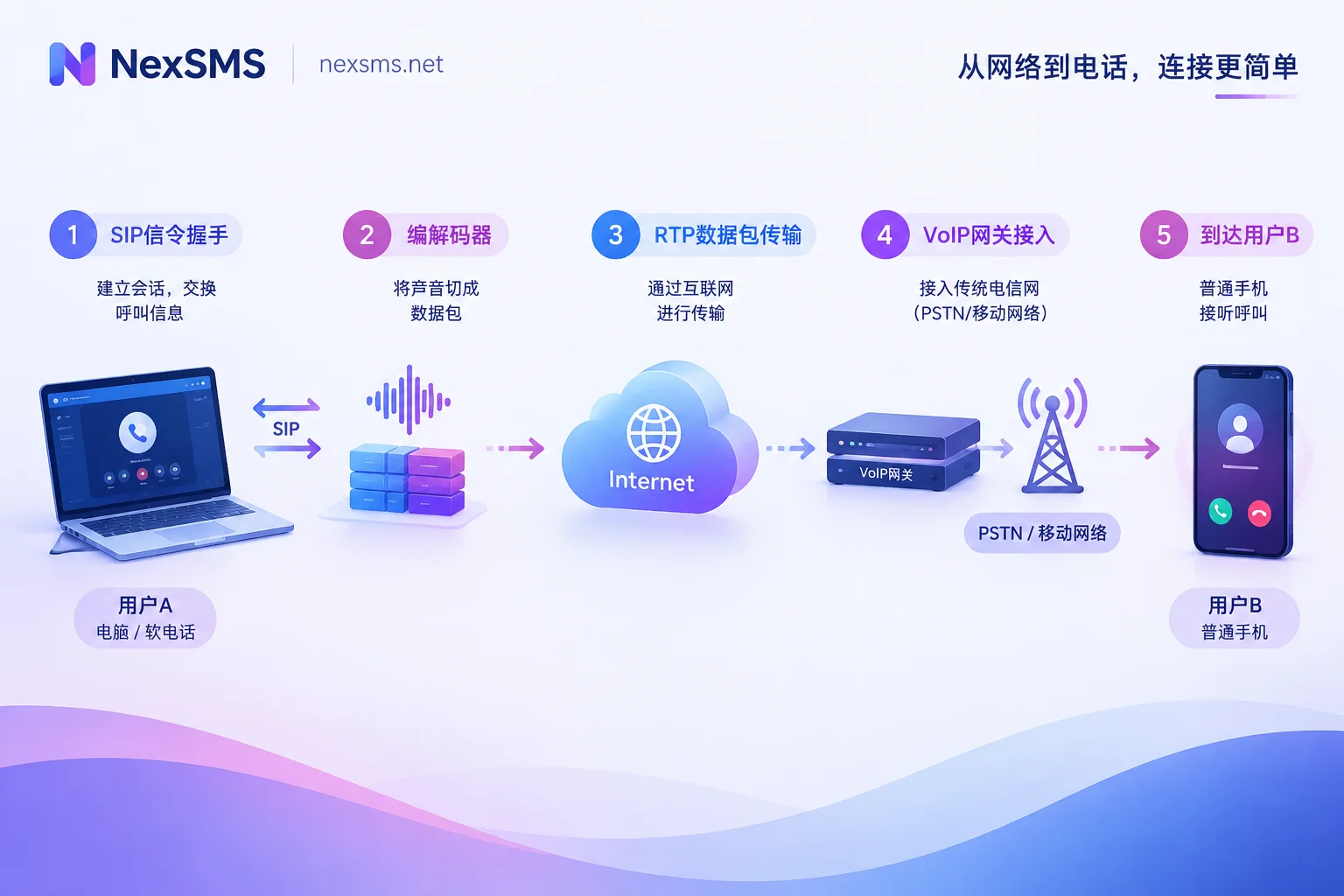
This architecture makes VoIP numbers flexible and cheap: no physical line is needed, and activation and migration are fast. However, precisely because the number does not depend on a physical device, platforms treat it differently when making security judgments.
Why do VoIP numbers often fail to receive verification codes?
In telecom management and carrier databases, VoIP and mobile cellular communications (CMRS) belong to different line types, and numbers are registered as VOIP, Mobile, or Landline. This record does not change just because the number can receive text messages.
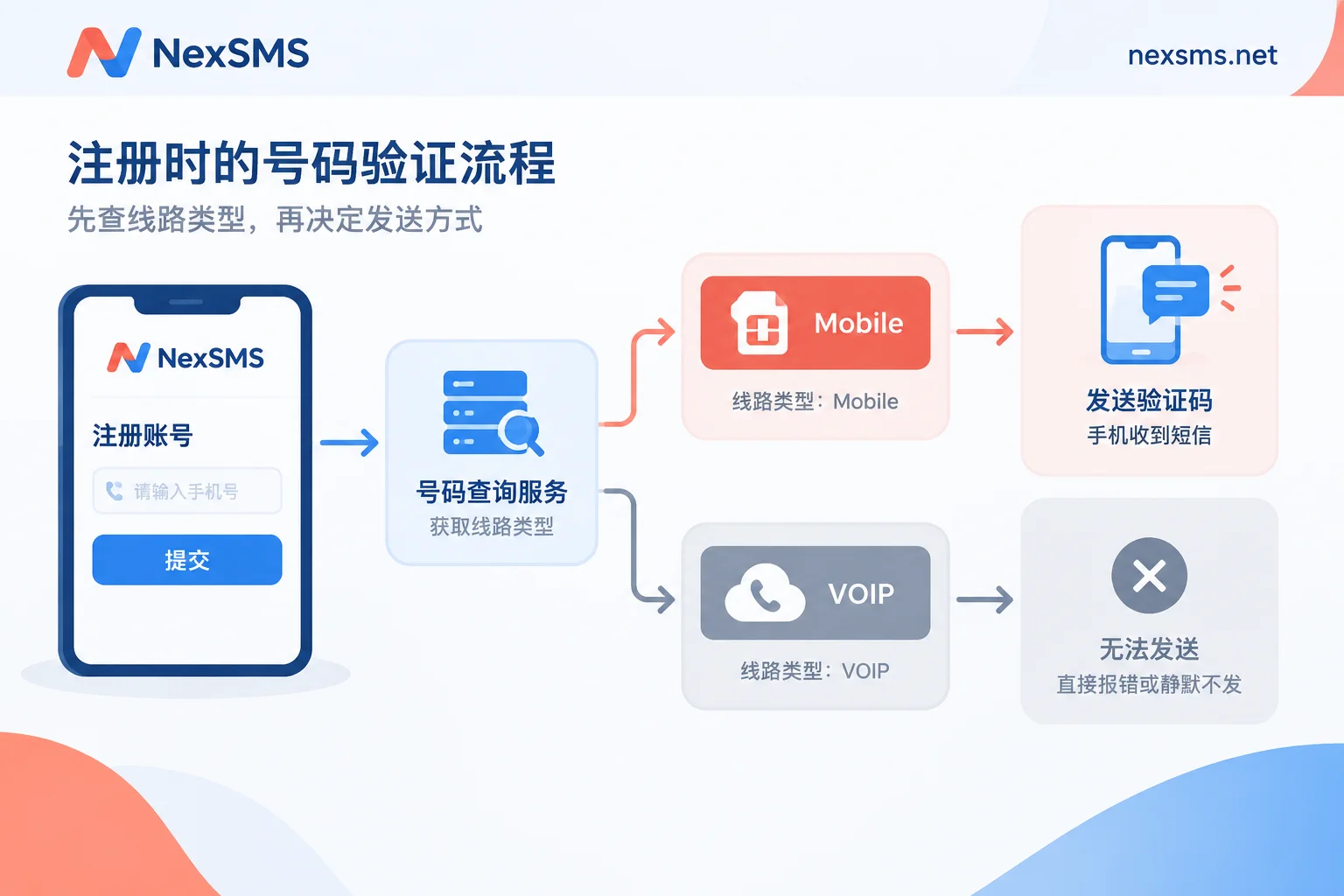
Many platforms, before sending a registration code or two-factor authentication (2FA) code, call a number lookup service (such as Twilio Lookup or HLR query) to check the line type of the target number. When they find VOIP, there are usually two common outcomes:
- Direct error at submission: The page shows the number is invalid, unsupported, or asks for another mobile number.
- Silent failure: The page shows it has been sent, but the SMS never arrives.
Platforms do this because VoIP numbers lack the constraints of a real-name SIM card and a physical device, making it easy to activate many at low cost for spam registrations and abuse. Therefore, platforms with strict risk control tend to trust only mobile numbers from real carriers.
Two points to note:
- Rules vary by platform and change over time. Which platforms block and how strictly they block is not publicly disclosed by each company, and depends on the platform's risk control policy at the time. Some platforms accept VoIP numbers; others block only in certain steps.
- Not receiving a code is not always a line type issue. If the page shows it has been sent but you do not receive it, it could also be resend frequency, number attribution, or the SMS channel itself. You can refer to troubleshooting methods for not receiving SMS after submitting a number to confirm layer by layer. For the specific situation with ChatGPT, see why VoIP numbers cannot register for ChatGPT.
Which number to use: choose based on what you need to do
Just making calls, running a customer service hotline, or not wanting to disclose a private number: A VoIP number is completely sufficient, low-cost, and convenient for use on multiple devices.
Completing registration, number change, or two-factor authentication on a platform: First confirm whether the target platform checks line type. If the platform gives an error for VoIP numbers or you consistently do not receive codes, switching to a real carrier number with line type Mobile usually gives a better chance of success.
Whether you need to receive codes again later determines whether to use a short-term or long-term number:
- If you only need to verify once and will not need the number again, you can use a short-term number. It is billed per use, has a very short validity period, and ends after one verification.
- If you have enabled two-factor authentication, or will need to recover the account or log in on a new device later, you need a number you can hold long-term and use to receive codes repeatedly. Otherwise, once the number expires, the account may no longer be verifiable.
NexSMS's long-term premium numbers are local numbers from real carriers, available in both physical SIM and eSIM forms, not virtual landing numbers. Numbers can be renewed, and code reception is unlimited within the validity period, making them suitable for accounts that need two-factor authentication and repeated code reception. Numbers must be renewed before expiration to continue holding them. For the specific differences between short-term and long-term numbers and renewal conditions, see the feature description page. For code reception precautions for different apps, see code reception instructions by app. Whichever number you choose, whether it passes verification is ultimately determined by the target platform's rules at the time.
If you are still comparing ways to hold a number long-term (VoIP, your own SIM card, cloud long-term number), see comparison of solutions for long-term rental of overseas numbers.


Comments(0)