 NexSms官方博客
To start with the conclusion: if you just want to try a new app, test the registration flow, or the platform is lenient about numbers, a short-term verification number is enough—cheap and ready to use. If the platform explicitly rejects VoIP (such as ChatGPT or WhatsApp), or the account will later need login verification, device changes, or password recovery, you should use a real carrier mobile number: an overseas physical SIM you obtained yourself, or a renewable long-term local number.
Below is a clear explanation of why, and how to choose based on your situation.
The real difference is line type, not "virtual" vs. "physical"
When a platform evaluates a number, it looks at the line type: Mobile (cellular), Landline, or VoIP (a number on an IP network). This information can be queried through telecom databases—Twilio's Line Type Intelligence is one such service—and risk control systems can get the result before sending an SMS.
This has two direct consequences:
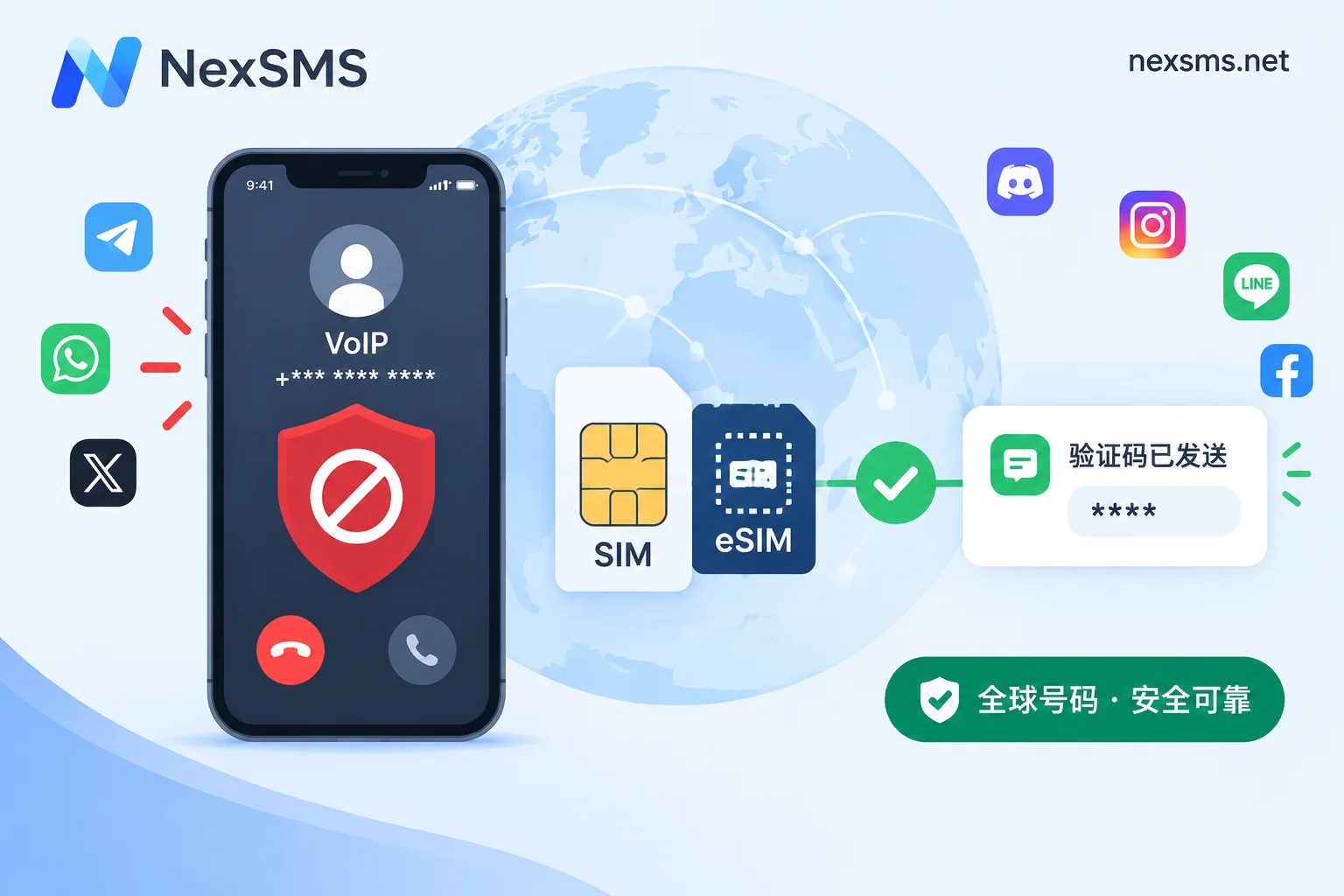
- Numbers identified as VoIP may be rejected before a code is even sent. The page usually says "number not supported" or "invalid number." This is a block at the number-attribute level; changing networks, browsers, or retrying repeatedly won't change it.
- "Whether it's a physical SIM" is not the criterion. An eSIM number issued by a real carrier is also line type Mobile; conversely, a number like Google Voice, even though it can be installed on a phone and used, is still VoIP by attribute.
So the term "virtual number" needs to be broken down: a VoIP-based virtual number and a local number managed in the cloud but issued by a real carrier are two different things in the eyes of a platform. For how VoIP numbers work, see What Is a VoIP Phone Number.
Platforms that have made the rules explicit
- OpenAI (ChatGPT): The help center states that VoIP, Google Voice, landline, and paid premium numbers are not supported; only mobile numbers can receive SMS verification, and in some regions WhatsApp can be used as an auxiliary verification method. The reason is that such numbers are highly associated with fraud and abuse. For detailed troubleshooting, see Why VoIP Virtual Numbers Can't Register for ChatGPT.
- WhatsApp (including WhatsApp Business): Does not accept VoIP, free phone numbers, or paid premium numbers; it requires a number that the user owns and that can normally receive SMS or calls. For the business version, if using a landline, voice call verification is required.
Many overseas banks and payment apps are also stricter about number types, but the specific rules, which risk control service they use, and how blacklists are defined are mostly undisclosed and cannot be fully predicted in advance. For platforms with unclear rules, it's safer to prepare on the assumption that they may reject VoIP.
Use three questions to decide
1. Does this platform accept VoIP?
If the official help center says it's not supported, rule out VoIP directly. If it's not stated, you can first try a low-cost number and see whether it's rejected before a code is sent.
2. Will you need to receive codes on this number again later?
Many people only consider the registration step. In reality, login two-factor verification, changing phones, changing passwords, and rebinding numbers may all send codes to the original number again. A short-term number becomes invalid after one verification, so you won't be able to receive codes then, and the account may become unrecoverable.
3. How important is this account to you?
For an account you won't use after trying it out, saving money is the priority. For an account tied to paid subscriptions, customer data, or a store, the cost of a number is far less than the loss of losing the account.
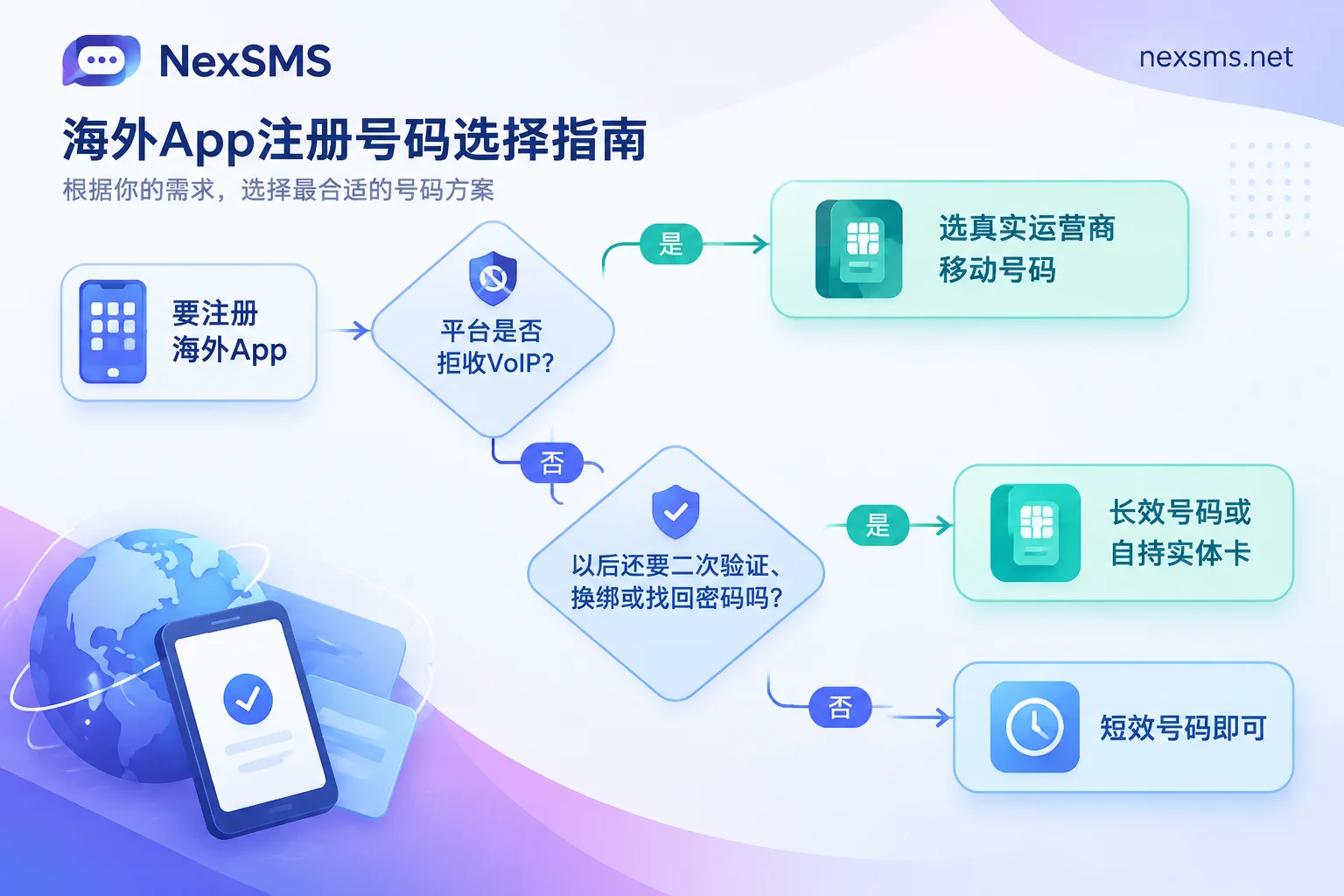
Scenario-by-scenario comparison
| Your situation | Recommended number | Reason |
|---|---|---|
| Trying a new app, one-off registration trial | Short-term number | Low cost, disposable |
| Development testing, repeatedly getting and receiving codes | Short-term number with API | Pay-per-use, suitable for batch testing flows |
| Platform explicitly rejects VoIP (e.g., ChatGPT, WhatsApp) | Real carrier mobile number | Line type must be Mobile |
| Primary account, 2FA enabled, long-term maintenance needed | Long-term number or your own physical SIM | You'll need to receive codes on the same number later |
Two ways to get a "physical SIM"
Get a local SIM card yourself. The number is entirely in your hands, but it usually requires being in the country or having a reliable channel to buy it, and you must top up to keep the number active according to carrier rules; when you're in China, relying on roaming to receive SMS may incur fees and may be unreliable.
Use a cloud-based long-term local number. When you don't want to maintain a card yourself, this is a more convenient choice. NexSMS's long-term premium numbers are real carrier local numbers (physical SIM and eSIM), not virtual landing numbers; verification codes are displayed in real time on the web page, and you can receive unlimited codes within the validity period, so subsequent login verification and password recovery can also be received. Note that the number must be renewed before expiry to continue holding it; after expiry the number no longer belongs to you, and you won't receive future verification codes. The difference between short-term and long-term and the renewal conditions can be seen clearly on the Feature Description page. For a detailed comparison of several long-term options, see How to Choose a Long-Term Overseas Number Rental.
Whichever you choose, having the right number type only satisfies the prerequisite. Whether you can pass a given platform's verification is ultimately determined by the platform's rules at that time.
When you can't receive the code, first identify which layer is stuck
- The page directly says the number is unsupported or invalid: It's most likely the line type is rejected; retrying with a different network is meaningless—switch to a mobile-line number.
- The page shows it was sent, but it doesn't arrive: This may be SMS routing, platform rate limiting, or the number being restricted by the platform. You need to troubleshoot layer by layer; see What to Do When Cross-Border SMS Verification Codes Don't Arrive.
Next step
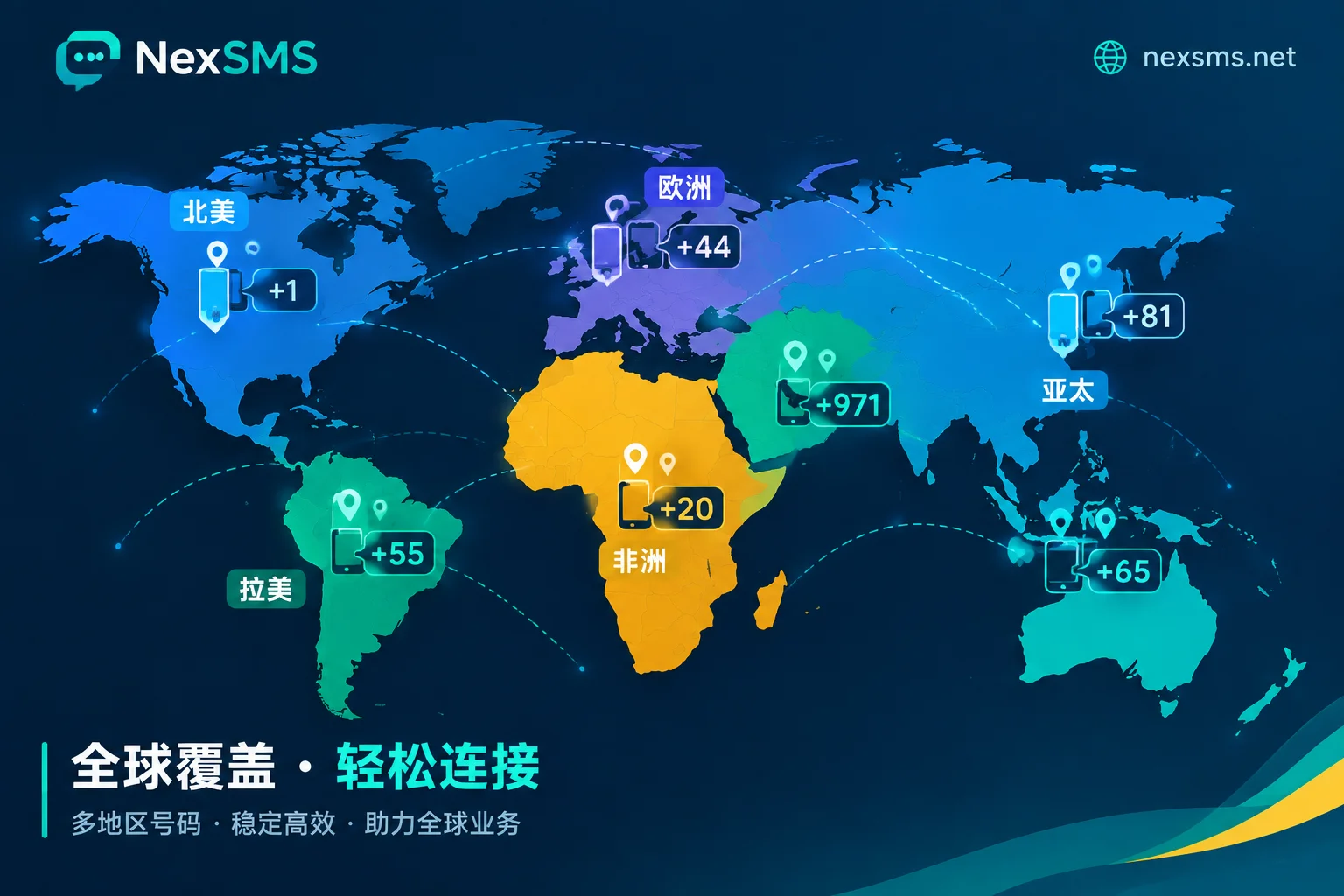
Once you've determined the number type, choose the country and number based on the target platform. Different apps have different requirements for receiving codes; you can first find the platform you want to register for in View SMS Receiving Instructions by App, then decide whether to use a short-term or long-term number.
The above advice is only for registration and verification of your own legal accounts. It does not apply to bypassing real-name or KYC requirements, bulk registration, or receiving verification codes on behalf of others.


Comments(0)