 NexSms官方博客
To bind a stable overseas phone number to OpenAI, Claude, Telegram, or PayPal, many cross-border professionals and individual users in earlier years chose "self-held overseas physical retention cards"—buying a foreign SIM card with zero or low monthly fees (or an eSIM written to an external tool card), enabling roaming or Wi-Fi Calling, and keeping it in a drawer specifically to receive verification codes.
But by the second half of 2026, this once hassle-free "card maintenance" route has repeatedly run into tightening carrier rules. If you are currently holding several overseas retention cards, or are about to get one, take a look at the recent industry changes before deciding how to allocate your number assets.
I. Three Major Changes to Overseas Retention Cards in 2026: Why Is Maintaining Your Own Card Getting Harder?
In the past, people tended to buy physical cards from overseas mainly because Google Voice frequently reclaims numbers, and VoIP virtual numbers like TextNow struggle to pass verification. However, by 2026, overseas local carriers have clearly stepped up their cleanup of "non-locally resident users":
1. UK Giffgaff Purges "Long-Term Overseas Roaming" Numbers
For a long time, Giffgaff, under the UK carrier O2, was known as a go-to card for overseas SMS receiving thanks to "zero monthly fee, send one text every six months to keep the number." But in late July 2026, a large number of domestic cardholders received official purge notices. The official criteria were very direct: the service is mainly aimed at UK residents, and long-term connection to roaming base stations outside the UK with no local activity records violates the terms of service. A large batch of numbers that had not promptly requested a PAC code for porting were directly terminated, and the prepaid balances in the associated accounts were also caught up in cumbersome cross-border appeals.
2. US Tello and Ultra Mobile Activation Order Cancellations and Risk-Control Suspensions
The US card camp is no better off. Since 2026, Ultra Mobile PayGo, known for its $3 monthly fee, and Tello eSIM, at $5 per month, have become increasingly strict about overseas orders and activations. Many users buying Tello encounter "every order gets cancelled" due to billing address, payment card issuing bank, or network environment issues; even if activation barely succeeds and Wi-Fi Calling is enabled, once the phone device is changed or the signal re-registers due to network fluctuations, it can easily trigger a suspension without warning. Moreover, many domestic Android models themselves do not support overseas carriers' Wi-Fi Calling protocols, making hardware compatibility another threshold.
3. Overseas Stored-Value Cards Restrict Remote Activation
Besides European and American cards, stored-value cards in some Asian regions are also tightening activation conditions. For example, starting in mid-June 2026, all China Mobile Hong Kong stored-value cards and global data cards stopped direct activation in mainland China, requiring connection to a local base station signal in Hong Kong or overseas before they can be enabled.
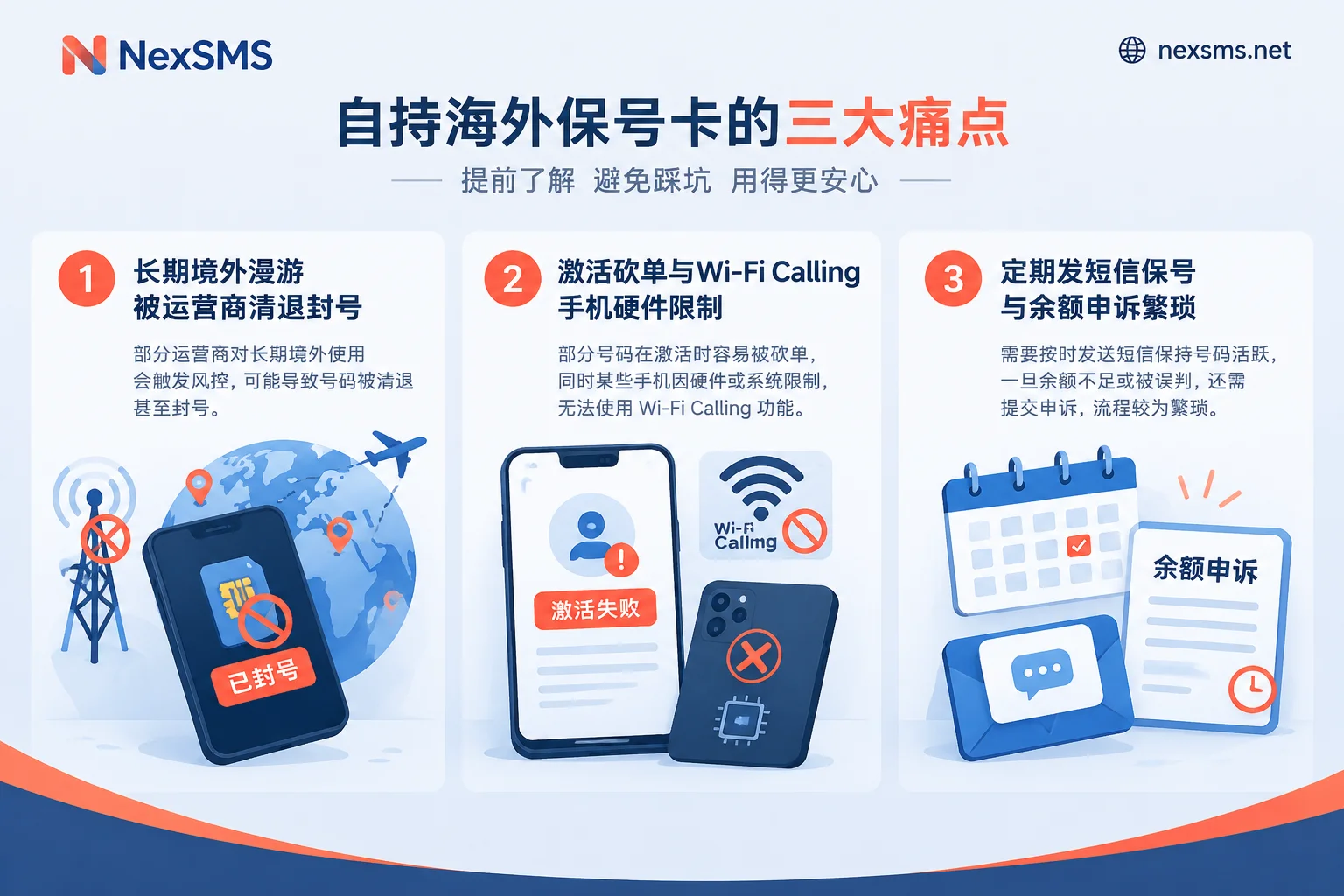
These events point to the same fact: overseas carriers are no longer willing to keep paying for overseas roaming users who "only occupy number segment resources and generate no high local communication spending." Buying cards from overseas, getting a card reader to write eSIMs, and setting alarms to send SMS to keep numbers alive not only carry extremely high hidden time costs, but also require constant vigilance against carriers changing roaming terms.
II. What to Do If Your Retention Card Suddenly Stops Service or Is on the Verge of Being Banned?
If you find that your overseas phone card signal has disappeared or the account balance shows unavailable (such as Giffgaff's Not Available), please stop the loss urgently in the following order:
- While you can still send/receive SMS or log in to the backend, prioritize rebinding core assets: If the card still has a few days of buffer, or the corresponding overseas account is currently logged in on a commonly used device, immediately prepare a new number that can reliably receive codes in the future and replace the old number in the account security settings. For example, when handling an Apple ID, you can refer to the two-factor authentication number change steps of adding the new number first and then deleting the old one.
- Distinguish "complete suspension" from "roaming blocking": If the number status is normal but you simply cannot receive codes, you can first read the troubleshooting methods for frequently not receiving verification codes; if it is confirmed that the card has been deactivated by the carrier and cannot be ported, you need to go through the recovery process using the remaining backup email, passkeys, or trusted devices (for example, the recovery path after the number bound to an Apple ID is deactivated).
- Never rely on a single point for main business accounts: Even if the account has already bound an authenticator app, the platform may still force SMS re-verification when encountering logins from unusual locations or large transactions (see the fallback role of real numbers in risk-control re-verification).
III. Skip the Hardware and Roaming Hassles: How to Configure Overseas Phone Numbers on Demand?
Since self-held overseas physical cards face roaming purges, hardware limitations, and cumbersome retention rules, a more worry-free approach is to shift from "maintaining cards with hardware" to "using numbers on demand via the web."
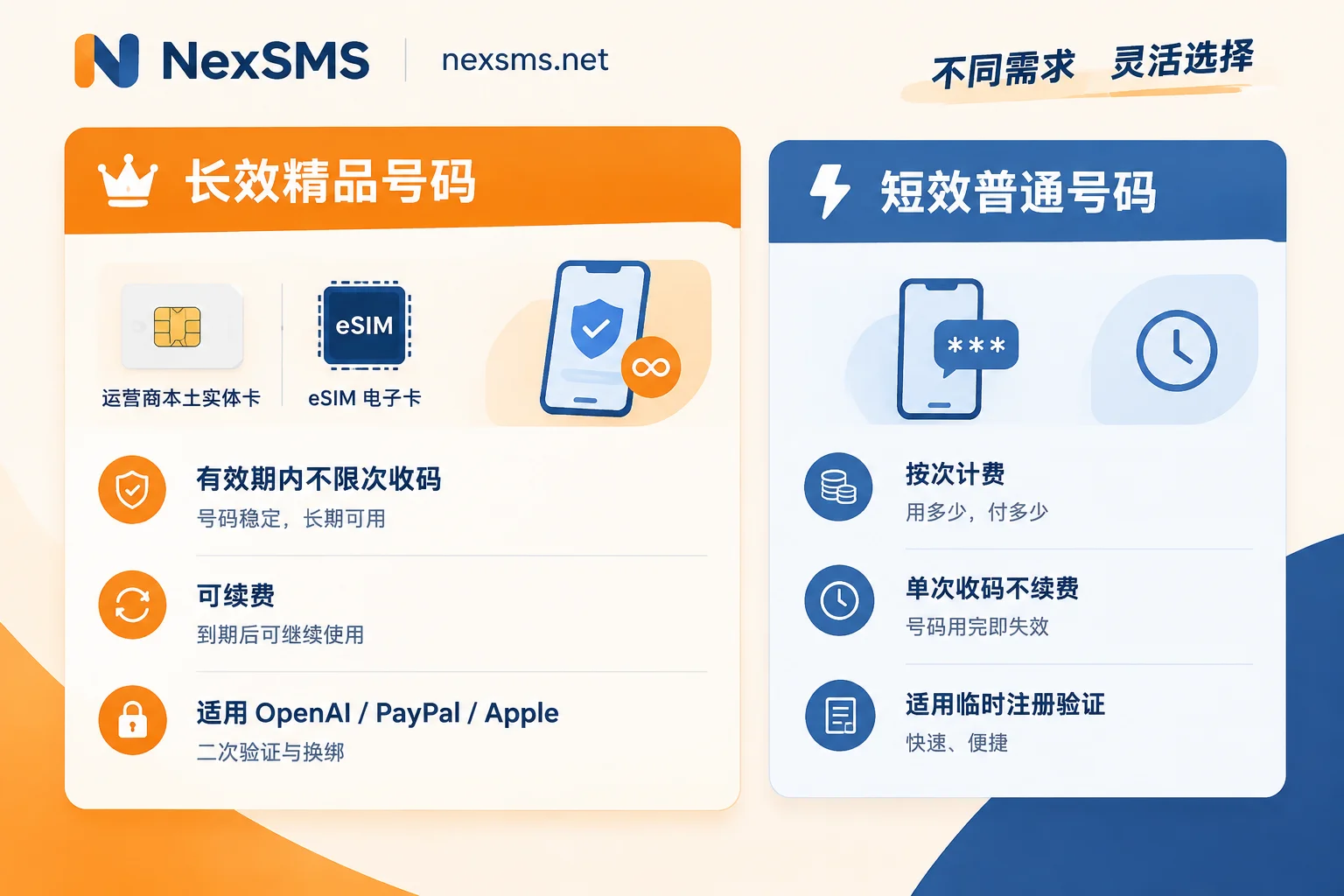
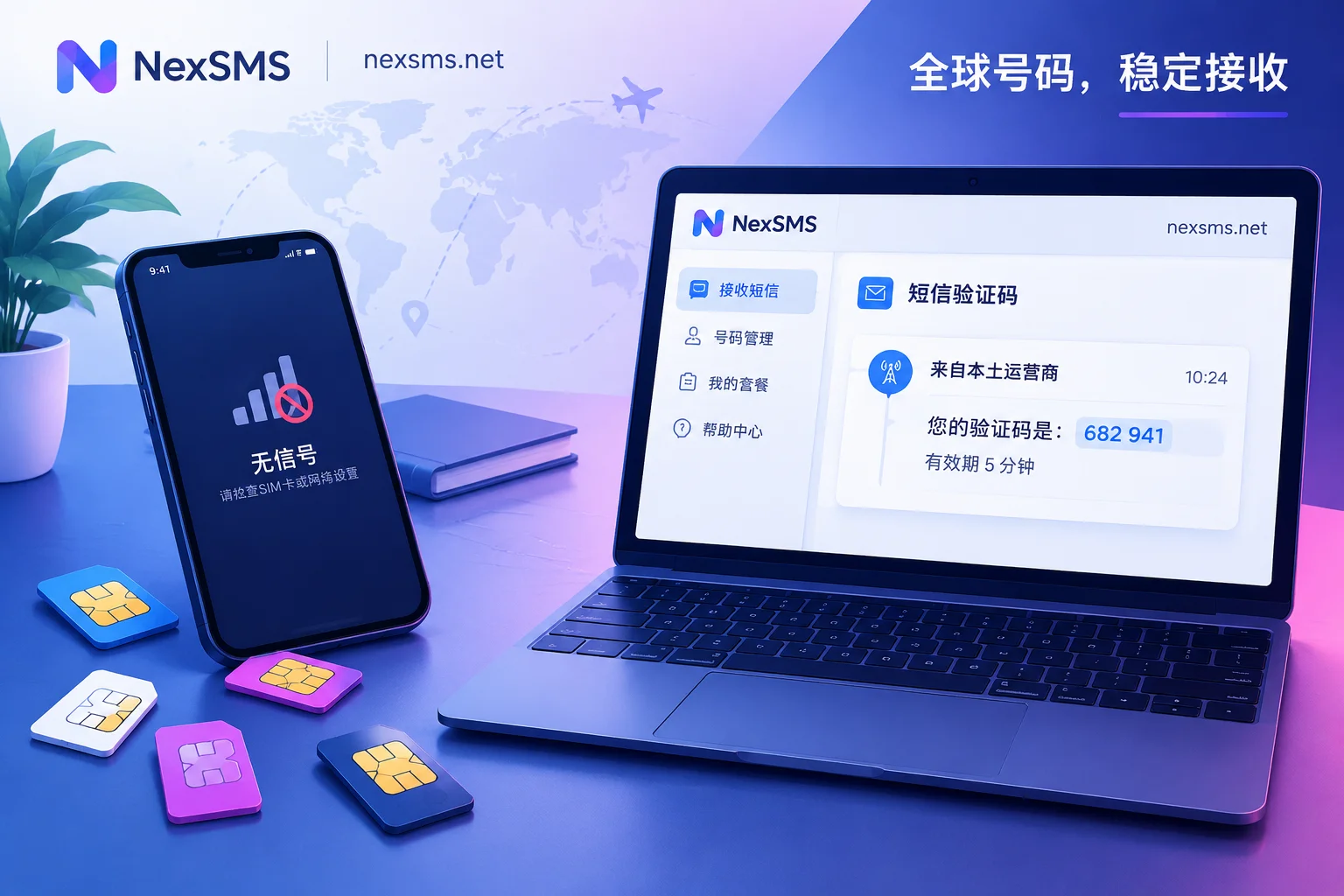
On the NexSMS SMS receiving platform, you do not need to mail plastic cards across borders, nor do you need to research whether your phone supports Wi-Fi Calling—all SMS verification codes are displayed in real time on the web. Although long-term rental of overseas numbers has multiple routes such as self-held SIMs and cloud long-term numbers, given the platform risk controls and carrier policies in 2026, splitting numbers into "long-term" and "short-term" categories according to account importance is a more cost-effective combination:
1. Core Accounts and Rebinding Fallback: Use Long-Term Premium Numbers Instead of Self-Held Retention Cards
For accounts such as OpenAI, Claude, Apple, Google, PayPal, Amazon, Telegram, and WhatsApp that need long-term maintenance or may trigger secondary verification at any time, the biggest fear is virtual numbers being rejected or cards being suspended midway.
- Real carrier local lines: NexSMS's long-term premium numbers use real carrier local numbers (based on local physical SIMs and eSIMs, not virtual landing numbers). The number attributes are clean and can avoid interception of VoIP virtual number segments by major platforms.
- No triggering of overseas roaming purges: Because these cards themselves are deployed in overseas local network environments, there is no violation of "long-term roaming outside the home location," and you do not need to fiddle with external card writers or proxy configurations on your own phone.
- Unlimited SMS receiving and flexible renewal: During the validity period, the same long-term number can receive SMS verification codes an unlimited number of times, suitable for secondary verification, account recovery, or multi-platform binding; manually renewing before expiration lets you continue to hold it, saving the trouble of counting days and sending SMS to keep the number alive.
2. Temporary Testing and One-Time Registration: Use Short-Term Regular Numbers as You Go
If you only need to temporarily register for a new overseas app or try out a service, there is absolutely no need to buy a dedicated overseas phone card.
- Pay-per-use, controllable cost: NexSMS's short-term regular numbers are billed per use with a short validity period; one number receives only one verification code and is done after use.
- Note the usage boundaries: Keep in mind that short-term regular numbers cannot be renewed, nor can the same number be used to receive codes again. Therefore, they are only suitable for one-time registration and temporary verification—never bind them to main accounts that may later need SMS unblocking or password recovery.
- Public numbers available for non-sensitive testing: If it is a pure testing scenario with no privacy requirements, you can also log in and view several US free public numbers provided on the official website, but verification codes received by public numbers are visible to everyone—never use them for important accounts.
3. Transparent Number Selection by App and Country, Directly Reusable by Teams and Developers
Different platforms' risk-control preferences for number segments from different countries change at any time, so blindly stockpiling physical cards from a single country can easily miss the mark.
- Check applicable services and inventory before ordering: Before placing an order on NexSMS, you can first visit SMS receiving instructions by app (covering common platforms such as OpenAI, Claude, X/Twitter, TikTok, Instagram, Facebook, eBay, Doubao, Xiaohongshu) to learn the verification steps and FAQs, or confirm the current starting price and number of available numbers through the number selection by country page (such as the US SMS receiving page) and the price and inventory query page.
- Multi-person collaboration and automated integration: If you are a team maintaining multiple overseas accounts, viewing codes centrally through the web is far more efficient than passing around several spare phones stuffed with overseas cards in the office (see the layered phone number and renewal management method for multiple accounts). If you are a developer who needs to write the number retrieval and SMS receiving process into a program, NexSMS also supports API parallel SMS receiving; for integration, you can directly contact the 24/7 online Telegram customer service.
Tip: Whether any SMS receiving method can pass verification ultimately depends on the target platform's risk-control rules at that time. Because number inventory, prices, and the specific validity days of short-term and long-term numbers are adjusted dynamically with the market, please refer to the real-time information displayed on the official website when placing an order after logging in to the NexSMS workspace. The platform supports recharge via Alipay, WeChat, and cryptocurrency (USDT/BTC), and account balances do not expire.
IV. Conclusion
From the failure of early free virtual numbers to the frequent tightening of roaming and activation rules for popular overseas retention cards such as Giffgaff and Tello in 2026, the threshold for individuals to maintain physical SIM cards across borders has become increasingly high. Rather than spending energy haggling with overseas carrier customer service, calculating retention cycles, and researching hardware hacks, it is better to hand core accounts over to real carrier local long-term numbers that can receive codes in real time on the web, and leave temporary needs to short-term numbers billed per use—letting overseas phone numbers return to being just a tool.


Comments(0)