 NexSms官方博客
Yes, they can be used directly—but only if you choose the right type of product. Many people in mainland China searching for "overseas virtual numbers" confuse "online SMS receiving websites," "VoIP cloud phone apps," and "overseas eSIM / physical number-retention cards," only to get stuck at identity verification, a phone that doesn't support eSIM, or not having an overseas credit card right after downloading or ordering.
If you only need to complete registration, change a linked number, or receive SMS verification codes on overseas platforms, you can buy a number and receive codes directly on a website in mainland China—no need to switch to an eSIM-capable phone, no need to wait for a physical card to be mailed, and no need for an overseas passport or a Visa/Mastercard bank card. But if you need a business number that can receive incoming calls and proactively send SMS to overseas clients, you'll have to clear completely different barriers and costs.
What Are the 4 Most Common Barriers to Getting Overseas Virtual Numbers in Mainland China?
Based on the actual usage environment in 2026, when mainland users look for overseas numbers, the real blockers are usually not price but the following four hard barriers:
- Overseas ID verification (KYC) barrier
More and more overseas communication tools and carriers have tightened account review. For example, after completing a number application, the personal version of Google Voice may trigger an identity review process requiring a name, local address, and overseas photo ID; a mainland Chinese ID card or domestic documents usually cannot pass. Some overseas app virtual number services also require a passport plus a selfie for verification. - Network region and original number verification barrier
Services like TextNow and Google Voice are designed for local users in the US or Canada; they check the IP and environment of your region during registration and often require binding an existing real US number to receive the first verification SMS during activation. - Phone hardware and roaming activation barrier
If you directly buy a prepaid eSIM or physical number-retention card from an overseas carrier, you need to confirm whether your device is unlocked and supports writing overseas eSIMs (some mainland China models do not support eSIM), or wait for the physical card to be delivered to China. After activation, you also have to rely on Wi-Fi calling or international roaming to maintain reception; once the service is suspended beyond the deadline, the number will be deactivated. - Foreign currency payment and long-term renewal barrier
Most overseas subscription-based cloud phone services charge monthly or annually and require binding a foreign currency credit card, PayPal, or an overseas app store account—very unfriendly to individual mainland users who lack overseas payment tools.
Comparison Table: Barriers and Capabilities of 4 Types of "Overseas Virtual Numbers"
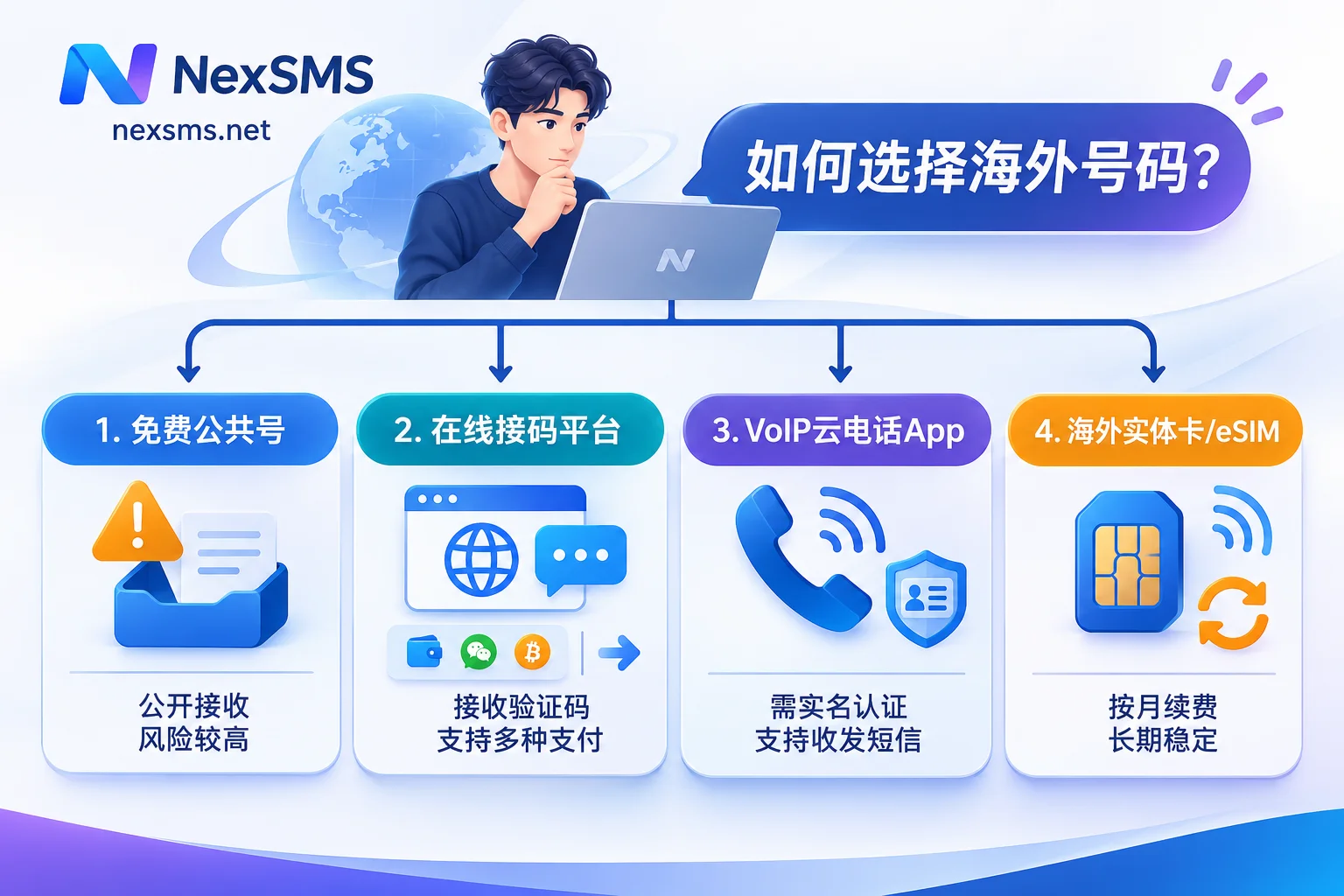
Although all called "overseas virtual numbers," the four common solutions differ greatly in applicable scope and prerequisites. Use the table below to determine which type you belong to:
| Solution Type | No overseas KYC or foreign card needed in China | No eSIM phone or physical card needed | Can receive verification codes | Can make/receive calls or proactively send SMS | Suitable scenarios and main limitations |
|---|---|---|---|---|---|
| Free public SMS receiving websites | Yes | Yes | Only some low-risk websites | No | Only for temporary testing; SMS are publicly visible, easily rejected by platforms or stolen by others |
| Online SMS receiving platforms (short-term/long-term numbers) | Yes (often support Alipay/WeChat/USDT) | Yes (real-time SMS on web or API) | Supported; real carrier number segments have higher pass rates | No (only one-way verification SMS) | Suitable for cross-border registration, two-factor authentication, and multi-account isolation; not for voice calls or outbound SMS |
| VoIP cloud phone apps (e.g., Google Voice / TextNow / subscription cloud numbers) | Mostly no (often require local IP, overseas KYC, or foreign card) | Yes (send/receive in app) | Depends on risk control; VoIP number segments are often blocked by mainstream platforms | Yes (two-way SMS and voice) | Suitable for daily communication and US local contacts; high registration and number-retention requirements, OTP easily rejected by risk control |
| Self-owned overseas physical card / carrier eSIM | Depends on country and carrier | No (requires physical SIM slot or compatible unlocked eSIM phone) | Supported (real mobile number segments have high weight) | Yes (billed by plan) | Suitable for binding high-value personal assets or banks; card purchase, activation, and monthly retention costs are high |
If you're not sure why "real mobile number segments" and "VoIP number segments" differ so much when receiving verification codes, or want to know how eSIMs and online virtual numbers divide work in business structures, see these two breakdowns: What's the difference between real carrier local numbers and virtual landing numbers and eSIM vs. virtual number: separating the data layer and identity verification layer.
What Can You Do After Buying? Clarify Two Functional Boundaries
When mainland users buy overseas virtual numbers, the most common mistake is "spending money on the wrong tool," rooted in confusing two different things:
1. "SMS receiving platforms" usually cannot send SMS or make/receive calls
The core capability of most online SMS receiving platforms is one-way reception of verification SMS (OTP). The platform shows numbers connected to its gateway; after the target website sends a verification SMS, the web page or API displays the content within seconds to tens of seconds.
If you want to use the number as a customer service line for your independent site, proactively send marketing or after-sales SMS to overseas buyers, or receive calls and call back, online SMS receiving platforms are not suitable. Such needs require enterprise cloud phone services or carrier plans that support outbound SMS and voice routing.
2. "VoIP numbers that can make calls" may not pass platform registration verification
Many users go through great trouble to get a US internet phone app, find that sending SMS to friends works perfectly, but as soon as they enter the number into OpenAI, WhatsApp, Claude, or Google registration forms, they immediately get a message that the number is not supported or receive no SMS at all.
The reason is that mainstream overseas platforms query the line type of the number before sending a verification code. VoIP virtual number segments, due to long-term abuse for bulk registrations, are often directly blocked in risk control databases. For common limitations of Google Voice and TextNow during verification, see Google Voice frequent bans and recycling, TextNow hard to pass verification: how to choose.
How to Buy and Use in Mainland China with Least Hassle? Direct Implementation by Scenario
After clarifying the barriers and boundaries above, the actual ordering path for mainland users becomes very clear:
Scenario 1: You only need to receive verification codes from overseas platforms on a web page/app in mainland China
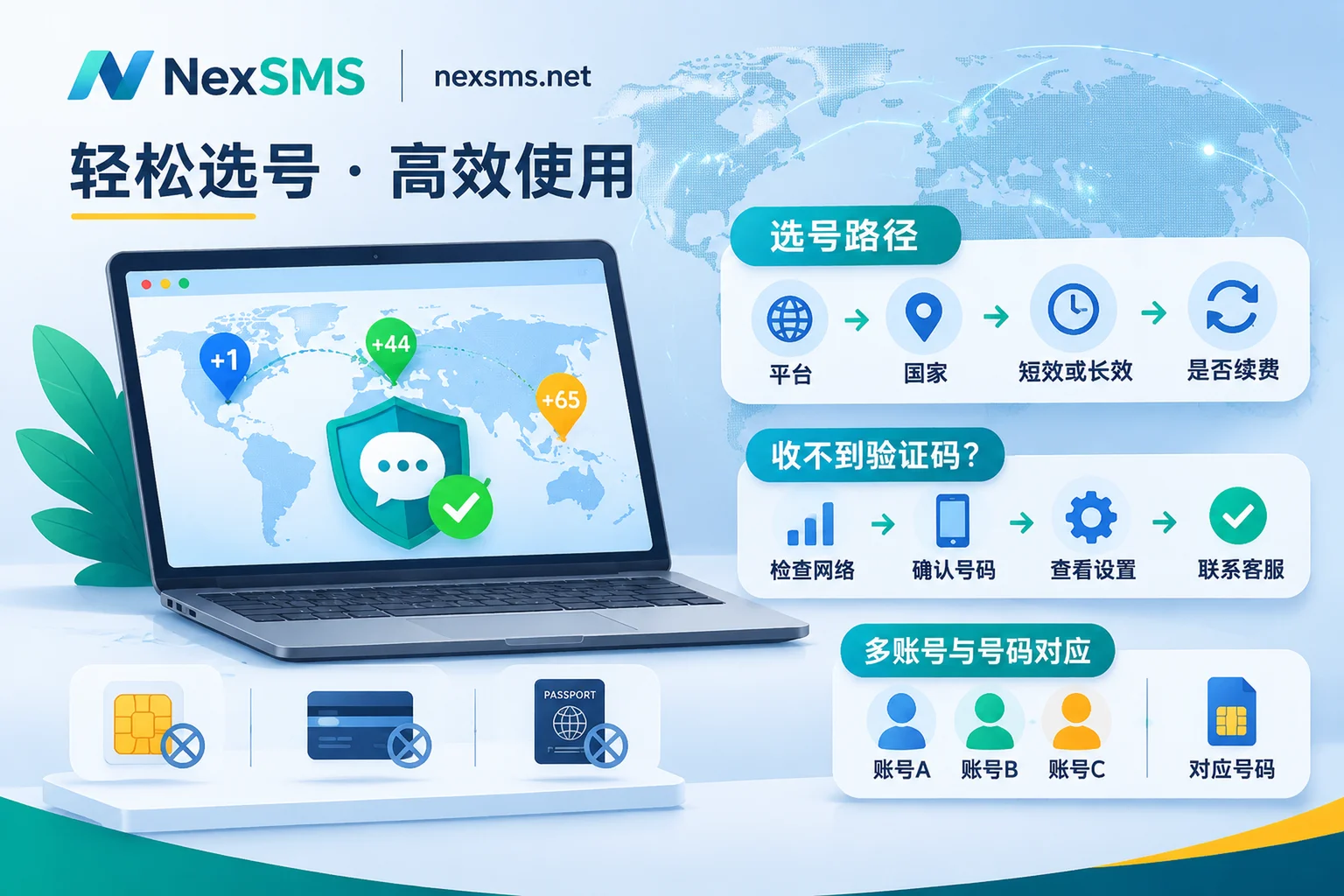
If your core need is to register overseas tools, social media, or e-commerce accounts, and you don't want to deal with overseas identity verification, unlocked eSIM phones, or foreign credit cards, you can directly choose an overseas virtual number service that receives codes in real time on a web page, such as NexSMS.
On NexSMS, the entire process is completed in a browser—no card mailing or insertion required. Account top-ups directly support Alipay, WeChat, and cryptocurrency (USDT/BTC), and account balances do not expire:
- One-time registration or temporary testing: On the per-app pricing page or country SMS receiving page, filter by target app and country and use short-term standard numbers. Billed per use at low cost, but a number receives one code only, expires after use, and cannot be renewed.
- Need two-factor authentication, login on a new device, or long-term binding: Choose long-term premium numbers. These numbers come from real carrier local physical cards and eSIMs (not virtual landing numbers that are easily rejected). Within the validity period, the same number can receive verification codes unlimited times; renew before expiry to keep it—no need to maintain a physical retention card yourself. (For selection details, see: How to choose between short-term numbers and long-term premium numbers)
- Developers running automated workflows: NexSMS supports integrating number acquisition and SMS receiving into programs, in parallel with real-time web viewing. Get API access via Telegram 24/7 support.
- Check the page flow first: The app SMS receiving guide lets you check verification notes for specific platforms (e.g., OpenAI, Telegram, Amazon). The official site also offers a few US free public numbers (log in to view SMS, visible to everyone—never use for important accounts).
Also clarify product boundaries before use: NexSMS only provides online SMS verification code receiving services; it does not provide voice calls or proactive SMS sending. Whether any platform verification succeeds depends on its risk control rules at the time; 100% pass is not guaranteed. Specific prices, available countries, validity days, and refund rules are subject to real-time display on the official console and each page.
Scenario 2: You must receive overseas voice calls or maintain long-term two-way communication
If you need an overseas customer service hotline displayed on your website long-term, the ability to exchange SMS with clients, or a local number as a long-term fallback for bank account opening and high-value personal main accounts, consider directly:
- A paid overseas cloud phone service that supports lawful KYC (confirm in advance whether it explicitly supports receiving OTP from banks or target apps);
- An overseas physical prepaid card obtained through proper channels and self-owned, or a carrier eSIM on a compatible device, and include the fixed monthly retention fee in your long-term budget.
Final Check Before Ordering: 4 Things
No matter which solution you ultimately choose, spend a minute before payment to confirm the following four items to avoid most rework:
- Confirm whether the target platform accepts VoIP: For AI tools, mainstream social apps, and e-commerce seller accounts, prioritize number segments marked as real carrier (Non-VoIP / Mobile); don't repeatedly try free internet phone numbers.
- Confirm whether you'll need a second code later: If the account may log in on a new device, change password, or appeal, don't use a one-time number that cannot be renewed.
- Confirm your payment and renewal path: Prioritize channels that support your common payment methods and can reliably renew in advance, avoiding number recycling by the carrier due to renewal failure.
- Completely isolate free public numbers from important accounts: Any free number that anyone can grab without logging in and whose inbox is publicly visible is essentially a "public message board"; anyone may recover and take over your account via verification codes.