 NexSms官方博客
In digital operations and cross-border business expansion, phone numbers have become a core anchor for user identity. However, directly exposing personal primary numbers not only faces high risks of spam messages and data breaches but may also lead to serious account security issues due to primary number theft. As global telecom regulators intensify governance over voice and SMS channels, using virtual numbers to establish a compliant and efficient business isolation layer has become a common practice for cross-border operations teams and privacy-conscious individuals.
Faced with diverse digital number resources on the market and increasingly strict platform risk controls, how can one accurately understand industry regulatory trends and choose a virtual number solution that matches their business scenario? This article combines the latest international telecom regulatory updates to analyze virtual number security selection and practical strategies.
2026 Telecom Regulatory Trends: VoIP and Virtual Number Compliance Directions
In recent years, global telecom regulators have been introducing stricter technical and management norms targeting telecom fraud, spam messages, and illegal automated bulk sending:
- FCC Strengthens KYC for Originating Service Providers: The U.S. Federal Communications Commission (FCC) proposed enhanced "Know Your Customer" (KYC) rules for voice and VoIP service providers in May 2026, requiring providers to collect and verify users' true identity attributes and legitimate usage intent before assigning numbers and providing communication access, severely cracking down on identity forgery and fraud through anonymous VoIP numbers.
- NIST and Security Agencies Redefine SMS OTP Risks: The National Institute of Standards and Technology (NIST), in its SP 800-63B specification, classified SMS one-time passwords (SMS OTP) over the public switched telephone network (PSTN) as a "Restricted Authenticator." Cybersecurity agencies generally remind that traditional single primary number SMS verification is susceptible to SIM swapping and man-in-the-middle proxy attacks. Therefore, isolating two-step verification of core assets from daily registration verification numbers has become a necessary measure for businesses and individuals to defend against risks.
- App Platform Review and Risk Control Upgrades: Some mainstream applications and financial platforms detect number types in real-time using CNAM (Caller ID Name) and HLR (Home Location Register) databases. For purely software-generated fixed VoIP numbers, certain high-security platforms enforce stricter risk control policies. This requires business teams to clearly distinguish between short-term verification and long-term binding needs when selecting numbers.
Short-term vs Long-term Numbers: Business Scenario Comparison
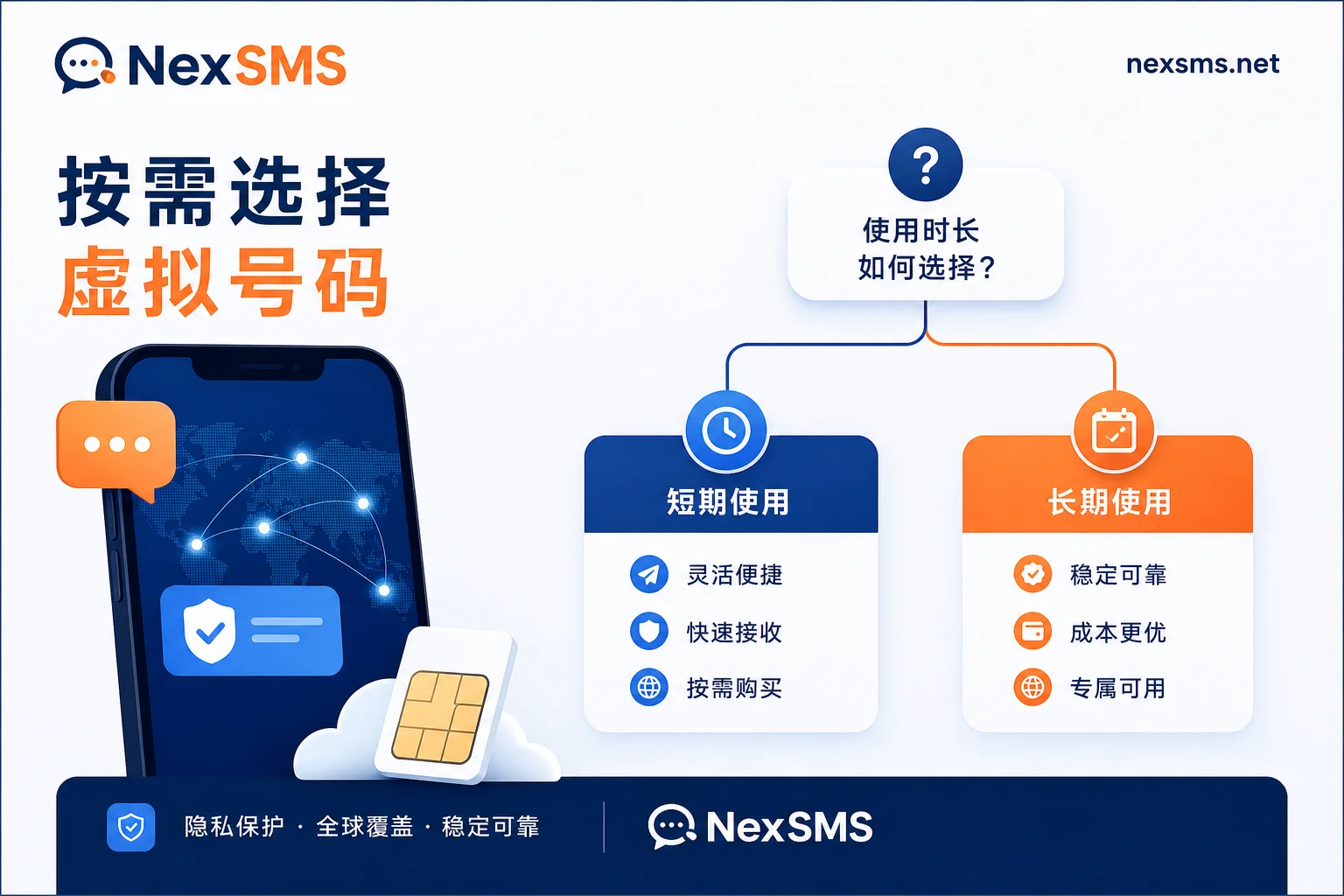
To balance privacy protection and harassment prevention while meeting various platform verification requirements, it is crucial to properly delineate the use cases for "short-term numbers" and "long-term numbers":
| Comparison Dimension | Short-term Virtual Number (SMS Activation) | Long-term Local Number (Rent / Dedicated) |
|---|---|---|
| Retention Duration | Per-use or short-term, released after use | Long-term holding, supports monthly/yearly renewal |
| Applicable Scenarios | One-time service trial, temporary account registration, event participation | Cross-border customer service, long-term business contacts, secondary identity verification |
| Privacy Isolation Level | Extremely high, completely eliminates subsequent harassment | Very high, effectively blocks exposure of personal primary number |
| Risk Control Adaptability | Suitable for quick verification, no renewal burden | Suitable for commercial accounts requiring continuous notifications and secondary verification |
| Cost Model | Charged per successful verification code reception | Charged by fixed periodic rent and usage volume |
Practical Steps for Business Number Isolation Based on NexSMS
For cross-border customer service, multi-platform account management, and personal privacy protection, follow these standardized steps to establish a secure and efficient number isolation system:
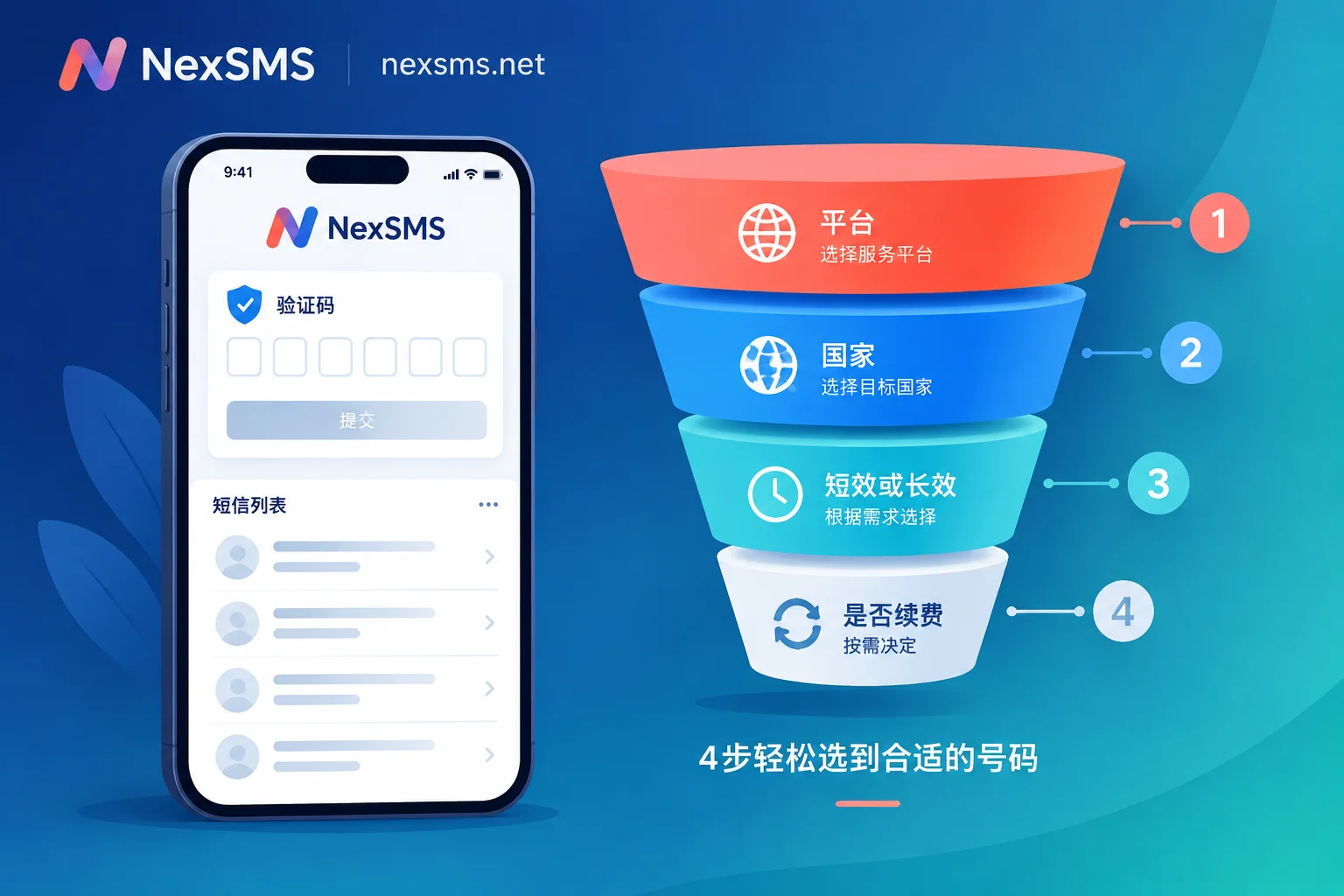
Step 1: Identify Business Verification Needs and Risk Levels
Before registering or verifying on a new platform, assess whether the business needs to receive notifications long-term. For test applications or low-risk forums, prioritize short-term numbers; for core business communications or cross-border stores, configure renewable long-term local numbers.
Step 2: Choose a Flexible Platform with Multi-country Coverage
Obtain number resources that meet the compliance requirements of the business location through a professional platform. For example, NexSMS, as a global virtual number and verification code reception platform, offers number selections covering multiple countries and platforms on its official website, allowing users to freely configure short-term numbers or renewable long-term local numbers based on specific business goals.
Step 3: Integrate Visual Interface or Automated API
For teams with batch operations or system integration needs, use the platform's developer API to incorporate verification code reception into internal workflows; for individual users, directly view verification codes in real-time via a web interface, achieving "receive and use instantly" without exposing primary number information to external databases.
Responding to Regulatory Trends: NexSMS Security Isolation Recommendations
Faced with an increasingly complex cybersecurity environment and escalating telecom regulatory requirements, relying on a single primary number for all online scenarios is no longer sustainable. While complying with platform terms of service and legal regulations, establishing a layered number isolation mechanism is an effective way to ensure digital identity security.
NexSMS, with its multi-country number support, convenient web-based SMS verification code reception, and flexible pay-as-you-go mechanism, provides a reliable communication isolation solution for individual users and cross-border operations teams. Whether for daily business privacy protection or cross-border customer service number configuration, users can rely on this platform for secure, transparent, and controllable number management.
If you are facing unstable verification code reception for overseas business or privacy leakage of primary numbers, visit the NexSMS official blog and service platform to learn more about virtual number selection and compliance usage, and experience a safer digital communication isolation service.


Comments(0)