 NexSms官方博客
In today's era of widespread digital identity authentication, SMS one-time passwords (SMS OTP) remain a primary verification method for many internet platforms and cross-border services. However, with the evolution of cyber attack techniques, over-reliance on primary phone numbers for receiving verification codes is facing unprecedented security and privacy challenges.
According to cybersecurity dynamics and regulatory trends, authoritative bodies including the National Institute of Standards and Technology (NIST) and the Cybersecurity and Infrastructure Security Agency (CISA) have repeatedly emphasized the flaws of traditional SMS verification in defending against targeted attacks; mainstream social and communication platforms are also continuously strengthening their identity verification systems. For cross-border operations teams and privacy-conscious individual users, understanding these security changes and establishing compliant number isolation mechanisms has become imperative.
2026 Communication and Verification Security Trends: NIST Restricts SMS OTP and Platform Protections Upgraded
Regulatory and Agency Warnings: From SIM Swapping to Man-in-the-Middle Proxy Attacks
In recent years, risks facing telecommunications operator networks have become increasingly complex. NIST, in its Digital Identity Guidelines (SP 800-63B Rev 4), has formally classified SMS OTP over the Public Switched Telephone Network (PSTN) as a "Restricted Authenticator." The core reasons are:
- SIM Swapping Attacks: Attackers use social engineering or illegal means to transfer the target's phone number to their own SIM card, thereby intercepting all SMS verification codes pushed to that number in real time.
- Adversary-in-the-Middle (AiTM) Attacks: Automated phishing tools can intercept credentials and verification codes in real time during user login, rendering traditional static two-factor authentication ineffective.
CISA and the FBI also explicitly recommend that accounts involving important financial, enterprise management, or core business operations should gradually transition to phishing-resistant MFA (such as Passkey, Hardware Key, or App-based dynamic tokens), with SMS used only as a backup method.
Platform Responses: Restructuring Verification Logic at the Application Level
Driven by regulatory pressure, major global applications are also restructuring their verification logic. For example, in July 2026, tech media reported that WhatsApp is rolling out an upgraded two-factor verification based on custom passwords in its Android beta, aiming to prevent attackers from completing account transfers using only intercepted 6-digit SMS registration codes. Additionally, the FCC's discussion on identity verification for voice and communication services (FCC 26-27) has increased market attention to the risks of personal information leakage and tracking after the primary number is exposed.
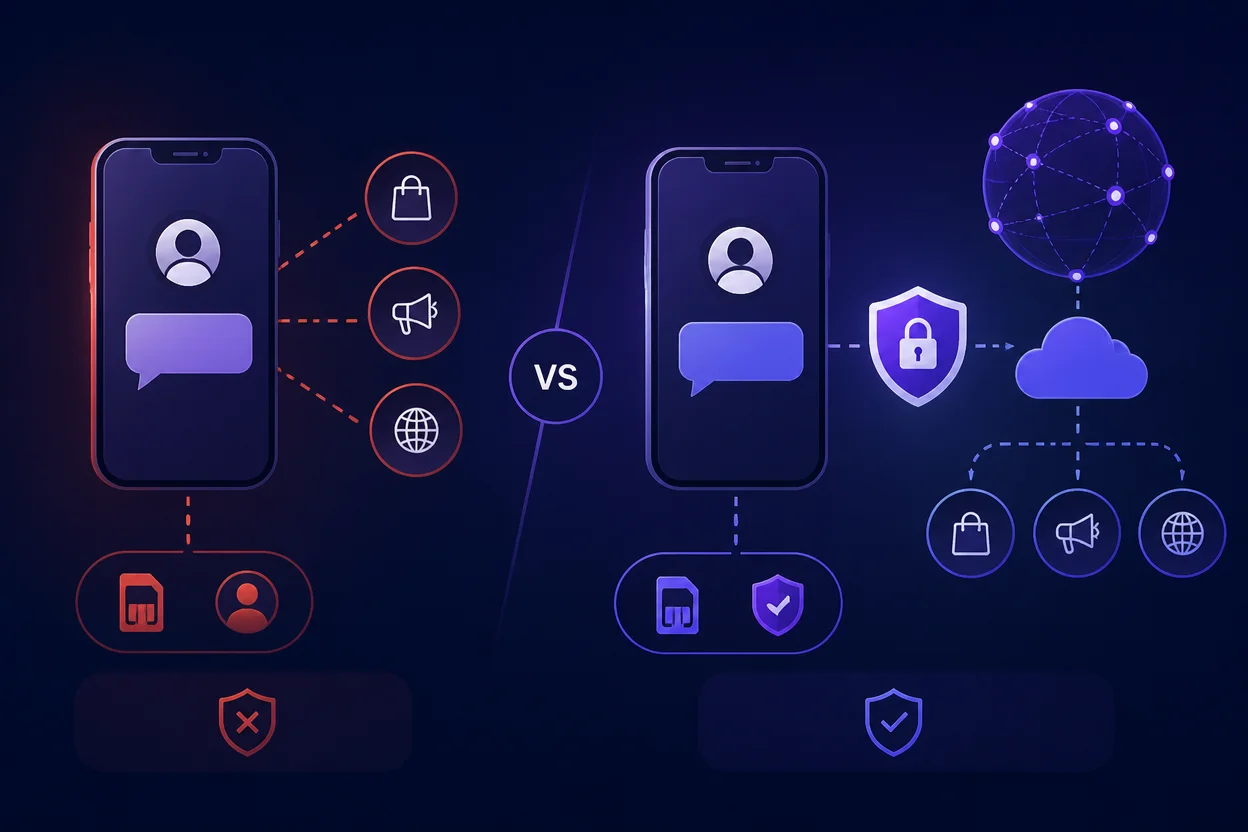
Isolating Personal and Business Numbers: How to Reduce Primary Number Exposure Risk
In real business scenarios, whether for cross-border e-commerce registration, social media operations, or market testing, frequently submitting personal primary phone numbers to third-party platforms not only invites spam SMS harassment but can also cause the number to become a "permanent label" linked to personal identity in data breaches.
To protect privacy while meeting compliance verification requirements, adopting a "number isolation" strategy has become an industry consensus:
- Separate Core Assets from High-Risk Accounts: Core accounts like personal bank and primary email use bound real physical SIM cards with strong MFA enabled; general business registrations, service tests, or cross-border contacts use independent virtual numbers or temporary segments.
- Choose Short-Term or Long-Term Numbers as Needed: One-time tests use short-lived numbers to avoid long-term binding; business accounts that need to continuously receive notifications or reset passwords use renewable long-term local numbers.
Building a Compliant Verification Code Reception Mechanism with NexSMS
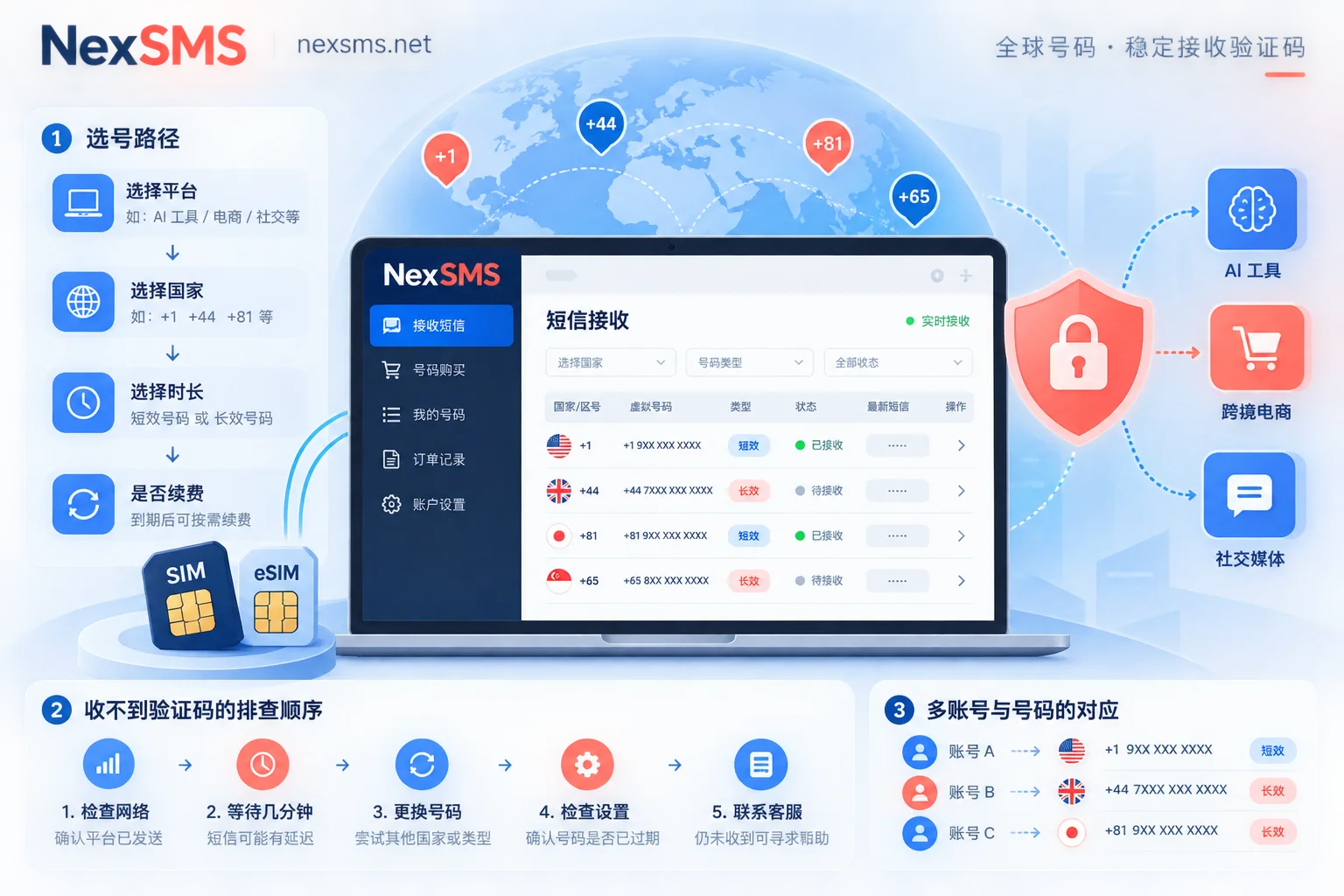
When addressing communication security and number isolation needs, choosing the right tools is crucial. NexSMS is a global virtual number and verification code reception platform. Its official website offers multi-country and multi-platform number selection, SMS verification code reception via web, short-term numbers, renewable long-term local numbers, developer API, and pay-as-you-go options.
While complying with platform terms of service and laws, users or operations teams can leverage NexSMS's multi-country and multi-platform number selection to establish a clear number isolation strategy:
- Flexible Multi-Country Number Configuration: Meets needs for compliant testing and customer verification across different regions in cross-border business.
- Complementary Short and Long-Term Mechanisms: Operations teams can flexibly choose short-term web-based code reception or long-term local numbers based on the business lifecycle.
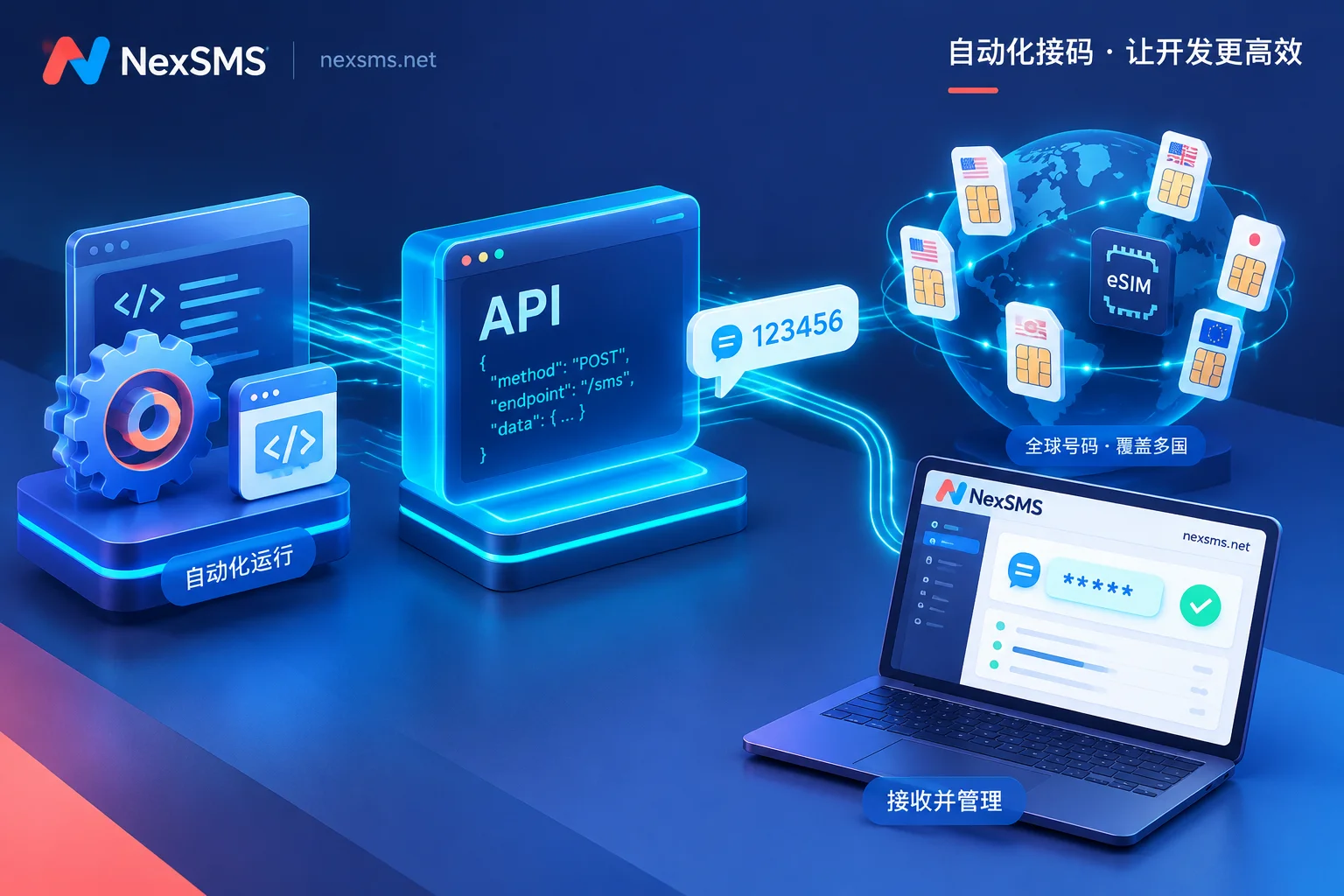
- Automated Workflow Integration: In compliant and authorized test scenarios, NexSMS's developer API and pay-as-you-go options effectively improve operation and verification efficiency.
It should be noted that any virtual number service must be used within the framework of legal authorization and third-party platform terms. The platform does not guarantee that any number will necessarily pass the risk control of a specific third-party system; users should plan protection solutions based on business risks.
Summary and Action Checklist
Given the current verification security environment, it is recommended that operations teams and users execute the following checklist:
- Comprehensively Review Numbers Bound to Accounts: Identify whether core applications rely excessively on primary number SMS verification.
- Upgrade Two-Factor Verification Mechanisms: Enable authenticator apps or Passkeys for core assets, downgrading SMS to a backup channel.
- Implement Number Isolation: For externally displayed, edge testing, and cross-border marketing services, use dedicated virtual numbers to isolate real identity.
- Choose Transparent and Secure Communication Platforms: Opt for service providers with clear reception interfaces and API support to ensure stable and reliable verification code acquisition.


Comments(0)