 NexSms官方博客
Conclusion First: Only Real Mobile Carrier Numbers Can Reliably Receive Bank 2FA Codes
The only type of virtual number that supports receiving bank 2FA codes is the real mobile carrier number (Non-VoIP/SIM-based). Before sending the short code, banks perform a Carrier Lookup to verify the line type. Requests identified as VoIP or Fixed VoIP are directly blocked or silently dropped, so the page shows "Sent" but the SMS never arrives, with no error message. Even if a short-lived shared number pool occasionally receives a code, it cannot handle subsequent retrievals.
The determining factor is the line type of the number, not the country or carrier brand.
Bank SMS Verification Code Not Received Without Any Notification: The Sending Side Is Blocked
"Not received without any notification" is completely different from common channel delays or carrier congestion. The former means the request is judged undeliverable at the sending side, so the bank page does not receive a failure receipt, and repeated resend attempts yield the same silent result.
Do not frequently resend or hastily change the number. First determine the line type of the current number, then take the next step. The reason why bank 2FA codes are not received is likely due to the number segment attribute.
Mechanism: What Does Carrier Lookup Check Before Bank Short Codes, and Why Can't VoIP Numbers Receive Bank Verification Codes
The Carrier Lookup interface uses HLR queries and number segment database comparisons to return the line type (Mobile, VoIP, Fixed VoIP, Landline) and carrier information. Financial short code policies only allow real mobile number segments, a long-standing risk control practice, not a temporary rule of a specific bank.
Therefore, expecting to bypass this verification by switching banks is unrealistic. The logic is common practice in the industry, independent of the bank.
Further reading: How to Choose Real SIM Card Numbers vs. VoIP Numbers for Business SMS Verification
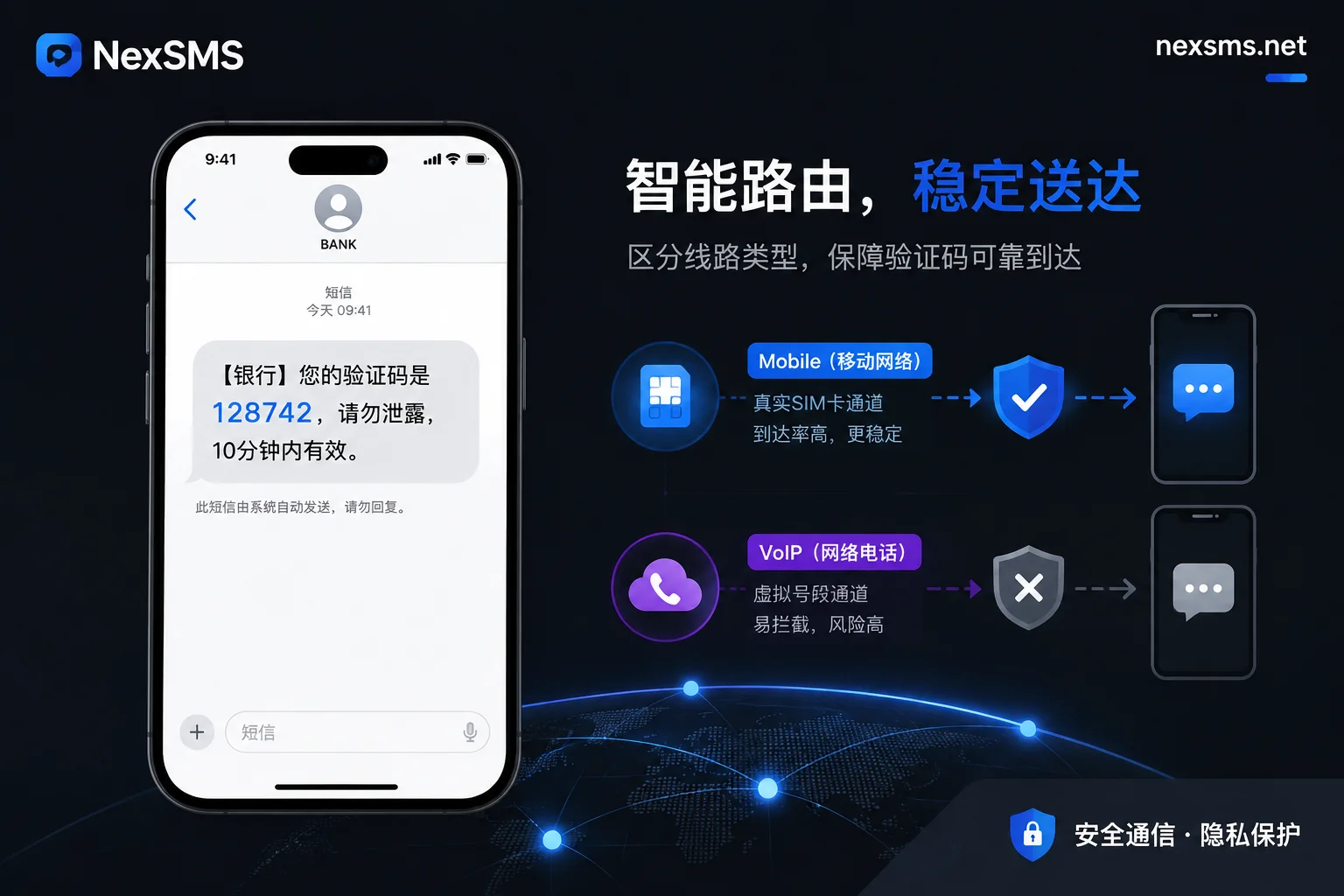
Three-Category Comparison: Real Mobile Carrier Numbers, Common VoIP Numbers, and Short-Lived Shared Number Pools
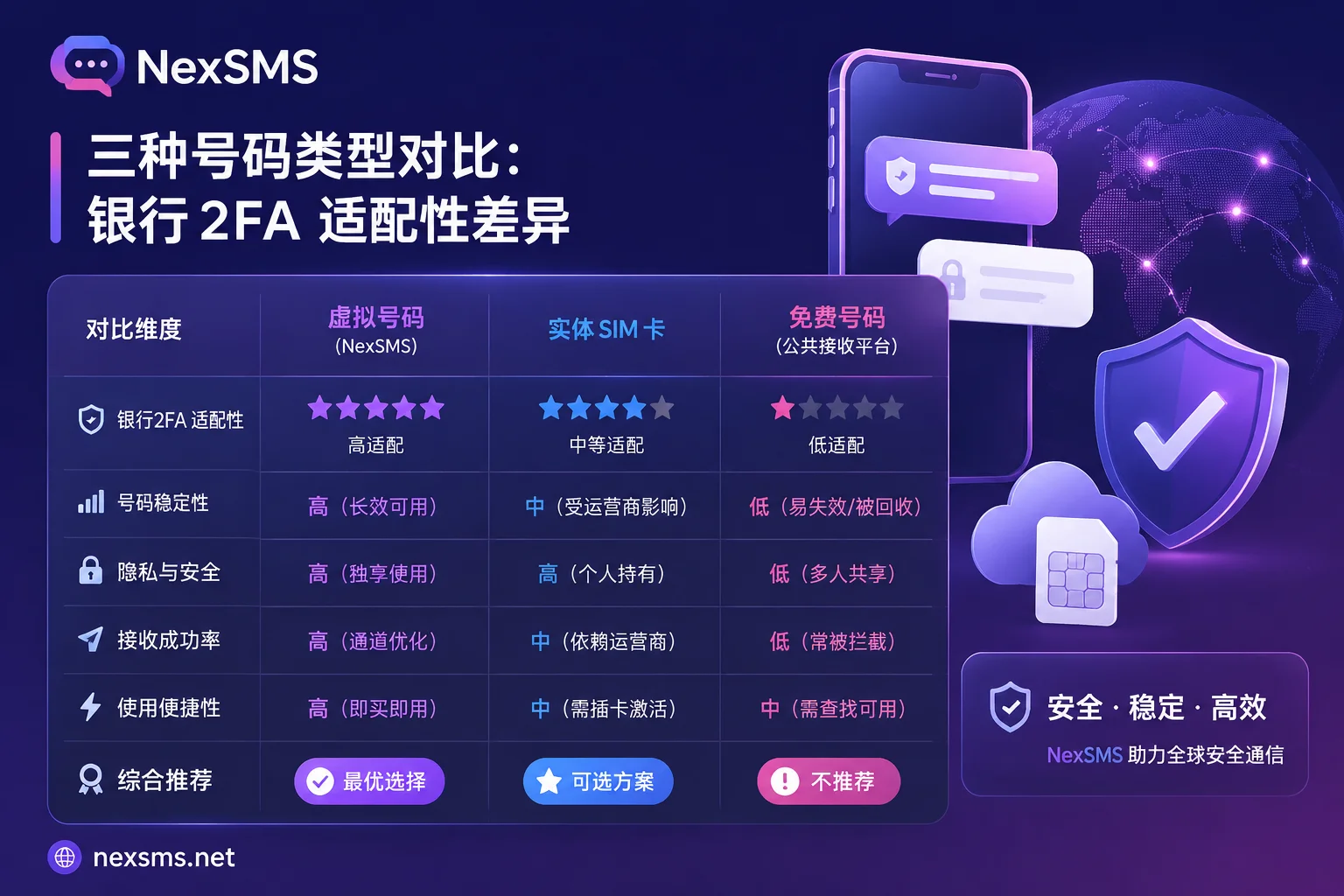
Below is a comparison of virtual number types that can receive bank 2FA codes across the three categories.
| Number Segment Type | Can Pass Bank Short Code | Can Receive Again | Can Be Held Long-Term | Suitable for Verification Positions |
|---|---|---|---|---|
| Real Mobile Carrier (Non-VoIP/SIM-based) | Yes | Yes | Yes | Bank 2FA, payment accounts, positions requiring long-term re-verification |
| Common VoIP Number | No (blocked at Lookup) | No | Yes (renewable) | Low-risk platform registration, one-time verification |
| Short-Lived Shared Number Pool | Usually no (even if number segment qualifies) | No | No (fast recycling) | One-time registration code reception, not suitable for account binding |
Common or fixed VoIP numbers fail at the initial binding because the short code channel recognizes them as non-mobile lines. Even if a short-lived shared number pool temporarily qualifies, subsequent re-verification fails due to number recycling and shared characteristics. For more on the holding periods of different number segments, refer to Difference Between Short-Term and Long-Term Numbers.
The Overlooked Second Threshold: Bank 2FA Requires Long-Term Number Availability
Bank 2FA is not a one-time event. Withdrawals, password changes, adding payees, remote logins, or new device logins trigger SMS verification again. Therefore, the phone number bound to a bank must be kept long-term and renewable.
Additionally, the stability of number control is subject to regulatory attention. FCC rules on SIM swapping and port-out fraud require carriers to perform strong identity verification before transferring numbers and send security notifications to the primary number user. This underscores that the security premise of SMS MFA is stable number control. When selecting a number, ensure you confirm the renewal method and number recovery path to avoid being unable to verify your account. Refer to SIM Swap Attack Protection for related risks.
Upstream Tightening: Impact of KYC Proposed Rules on Shared Number Sources
In May 2026, the FCC published a Notice of Proposed Rulemaking (FCC-26-27) to strengthen KYC requirements for voice and VoIP providers, requiring carriers to enhance customer identity verification, retention, and re-verification, with penalties based on call frequency. From June to July of the same year, attorneys general from all 50 states and the Bank Policy Institute (BPI) collectively submitted supportive comments.
Although this is in the proposed stage and not yet effective, the direction is clear: access to and retention of low-quality shared number sources will become increasingly restricted. For ordinary users, choosing numbers that can be verified with real identity and renewed long-term is safer.
Four-Point Checklist Before Purchasing
After confirming the virtual number types that can receive bank 2FA codes, verify the following four items:
- Check line type: Confirm it is a mobile number segment (Non-VoIP), not VoIP or Fixed VoIP.
- Check exclusivity: Confirm the number is exclusive and has no historical binding remnants.
- Check renewal method: Confirm the renewal cycle and maximum holding period.
- Check recovery path: Can the number be recovered or smoothly taken over if lost or expired?
Operationally, it is recommended to trigger a bank short code verification with a small amount or low-risk action first to test deliverability, then migrate the primary account 2FA. For the difference between exclusive and shared numbers, refer to Difference Between Exclusive and Shared Virtual Numbers.
Allocation: Can Overseas Banks Use Virtual Numbers for Binding? How to Tier
Separating bank 2FA positions from one-time registration positions is safer. According to NexSMS's official capabilities, multi-country number selection facilitates matching the bank's market, renewable long-term local numbers are suitable for bank 2FA positions requiring repeated verification, short-term numbers are only for one-time registration code reception, and web reception and developer APIs are suitable for team management.
This tiered approach is suitable for most cross-border scenarios, but whether a specific bank accepts it still requires actual testing.
FAQ
Can VoIP numbers receive bank verification codes?
No. The bank short code channel blocks or silently drops VoIP lines at the Carrier Lookup stage. Therefore, VoIP numbers generally cannot receive bank 2FA codes unless the target platform has lower risk control.
Can overseas banks use virtual numbers for binding?
Yes, but you must choose the right type. Only real mobile carrier numbers (Non-VoIP) can pass verification; common VoIP numbers are blocked. Confirm the number segment attribute before purchase.
How to determine if a number is non-voip?
You can use a carrier line type lookup API (e.g., Twilio Lookup) and input the number to check the returned line type. If the result shows line_type as 'mobile', it is a real mobile number; if it returns 'voip' or 'fixedVoip', it cannot be used for bank 2FA. Additionally, legitimate SMS verification platforms label number attributes; prioritize numbers explicitly marked as Non-VoIP.
What happens if a successfully bound number expires and is not renewed?
After the number is recycled, you cannot receive verification codes sent by the bank, and there is a SIM swap risk due to number ownership change. Bank 2FA requires long-term availability; ensure the number is renewable and set expiration reminders.
Can the same number be used for multiple bank accounts?
There is no hard technical limit, but bank risk control may be wary of multiple accounts bound to the same number. It is recommended to use a separate number for each bank account to avoid multiple accounts being restricted simultaneously due to one number anomaly.


Comments(0)