 NexSms官方博客
Determining whether an overseas app SMS verification passes involves only three conditions: whether the SMS can be delivered, the number's prefix and ownership attributes, and whether the number is already occupied. Being able to receive the verification code is just the minimum threshold; the latter two often determine whether you ultimately pass.
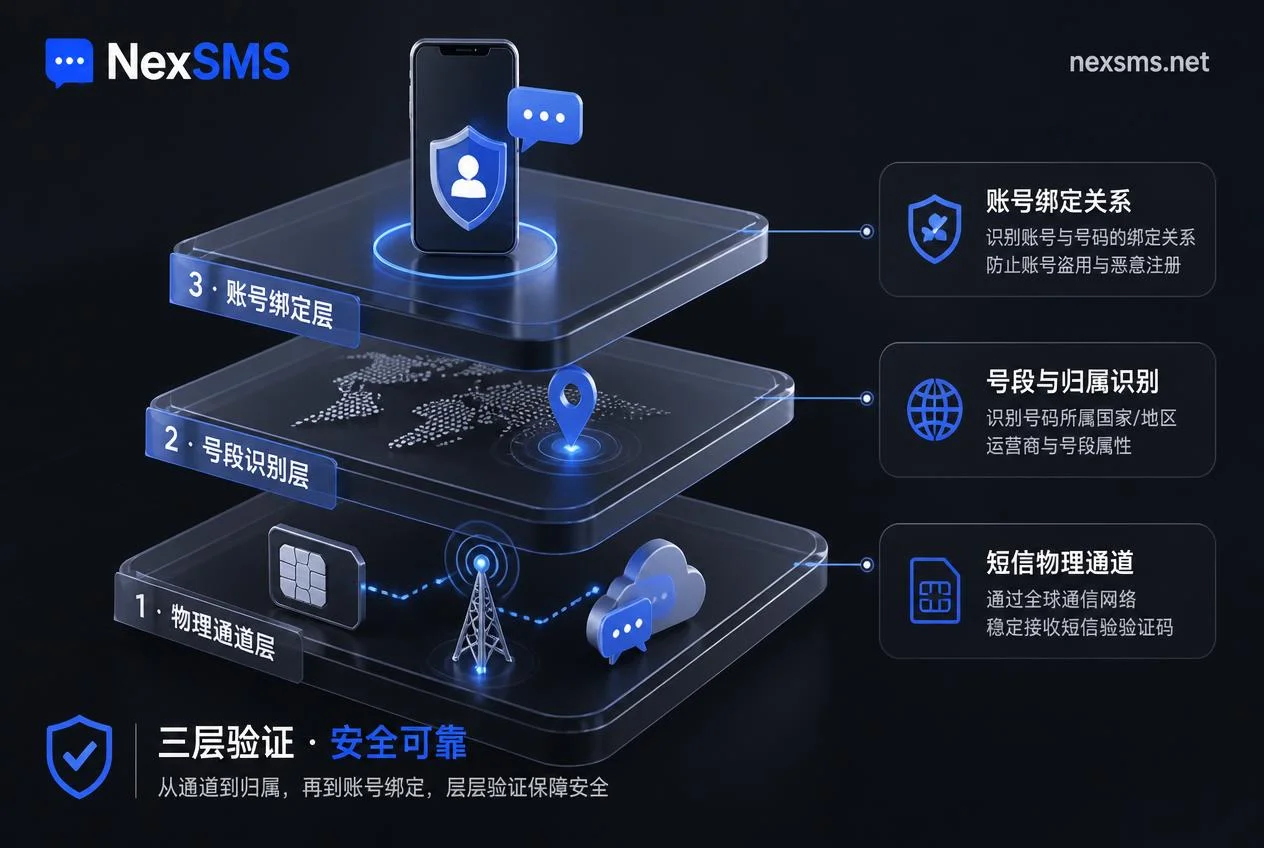
Why do overseas apps require phone number verification for registration? On the surface, it's confirming that "this number can receive SMS," but behind the scenes, the platform verifies three things simultaneously: whether the SMS can be delivered to you (reachability), what type of line this number belongs to (ownership attributes), and whether this number is already bound to another account (occupancy). If any layer fails, verification fails, even if you clearly received the code.
Layer 1: Reachability – Why SMS Delivery Is Only the Minimum Threshold
The first layer verifies whether the number can "receive SMS." From platform dispatch, through international routes, to local carrier landing, delays or blocking at any step can result in not receiving the code for a long time. But here's a key misconception: receiving a code only proves the message physically reached you; it doesn't mean the platform accepts your number.
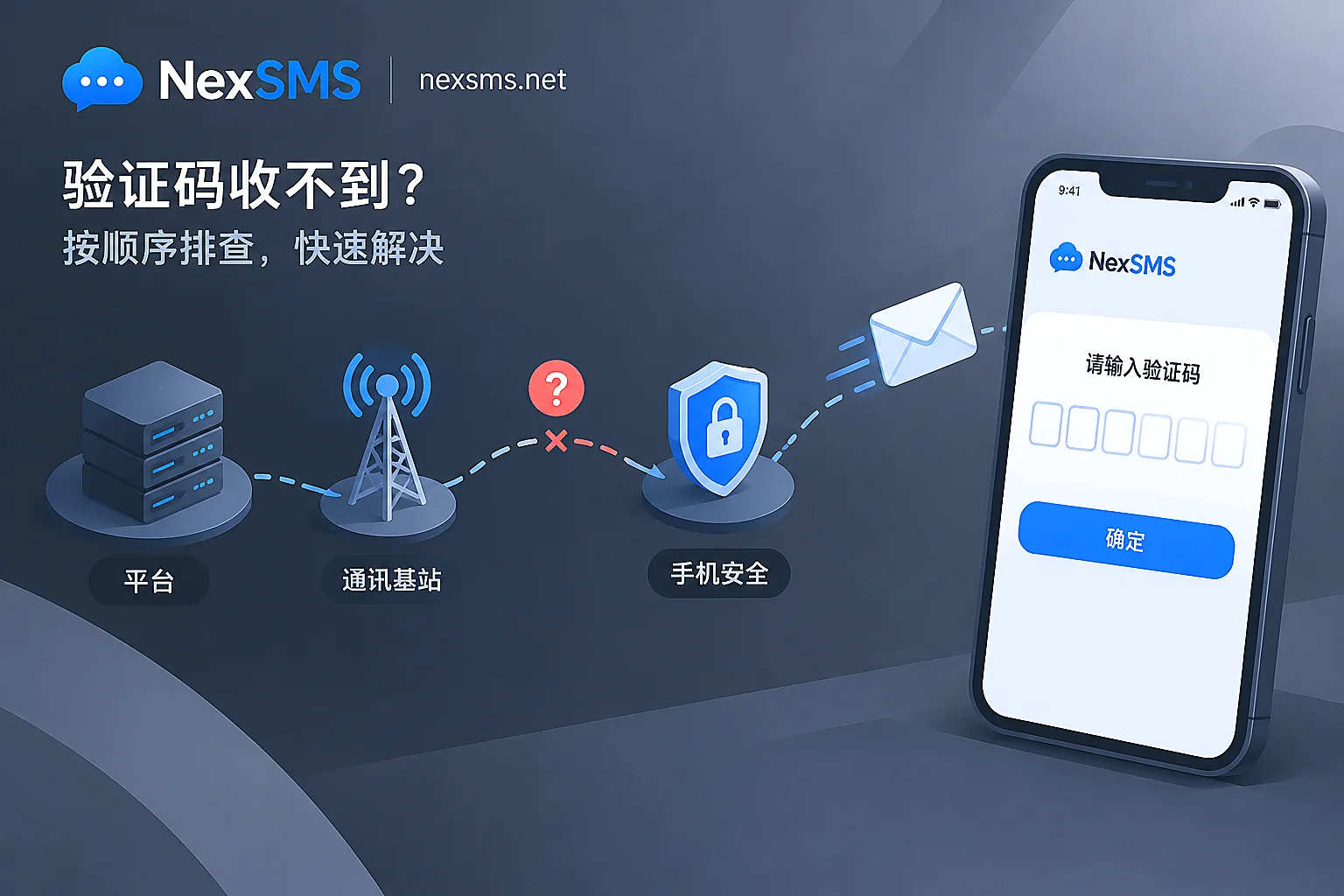
When verification fails, first distinguish whether it's a channel issue or the platform didn't actually send the code. If you repeatedly fail to receive the code, it's often channel congestion or local carrier filtering; if you receive the code but get an "invalid number" error after submitting, the problem is likely at Layer 2.
Layer 2: Number Prefix and Ownership Attributes – What the Platform Checks Before and After Sending the Code
At this layer, overseas app SMS verification checks the number's characteristics. The platform determines the country, line type (mobile/landline/VoIP), and current status (active, whether it's been flagged). For example, numbers from high-risk prefixes or virtual operators may be directly deemed "unusable for verification," even if SMS can be delivered normally.
Failure at this layer typically shows as "number cannot be used for verification" or "please change your number." This is unrelated to whether you received the SMS; it's the platform locking your number type based on prefix databases and risk control rules. What's the difference between exclusive and shared virtual numbers? Shared numbers, repeatedly used by many for registrations, are more likely to trigger the platform's number reuse detection. Exclusive numbers don't have that historical baggage, but whether the platform allows them still depends on its own risk control rules—no number guarantees success.
Changes Brought by Network APIs: Number Verification and SIM Swap Make Verification Less Dependent on Manually Entering Codes
In addition to traditional SMS OTP, verification methods are undergoing an underlying upgrade. The GSMA's Open Gateway initiative, based on the open-source CAMARA standard, has deployed commercial SIM Swap API and Number Verification API across major operators globally (including backbone networks in the Americas and Europe; commercial rollout is planned for 2025-2026, per GSMA official info). Simply put, apps can skip sending you an SMS and instead directly verify via the cellular network whether "this number is in your current phone" and query the number's recent SIM swap timestamp.
What does this mean? If your number is virtual or you frequently swap SIMs, the API will expose these states, and the platform may judge the number as unstable. So, how do overseas apps detect virtual numbers? Beyond prefix identification, these network APIs are becoming new detection methods. Currently, the open scope varies by country and operator, but the trend is clear: verification is shifting from "sending you a code" to "directly asking the operator about the number's status."
Layer 3: Occupancy – What TikTok's Single-Number Single-Binding and Change Rules Tell Us
The third layer checks the binding relationship between the number and the account. TikTok's official support documentation explicitly states: a single mobile phone number can only be bound to one TikTok account, and cannot be repeatedly bound to multiple accounts; during account security checks and when changing the bound number, both the old and new numbers must have real-time ability to receive verification codes (per TikTok official docs, updated 2025-11-21).
This directly answers "how many TikTok accounts can one phone number register"—by rule, only one. If you try to bind the same number to a second account, the system will prompt "number already in use." "What to do if TikTok binding says the number is already used?" Only option: use an unbound number, or unbind the old account first (provided the old number can still receive codes). Also, if your old number is deactivated when you try to change numbers, you'll be stuck in a loop of "old number can't receive code, can't complete verification." So, for long-term bindings, ensure the number remains usable.
Failure Signal Reference Table for Overseas App SMS Verification: How to Trace the Layer
| Typical Symptom | Corresponding Layer | Possible Cause | Directional Action |
|---|---|---|---|
| No SMS for a long time, or delayed by several minutes | Layer 1: Reachability | International channel congestion, local carrier filtering | Wait and retry, or change network environment |
| Received code but error "number invalid/cannot be verified" | Layer 2: Ownership attributes | Prefix flagged, virtual prefix detected | Switch line type (e.g., to a real SIM card number) |
| Error "number already in use" | Layer 3: Occupancy | Number already bound to another account | Change number, or unbind old account first |
| Old number doesn't receive code when changing | Layer 3: Occupancy + Layer 1: Reachability | Old number deactivated or channel issue | Ensure old number can still receive codes before changing; otherwise contact support |
Determine the layer first before acting, to avoid blindly changing numbers. If it's a Layer 1 issue, it might just be channel fluctuation; if Layer 2, switching to a "clean" number is more effective; if Layer 3, you need to handle the binding relationship.
Allocating Numbers Based on Three Layers: Registration Receiving, Two-Factor Verification, and Long-Term Binding
Understanding the mechanism, you can choose numbers methodically. You can categorize numbers based on usage:
- Registration receiving: Used only for one-time registration; can use short-term numbers, discard after receiving the code.
- Two-factor verification: Needs to receive codes long-term; recommend renewable long-term numbers.
- Long-term binding: The primary binding number for your account; must be stable, exclusive, and usable long-term to avoid failures due to deactivation or sharing.
Each account should have independently allocated numbers to avoid sharing. For long-term vs. short-term numbers, refer to difference between short-term and long-term numbers. For cross-border teams managing multiple accounts, follow multi-account number management practices to ensure one number per account.
Implementing with NexSMS: Country Selection, Short-Term vs. Long-Term Roles, Web Receiving, and API
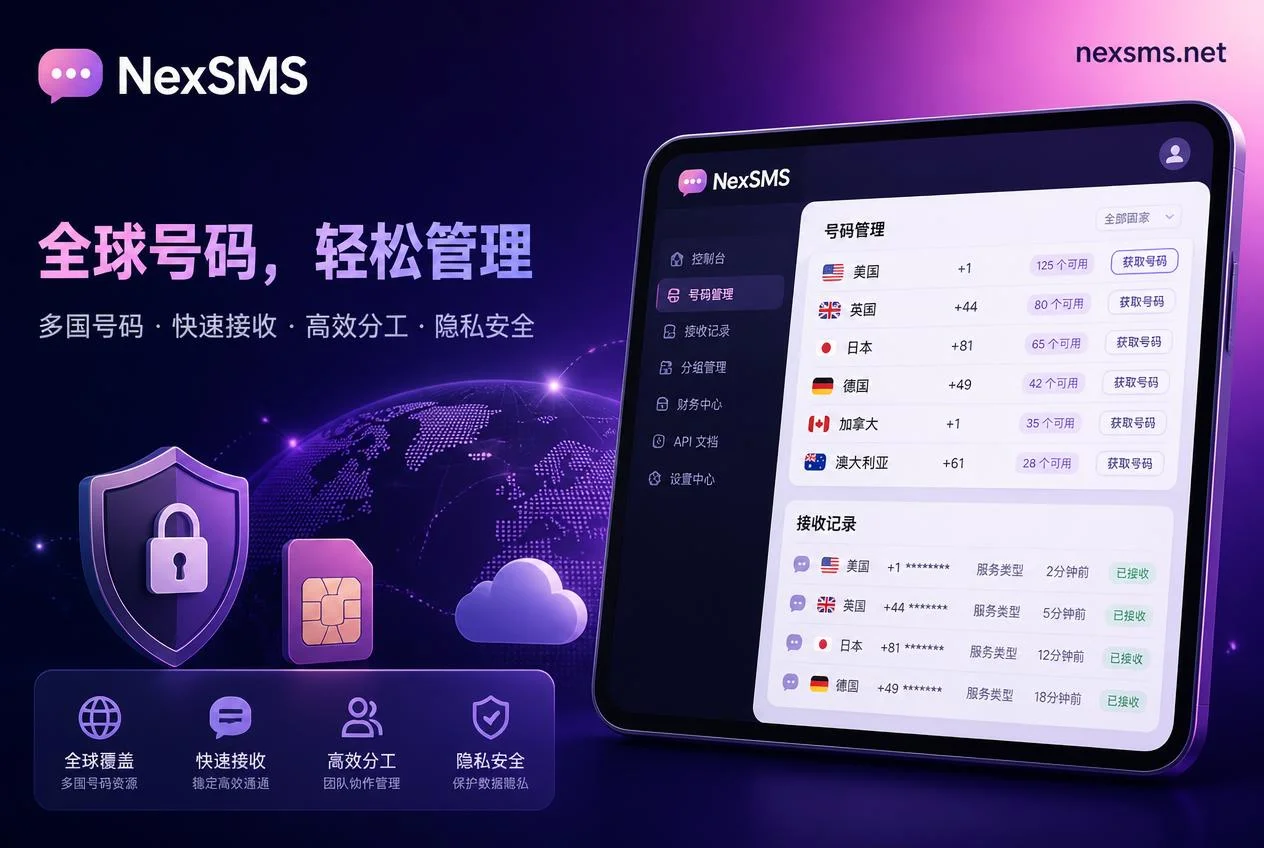
On the operational side, the NexSMS official website offers a choice of numbers from multiple countries, allowing you to select a number matching your target platform's market (e.g., choose US numbers for TikTok US). For registration, you can use short-term one-off numbers; for long-term binding, choose renewable long-term local numbers to control the number's lifecycle.
The web interface allows direct code reception, and developer APIs are available for batch usage. This model suits legitimate account self-verification and privacy isolation, helping you avoid risks of shared numbers. If you need to distinguish real SIM cards from VoIP numbers, refer to business SMS receiving: choosing real SIM vs. VoIP.
Pre-Registration Checklist
Before ordering a number, run through the following checklist:
- [ ] Is this number exclusive, and won't be reused by others?
- [ ] Can it be renewed? Will long-term binding depend on it?
- [ ] Does the number's country match the target platform's market?
- [ ] Is it already occupied? (Ask support or test)
- [ ] Before changing numbers, can the old number still receive verification codes?
FAQ
Can I verify with a deactivated old number after changing?
No. When changing a bound phone number, platforms usually require verification of the old number. If the old number is deactivated, you won't receive the verification code, and the change process will be stuck. Advise completing the change before deactivating the old number, or contact customer support.
How many TikTok accounts can one phone number register?
Per TikTok's rules, one phone number can only bind to one account, and cannot be reused across accounts. If you try to bind a second account, you'll get "number already in use." For managing multiple accounts, each account needs its own independent number.
How do overseas apps detect virtual numbers?
Platforms mainly use prefix databases to identify virtual numbers, and some also leverage operator network APIs (like Number Verification) to verify authenticity. If your number is a public virtual number, it's highly likely to be flagged.
How long should I wait before assuming overseas app SMS verification fails?
International SMS usually arrives within minutes; if no SMS after ten minutes, it's often not just delay (this is common experience; platforms and operators haven't published a uniform limit). If it's been long, also consider Layer 2's prefix and ownership attributes.
Why do overseas apps require phone verification during registration?
Phone numbers serve as unique identity identifiers for accounts, used to prevent abuse, password recovery, and two-factor authentication. By verifying number reachability and ownership, platforms reduce risks of bulk registration and fraud, while providing users with account recovery options.


Comments(0)