 NexSms官方博客
First, the conclusion: allocate numbers based on account value and whether you'll need to receive codes in the future.
- For accounts you plan to operate long-term, give each a separate number that you can hold long-term. This includes main brand accounts, customer service accounts, and accounts with SMS two-factor authentication enabled.
- For short-term test accounts that you'll abandon after use, you can use one-time short-term numbers. The trade-off is that when you need verification later, the number will likely no longer receive codes.
- Don't share a number among important accounts, even if the platform allows it.
Let's first look at platform rules, then discuss specific allocation practices.
Step 1: Confirm how many accounts each platform allows per number
Platforms vary greatly in their rules for "how many accounts one number can bind to." Check clearly before planning:
| Platform | Rule | Impact on allocation |
|---|---|---|
| One number can only be associated with one active account | You need as many numbers as accounts; no flexibility | |
| No official lifetime limit published. From practical use and support feedback, a number will error after verifying around 4 to 5 accounts cumulatively | The limit is cumulative; deleting an account won't return the quota. Don't repeatedly register with one number | |
| X (Twitter) | Allows one number to bind multiple accounts | Allowed by rules, but these accounts will be considered related. See risks in the next section |
For other platforms (e.g., TikTok, Instagram), there is no clear public specification for binding limits for different account types. Refer to the platform's help center. If you can't find it, plan with one number per account—that's the safest. For specific limits on each platform, see "How many accounts can one phone number register?".
Why sharing a number is not recommended even if the platform allows it
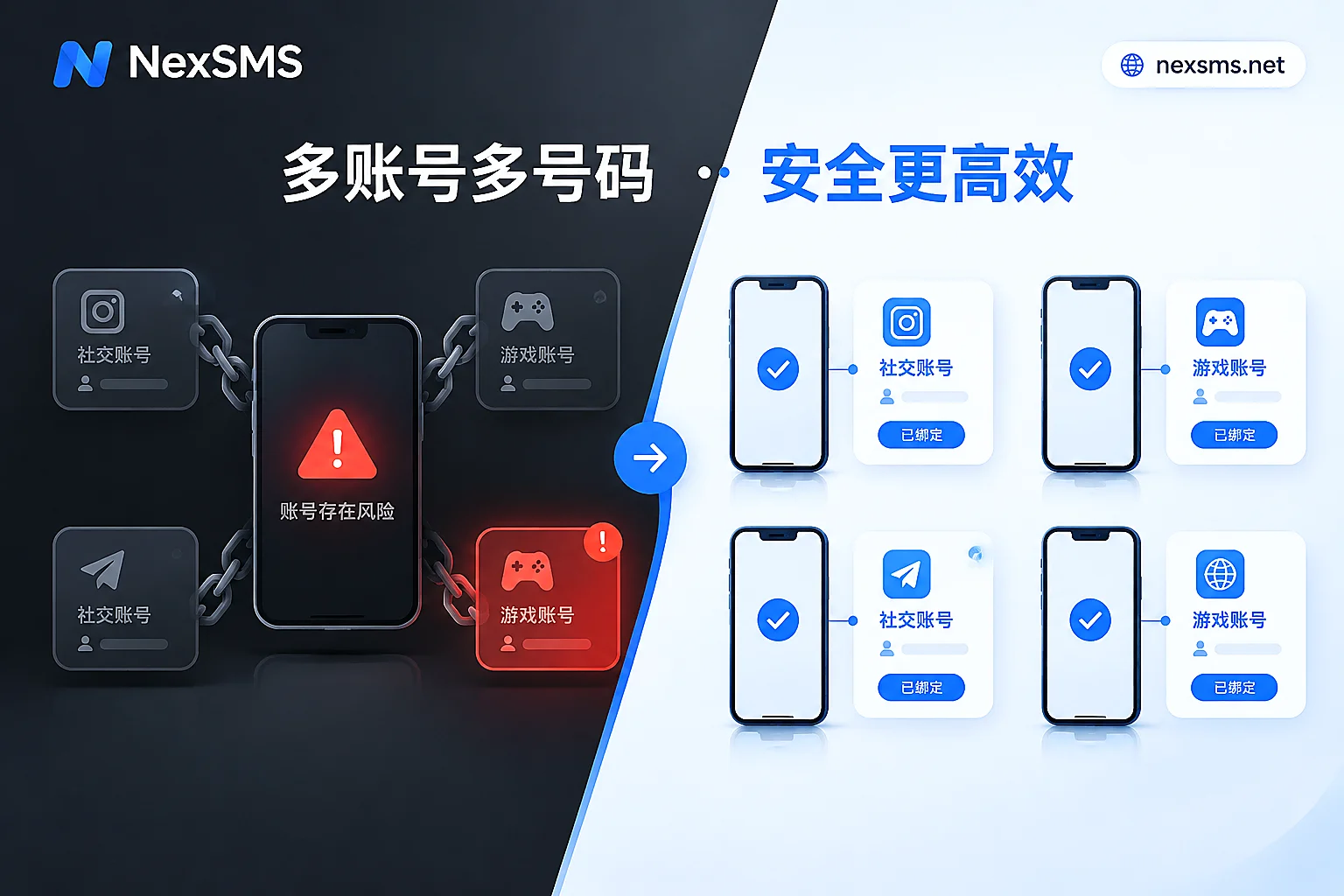
Phone numbers, like email addresses, are a strong signal for platform risk control to determine that "these accounts belong to the same person." Sharing a number has two main consequences:
- One problem affects others. If one account is restricted or banned due to violations or abnormal behavior, other accounts sharing the number are likely to be restricted together or required to redo human verification.
- Hard to separate later. As accounts grow, changing numbers requires logging in and verifying each one. If the original number can no longer receive codes, several accounts will be stuck at the same step.
For more consequences and solutions, see "What are the risks of sharing one number across multiple overseas accounts?".
Step 2: Allocate in three tiers based on account value
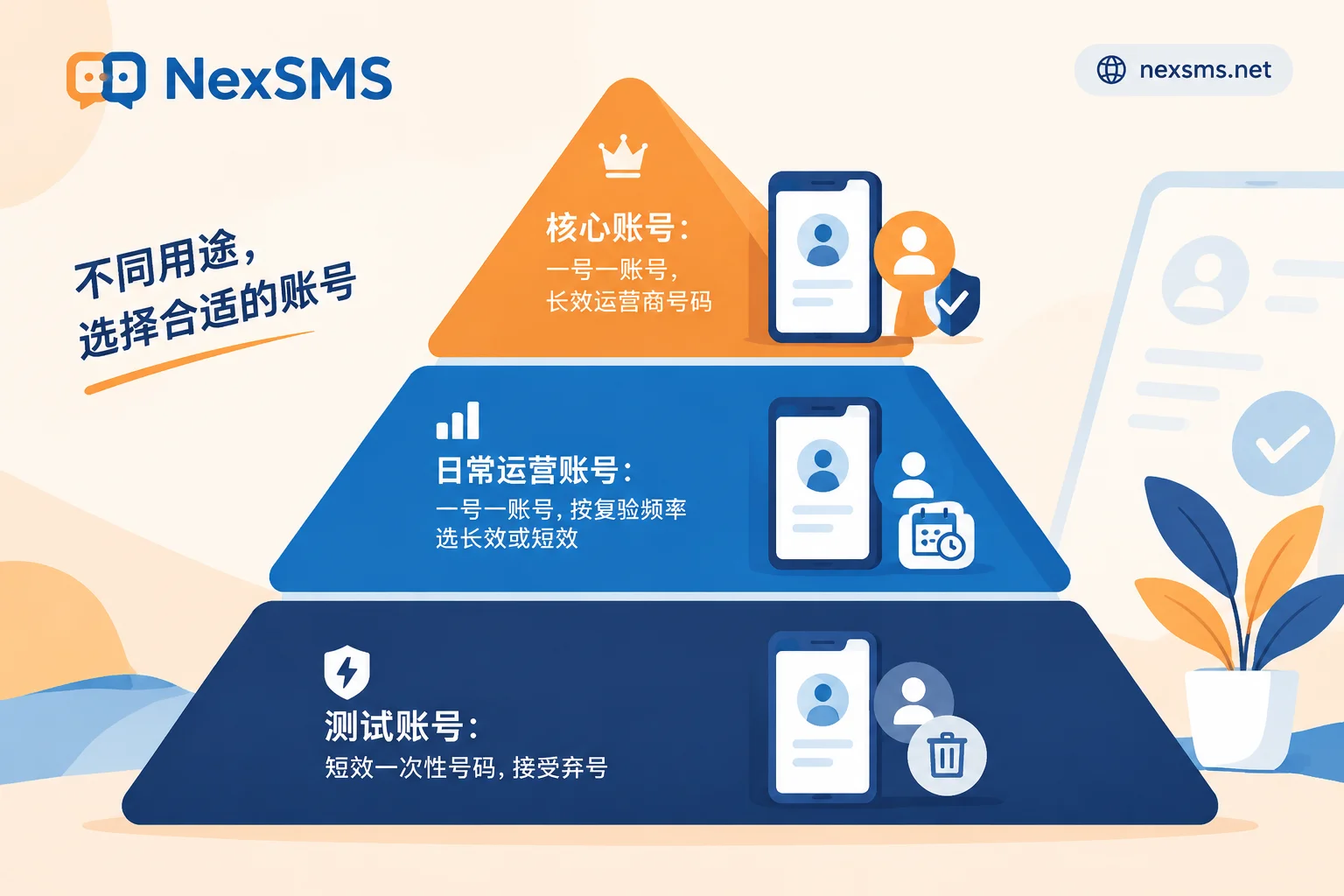
Before allocating, ask: Will this account still need to receive verification codes six months from now? Changing devices, logging in from a new location, changing passwords, or platform security reviews may require re-verifying the phone number. The more frequent the re-verification, the more you need a long-term number.
Tier 1: Core accounts. Main brand accounts, customer service accounts, accounts with payment methods or ad campaigns, and accounts using SMS for two-factor authentication fall here. Each account gets its own number, not shared with others. The number can be a physical SIM under the team's name or a carrier number that can be renewed and receive codes repeatedly during its validity. Don't use short-term numbers for this tier; if the number expires, you may lose the account forever.
Tier 2: Daily operations accounts. These have some value but can be rebuilt if lost, such as regional sub-accounts or campaign accounts. Also recommend one number per account. The number type can depend on re-verification frequency: if the platform often requires re-verification, use long-term numbers; if rarely, short-term numbers can be used initially, but note the risk in the ledger. For why platforms repeatedly require verification, see "Why social platforms keep asking you to re-verify your phone number".
Tier 3: Test and transitional accounts. Used for testing features or short-term transitions, then stopped. This tier can use short-term one-time numbers at low cost. The premise: when this account later requires two-factor authentication, the number will likely be invalid, and you'll have to abandon the account.
Step 3: Choose the right number type and country
Line type matters more than price. Many platforms block regular virtual numbers and VoIP numbers during registration and security checks. Services like Google, TikTok, and Microsoft prefer real local mobile carrier numbers. With virtual numbers, registration pass rates are low, and subsequent logins from new locations or security reviews may be blocked. Using real carrier numbers for core accounts avoids many pitfalls.
Country can match the account's operating region. When the number's country, the account's stated region, and usual login location conflict, extra verification is likely. Follow the platform's current rules.
Once you know which number type you need, you can select by platform and country on NexSMS:
- Short-term regular numbers are pay-per-use, valid for a very short time, and end after one verification. Suitable for Tier 3.
- Long-term premium numbers are real carrier local numbers (physical SIM and eSIM, not virtual landlines), renewable, with unlimited code receptions during validity. Suitable for Tier 1 and Tier 2 that need re-verification.
The difference between the two types and renewal conditions can be found on the features page. For code reception instructions for each app, see the solutions page. Two notes: long-term numbers must be renewed before expiration to continue holding; whether a platform accepts the number depends on the platform's rules at the time—the number itself cannot guarantee success.
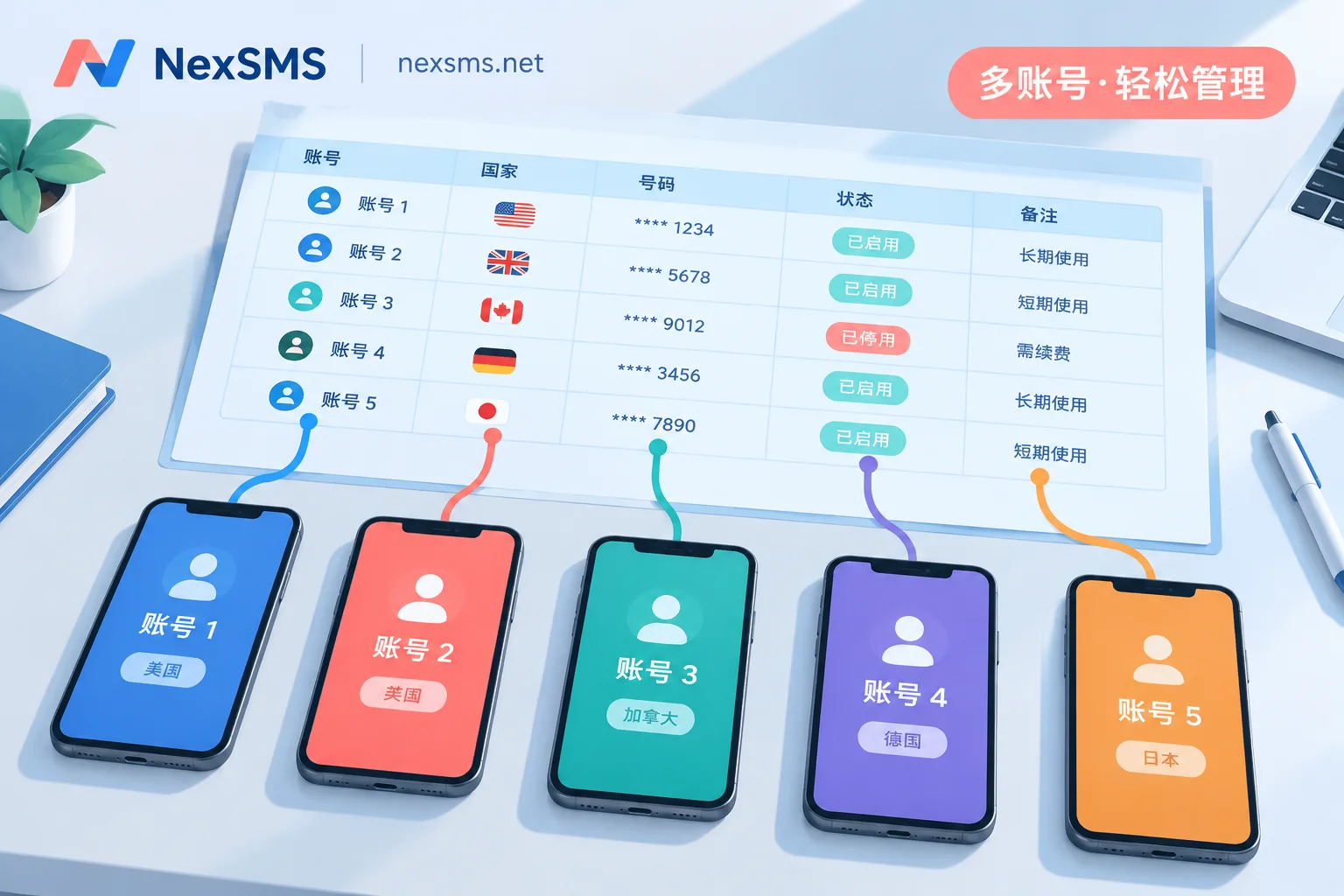
Step 4: Keep a number ledger
With many accounts, the most common problem is not choosing the wrong number, but forgetting which number is bound to which account, or missing a renewal. Record one row per number:
- Platform and account name
- Number, country, type (own SIM, long-term number, or short-term number)
- What functions this number is bound to (registration, two-factor authentication, recovery)
- Expiration date and renewal owner
- Last code reception time
For long-term numbers, leave buffer time before expiration and set reminders. When employees leave or hand over, numbers should be transferred along with the ledger, not left on someone's personal phone or account.
Besides numbers, separate other aspects
Phone numbers only solve the "receive verification code" step. Platforms also check login devices, network exits, emails, etc. to determine if accounts are related. When a team maintains multiple accounts, these should also be managed separately like numbers:
- Login environment: use a multi-account browser like NexBrowser
- Network exit: use NexIP
- Email and identity information: use NexMask
Common exceptions
- Platform allows only one number per account (e.g., WhatsApp): No choice—each account gets its own number. Once a number expires, migration is difficult, so use long-term numbers directly.
- Google says this number has verified too many accounts: The number's quota is used up. Use another number to verify; don't retry repeatedly.
- Want to change from short-term to long-term number: While the account can still log in normally, bind the new number in account settings first, then unbind the old one. Waiting until the old number expires is often too late.
Final reminder: The above practices apply only to accounts you legally operate. If platforms have rules on account quantity and usage, follow the platform rules.


Comments(0)