 NexSms官方博客
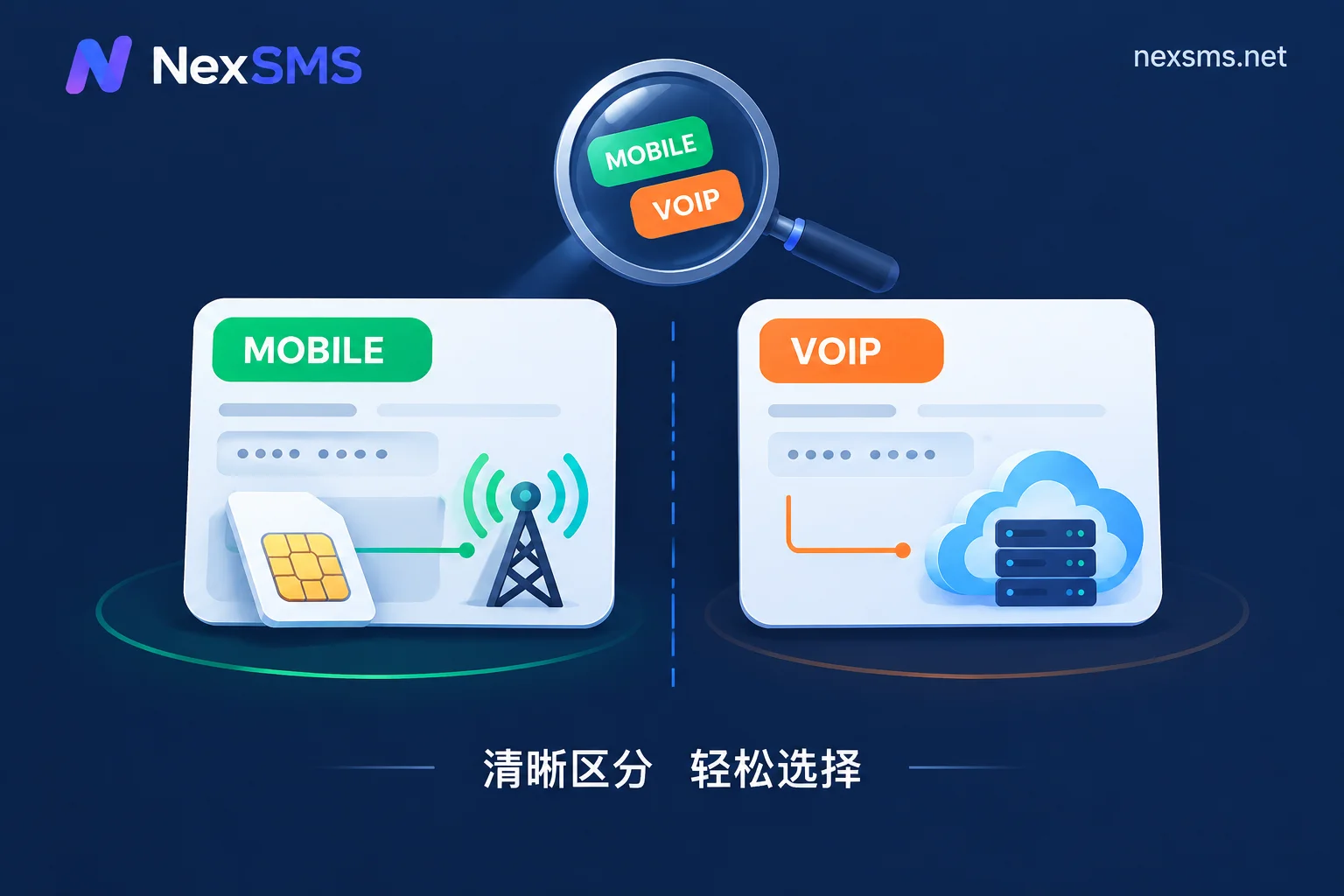
Let's get straight to the conclusion: the most critical difference between the two is not price, not the country of origin, and not whether the number looks like a local one—it's what line type the number is registered as in telecom databases. Real carrier local numbers (physical SIM cards or eSIMs, using actual mobile network resources) are marked as mobile; virtual landline numbers are routed via cloud protocols and marked as voip, fixed_voip, or non_fixed_voip. Many overseas platforms read this marker before sending you a verification code—if they see VoIP, they simply don't send it.
So the "this number can't receive codes" you encounter is often not a network issue or a matter of luck, but rather that the SMS was never sent in the first place.
How platforms detect this
Platforms don't rely on visually inspecting number prefixes, nor do they check which country you're in. A common approach is to call a carrier lookup service (like Twilio Lookup's Line Type Intelligence, Telesign, etc.) before sending the code. The API queries the number's registration attributes in the national numbering database—such as NPAC/LERG in North America—and returns the line type and carrying carrier.
This query is real-time, performed per number, and the results are very cheap and reliable for platforms. That's why "trying a different number prefix" usually doesn't work: the same batch of virtual landline numbers, no matter how much the prefix resembles a local mobile number, all come back as VoIP.
For anti-fraud systems, VoIP numbers are a high-risk signal: they can be activated in bulk, cost very little, and have a weak binding to real identity. Financial payment services, mainstream social platforms, and apps with strict risk controls therefore commonly filter them out directly; whereas forums, tool apps, and small platforms with low risk controls often don't check, or let them through even if they do.
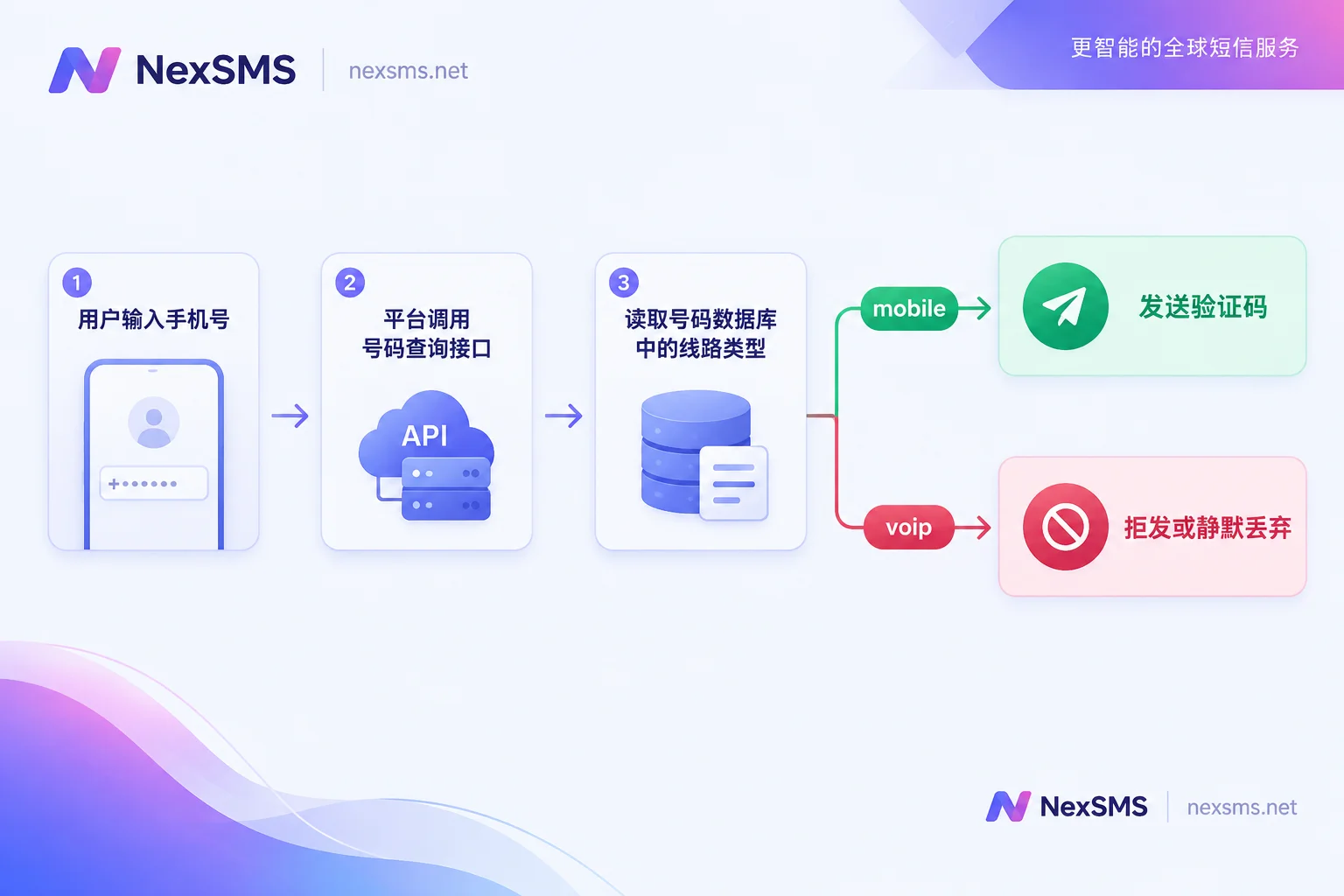
What you'll see when flagged as VoIP
There are two manifestations, and they require different approaches:
One is direct front-end rejection. Before you even click "Send," the page says "Please enter a valid phone number," "This number type is not supported," or "This number cannot be used for verification." This is the easiest to identify—it almost certainly means the number's attributes were blocked.
The other is silent back-end interception. The page shows "Verification code sent," the countdown proceeds normally, but the code never arrives. This is the most time-consuming because it looks exactly like a "delay," leading many people to repeatedly resend, which triggers the platform's rate limiting and complicates things further.
The way to distinguish is simple: try a number you know is a real carrier number on the same platform and the same page. If it arrives immediately, you can basically conclude it's a number type issue; if it also fails, the problem is likely elsewhere—perhaps the country isn't supported by the platform, the account itself is under risk control, or the carrier's routing genuinely has delays. For a complete troubleshooting sequence when codes don't arrive, refer to What to do when verification codes are delayed: from stopping resends to switching numbers. The first step there is to stop and not resend repeatedly.
It should be noted that "number type" is only one reason for code rejection—don't attribute all failures to it. In cases like Google account SMS verification rejected or ChatGPT/Codex suddenly requiring phone verification, VoIP detection is indeed a common cause, but the same error message could also stem from regional restrictions or the account's historical behavior.
The more easily overlooked difference: can you receive another code later?
Whether you can pass the first registration is only half the issue. The other half is—how long can you keep this number?
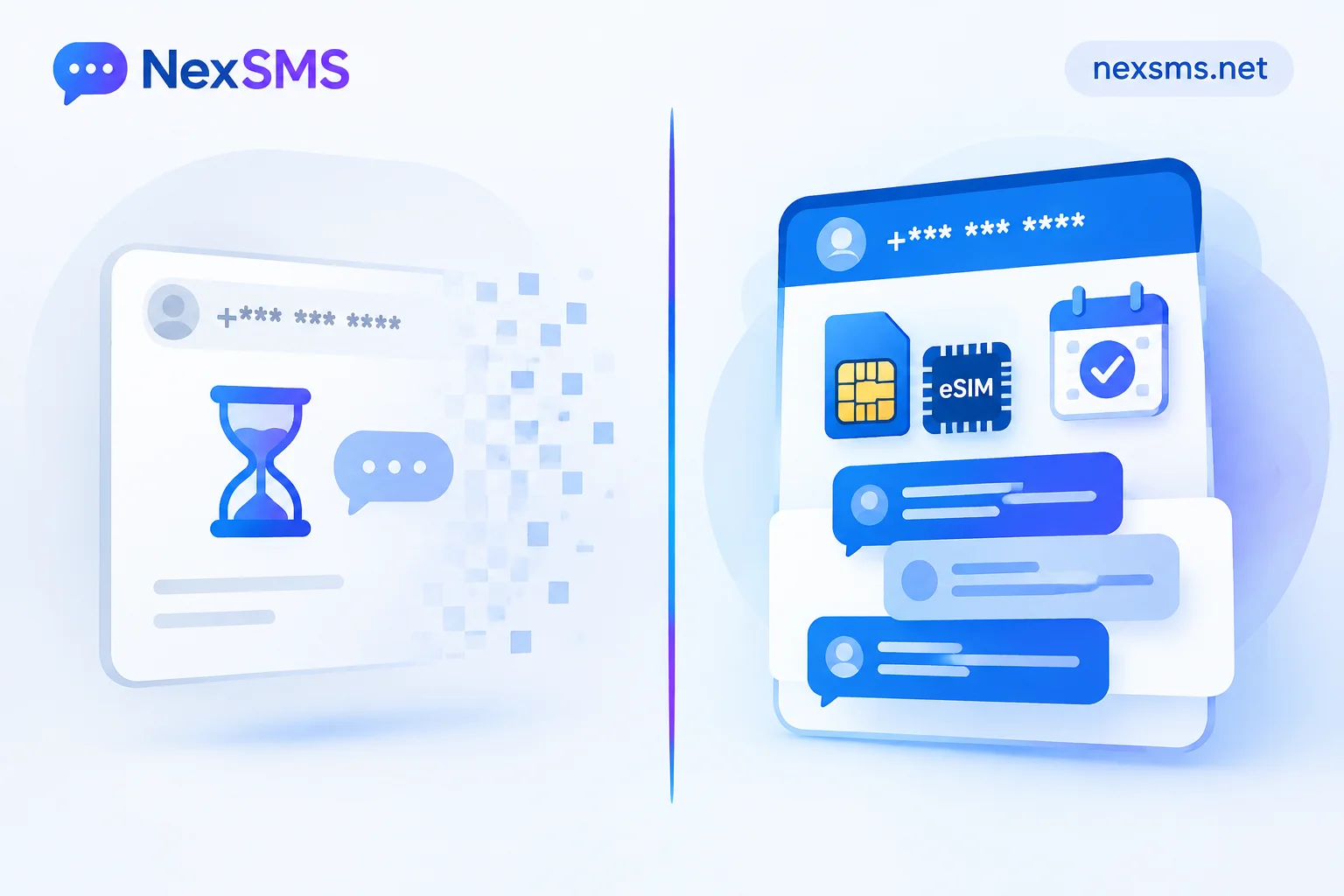
Virtual landline numbers and public/short-term number pools are mostly temporarily rotated or shared among multiple users. Once verification is complete, the number is no longer yours. The real trouble arises later:
- The platform requires changing the bound phone number, and the verification code goes to the old number;
- SMS two-factor authentication (2FA) is enabled, requiring a code for every login from a new location;
- The account triggers risk control and requires identity confirmation via the bound number;
- Password recovery process is needed.
If any of these situations occurs and the number is no longer in your hands, the account is basically lost. The value of a real carrier local number in this regard is not just "can register," but can be continuously held and receive codes repeatedly during its validity period, and can be renewed. This is why core accounts are worth spending a bit more on. For a deeper look at this decision line, see How to choose between short-term numbers and long-term premium numbers.
Choose based on account importance, not one-size-fits-all
Scenarios where short-term or low-cost virtual numbers are sufficient: One-time registrations, downloading materials, claiming trials, forum posting, small platforms that clearly don't check number types, and accounts you're sure you'll never log into again.
Scenarios where real carrier local long-term numbers should be used: Payment gateways and collection tools, primary numbers for mainstream social apps, e-commerce seller backends, cloud services and critical developer services, any account you plan to use long-term and have enabled 2FA for.
The criterion for the middle ground is just one sentence: If this account is lost, will you be heartbroken? If yes, choose one that can be renewed and receive codes repeatedly.
When you're actually ready to pick a number, NexSMS separates the two types: short-term regular numbers are billed by usage, have a very short validity period, and are done after one verification; long-term premium numbers are real carrier local numbers (physical SIMs and eSIMs, not virtual landlines), can be renewed, allow unlimited code receptions during the validity period, display codes in real-time on the web, and also offer a developer API. If you haven't tried it, you can first test on the free public number page without registration to confirm the process works, then decide which type to buy.
A reminder: the number type only determines whether the platform is willing to send a code. Whether you ultimately pass verification is determined by that platform's rules at the time—each platform's risk thresholds and blacklists are not public and can change. Long-term numbers also require renewal before expiration to continue holding.
Three common misconceptions
Country of origin does not equal number type. A number starting with +1 and an area code that looks like Los Angeles could very well be VoIP. Conversely, real carrier numbers from certain countries may be globally downgraded by platforms due to high fraud rates in that country. When choosing numbers, these two things should be considered separately. Which country's number is more stable for Telegram registration explains this order in more detail: first look at attributes, then at country of origin.
If it worked this time, it doesn't mean it'll be stable later. Platforms' number databases and risk strategies are updated on a rolling basis. A VoIP number segment that passes today might be entirely blacklisted next month; accounts already bound may also be asked to re-verify during a routine review.
The number is only one link in the identity chain. Bulk logins from the same device, an exit IP that clearly conflicts with the number's country of origin, a suspicious email domain—these can independently trigger risk controls. Even if you switch to the right number, if other links are exposed, you still won't get through. These aspects are handled by multi-account environments (NexBrowser), network exits (NexIP), and email identities (NexMask) respectively—they can't be solved at the number level.
When unsure, follow this order
- First confirm whether the target platform supports the country you want to use (the platform's help center and the country dropdown on the registration page are most accurate, preferred over third-party articles);
- Think about whether you'll need to receive codes again for this account—if yes, go straight for a long-term real number and don't skimp on a short-term one this time;
- If you really can't receive a code, stop first, don't resend repeatedly, and judge based on the error type whether it's a number attribute, regional restriction, or rate limiting;
- Before switching numbers, confirm the old number is no longer bound to the account, to avoid leaving a number that is neither in your hands nor unbound.
One final reminder: all of the above is only for your own lawful account verification needs.


Comments(0)