 NexSms官方博客
The legacy SMS verification platform SMS-Activate has announced it is ceasing operations, and it requires account balances to reach a certain threshold before users can apply for withdrawal. Many long-time users are forced to look for alternatives before they can use up their balances. Meanwhile, major overseas internet platforms have moved number risk control to an earlier stage—before sending an SMS, they check the line type and block batches of cheap VoIP virtual number ranges.
These two developments together make many individual users and cross-border teams realize that the old habit of "finding any cheap SMS verification website, topping up a few dozen yuan, and using it slowly" no longer works. Choosing the wrong SMS verification platform can mean, at best, wasting hours because you cannot receive verification codes; at worst, accounts tied to core business get banned because you cannot receive a second verification code or because the number range is tainted.
If you are looking for a new primary SMS verification platform or want to put together a more reliable backup plan for your team, it is advisable to run your candidates through the following five criteria before topping up and paying.
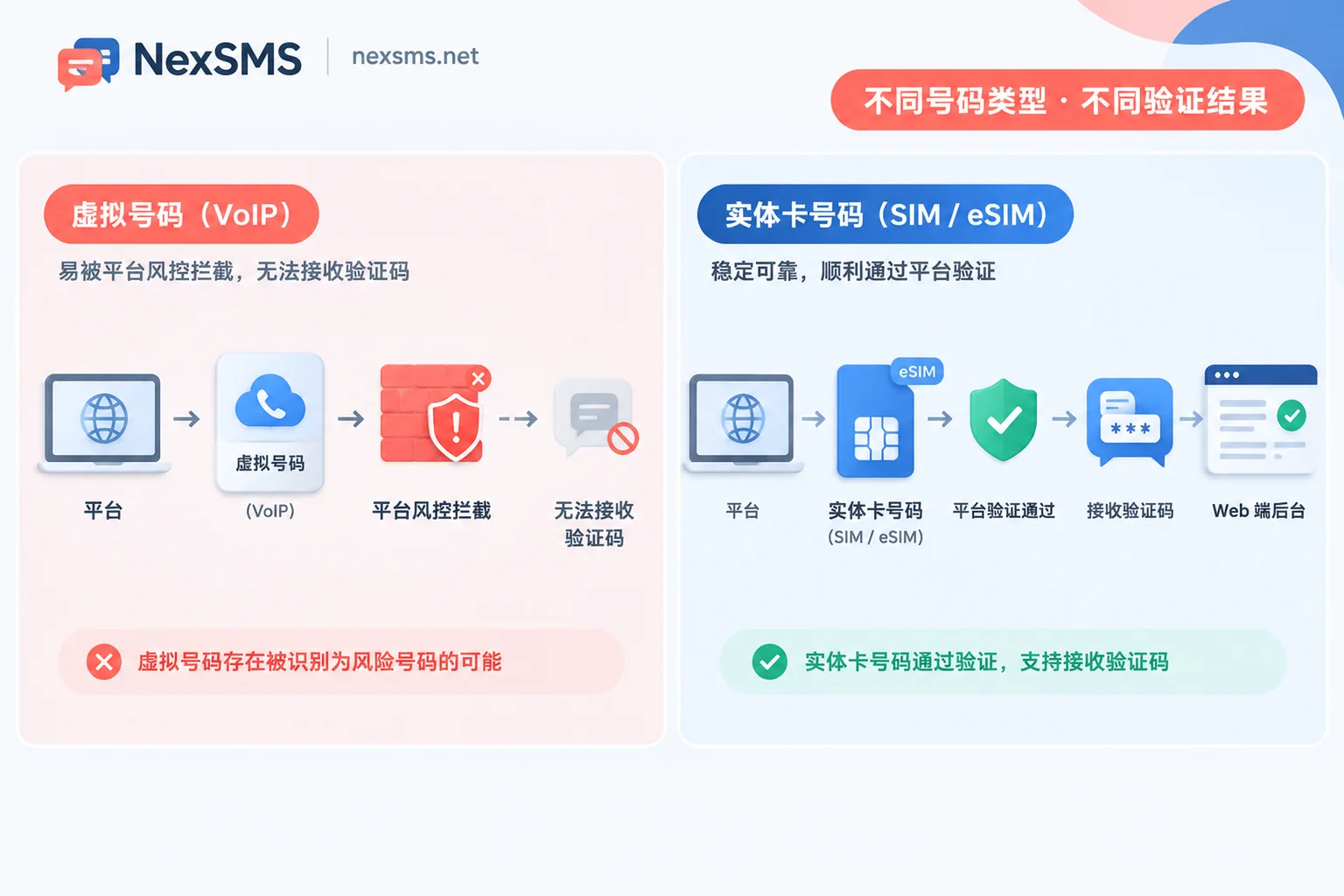
1. Look at the underlying number source: does it distinguish between ordinary temporary numbers and real carrier local numbers?
The most common pitfall for beginners using SMS verification platforms is indiscriminately using the cheapest virtual numbers to register for high-risk applications.
In the current risk-control environment, OpenAI, Claude, WhatsApp, PayPal, and major social platforms perform HLR (Home Location Register) queries and number-range reputation checks the moment you click "Send verification code." If the number is a publicly shared free number or a purely virtual landing number (VoIP) without a physical SIM card, the request is often silently blocked on the platform side, and the SMS is never sent (for more on this, see our previous article "Why VoIP Virtual Numbers Can't Register for ChatGPT: Platforms Check the Line Type Before Sending the Code").
Therefore, the first step in evaluating an SMS verification platform is to see whether it sells numbers of different underlying quality separately, rather than mixing all numbers in one pool and leaving it to luck.
Take NexSMS's number system as an example: the platform directly divides number sources into two categories in its product form:
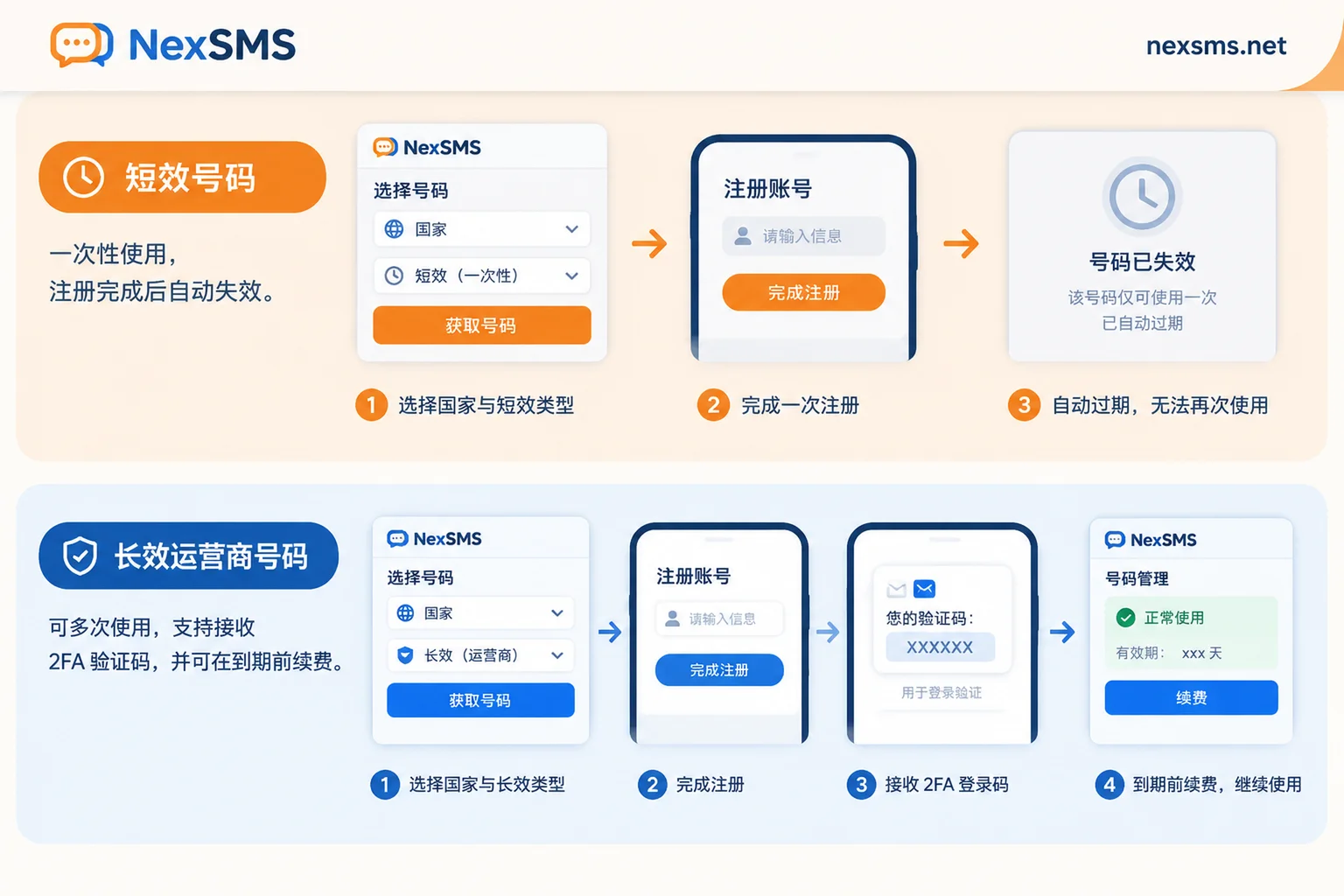
- Short-term ordinary numbers: billed per use with a short validity period, specifically for one-time registrations or temporary verifications on platforms with lenient risk controls.
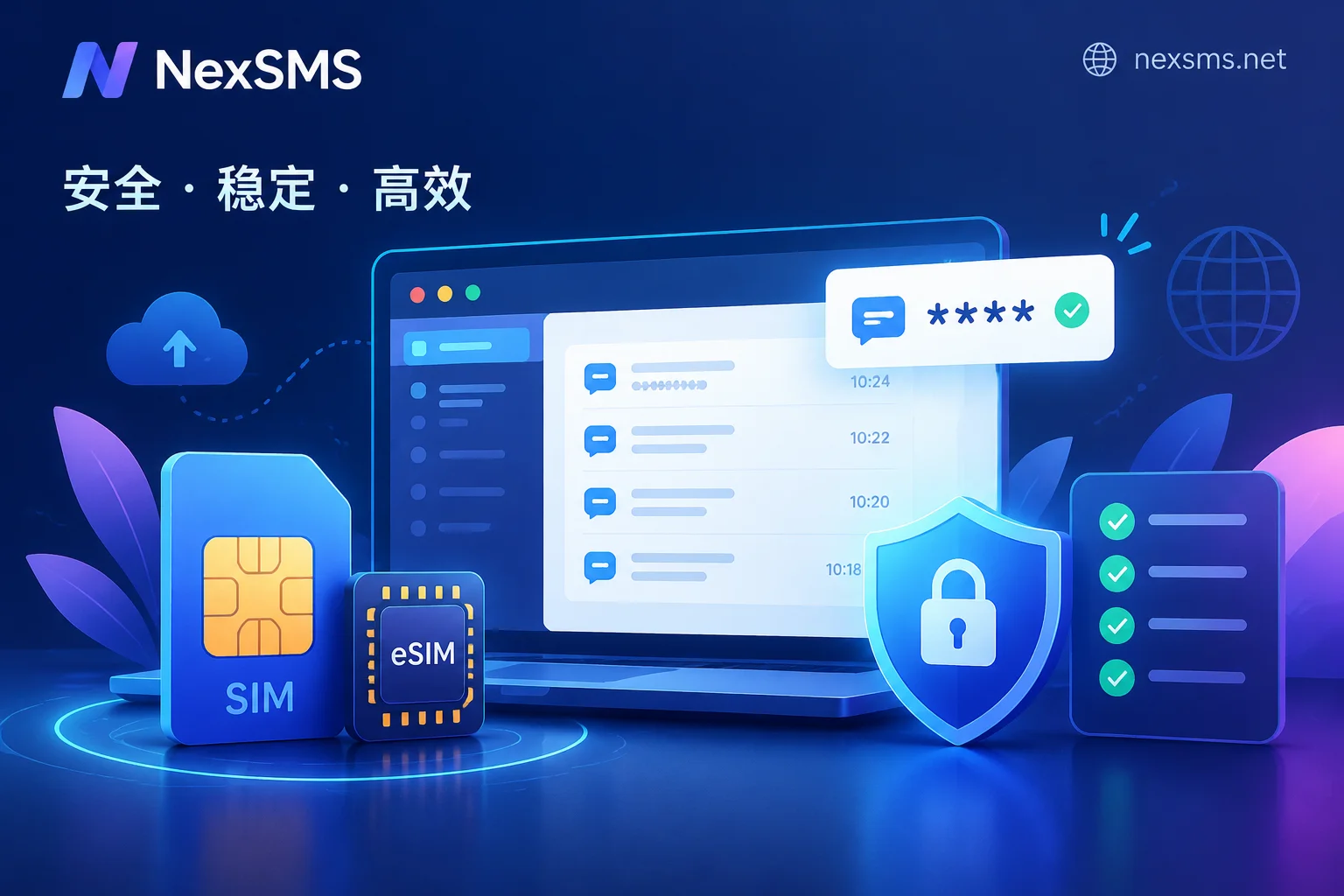
- Long-term premium numbers: using real carrier local numbers (local physical SIM cards and eSIMs, not virtual landing numbers), which appear as normal local mobile users to platform risk controls and are suitable for strict verification or binding important accounts.
If you just want to take a look at the code-receiving process first, NexSMS also provides a free public number page (listing a few US public numbers; you can view codes after logging in), but the official site also clearly warns: verification codes received by public numbers are visible to everyone; never use them for important accounts.
2. Look at re-verification capability: when an account triggers a second verification, is the original number still there?
An SMS verification platform that only offers "15-minute one-time temporary numbers" solves only half the problem.
Anyone who uses overseas accounts long-term knows that successful registration is only the first step. When you change login devices, switch network nodes, log in from a different location, or modify payment information on an e-commerce platform, the system may at any time pop up a request to "send a verification code to the originally bound mobile number to confirm your identity" (see "Why Social Platforms Keep Asking You to Re-verify Your Phone Number: Triggers, Ways to Reduce Re-verification, and Number Selection Tips").
If you used a one-time number that is destroyed after receiving one code and cannot be renewed, a second verification means you effectively lose the account.
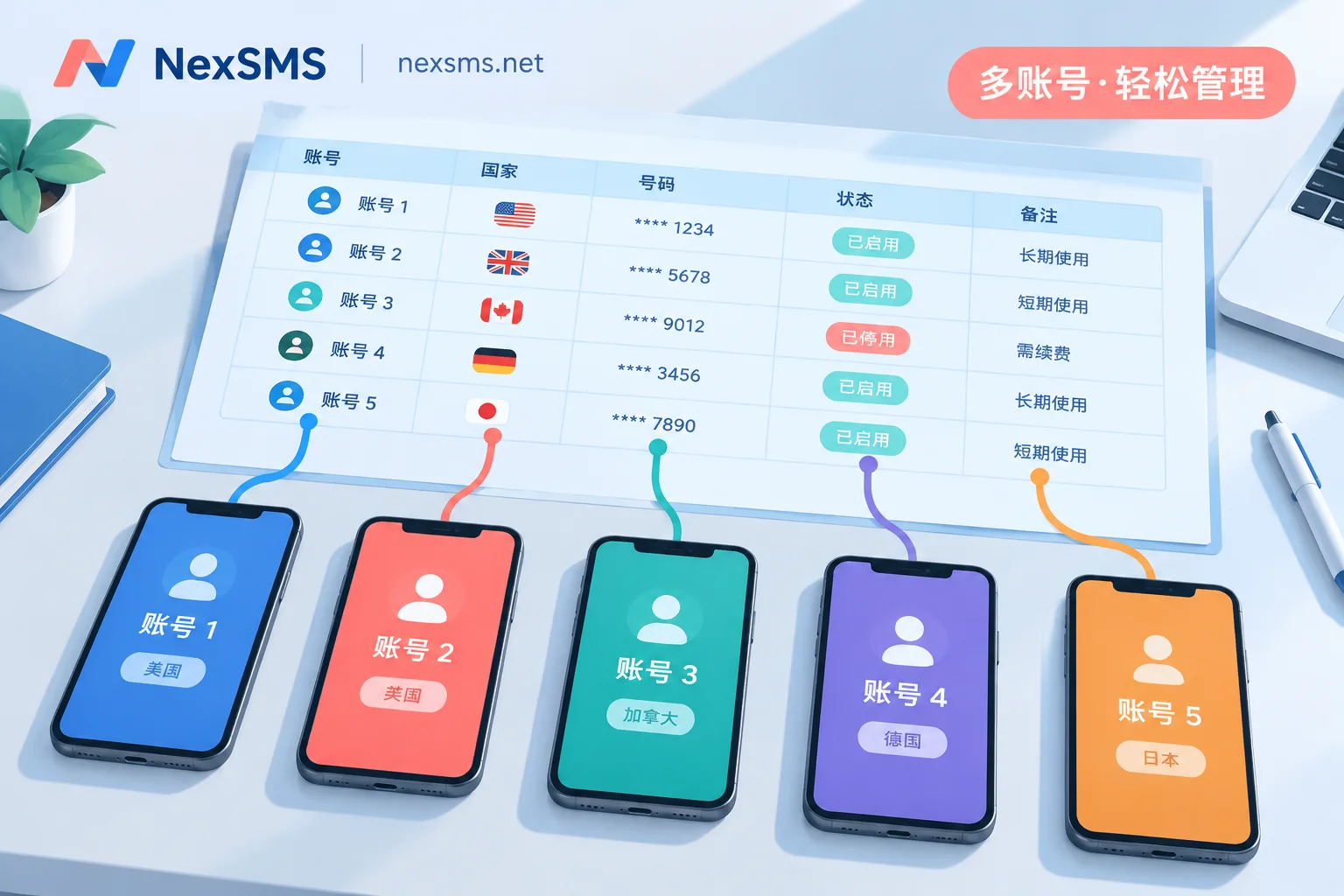
So when choosing an SMS verification platform, be sure to confirm whether it supports both per-use short-term numbers and renewable long-term numbers (if you are unsure how to allocate these two types of numbers based on account value, you can first read "Managing Multiple Accounts: How to Allocate Phone Numbers—Tier by Account Value, One Number per Account, and Note Who Renews").
In NexSMS's features, the boundary between the two is clearly drawn:
| Comparison Dimension | Short-term Ordinary Number | Long-term Premium Number |
|---|---|---|
| Number Nature | Temporary verification number | Real carrier local number (physical SIM/eSIM) |
| Billing and Code Receiving Count | Billed per use, only one verification code | Unlimited code receiving on the same number during the validity period |
| Renewable and Retainable | Cannot be renewed, and cannot receive a second code | Can be renewed to continue holding before expiration |
| Typical Use | One-time registration, temporary test verification | Two-factor authentication (2FA), account recovery, long-term binding across multiple platforms |
Managing "one-time consumables" and "long-term fixed assets" separately on the same platform in advance is much less troublesome than scrambling for number-change remedies after something goes wrong.
3. Look at filter granularity: can you check inventory and prices by "target application + country" first?
Some SMS verification platforms hide products behind a top-up threshold—without first adding funds to your account, you have no idea which countries have numbers for the app you want to register and what the unit price is.
A transparent SMS verification platform should allow users to search directly by target application and country code before placing an order (for pre-order verification details, see also "Before Choosing an SMS Verification Number by Country, Confirm These Four Things Before Paying"). On NexSMS, you can calculate costs in advance through three public paths:
- Check starting prices and inventory by application: Open the NexSMS price and inventory query page directly to view current starting prices and available number quantities by target application (specific prices and real-time inventory are subject to the official website).
- Choose numbers by country: On the global country SMS verification pages, each country has its own page (e.g., the US SMS verification page), specifying local area codes, common verification platforms, and uses. Number sources change dynamically with inventory; when ordering, you can filter by country and application.
- View dedicated SMS verification instructions by application: Different platforms have completely different verification behaviors. In its application SMS verification solutions, NexSMS provides common verification scenarios, operation steps, and FAQs for OpenAI (view instructions), Claude, Doubao, Google, Apple, Telegram, WhatsApp, X / Twitter (view instructions), Instagram, Facebook, TikTok, Xiaohongshu, WeChat, Amazon, eBay, PayPal, and Gojek, helping you avoid common pitfalls before getting a number.
4. Look at funding and access experience: is payment convenient, does the balance expire, and is there customer service and an API?
The shutdown of the legacy platform caught many domestic users off guard. On one hand, many overseas sites only accept cryptocurrency or specific foreign currency cards, making the top-up process long and subject to high exchange losses; on the other hand, when orders get stuck or APIs return errors, support tickets may go unanswered.
For frequent daily use of an SMS verification platform, it is advisable to verify these four basic safeguards:
- Multiple familiar top-up methods: NexSMS supports Alipay, WeChat Pay, and cryptocurrency (USDT / BTC), so you don't need to go through the trouble of using a virtual credit card just to top up a few dollars.
- Clear balance rules: Account balances topped up on NexSMS do not expire (note: balances are non-transferable). Even if you are a low-frequency individual user, you can top up once and use it slowly without worrying about it being zeroed out at the end of the month.
- Real-time web code viewing and API in parallel: After ordinary users place an order on the NexSMS user dashboard, verification codes are displayed in real time directly on the web page; developers who need to integrate number acquisition and code receiving into automated programs can also use the developer API in parallel with web-based code receiving.
- Human customer service response: Whether you have questions about top-ups, renewals of long-term numbers, or need to integrate the API as a developer (NexSMS does not provide public API documentation; dedicated staff assist with integration directly), you can always reach someone via 24/7 Telegram customer service.
5. Look at capability boundaries: does it dare to spell out what it cannot do?
A practical tip for avoiding pitfalls in this industry is: a platform that clearly states its limitations before purchase is often more trustworthy than one that promises "100% success, never banned."
SMS verification codes are only one piece of the platform risk-control puzzle. If the behavior or account environment at registration itself triggers the target platform's blocking rules, even the most expensive number may not pass.
To give you accurate expectations before spending money, NexSMS clearly states its capability boundaries:
- No guarantee of successful verification on any platform: Whether a verification code can be sent smoothly and pass validation is ultimately determined by the target platform's risk-control rules at that time; specific refund rules and the validity periods of short-term and long-term numbers are subject to the official website's real-time descriptions.
- Short-term numbers are irreversible: Short-term ordinary numbers are strictly limited to "one code per number," ending once the code is received; they cannot be renewed, nor can the same short-term number be used to receive a second verification code.
- Focused solely on SMS verification: Multi-account browser environments, proxy IPs and network egress, email and identity information, number status screening, purchase of ready-made accounts, CAPTCHA recognition, or private domain follow-up are not the responsibility of this site. NexSMS focuses only on providing you with clean, real-time SMS verification code receiving services.
Conclusion: Choose numbers on demand and get the process working first
There is no one-size-fits-all "universal number" for SMS verification platforms—only a reasonable combination that matches your current business scenario: for temporary testing or registering secondary applications, use per-use short-term ordinary numbers to control costs; for registering core AI tools, primary overseas social media accounts, or cross-border e-commerce stores, use renewable real carrier long-term premium numbers from the start to lock down the second verification channel.
If you happen to have an overseas application waiting for verification, why not first check the number availability for your target application and country on the NexSMS price page, or log in directly to the NexSMS order console to pick a suitable number and try it. If you encounter any number selection or API integration issues, just call the 24/7 online Telegram customer service via the contact page.


Comments(0)