 NexSms官方博客
Recently, many friends engaged in cross-border business, operating overseas social media, or using overseas AI tools have discovered new hurdles in the previously smooth phone number registration process: on one hand, when registering Telegram with common area codes, the client directly pops up a prompt requiring payment of an SMS Fee or subscription to membership, and sometimes even after paying, the SMS is not received; on the other hand, when registering for Claude (including using Claude Code) or OpenAI, entering a newly obtained overseas number directly shows "unsupported number type".
Entering 2026, major overseas platforms have not only tightened their anti-abuse risk control but also adjusted the underlying international SMS gateway costs and billing strategies. Relying solely on "randomly finding a free number or cheap virtual number and trying your luck" not only wastes time but also easily leads to your current network environment being flagged by the platform due to high-frequency trial and error.
In this article, we will combine recent high-frequency verification pain points to dissect where Telegram and mainstream AI platforms get stuck in the phone number verification process, and how to use SMS verification services to precisely break through based on country area codes and number attributes.
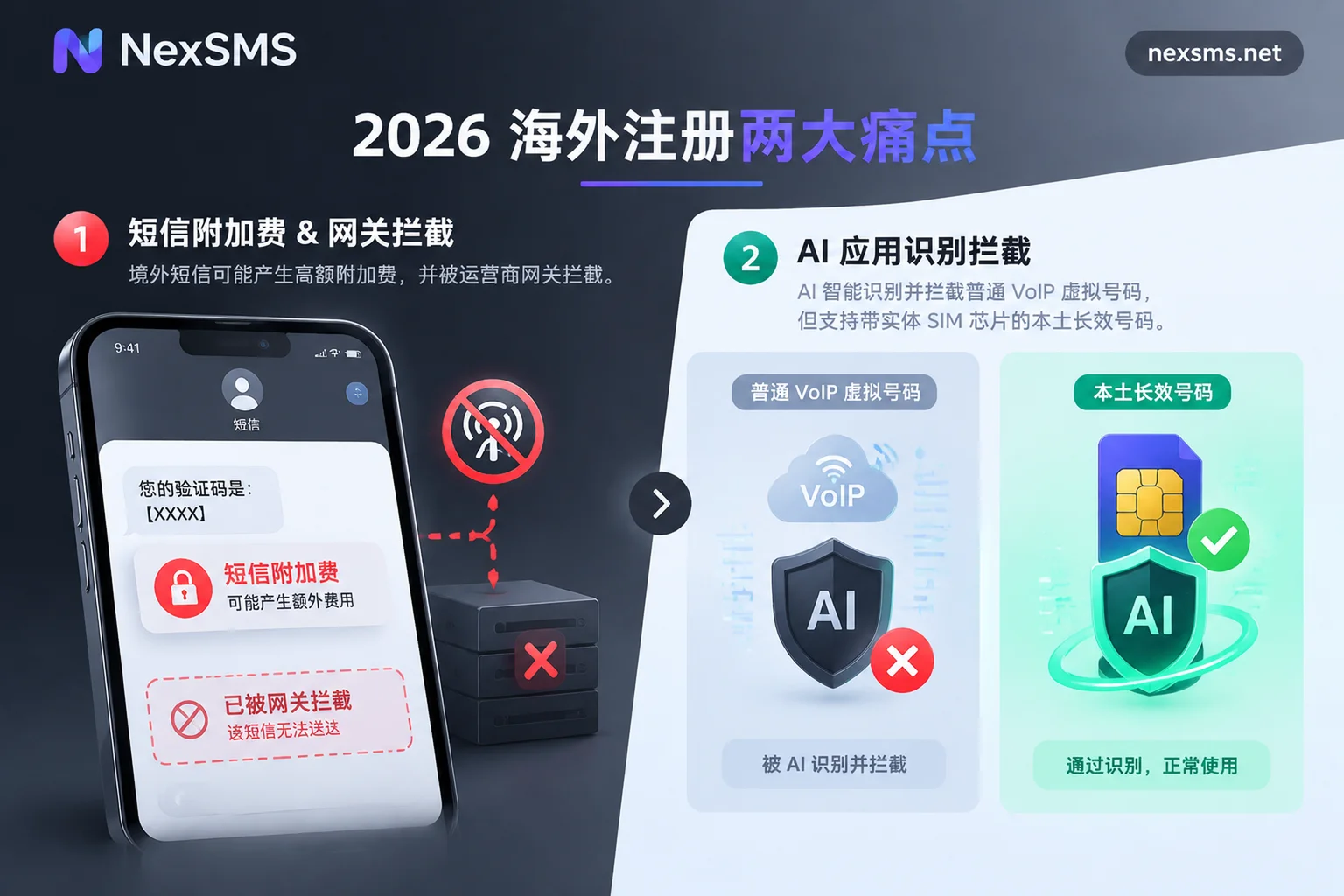
Pain Point 1: Telegram SMS Fee Pop-up and Failure to Receive Verification Codes
Recently, when registering or re-logging into Telegram, many users have encountered an interface they haven't seen before: the system prompts that due to high international SMS gateway costs in the region or a large number of fake registrations, the user needs to pay an SMS Fee of about $1.19, or directly subscribe to Telegram Premium to receive the SMS verification code. What's more frustrating is that not only mainland China (+86) numbers but also some common area codes like the UK trigger this payment pop-up under certain request environments, and sometimes it even directly shows SMS Fee unavailable causing the process to stall.
Why does it get stuck here?
- Gateway cost pass-through by area code: Telegram officially classifies countries/regions with high international SMS channel costs or concentrated bulk registrations into the paid list.
- Two-way blocking and silent packet loss by carriers: Even without a payment prompt, cross-border verification SMS often gets filtered as spam or high-risk messages by local carrier gateways. The page is still counting down, but the SMS cannot reach the phone.
- Numbers reused repeatedly triggering blacklist: If you use a number shared by many people on public channels, it is likely already in Telegram's risk control database, and when requesting a code, the system will silently block it on the server side.
Solution: Switch verification countries and check long/short-term needs
When encountering SMS fees for specific area codes or blocking by local gateways, the most direct approach is to avoid high-incidence paid area codes and switch to numbers from other countries for verification.
In NexSMS's Telegram dedicated verification guide page, common verification scenarios and operation steps are organized. When selecting numbers, you can proceed in two steps:
- Flexibly choose numbers by country: Go to the Choose verification numbers by country page to view area codes, real-time inventory, and current prices of different countries. When a popular region triggers a payment pop-up or slow delivery, try switching to number sources from other countries with sufficient inventory.
- Distinguish between one-time registration and long-term holding: If it's just for temporary testing, you can use pay-per-use short-term regular numbers; however, note that after changing login devices or clearing cache, Telegram often requires receiving a verification code again via the original phone number (if the old device has logged out and no two-step verification email is set). Therefore, if it's a main business number for contacting overseas clients, it is recommended to directly choose long-term premium numbers, which allow unlimited code reception on the same number within the validity period, and can be renewed before expiration to continue holding, avoiding the account becoming a "one-time consumable".
Pain Point 2: Claude and OpenAI's "Two Hurdles"—Line Check Before, Re-verification After
Besides social media apps, in 2026, phone number verification for AI tools (such as Claude upgraded to Fable 5 and its command-line tool Claude Code, OpenAI, etc.) is also a major challenge. Many developers and content creators, after passing email verification, get stuck at the SMS verification step.
First hurdle: HLR / line type screening before sending codes
Why do some platforms not even enter the countdown interface after entering a purchased number? As we analyzed in "Why VoIP Virtual Numbers Cannot Register ChatGPT: Platforms Check Line Type Before Sending Codes", the help centers of platforms like Anthropic (Claude) and OpenAI clearly state: VoIP (Voice over IP), Google Voice, app-generated virtual numbers, or landline numbers are not accepted.
When you submit your phone number in the input box, the platform's risk control interface immediately queries the carrier attributes of that number segment through the underlying database. Once identified as a virtual landing number or network number segment, the system will directly refuse to send the code.
Second hurdle: Routine checks during use and re-verification after number change
Even if you barely pass registration by borrowing a friend's number or buying a one-time number, later during use, if there is network fluctuation, switching login devices, or triggering the platform's routine security checks, the system often requires the original phone number to receive a verification code again for secondary verification. If the number at that time has expired, the accumulated conversation records, Project knowledge base, and unused Pro subscription quota will be at risk of being irrecoverable.
Solution: Prioritize local physical/eSIM lines and reserve re-verification capability
For AI and high-value overseas platforms with strict risk control, the core of number selection is no longer "the cheaper the better", but line authenticity and re-verifiability:
- Choose genuine carrier local numbers: The long-term premium numbers provided by NexSMS use genuine carrier local numbers (based on local physical SIM cards and eSIM, not virtual landing numbers). When facing platforms that strictly screen VoIP lines, such local physical number segments have more advantages (of course, whether any number can ultimately pass verification is still determined by the target platform's comprehensive risk control rules at the time).
- Check app-specific guides before ordering: Whether you plan to register for Claude or OpenAI, you can first check the verification process and FAQs of the corresponding platform on NexSMS's app verification solution page, and then go to the price and inventory query page to compare starting prices and available numbers.
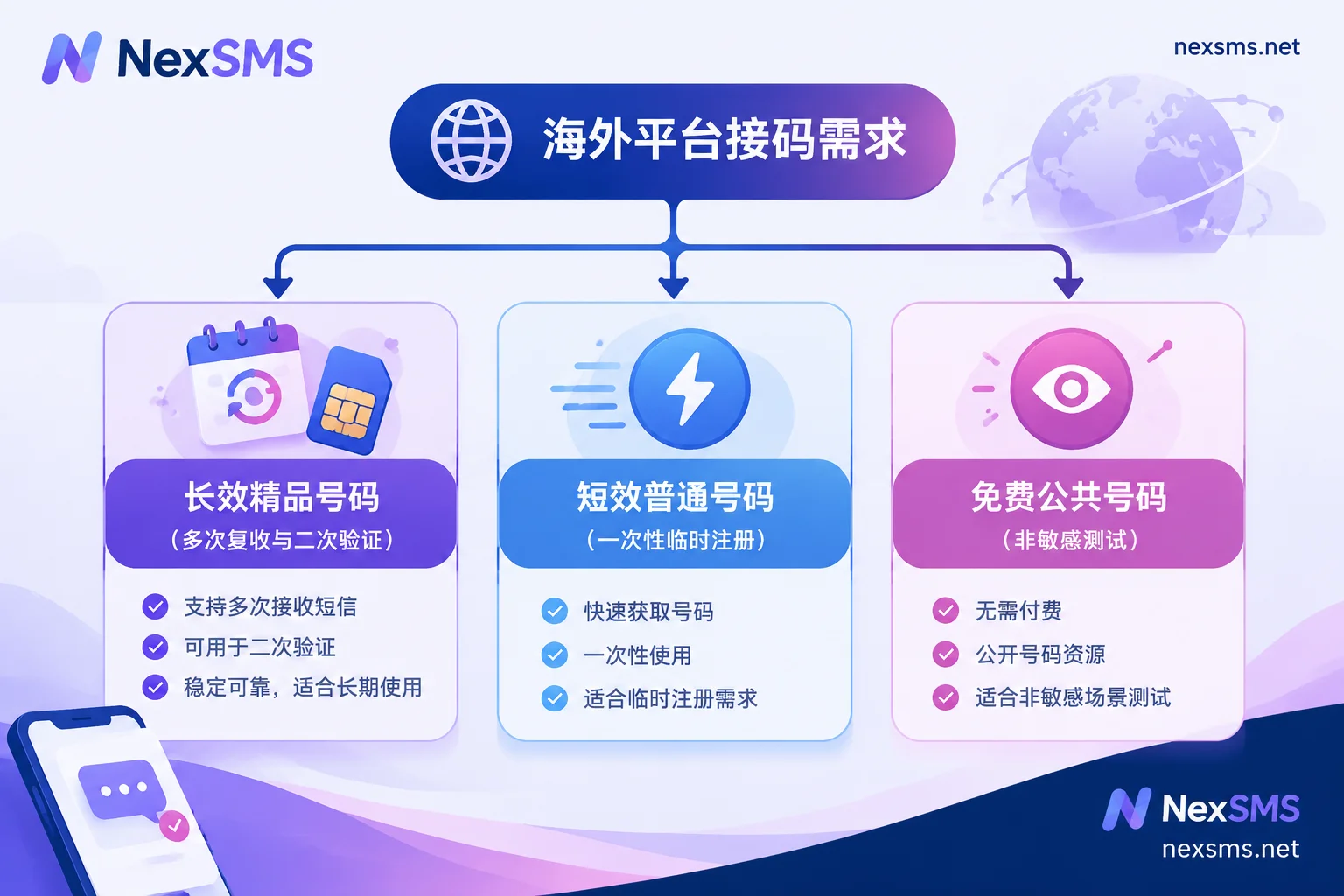
2026 SMS Verification Practical Number Selection Table: How to Choose Without Pitfalls in Different Scenarios?
To help everyone save money when registering and changing numbers, we have combined the experience from "How to Choose an SMS Verification Platform: 2026 Selection Checklist from the Shutdown of Old Platforms and Risk Control Upgrades" and organized the three number types currently available at NexSMS into the table below. Take 30 seconds to compare before ordering:
| Number Type | Billing and Holding Rules | Core Advantages | Applicable Scenarios | Pitfall Reminders |
|---|---|---|---|---|
| Long-term Premium Numbers | Hold within validity period, unlimited code reception on the same number; renewable before expiration | Genuine carrier local numbers (physical SIM/eSIM), not virtual landing numbers; supports repeated code reception | Claude / OpenAI main numbers, Telegram long-term customer service numbers, Apple / Google / Amazon / PayPal and other accounts requiring secondary verification or password recovery | Please keep an account ledger and renew in time before expiration to prevent loss of number due to non-payment |
| Short-term Regular Numbers | Pay-per-use, short validity period | Low cost, ready to use, suitable for single quick verification | One-time registration, temporary experience of an overseas service, test numbers not requiring long-term maintenance | A number can only receive one verification code, cannot be renewed, and cannot receive a second code on the same number |
| Free Public Numbers | Free and open (login required to view verification codes) | Zero-cost experience of the web real-time code reception process | Pure process testing, temporary browsing verification of no importance | The verification codes received by the several US public numbers listed on the official website are visible to everyone, never use for important or private accounts |
Multi-account team management tip: If you are managing a dozen overseas social media accounts (such as WhatsApp, X (Twitter), TikTok) or e-commerce accounts simultaneously, never bind all platforms to the same phone number. For the associated risks of sharing numbers across multiple accounts and hierarchical management methods, you can read further: "Operating Multiple Accounts: How to Allocate Phone Numbers: Tier by Account Value, One Number per Account, and Note Who Renews".
Four Steps to Efficiently Complete SMS Verification on NexSMS
Whether you are an individual user or a team/developer needing to manage numbers in bulk, the process of obtaining verification codes on NexSMS is very intuitive:
- First check app and country inventory: On the official website, check Choose Numbers by Country (for example, view the area codes and common uses on the US SMS verification page) or Check Prices by App to confirm that the target service currently has available number sources.
- Login and flexible recharge: Visit the NexSMS user dashboard to log in. The platform supports Alipay, WeChat, and cryptocurrency (USDT / BTC) recharges. Account balance does not expire (non-transferable); recharge according to actual needs.
- Real-time code viewing on web: After filtering and ordering by target app and country, enter the number into the target platform to trigger SMS delivery. The verification code will be displayed in real-time on the NexSMS web page, no additional software required.
- Developer API parallel integration (as needed): If you are a developer needing to integrate the "get number—receive code" process into automated programs or internal systems, NexSMS supports developer API integration, which can work in parallel with web code reception. Since the platform does not provide public API documentation, if you need API integration or encounter any problems during use, you can contact the 24/7 online Telegram customer service for support.
Facing constantly changing platform risk control and international SMS strategies, choosing the right number's "country of origin" and "long/short-term line type" is often more cost-effective and reliable than blindly retrying dozens of times. Now go to the NexSMS features page and choose the verification solution that suits your business scenario!


Comments(0)