 NexSms官方博客
Entering 2026, the risk control mechanisms of major overseas platforms (such as Google, Apple, X, WhatsApp, etc.) have entered the era of "deep filtering." The old simple and crude approach of "buy a temporary number somewhere, receive a verification code, and register" is facing an unprecedented risk of failure.
Why Is the "SMS Verification" You Commonly Use Getting Harder?
Recently, many users have reported that accounts they just registered are forced to undergo "two-factor verification" within a few days, while the previous number has long expired and become invalid. There are two main reasons behind this:
- Number Quality Stratification: By detecting the carrier attributes of numbers, platforms directly blacklist virtual number ranges (VoIP) and even trigger a "number unavailable" prompt at the registration stage.
- Increased Re-verification Frequency: To counter bulk account operations, platforms trigger random re-verification from time to time. If your account is bound to a short-term, one-time number, once re-verification is required, you will completely lose access to that account.
Short-Term vs. Long-Term: Your Account Positioning Determines Your Choice
In NexSMS's view, the use of numbers must align with account value:
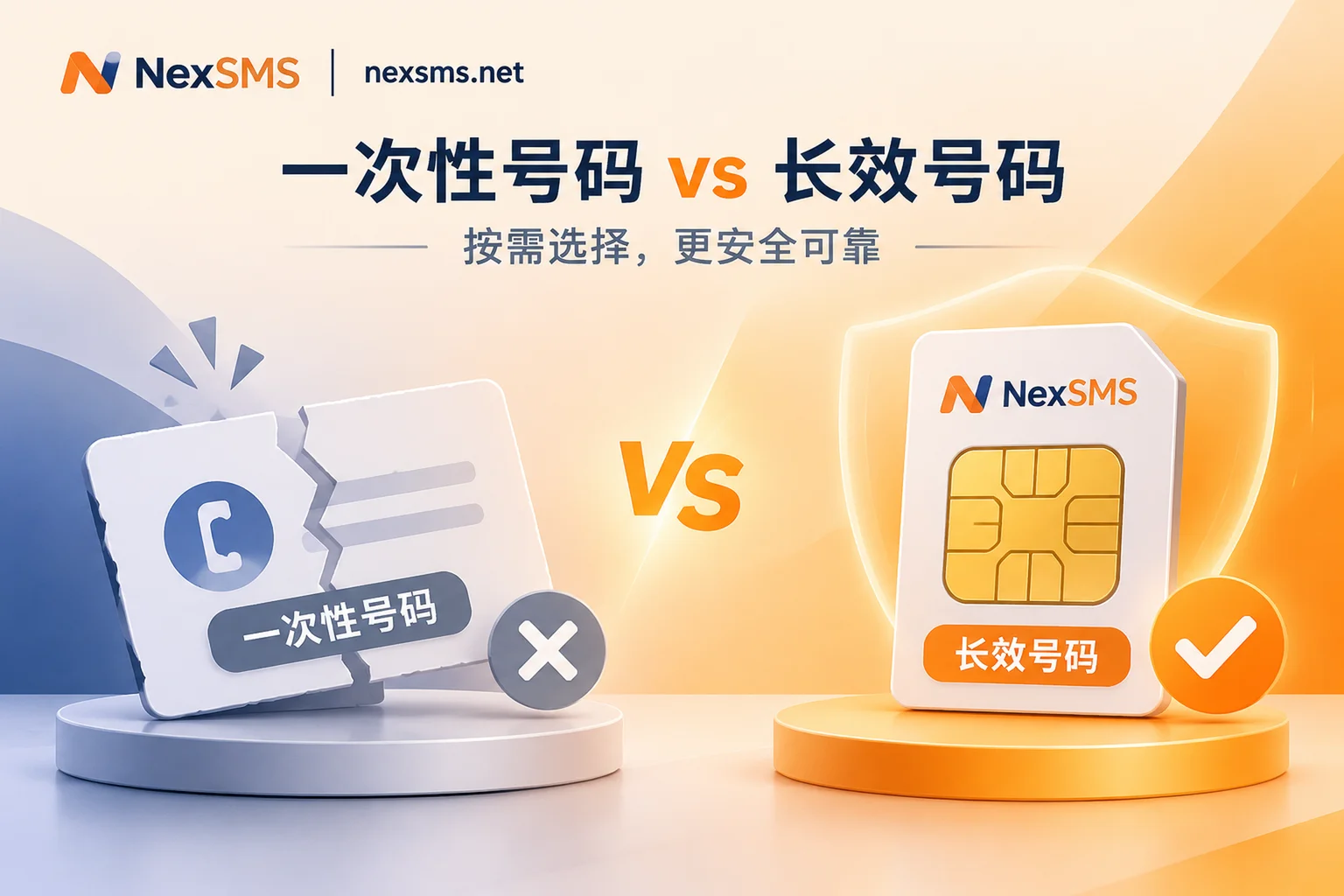
- Short-term regular numbers: Suitable for extremely temporary testing or extremely low-frequency one-time registrations. If you have no need for subsequent asset accumulation on the account, short-term regular numbers remain a cost-effective choice.
- Long-term premium numbers: This is currently the "security foundation" for overseas social media, payment, and e-commerce accounts. Long-term numbers are real local carrier numbers, not virtual landing numbers, and offer extremely high stability. During the validity period of a long-term premium number, you can receive two-factor verification codes at any time, supporting account recovery and long-term binding, and avoiding "account assets dropping to zero" caused by number recycling.
Core Account Retention Strategy for 2026: Don't Put All Your Eggs in One Basket
Facing increasingly strict overseas risk controls, the following "tiered number management" strategy is recommended:
- Choose numbers by country to avoid pitfalls precisely: Risk controls vary greatly across regions. For example, for accounts in the United States, prioritize local physical number ranges. Before placing an order, be sure to refer to the latest SMS verification instructions for each platform and avoid high-frequency restricted number ranges.
- Use APIs for automated monitoring: For teams managing large numbers of accounts, manual code receiving is no longer realistic. By integrating automated workflows through the developer API, you can not only achieve parallel number acquisition and code receiving, but also monitor number status in real time, ensuring that verification codes can be obtained immediately when risk control is triggered.
- Renew in time to protect your assets: The value of long-term numbers lies in "ownership." Don't wait until they expire to remember to renew. Holding them in advance and renewing as needed is the cheapest way to protect your accounts.
Conclusion
Don't risk losing hundreds, thousands, or even more in digital assets just to save a few dollars on a number. If you need account registration, number rebinding, or help dealing with frequent two-factor verification requirements, please check NexSMS pricing and inventory and equip your core accounts with a "long-term valid" pass based on your business needs.
If you have any questions about using numbers, you can contact Telegram customer service for 24/7 consultation at any time.