 NexSms官方博客
Cross-border e-commerce standalone site customer service number setup guide: first determine the channel, then choose the country code, distinguish short-term vs. long-term numbers, clarify ownership and handover, and finally prepare a recovery plan. These five layers form the complete setup path for a customer service number. In 2026, Meta is advancing WhatsApp's Username and BSUID mechanisms, shifting customer identity from phone numbers to structured IDs, but the number remains the entry point for activation and verification, making these five layers even more important.
Direct Answer: How to Set Up a Customer Service Number for a Standalone Site? The Five-Layer Configuration Sequence Explained
Let's get straight to the point: setting up a customer service number for a standalone site follows a five-layer sequence, each indispensable. The first layer is to define the channel, clarifying which entry points the number needs to support. The second layer is to choose the country and number segment, ensuring the number aligns with your target market. The third layer is to distinguish short-term from long-term numbers, as customer service entry points must use renewable long-term numbers. The fourth layer is to define ownership and handover, ensuring the number belongs to the company, not an individual. The fifth layer is to prepare a recovery plan to prevent service disruption if the number is lost or expires.
In May 2026, Meta clarified in developer documentation that enterprises using the WhatsApp Cloud API must complete technical integration preparation for the BSUID and username mechanisms by mid-2026, aiming to reduce reliance on phone numbers as sole identity identifiers. However, this does not mean customer service numbers are no longer needed—registration, verification, and recovery still depend on phone numbers, so compliant, renewable numbers remain infrastructure.
Layer 1: Define the Channel First—List All Entry Points Before Setting Up the Phone Number
Don't rush to buy a number. First, list all customer service entry points. Common entry points for standalone sites include three types:
- On-site forms and page displays: Phone numbers or WhatsApp buttons on the page, where customers may directly call or click.
- WhatsApp Business inquiries: Customers initiate chats via WhatsApp, which requires a linked number.
- Call-back numbers in emails or tickets: Customers may call back after receiving emails, and this number must be reachable.
First determine the number and priority of entry points to assess how many numbers are needed and which ones must be able to receive SMS verification codes. For example, a WhatsApp Business number must receive verification texts, while an on-site display number may not. After clarifying the entry points, configure accordingly.
Layer 2: Which Country Should You Choose for the Customer Service Number? Market Consistency Takes Priority Over Cost
The country of the customer service number should match your primary customer market. For instance, if most customers are in the US, choose a US local number; if in Europe, choose a number from the corresponding country. Local numbers are easier for customers to recognize and dial, and are less likely to trigger anomaly flags when registering and displaying on platforms. Cost differences should not be the primary decision factor, because the core of a customer service number is trust and stability—a cheap number that is hard to reach or easily fails is actually more expensive.
If you cover multiple markets, consider assigning a number per market, each being a local number, and use routing or manual assignment. For specifics on choosing a country, refer to the approach in Virtual Number Country Selection: first look at customer distribution, then compare source stability, not just price.
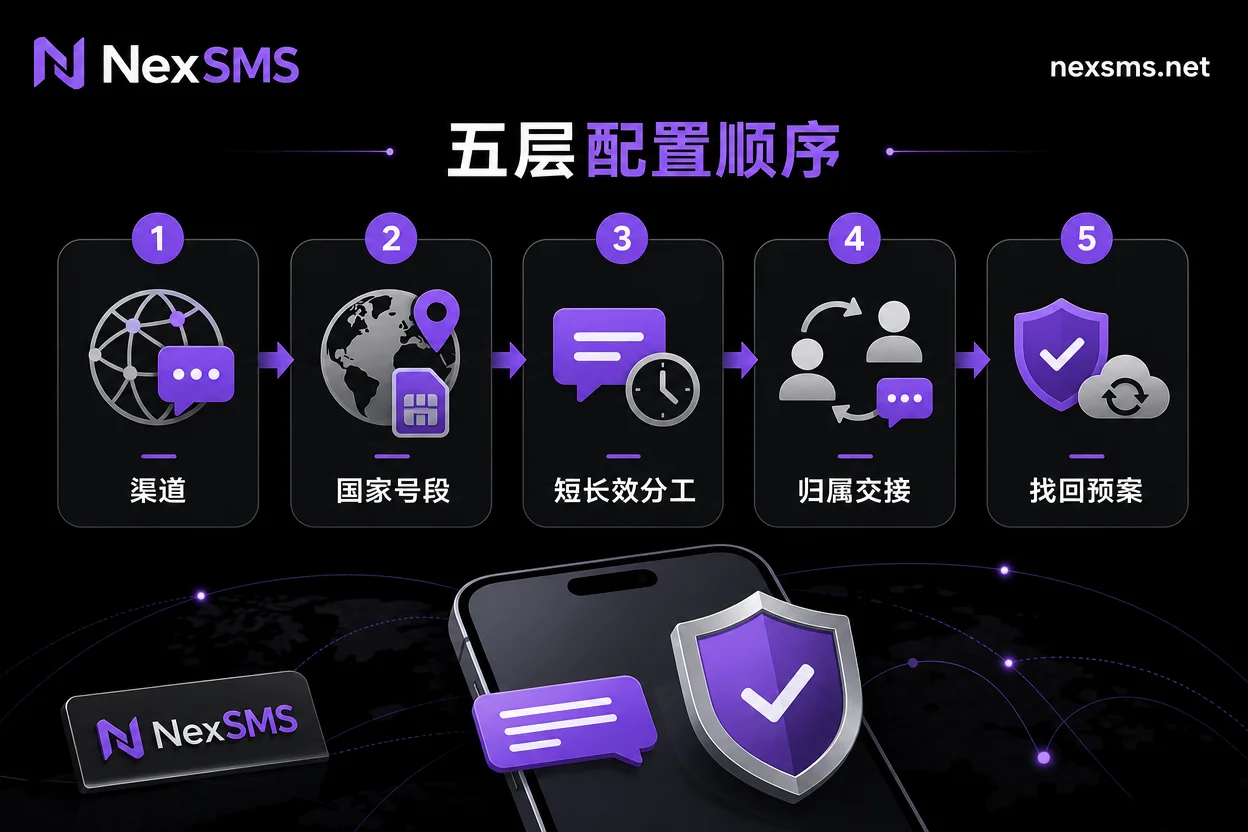
Layer 3: Division of Short-Term vs. Long-Term Numbers—Use Short-Term for Testing, and Long-Term Renewable Local Numbers for Customer Service Entry Points
This guide dedicates a separate layer to the division between short-term and long-term numbers for a straightforward reason: many teams use virtual numbers for testing, which is fine, but the scenarios must be distinguished. For testing phases (e.g., running through verification flows, trial registrations), short-term numbers are acceptable due to low cost. However, once a number is to be printed on the website, linked to WhatsApp Business, or written into email signatures, it must be replaced with a renewable long-term local number.
Why? Because short-term numbers are reclaimed upon expiration, causing immediate issues in the customer service chain: customers can't call back, WhatsApp accounts can't be re-verified, and accounts may even be restricted. Can cross-border e-commerce use virtual numbers for customer service? Yes, but only during the testing period. Core customer service entry points must use long-term numbers. For the difference between short-term and long-term numbers, see Short-Term vs. Long-Term Numbers: in one sentence, only renewable numbers are your assets.
Layer 4: Number Ownership and Personnel Handover—How to Build a Minimal Five-Column Ledger
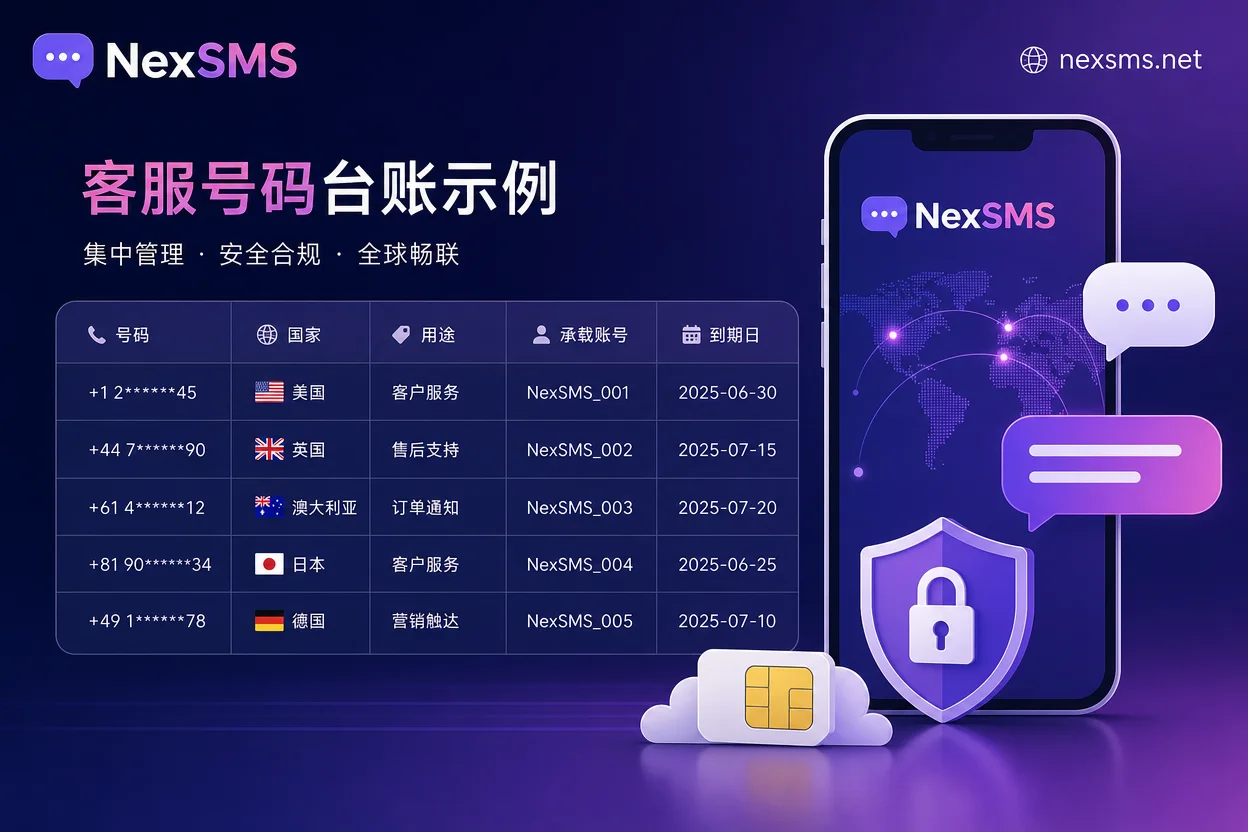
The customer service number must belong to the company, not to an employee's personal number. If a personal number is used, when the employee leaves, the number goes with them, severing customer contact. It is recommended to create a minimal five-column ledger:
| Number | Country | Purpose | Associated Account | Expiration Date |
|---|---|---|---|---|
| +1 555 0100 | USA | WhatsApp Business main account | Placeholder email | 2026-12-31 |
| +44 20 7946 0000 | UK | Website contact page | - | 2027-06-30 |
| +61 2 9374 0000 | Australia | Customer service email ticket system | - | 2026-09-30 |
Add a sixth column "Owner" to the five columns, and upon handover, transfer associated accounts and renewal responsibilities item by item according to the ledger. How to hand over a customer service number when an employee leaves? Simply update the ledger owner, reset account passwords, and ensure the number itself remains unchanged. This way, customers are unaware, and business continues. For a more detailed ledger specification, refer to Enterprise Business Number Procurement and Internal Ledger Checklist.
Layer 5: Recovery Plan—How to Keep the Customer Service Chain Uninterrupted When Numbers Are Lost or Expire
The number is infrastructure, so a recovery plan is essential. Prepare according to this checklist:
- Expiration reminders: Set up three-level reminders in the ledger: 30 days, 7 days, and 1 day before expiration.
- Alternative verification methods: Configure non-SMS two-step verification, such as email or authenticator apps, for key accounts (like WhatsApp Business).
- Fallback entry points: Use on-site forms and email as backup contact channels during number unavailability to ensure customers can reach you.
- Number replacement process: Prepare announcement templates in advance, update the website, email signatures, and WhatsApp profile synchronously when changing numbers, and leave a message on the old number directing to the new one.
What happens if a customer service number expires and is reclaimed? At worst, customers cannot call back; at worst, accounts cannot be recovered. With a plan, losses can be minimized.
After Username and BSUID: Customer Identity Decouples from Phone Numbers, But Numbers Remain the Activation Entry Point
Meta's BSUID and username mechanisms are shifting customer identity from phone numbers to structured IDs—that's the trend. But note, this does not mean "numbers are no longer needed"—registration, verification, and recovery still require phone numbers. The truth is: the number has shifted from "identity identifier" to "activation entry point." Therefore, you still need to manage numbers according to the five-layer sequence, just don't treat the number as the sole identity.
Why You Shouldn't Use Shared Numbers of Unknown Origin: Survival of Number Sources from a KYC Regulatory Perspective
In May 2026, the FCC published the FCC 26-27 proposed rule (FNPRM) in the Federal Register, requiring voice and VoIP providers to verify customer identity before activation and periodic reviews, and proposing a penalty benchmark of up to $2,500 per illegal call. The rule is still in the comment-gathering and rulemaking phase and is not yet in effect; however, from its regulatory direction, it is reasonable to infer that the survival period of shared number segments with unverifiable origins will further shorten. Customer service numbers must be from sources that can be explained and are renewable; otherwise, they may be deactivated at any time.
Using NexSMS to Implement the Five-Layer Sequence: Country Selection, Long-Term Numbers for Customer Service Entry Points, and Unified Code Reception via API
Using NexSMS as an example, you can implement the five-layer sequence as follows:
- Country selection: Choose numbers based on target markets, covering major markets like the US, UK, and Australia.
- Long-term numbers: Use renewable long-term local numbers to carry external customer service entry points, linked to WhatsApp Business.
- Short-term numbers: Use only for initial channel testing, not printed on any external materials.
- Unified code reception: In multi-number scenarios, use web-based code reception or API to receive verification codes centrally, coordinated with the ledger.
These are routine configuration actions; the key is to follow the five-layer sequence: short-term numbers stay in the testing phase, all external entry points use renewable long-term numbers, and they are registered in the ledger.
Pre-Launch Self-Checklist
Here is the self-check table to translate this guide into launch actions.
| Check Item | Complete? |
|---|---|
| Are all customer service entry points listed (form, WhatsApp, email)? | |
| Does the number country match the primary market? | |
| Is the external number long-term and renewable? | |
| Is the ledger filled with five columns (number, country, purpose, account, expiration date)? | |
| Are expiration reminders set? | |
| Are fallback entry points (form, email) available? | |
| Is alternative verification for associated accounts configured? |
FAQ
How should I set the customer service phone number for a standalone site?
First, determine the customer service entry points, then choose a local number based on the market, and ensure the external number is a renewable long-term one, not a personal number. During setup, display the number synchronously on the website, WhatsApp, and email signatures, and configure verification reception.
Can cross-border e-commerce use virtual numbers for customer service?
Yes, but only for testing or non-core scenarios. Customer service entry points must use long-term local numbers, because virtual numbers are mostly short-term and expiration leads to service interruption and difficulty passing platform verification.
How do I apply for a WhatsApp Business customer service number?
First, prepare a number that can receive SMS (preferably a long-term local number). Then register in the WhatsApp Business App or Cloud API, and receive the verification code as prompted. Note that before registration, confirm the number has not been previously linked to another WhatsApp account; otherwise, you need to unbind it from the original account. Free shared VoIP number segments may be deemed unsupported, so it is recommended to use regular carriers or compliant service providers.
How do I hand over the customer service number when an employee leaves?
Establish a number ledger. On departure, update the ledger owner, reset the associated account password, and after handover, have the new owner initiate a code reception test to confirm the link works before closing the old permissions. The core is that the number belongs to the company; personal numbers cannot be used as customer service numbers, otherwise there is no solution.
What happens if the customer service number expires and is reclaimed?
After reclamation, customers cannot call back, WhatsApp may fail to re-verify, and accounts may be restricted. Be sure to set expiration reminders, renew or replace in advance, and prepare fallback entries like on-site forms.


Comments(0)