 NexSms官方博客
There is no one-size-fits-all number for cross-border e-commerce account verification. First, determine whether the verification occurs during registration code reception, two-step verification, or as the business contact number retained by the platform, then choose the number based on its lifespan and exclusivity. When a store backend prompts for phone verification, many operators' first instinct is to "just grab any number to receive the code," but many sellers end up stuck with undelivered codes or subsequent association risk controls. Getting the order right solves half the problem.
First, Answer: What Number Should You Use for Cross-Border E-Commerce Account Verification?
During registration, code reception is a one-time action, so a short-term number can be used. However, two-step verification and business contact numbers required by the platform must be local regular numbers that can receive codes long-term. Amazon Seller Central's official guidelines explicitly recommend that sellers use local regular mobile operator numbers rather than virtual numbers, noting that generic virtual numbers are easily filtered by carriers or risk controls, leading to delayed or undelivered codes. Additionally, the U.S. FTC, under the INFORM Consumers Act, requires high-volume third-party sellers to maintain a verified valid business phone number and complete annual certification. This means that the number serving as a "business contact number" cannot be a short-term number that is recycled at any time.
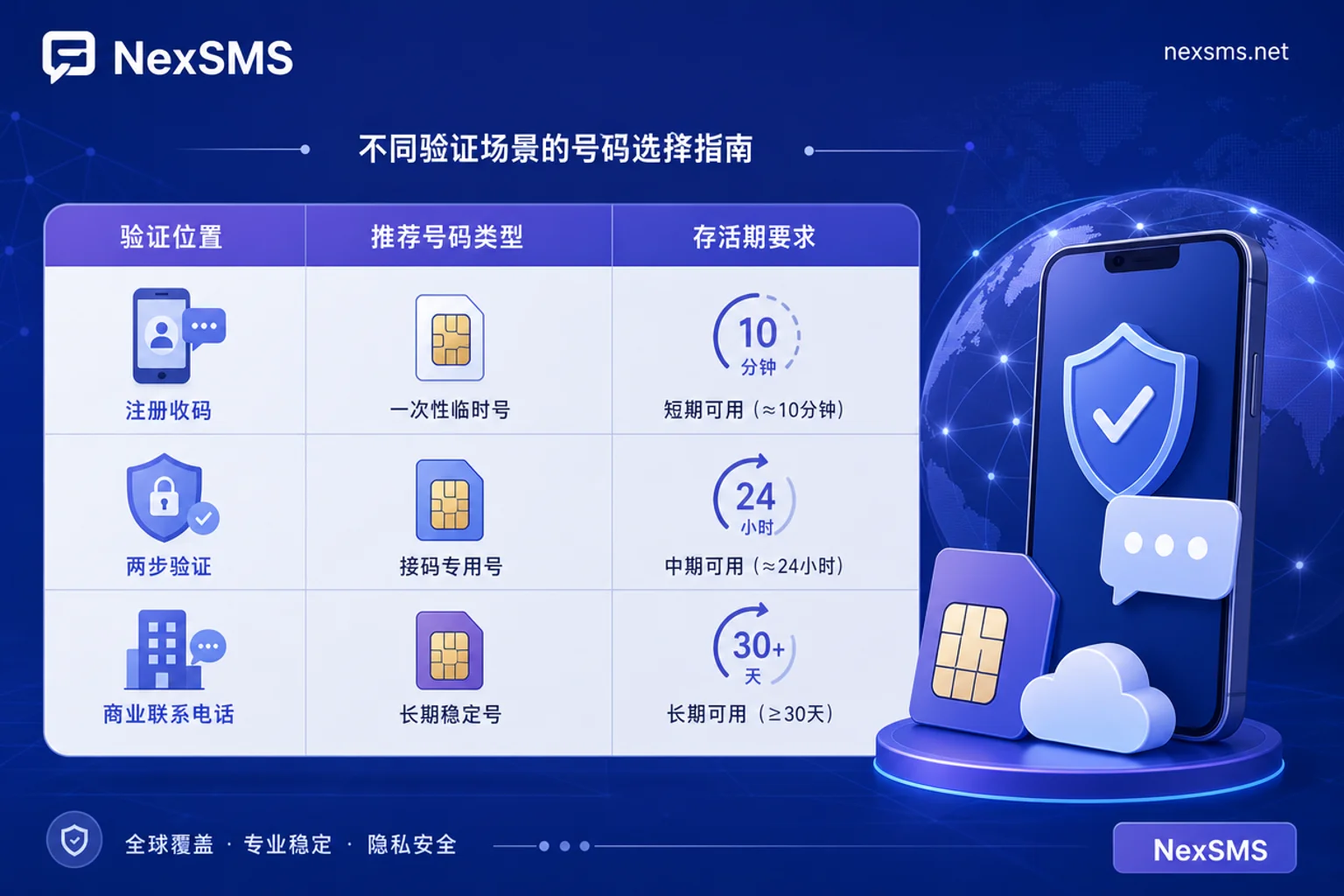
Cross-Border E-Commerce Account Verification Has Three Positions: Registration Code, Two-Step Verification, Business Contact Number
Cross-border e-commerce account verification typically occurs in three positions, each with completely different requirements for the number.
- Registration Code: Used only to receive a verification code once during registration, rarely used afterward, with the shortest lifespan requirement.
- Two-Step Verification: The platform repeatedly sends codes to this number during login, which is a "long-term repeated reception" action, so the number must be able to receive codes continuously.
- Business Contact Number: According to the INFORM Consumers Act, high-volume sellers must retain and annually verify a valid business contact number on the platform. The number not only needs to be valid long-term but also reachable at any time.
Mixing all three positions with the same short-term number is the root cause of subsequent code reception failures, account anomalies, and even association risk controls.
Step 1: Determine Which Position This Verification Falls Into, Deciding How Long the Number Needs to Live
First, ask yourself: After receiving this code, will the platform send messages to this number again?
- If it's just one-time reception during registration, a short-term number is sufficient.
- If the number will be used for login, password changes, or annual reviews later, you must choose a long-term renewable number.
Judgment Standard: Check whether the number is marked as "backup verification method" or "business contact number" in the platform settings. Once marked, the number's lifespan should be calculated in months or even years.
Step 2: Number Segment Attribute Check: Why Official Recommendations Favor Local Regular Operator Numbers
Amazon Seller Central recommends using local regular mobile operator numbers because generic virtual number segments are easily filtered by carriers or platform risk controls, causing delayed or undelivered codes. Before placing an order, verify the number segment's attribution and landing country:
- Segment Attribution: Confirm the number is a local segment of the target platform's country; cross-border numbers easily trigger risk controls.
- Landing Country: Choose a number from the corresponding country based on the store's registration site. For example, use a U.S. number for a U.S. site.
If you encounter "Amazon registration not receiving SMS verification codes," first check whether the number segment type and attribution are correct, then consider carrier interception issues. For country selection, you can refer to Virtual Number Country Selection to understand the characteristics of different countries' segments.
Step 3: Exclusivity Check: Shared Number Pools Simultaneously Cause Code Reception Failures and Association Risks
Public shared number pools are repeatedly reused, and the same number may be used by multiple users simultaneously. The direct consequences are:
- Codes Taken by Others: You don't receive the code, or the code you receive has already been used.
- Segment Flagged as Abnormal: Frequently receiving codes from shared pools can easily mark the segment as high-risk.
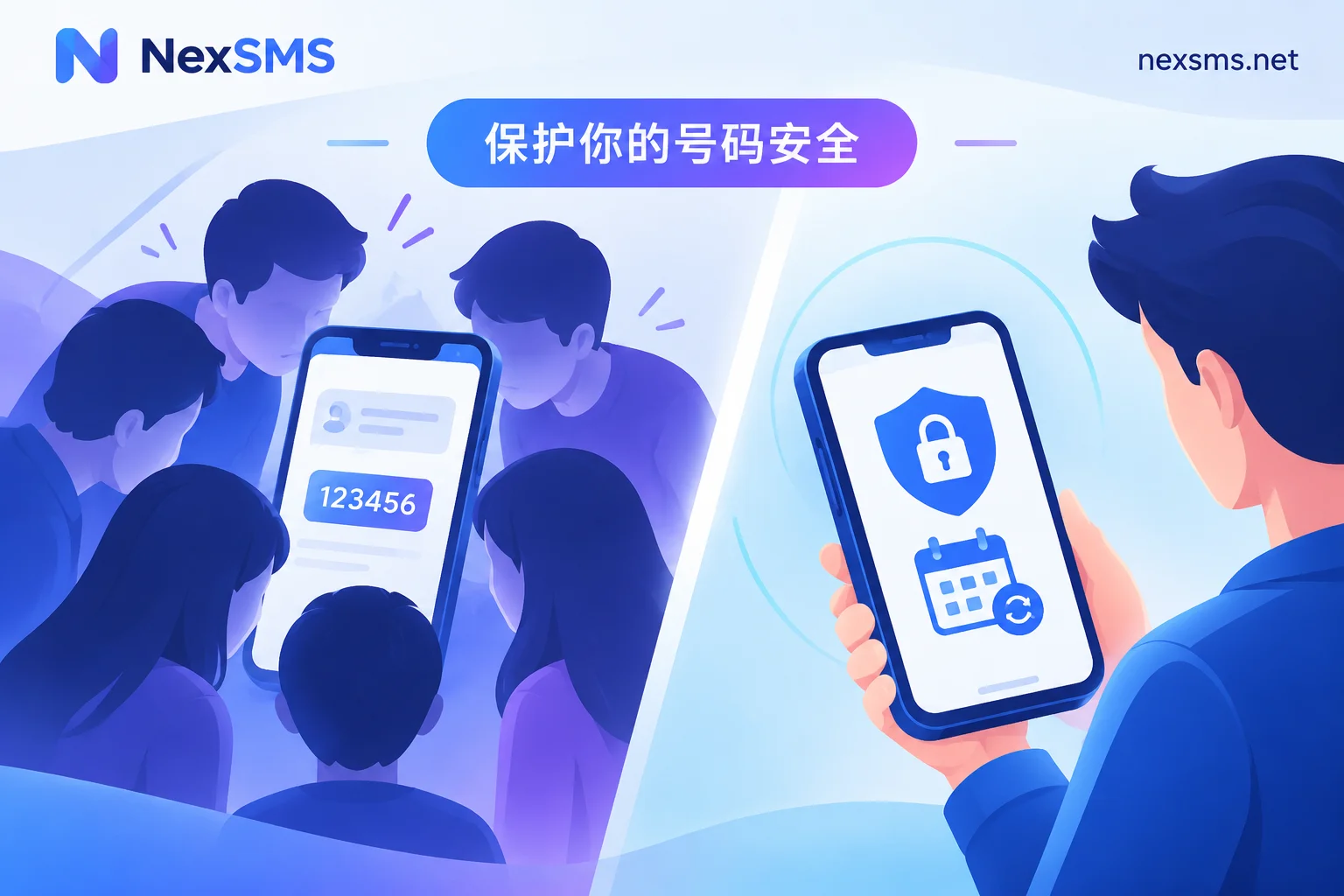
In multi-store scenarios, numbers must be exclusive. Note: The isolation mentioned here refers to information isolation for your own legitimate stores, not for evading platform real-name and association reviews.
Step 4: Annual Review Contingency: Under the INFORM Act, Business Contact Numbers Must Remain Valid
Under the FTC's INFORM Consumers Act, high-volume third-party sellers must maintain a verified valid business phone number and complete annual certification. This means the business contact number cannot be a short-term number; otherwise, the annual review will be blocked due to number expiration. This number must be reachable long-term. For maintenance methods, refer to Guide to Setting Up Customer Service Numbers for Cross-Border E-Commerce Standalone Sites.
It is recommended to establish a number ledger, recording the number's position, expiration time, and renewal reminders, to avoid certification failure due to number expiration.
Step 5: Recovery and Handover: Where Does the Chain Break When Numbers Expire or Employees Leave?
When a number becomes invalid, the chain reaction is significant: two-step verification fails, recovery entrances fail, and the business contact number stored on the platform no longer matches reality. The correct order to change a two-step verification phone number is: first add the new number in account settings, verify it, then remove the old number, avoiding an interim gap.
When employees leave, hand over the responsible numbers and verification permissions; otherwise, recovering login may be difficult.
Five-Step Checklist Comparison Table: Position, Number Type, Lifespan Requirement, Failure Signals
The table below summarizes the number types and typical failure signals for the three verification positions, serving as a quick reference before placing orders. Lifespan is an operational experience value derived from verification frequency and annual certification cycles; the platform has not published specific duration requirements, so please refer to actual store settings.
| Verification Position | Number Type | Minimum Lifespan | Typical Failure Signal |
|---|---|---|---|
| Registration Code | Short-term | Minutes to hours | Code delayed, already used by others |
| Two-Step Verification | Long-term local number | At least 3 months | Cannot receive code, unable to log in |
| Business Contact Number | Long-term local number | Over 1 year | Annual certification failed, information mismatch |
Upstream Tightening: FCC KYC Proposed Rules Impact Low-Quality Shared Number Sources
In May 2026, the U.S. FCC issued a proposed rule titled "Strengthening Know Your Customer Requirements" (FNPRM), requiring voice and interconnected VoIP service providers to verify customers' core identity attributes (name, physical address, government ID, etc.) during network access and renewal, with a proposed base fine of $2,500 per violating call. This rule is still in the public comment and feedback stage, and the final effective date and detailed exemption clauses are pending official legislation. However, the trend is clear: low-cost, anonymous, heavily reused public shared number pools face increasing elimination pressure, and sellers choosing such number sources may face sudden number invalidation.
Using NexSMS to Implement This Tiered Approach
Returning to the three verification positions, what you need is only four things: country matching, division of short-term and long-term numbers, code reception methods, and renewability upon expiration.
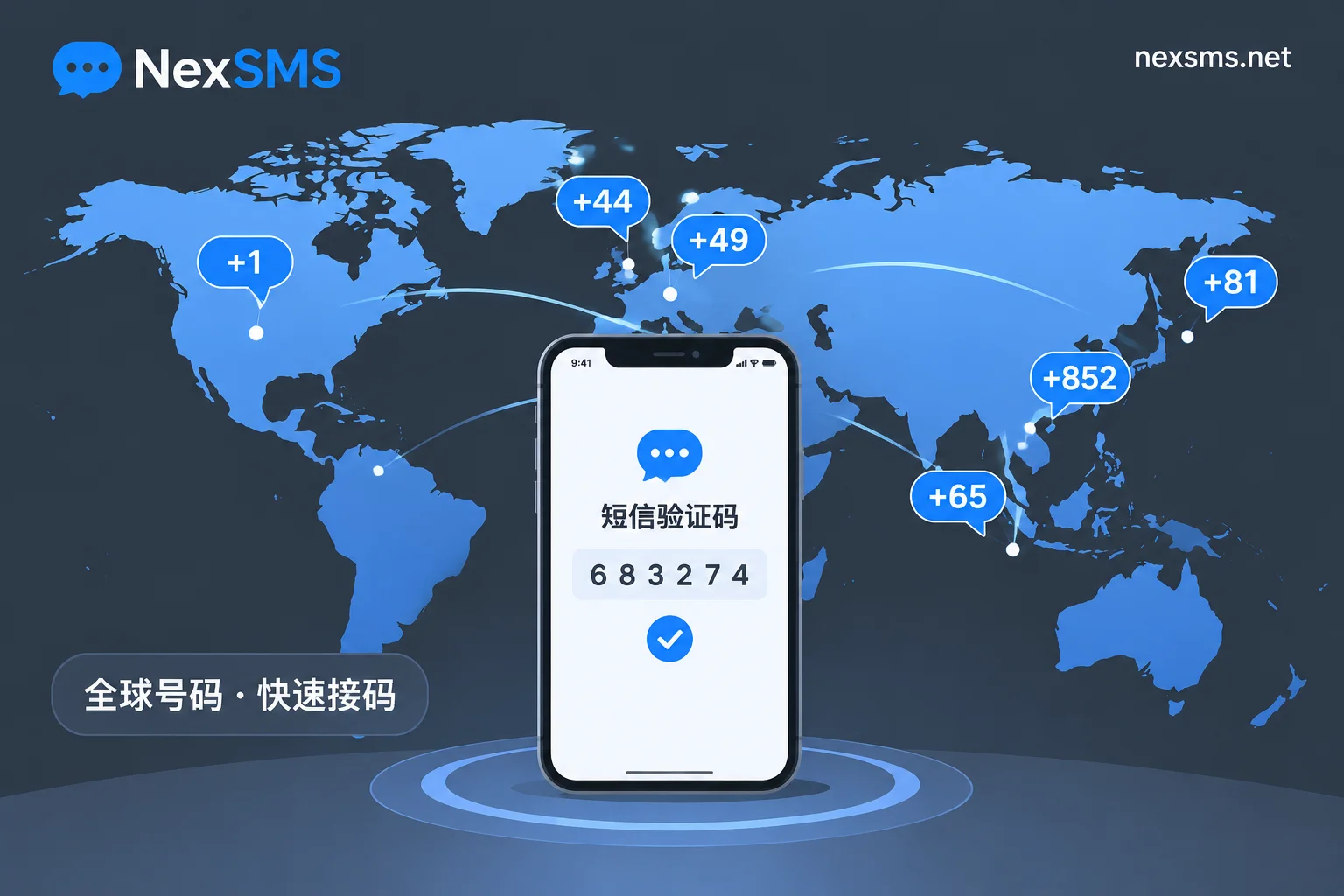
- Country Selection: Choose numbers based on the target platform's landing country, e.g., U.S. numbers for U.S. sites.
- Short-Term Numbers: Suitable for one-time registration code scenarios.
- Long-Term Local Numbers: Renewable, suitable for two-step verification and business contact numbers.
- Code Reception Methods: Use web-based code reception for manual scenarios, and connect to developer APIs for batch scenarios.
Note that NexSMS provides numbers solely for number isolation and information management of your own legitimate stores, not for evading platform real-name and association reviews. For specific operations in account verification, refer to Short-Term vs. Long-Term Number Differences and Not Receiving Verification Codes.
Pre-Order Self-Checklist
- [ ] Confirm the verification position (registration code / two-step verification / business contact number)
- [ ] Select a number from the target platform's country
- [ ] Verify the number segment type (local regular operator / virtual)
- [ ] Ensure the number is exclusive, avoiding shared pools
- [ ] Confirm the number's renewability period meets lifespan requirements
- [ ] Record the number's expiration time and handover responsible person
Frequently Asked Questions
Can Amazon sellers use virtual numbers for account verification?
As mentioned earlier, platforms officially recommend using local regular mobile operator numbers. Virtual numbers, especially generic ones, are easily filtered by carriers or risk controls, causing delayed or undelivered codes. If you must use a virtual number, choose an exclusive, long-term number with matching attribution, but there is no guarantee it will pass verification.
What if Amazon registration doesn't receive SMS verification codes?
First, check whether the number is a local regular operator segment and whether the attribution matches, ruling out virtual segment interception. Then confirm the number is not shared, and check if the SMS is blocked by phone security software. If you still don't receive it, try switching carriers or contact platform support.
How do I change my Amazon two-step verification phone number?
Log in to your Amazon account, go to "Login & Security" settings, add the new phone number and verify it first, then remove the old number to avoid an interim gap. Note that the new number should be a long-term local number that can receive SMS, and it should not be shared with other stores.
Will using the same phone number across multiple Amazon stores cause association?
Possibly, because platform risk controls capture overlaps in registration information, login devices, and other dimensions, and phone numbers are an important association factor. It is recommended that each store use an independent long-term local number.
What should be filled in for the INFORM Act seller contact phone annual certification?
Under the INFORM Consumers Act, high-volume third-party sellers must retain a valid business contact number on the platform and verify it annually. The number must be reachable long-term and cannot be a short-term number. When filling it out, ensure that the number's attribution and real-name information match the store entity.


Comments(0)