 NexSms官方博客
Getting a US phone number for verification doesn't necessarily mean you have to buy a physical US SIM card or sign up for an overseas monthly plan. If your goal is just to complete registration, change binding, or receive two-factor authentication (2FA) SMS on overseas platforms, using an online verification platform to access real US carrier numbers and view verification codes in real-time on a webpage is much lower in cost and threshold. What really determines whether you can receive SMS is not whether you hold a physical card, but whether the number line is from a real mobile carrier (Non-VoIP) and whether you will need to use the same number to receive codes again in the future.
Many people searching for "US phone number verification" often try free SMS websites, TextNow, or plan to apply for a Google Voice number, only to hit walls. Below, we clarify the real situation in 2026, how to choose among 4 number sources, and the specific steps and troubleshooting order.
Why Free Solutions and Old Methods No Longer Work in 2026
In the past, people often relied on three zero-cost or low-cost methods to get US +1 numbers, but thresholds and risk controls have changed in recent years:
- Free public SMS websites are almost blacklisted by mainstream platforms: The same batch of public numbers is used by thousands of people every day for registration. Platforms check the number segment or usage frequency and directly refuse to send verification codes. Worse, the SMS content is public to everyone, so anyone can see the code you just received. These are only suitable for testing unimportant temporary pages (for specific security risks, see Why Free Public Numbers Are Unsafe).
- Google Voice and free VoIP apps have raised thresholds significantly: In 2026, applying for a new personal Google Voice number not only still requires binding a real valid US non-VoIP number but also triggers strict KYC identity verification, requiring US-issued documents and address. Apps like TextNow and Talkatone are VoIP lines, which many platforms reject at submission, and numbers may be reclaimed if not actively used for over 30 days (see Google Voice and TextNow Pitfall Alternative Analysis).
- Maintaining overseas physical cards / eSIMs is costly: If you only need to receive a few codes, or a team needs to manage multiple accounts separately by business, purchasing physical cards, researching whether phones support overseas eSIMs, and monitoring roaming and number retention costs can be time-consuming and have monthly fees. If risk control cancels orders or service is suspended, the hassle far exceeds one-time verification.
A Table to Understand How to Choose Among 4 US +1 Number Sources
Before choosing a US number, compare the 4 common types of number sources to see what each can and cannot do:
| Number Source Type | Line Nature | Acceptance by Mainstream Platforms | Can Be Used for 2FA / Recovery | Privacy and Exclusivity | Suitable For |
|---|---|---|---|---|---|
| Free public verification numbers | Public shared virtual pool | Low (often directly blocked) | No (expires anytime) | No privacy, SMS visible to all | Only for testing non-important websites, temporary downloads |
| Free VoIP app numbers | VoIP | Relatively low (OpenAI / Google / payment services often reject) | Unstable (easily reclaimed if idle) | Used within personal account | Only for normal calls in US/Canada or very few platforms that don't check line type |
| Short-term ordinary verification numbers | One-time numbers from online platforms | Medium to high (depends on app and risk control) | No (only receive once, no renewal) | Single allocation, not shared simultaneously | Accounts that are surely registered once and won't need phone re-verification later |
| Long-term premium local numbers | Real carrier local physical card / eSIM number segment | High (non-virtual landline, suitable for high-risk-control apps) | Yes (unlimited code reception within validity, renewable before expiry) | Exclusive holding within validity | Primary accounts, AI tools, cross-border e-commerce, social media and payment 2FA |
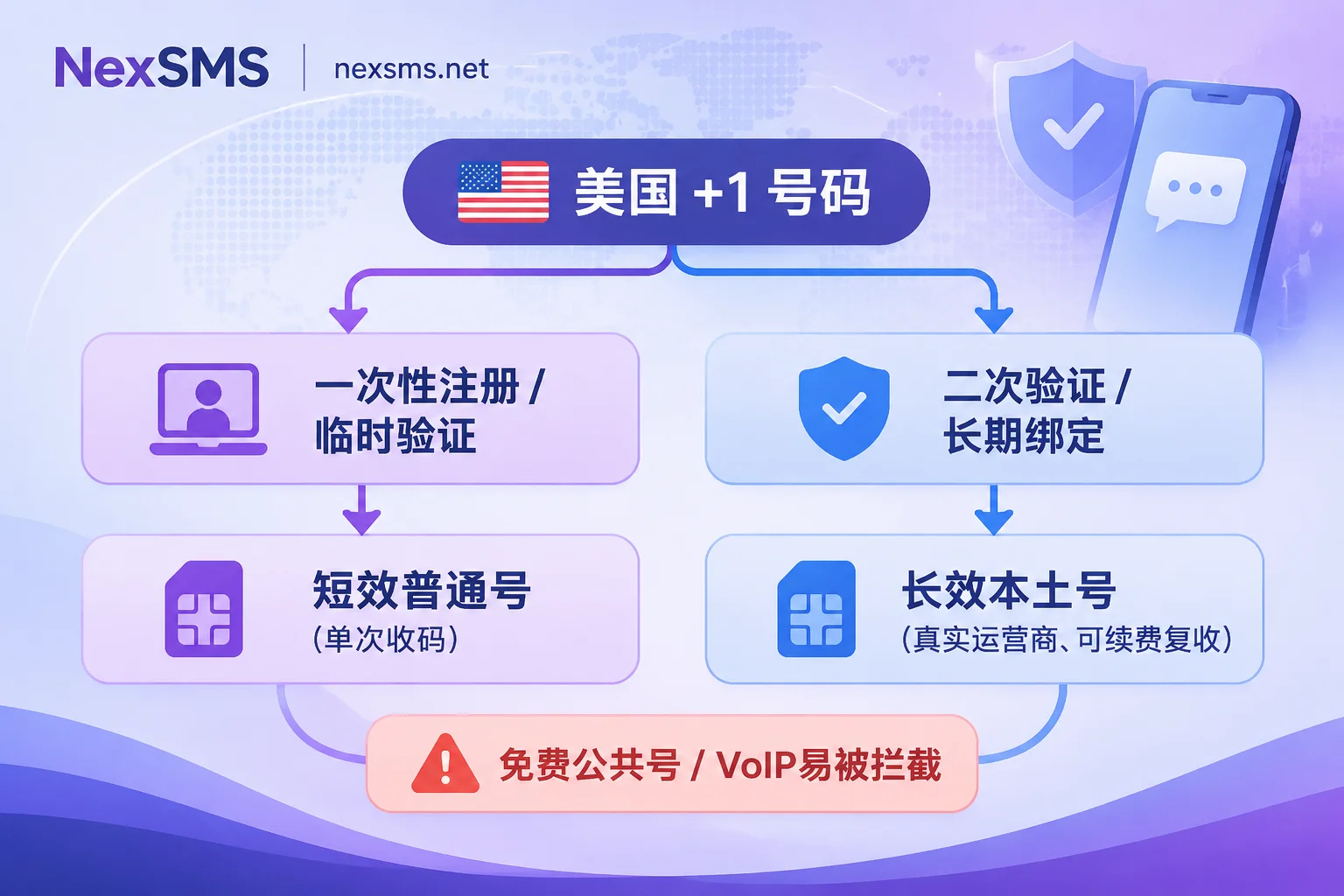
If you don't want to deal with physical cards yourself but need a real valid US number source, you can directly choose on an online verification platform like NexSMS:
- For one-time temporary verification: Choose short-term ordinary numbers, pay per use. A number receives a verification code only once, then expires; cannot be renewed or used again for a second code.
- For accounts that need re-verification or long-term binding: Choose long-term premium numbers. NexSMS long-term numbers use real US local carrier physical cards and eSIM resources, not virtual landlines. Within the validity period, the same number can receive unlimited verification codes. Renew before expiry to continue holding. Suitable for 2FA, account recovery, and multi-platform binding.
- Just want to experience the verification process first: The official website also lists a few free public US numbers (currently requires login to view codes), but the site explicitly warns not to use them for any important accounts.
How to Complete US Phone Number Verification Online Without a Physical Card? (4 Steps)
Step 1: Determine Whether the Account Will Trigger 2FA Later
This is the step most likely to waste money. For example, if you register for a small tool to view a document once, a short-term ordinary number is most cost-effective. But for accounts like OpenAI, Claude, Google, Apple ID, Telegram, WhatsApp, TikTok, Amazon, eBay, PayPal, platforms often require the original phone number to receive another code when logging in from a different location, changing password, or withdrawing funds. In such cases, it's advisable to use a long-term premium number directly to avoid being locked out days later without the original number (for selection logic, see How to Choose Between Short-term and Long-term Premium Numbers).
Step 2: Filter Number Sources and Inventory by Country and Application
Don't buy blindly and then try. First open the US phone number verification page (or check the verification guide by application for specific platforms like OpenAI), view real-time inventory, prices, and applicable services for US (+1) numbers. You can also compare starting prices and available numbers for different applications on the pricing page.
After deciding the type, log in to the NexSMS user console to top up (supports Alipay, WeChat, and cryptocurrencies like USDT/BTC; account balance never expires and is non-transferable). Select the US and target application, place an order, and get a number.
Step 3: Enter the Number and View Codes in Real-Time on the Webpage
Fill in the 10-digit US number (including +1 country code) into the target platform's verification form and wait for the SMS. The verification code will be displayed in real-time on the webpage, with no need to insert a physical card or configure roaming.
If you are a developer or need to integrate number acquisition and code reception into your own programs and automation scripts, NexSMS supports both web-based code reception and program API in parallel. Since the platform does not have public API documentation, contact NexSMS 24/7 Telegram support directly for integration methods.
Step 4: Keep a Renewal Ledger for Long-term Numbers
If using a long-term premium number bound to important business or social media accounts, be sure to note the expiration date and renew promptly before expiry to avoid inability to re-verify after the number is released. Specific validity days and renewal rules are subject to the official website page at the time of order.
Always Not Receiving SMS with US Numbers? Check These 5 Causes
Even with a +1 number, you may encounter "invalid number" or "no verification code received." Troubleshoot in the following order (for a more detailed funnel troubleshooting method, see How to Troubleshoot When No SMS Is Received After Submitting Number):
- Number line blocked by target platform: Some apps check the number's carrier and line type against a database before sending SMS, and directly refuse to send to VoIP or restricted segments (for North American carrier detection mechanisms, see 2026 US LNP and 10DLC Number Selection Analysis). If using a free or ordinary virtual number, switch to a real local carrier number.
- Network environment and +1 number span too large: Using a non-US node or frequently changing shared proxy while submitting a US number to register on a high-risk platform can trigger risk control before sending. Keeping a stable network exit matching the target business region is often more effective than repeatedly changing numbers.
- Frequent resends in a short time trigger rate limiting: Clicking "resend" three or four times after waiting 30 seconds can trigger anti-spam protection and lock the sending channel. It's generally recommended to wait 60–90 seconds patiently, and if not received, then troubleshoot the environment or change numbers according to platform rules.
- Number previously bound to the same app by a previous user: US carriers recycle and reassign phone numbers that are not renewed, so occasionally you may see "this number is already registered." Just try a new number.
- Mistakenly using a short-term number for 2FA: Short-term ordinary numbers cannot be reused or renewed for recovery. No platform can guarantee 100% verification success for any app; final success depends on the target platform's risk control rules at the time. For important accounts, choose a renewable long-term number from the start and use a clean registration environment.
Quick Answers to Common Questions
1. I only need to register a one-time trial account. Which is most cost-effective?
Choose a short-term ordinary number. Pay per use, receive one code, and you're done. No need for long-term monthly fees. If it's a test page with no privacy or recovery concerns, you can also try the free public numbers provided officially, but never use them for personal email, social media, or financial accounts.
2. I might need to log in again or change password later. Can I buy a short-term number first and then switch to long-term?
No. Short-term ordinary numbers cannot be renewed, nor can the same number receive a second code. If there's any possibility of triggering 2FA later, you should directly choose a long-term premium number when ordering.
3. Do I need a US version phone that supports eSIM to use this in China?
No. With online verification platforms like NexSMS, the number is hosted on backend channels, and verification codes are displayed in real-time in the browser (or returned to programs via API provided by customer service). There are no requirements for your phone model or local SIM slot.