 NexSms官方博客
As more outbound travelers leave behind the era of using SIM ejector pins on airplane tray tables, software-based SIM issuance has evolved into embedded subscriber identity modules (eSIM). Just scan a QR code to connect to a foreign base station. This convenience makes many feel the goodwill of technology.
However, behind the seemingly invisible digital signals, the boundaries of personal information are quietly shifting. Especially when we frequently register for various local services and social accounts on public networks or in international roaming mode, identity traces are being cross-referenced unknowingly. At this point, introducing virtual numbers for identity isolation becomes an important choice for protecting personal communication privacy.
Since eSIM has no physical chip, why can it still expose location and data?
In traditional thinking, removing the plastic card cuts off physical tracking, but cybersecurity academia reveals the opposite truth. In a recently updated ACM Conference on Computer and Communications Security paper, a research team from Northeastern University published findings on the security risks of travel digital cards.
The study conducted in-depth tests on 25 major international travel data service providers. Results showed that many cheap overseas data plans use "home routing" technology without users' knowledge. This means even if you are in Europe, all your network traffic is silently redirected to a third-party gateway thousands of miles away or servers in other regions.
A more critical risk lies in the fragility of the distribution system. Due to the low barrier for overseas distributors to access interfaces, some agent platforms can not only obtain users' International Mobile Subscriber Identity (IMSI) but even directly pinpoint device locations on a map to within 800 meters. This means that when you scan a QR code to download a profile at a foreign airport, your whereabouts and network footprint are already exposed to opaque intermediaries.
How does the tightening global regulation of physical SIM cards affect ordinary users?
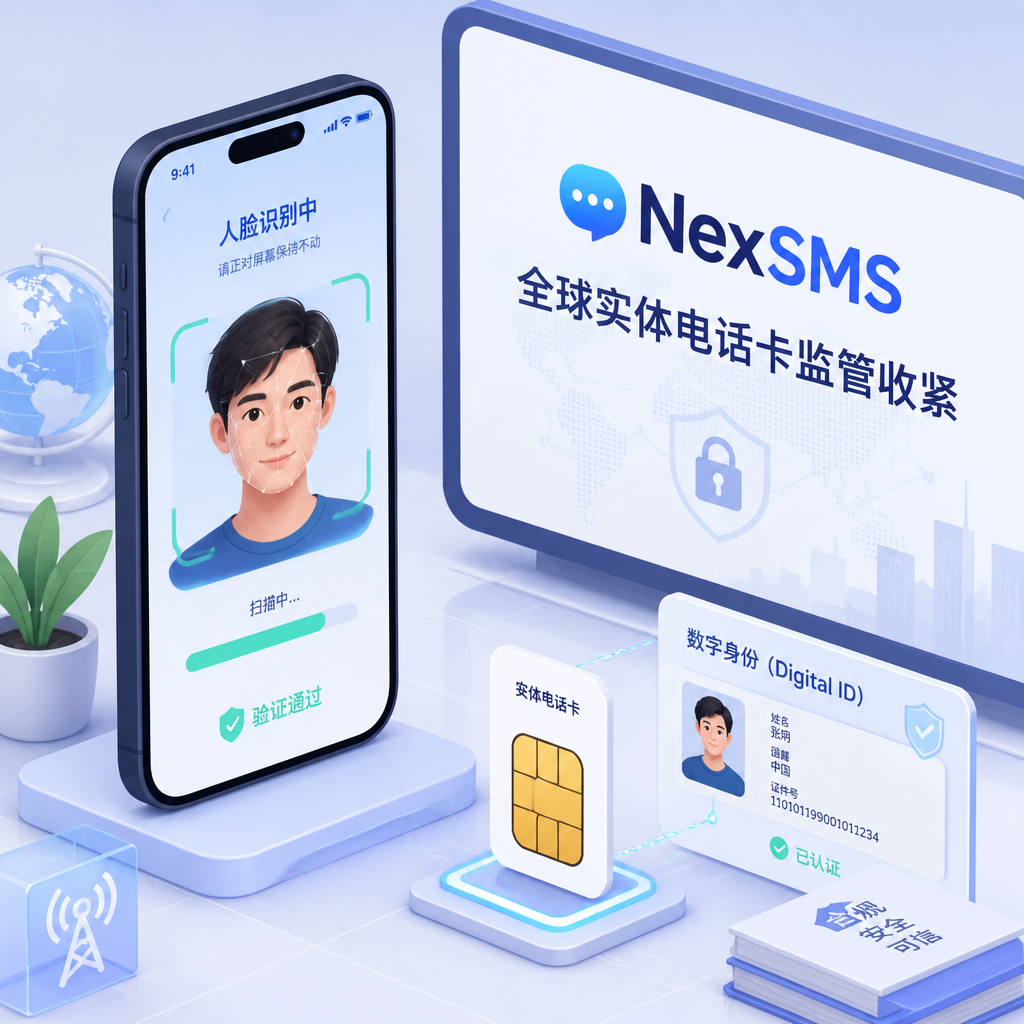
While the digital world's convenient channels are creating loopholes, the control ropes of the physical communication world are tightening. The South African government reached a consensus with local telecom operators to completely revise existing communication regulations. New rules require phone cards to be fully bound to personal digital identities and mandate the introduction of biometric technologies like facial recognition for real-name registration.
Not only in Africa, but the Philippine National Bureau of Investigation also disclosed that in the past few days, they arrested multiple suspects for illegally selling pre-registered SIM cards in raids across several locations. These cards are typically bulk-supplied to cross-border cybercrime centers. This series of tough actions sends a clear signal to the public: globally, a completely anonymous, buy-and-use physical phone card is becoming history.
For fresh internet operations staff or frequent business travelers crossing borders, this means your real facial data and identity information will be permanently bound to your phone number. If you habitually use your primary number to fill in registration codes on various insecure overseas platforms, every future database leak could directly link your virtual accounts to your real identity with precision.
Why are virtual numbers the best isolation solution to protect your primary number?
Facing this dilemma, we need to build a safe buffer between "getting a verification code to complete registration" and "preventing identity information leakage." Virtual numbers, as cloud-based communication resources, serve as an effective protective barrier.
By using virtual numbers, you can temporarily or long-term receive SMS without exposing your real mobile phone hardware characteristics. The core advantages are as follows:
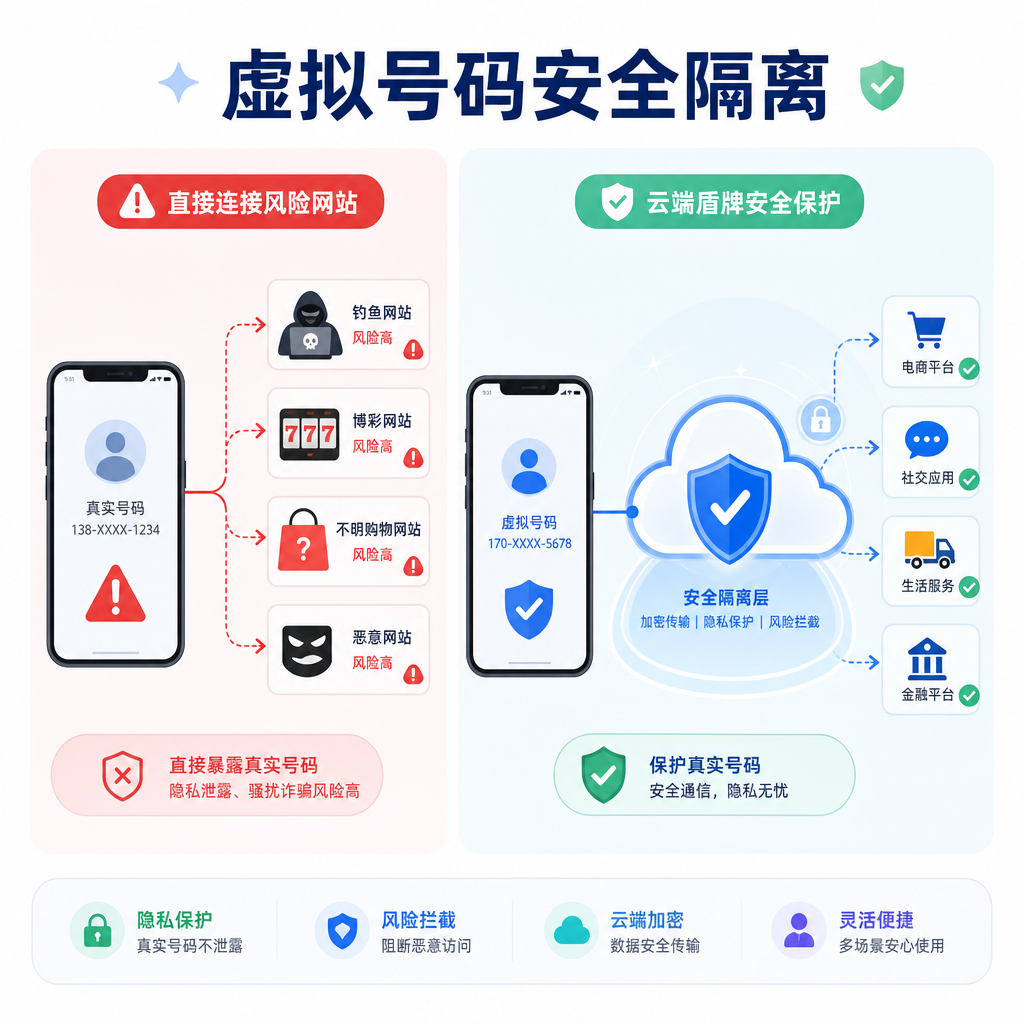
- Cut data routing tracking: SMS verification code reception does not rely on the travel data card's network channel, preventing traffic sniffing by intermediaries.
- Physical isolation from biometrics: No need to upload ID or facial information on various small platforms; complete registration using only a cloud virtual port.
- Mitigate SIM swap risk: Your primary number is not exposed to the public internet, so hackers cannot use social engineering to deceive operators and cause SIM swap crises.
- Purify primary number communication environment: Disposable temporary numbers can handle all marketing SMS, completely eliminating daily spam.
- Low-cost cross-border verification: No need to fly to a location or buy expensive roaming cards; flexibly call on number resources from around the world in the cloud.
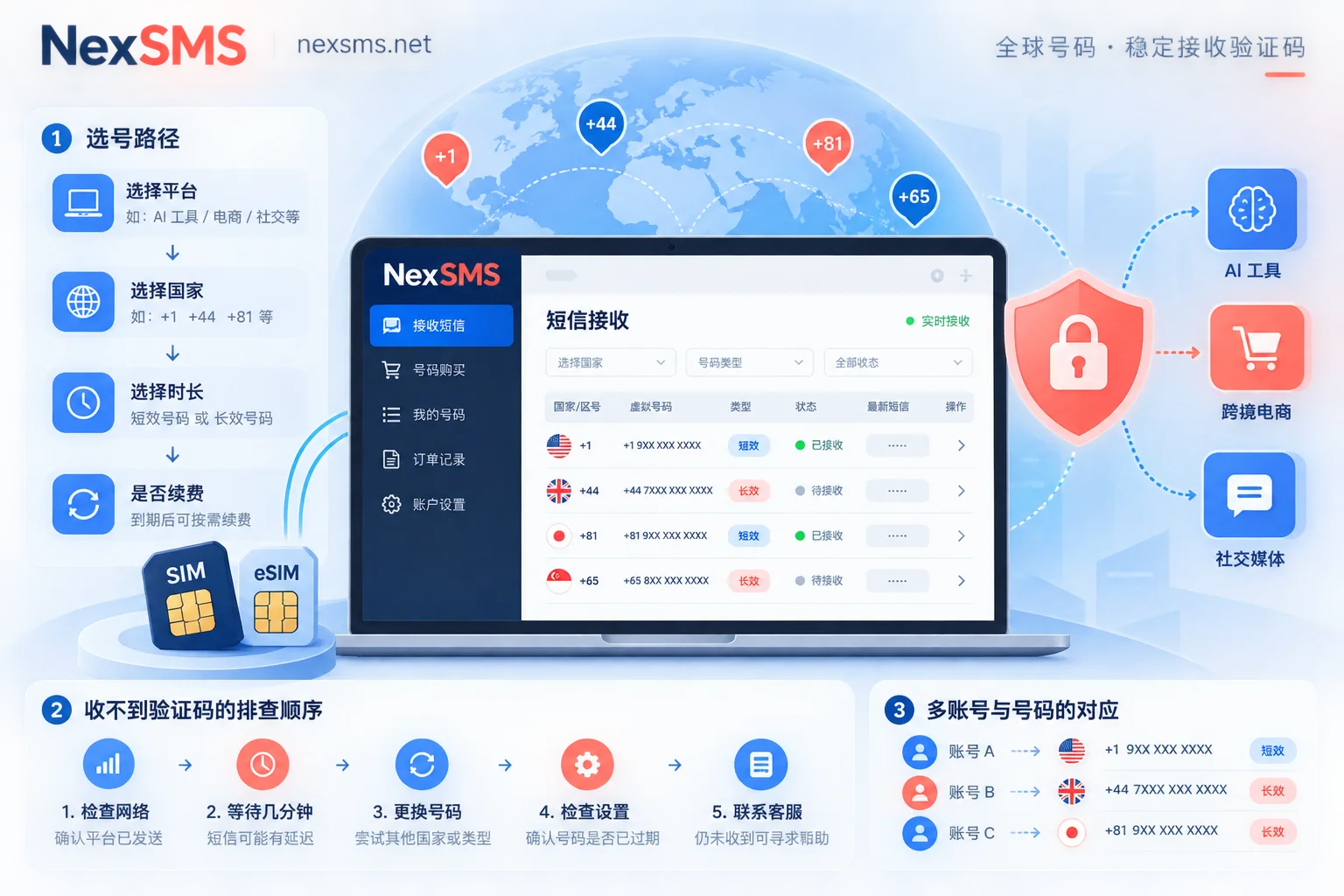
As a professional communication service provider, NexSMS helps users obtain clean number ports within seconds, completely separating core business accounts from edge test accounts, ensuring long-term security for the primary number at low maintenance cost.
How can beginners use SMS verification services to reduce privacy leakage risks?
For beginners new to SMS verification, the first golden rule is to stay away from "free public verification code pools." Many free websites publicly display all received SMS, which is equivalent to broadcasting your account ownership to the entire internet, easily leading to secondary account theft.
When choosing a platform, it is recommended that beginners adopt a "dedicated number for dedicated purpose" strategy. For important personal accounts linked to funds, choose dedicated number segments with longer rental periods and exclusive use. For one-time temporary test tools, you can use NexSMS's disposable verification code service to save budget.
During operation, if the system prompts verification failure, it is usually because the target application's risk control system identifies a specific data center IP. At this point, using a clean residential proxy network or trying a number with a different country code can effectively improve registration success. Finally, after completing the first SMS activation, it is recommended to enable software-based two-factor authentication (2FA) immediately in the account security settings, gradually replacing SMS verification and fundamentally locking down privacy loopholes.


Comments(0)