 NexSms官方博客
If you've recently tried to register for overseas software or log into cross-border accounts, you may have noticed that SMS verification codes, which usually arrive instantly, are suddenly not being received at all. As global telecom operators tighten their interception policies, many people are seeking alternative solutions. In this context, using a SMS verification platform to obtain temporary verification codes has become an emergency solution for many facing registration difficulties.
This is not due to a malfunction in your phone; it is mainly because the rules of cross-border communication are undergoing profound changes. In order to combat rampant spam and online fraud, regulators and operators in various countries have recently introduced strict new control measures, resulting in legitimate users' verification SMS being intercepted.
Global Operators' Anti-Fraud Upgrades Leading to SMS Reception Issues
The UK's Office of Communications (Ofcom) established mandatory new rules on July 15, requiring all mobile network operators to directly intercept, restrict, and dismantle fraudulent SMS messages during transmission. Additionally, the new rules recommend limiting the number of SMS messages that can be sent from pre-paid (Pay-as-you-go) cards, rendering many temporary cards used for international verification code forwarding ineffective.
At the same time, the SMS Sender ID Register implemented by the Australian Communications and Media Authority (ACMA) entered full enforcement in July. Any enterprise using an unregistered brand name to send SMS will have its messages directly marked as "Unverified" and quarantined on the user's mobile device, or even rejected by the operator.
In Asia, India's telecom ecosystem is also experiencing drastic changes. According to online community discussions on July 21, major Indian operators such as Airtel and Vodafone Idea have begun adopting extremely strict interception policies for arrears. Once a prepaid plan expires, even if it's only one day overdue, the system immediately cuts off all services including receiving SMS. Many users are thus unable to receive one-time passwords (OTP) from credit cards or banks, falling into a lock-in loop where they cannot receive codes due to service suspension, and cannot recharge online due to lack of verification codes.
Why Can't Your Phone Number Receive Verification Codes Normally?
With the continuous escalation of global communication risk control, the reasons why ordinary users cannot receive verification codes can be summarized as follows:
- Cross-border routing interception: After Ofcom's new rules, if cross-border SMS routing is identified as coming from a high-risk area, operators will activate defense mechanisms to intercept it.
- Unverified sender: Due to ACMA's new policy, system verification SMS from unregistered senders will be filtered and classified.
- Account arrears protection: Some operators lock the SMS channel immediately upon failed deduction, even shutting down free SMS reception services.
- Restricted shared virtual numbers: Many platforms, to prevent malicious registrations, automatically filter out low-quality VoIP numbers that have been compromised.
How to Solve Verification Code Reception Issues Using an SMS Verification Platform?
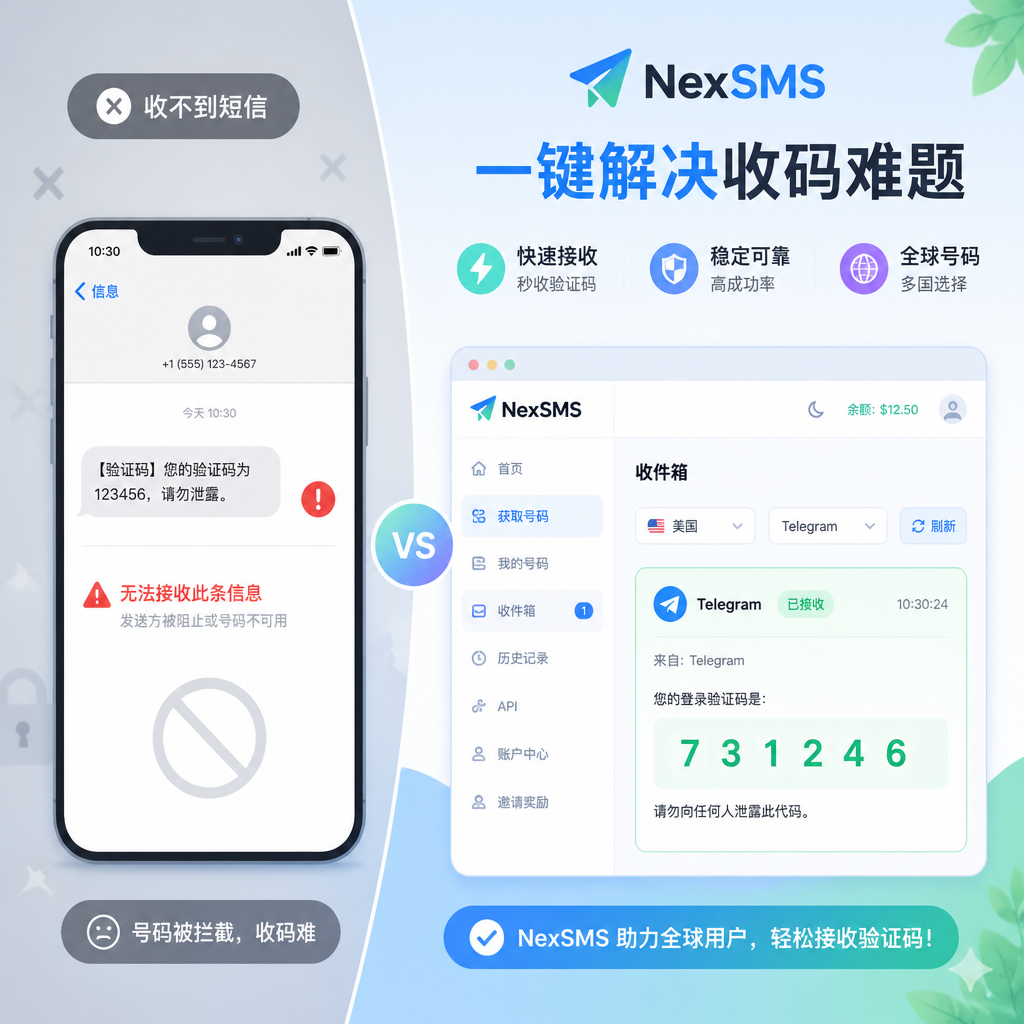
When your local SIM card cannot receive codes due to roaming restrictions, arrears, or operator interception, using an SMS verification platform to obtain verification SMS is an effective way to address the immediate problem.
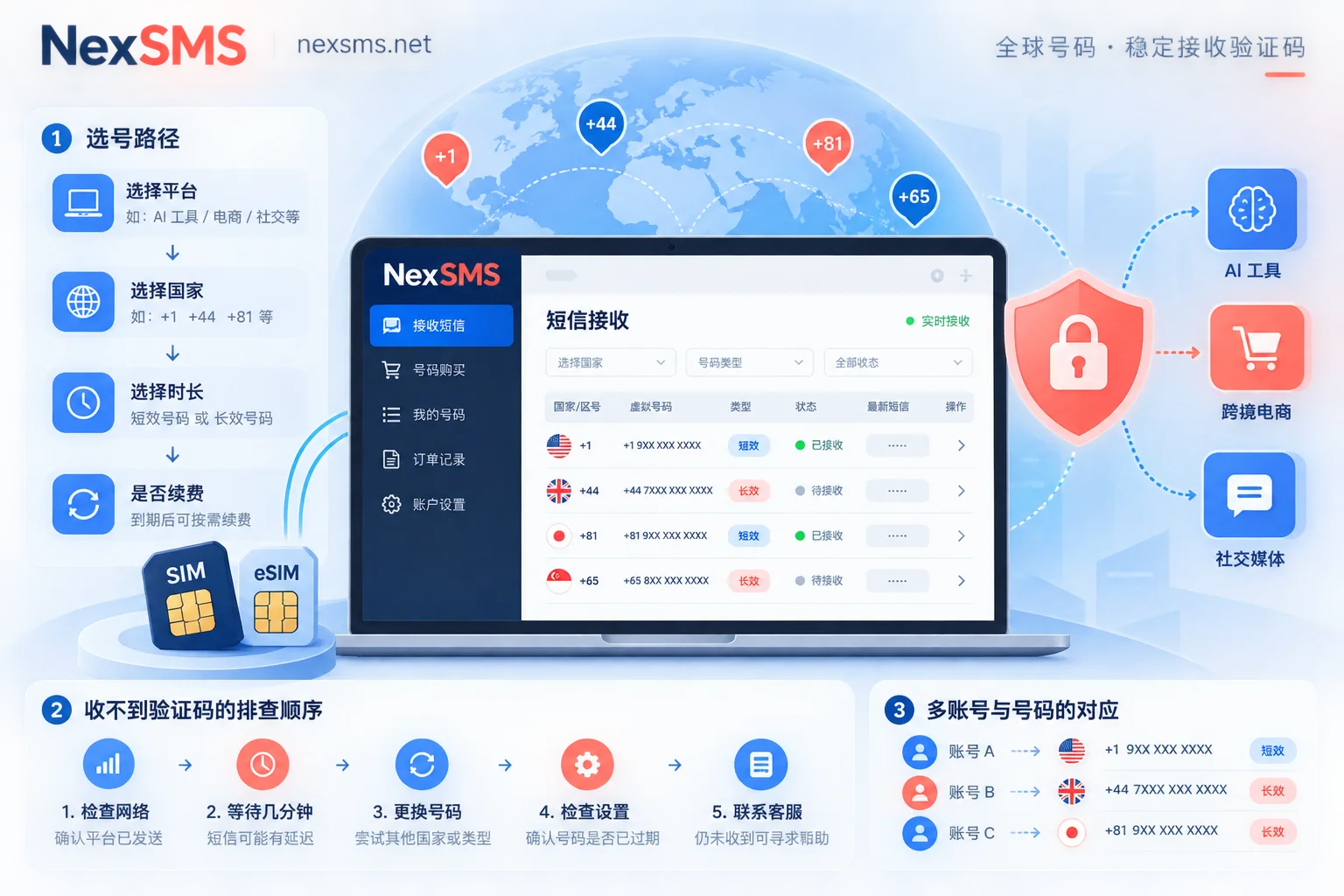
First, you need to register and log into your NexSMS account. In the account control panel, based on the platform you want to register on, enter the target application's name in the service search bar.
Then, filter by country and region options. It is recommended to prioritize selecting a number from the same country as the target software, for example, using a US number when registering for a US service. This greatly reduces the probability of risk control interception.
After obtaining a temporary number assigned by the system, copy and paste it into the registration or login page of the target software, then click to send the verification code.
Finally, return to the reception list of the NexSMS system, wait a few seconds, and you will see the SMS content synchronized in real-time. Copy the verification code and fill it into the registration box to complete the entire verification process.
Tips to Improve Verification Code Reception Success Rate
When selecting an SMS reception service, it is advisable to choose platforms that provide real physical SIM card number sources. Many traditional SMS platforms often use shared VoIP numbers, which are easily identified as high-risk by risk control systems, leading to prompts like "This number cannot be used for verification" during registration.
For important accounts that require long-term maintenance or have assets bound, such as social or payment accounts, it is not recommended to use one-time temporary reception services. Once such services expire, if you encounter two-factor authentication or device change login later, you will not be able to receive verification codes again. In such cases, using NexSMS's exclusive number rental solution is a safer strategy.
Additionally, when using reception services, ensure your browser is in private mode or use a clean IP environment. If your registration network environment is already abnormal, even if the number quality is high, it can still easily trigger the platform's interception mechanism.


Comments(0)