 NexSms官方博客
SMS Verification Codes Are Becoming Less Reliable
Registering or logging into various services still requires SMS verification codes, but industry signals are increasingly clear: relying solely on SMS OTP has exposed significant weaknesses. Platforms are tightening controls, regulators are taking action, and users face considerable risk if they casually use their primary phone numbers.
Research from Cambridge University found that disposable virtual numbers can bypass SMS verification on many social platforms at very low cost—sometimes under $0.30 for a US number, and as low as $0.10 in some countries. Tests showed it's not difficult to create fake accounts in bulk using these numbers. Another study monitoring large numbers of temporary numbers revealed that verification SMS received by such numbers grew from thousands to millions, primarily used to bypass verification and mass-create accounts, targeting social media, messaging, payment, email, and even AI tools.
This isn't just a black-market issue. For ordinary users, once their primary number is exposed, it invites harassment, spam SMS, and even more severe SIM swap attacks. When the primary number is tied to banking, payments, or email recovery, the potential damage is direct.
Phishing and Abuse Drive Up OTP Costs and Risks
SMS OTP is also vulnerable to phishing. Attackers use fake pages or real-time proxies to trick users into entering the verification code they just received, completing a login. The Hong Kong Securities and Futures Commission's recent action is telling: they required licensed crypto trading platforms and online brokers to stop using SMS, email, or app-generated OTP as the primary login and device binding method within 12 months, switching to phishing-resistant Passkey (FIDO2) or device-bound solutions. The reason is straightforward—in local cybersecurity incidents in 2025, phishing accounted for 57% and was rising significantly. Global crypto-related phishing losses remain high.
On the other hand, there are abuses like SMS pumping. Attackers find open OTP-sending interfaces and flood requests to send SMS to many numbers (sometimes high-premium routes they control). Each SMS costs the platform, and attackers share the revenue. A real case involved a startup that had its SMS balance drained shortly after launch; real users couldn't receive codes, forcing service suspension. Protection isn't difficult—IP and number rate limiting, verification code intervals, frontend CAPTCHA, and spending anomaly alerts—but many teams don't implement them before going live.
These trends have led platforms to tighten detection of virtual/disposable numbers. They maintain databases of known temporary numbers or subscribe to professional verification services to block high-risk numbers during registration. Free shared public number pools are more easily flagged, and success rates naturally drop.
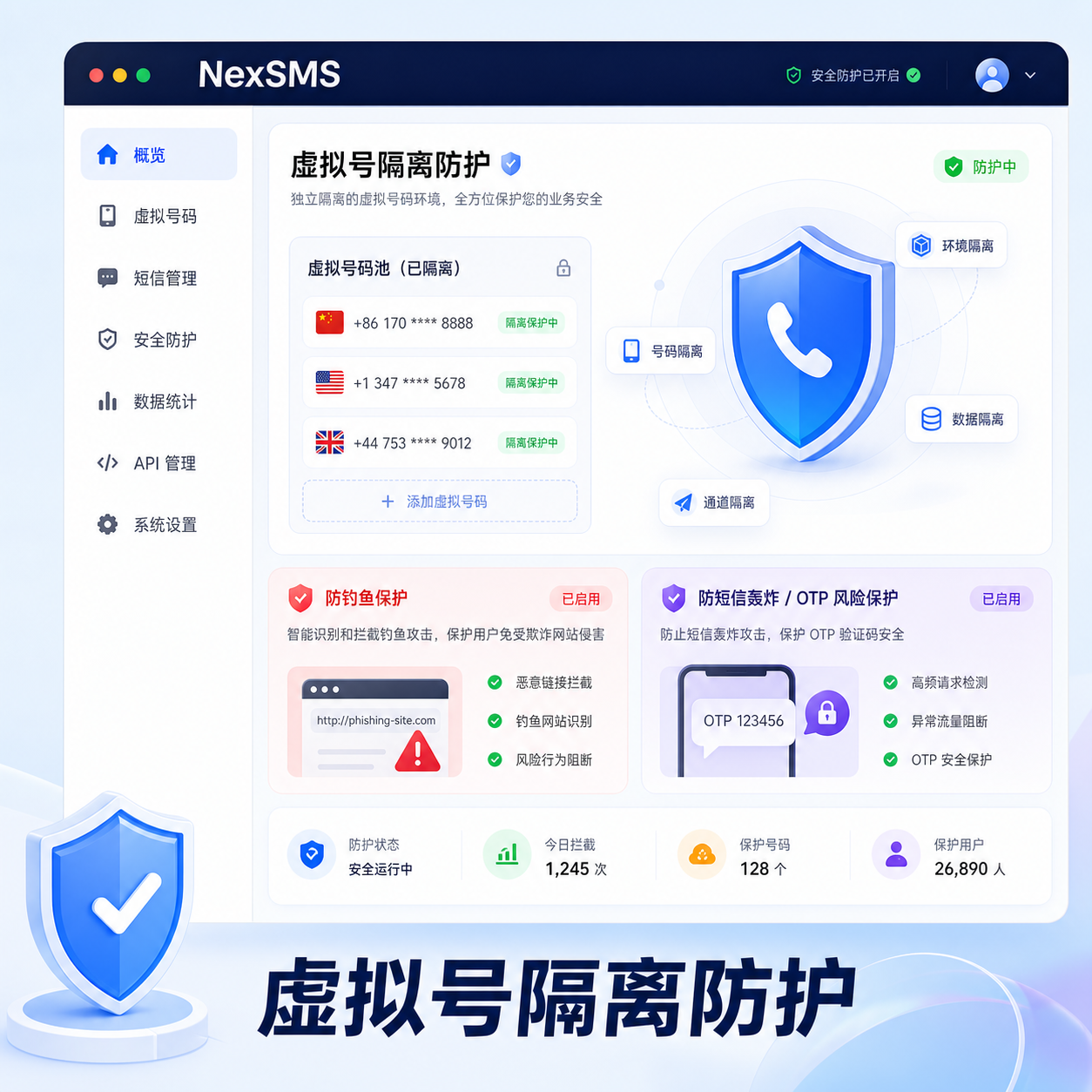
How Virtual Numbers Can Still Be Used: The Key is Isolation
Despite tighter platform controls, legitimate demand for virtual numbers hasn't disappeared. Privacy protection, testing/development, temporary registration, and multi-scenario isolation remain common use cases. The key is to avoid using your primary number for "rushing in"—instead, use virtual numbers as an isolation layer.
Modern virtual numbers are based on VoIP and cloud routing, and can be quite secure. Reputable services use TLS/SRTP encryption for transmission, AES-class standards to protect stored data, plus real-time fraud monitoring and access control. Compared to traditional fixed lines, cloud architecture actually makes it easier to add multiple protection layers. As long as users choose the right service and follow proper methods, they can protect their primary number while completing necessary verifications.
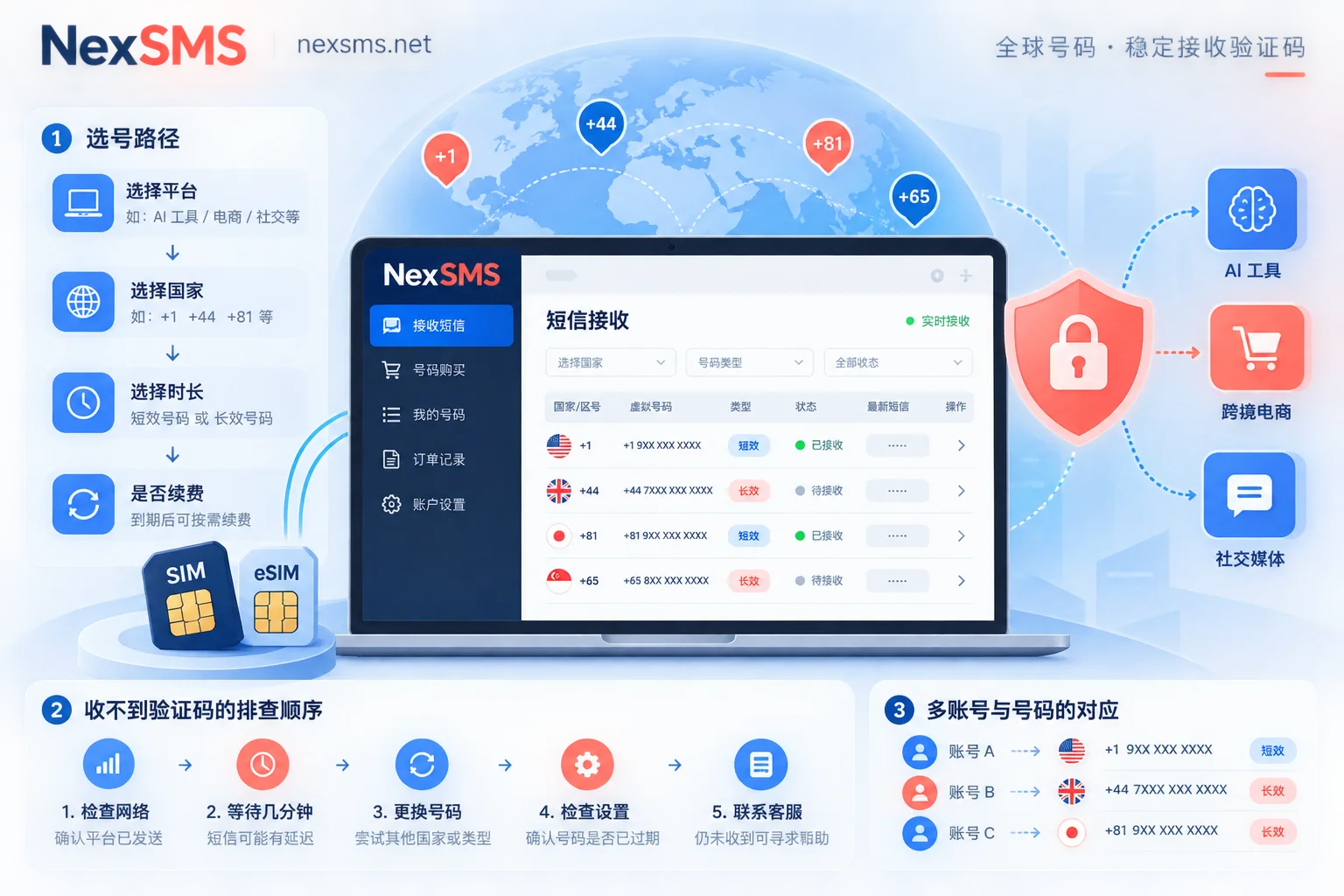
In practice, first distinguish your purpose. For one-time registration, short-term numbers are sufficient; for long-term accounts that require subsequent logins, prioritize stable numbers that can be rented for a period. Try to select numbers matching the target platform's country/region—local numbers typically have higher pass rates. Avoid public pools that are heavily shared and recycled. During registration, ensure a clean network environment and normal device fingerprint; don't open too many accounts at once to trigger risk controls.
Complete verification as soon as you receive the code, and don't leave numbers publicly exposed for long. Release numbers you no longer need to reduce the chance of association. If the platform supports it, prioritize app-based authenticators or Passkeys, keeping SMS as a backup.
For strict platforms, don't repeatedly try the same number. Switching country, type, or waiting a while is often more effective than persisting. Limit primary number binding to core accounts and use virtual numbers for others.
Points to Note When Choosing and Using
When choosing a service, prioritize stability and number quality over sheer cheapness. Platforms that support multiple countries, real-time reception, and feedback on failures are more convenient. Services like NexSMS provide convenient virtual number reception, helping users complete verifications without exposing their primary number, suitable for everyday registration and privacy isolation.
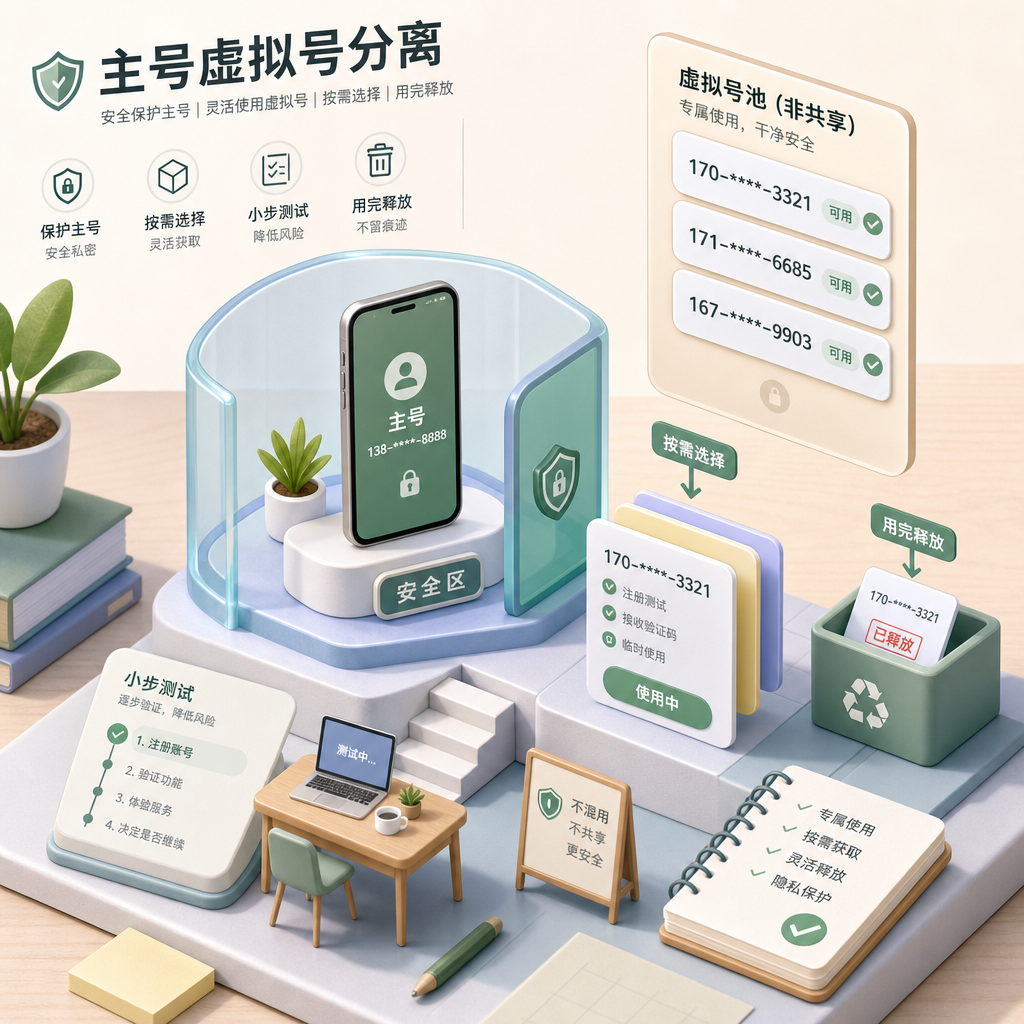
Common mistakes: first, using free shared numbers for high-value accounts—low success rate and high risk of association; second, treating virtual numbers as permanent primary numbers—difficult to recycle or replace later; third, ignoring platform rules and triggering bans through batch operations. The proper approach is to test small, use on demand, and strictly separate primary and virtual numbers.
Also, virtual numbers aren't universal. For high-risk services (core banking, government-related), it's best to use a verified primary number or stronger authentication. Compliance matters—don't use them for illegal bulk operations.
Pragmatic Response Under Trends
Regulators and platforms are pushing for stronger authentication; SMS OTP's role will gradually shift from primary to supplementary. But in the short term, many services still rely on it. During this transition, the greatest value of virtual numbers is hiding your primary number, reducing the risk of phishing, harassment, and association.
Concrete steps: when needing verification, first open NexSMS and select a suitable country number; after registration, upgrade important accounts' two-factor authentication to app or hardware keys; reserve your primary number only for truly long-term binding. If verification fails, don't rush to switch to your primary number; first check if the number type is recognized, network issues, or temporary platform restrictions.
Stay updated on platform announcements and industry trends. Hong Kong's ban is just the beginning; other regions may follow. Diversifying your verification methods in advance is much easier than dealing with consequences afterward.
Using virtual numbers well is not about fighting platforms—it's about adding a controllable layer of protection for yourself. Keep your primary number clean, and your accounts become more secure. NexSMS provides a stable reception channel in these scenarios, making isolation simpler and more direct. Try it a few times, and you'll find that once the habit forms, registration and login become much smoother.


Comments(0)