 NexSms官方博客
Main phone number privacy isolation centers on reserving your real SIM card exclusively for critical, non-reproducible entry points like banking and government services, while migrating all routine registrations, public disclosures, and testing to external numbers. This prevents non-core activities from exhausting your primary number's verification eligibility for high-value services. This strategy is directly supported by Google's official help center on hard limits for single-number verification quotas and the US Federal Trade Commission's persistent warnings about verification code scams in second-hand transactions.
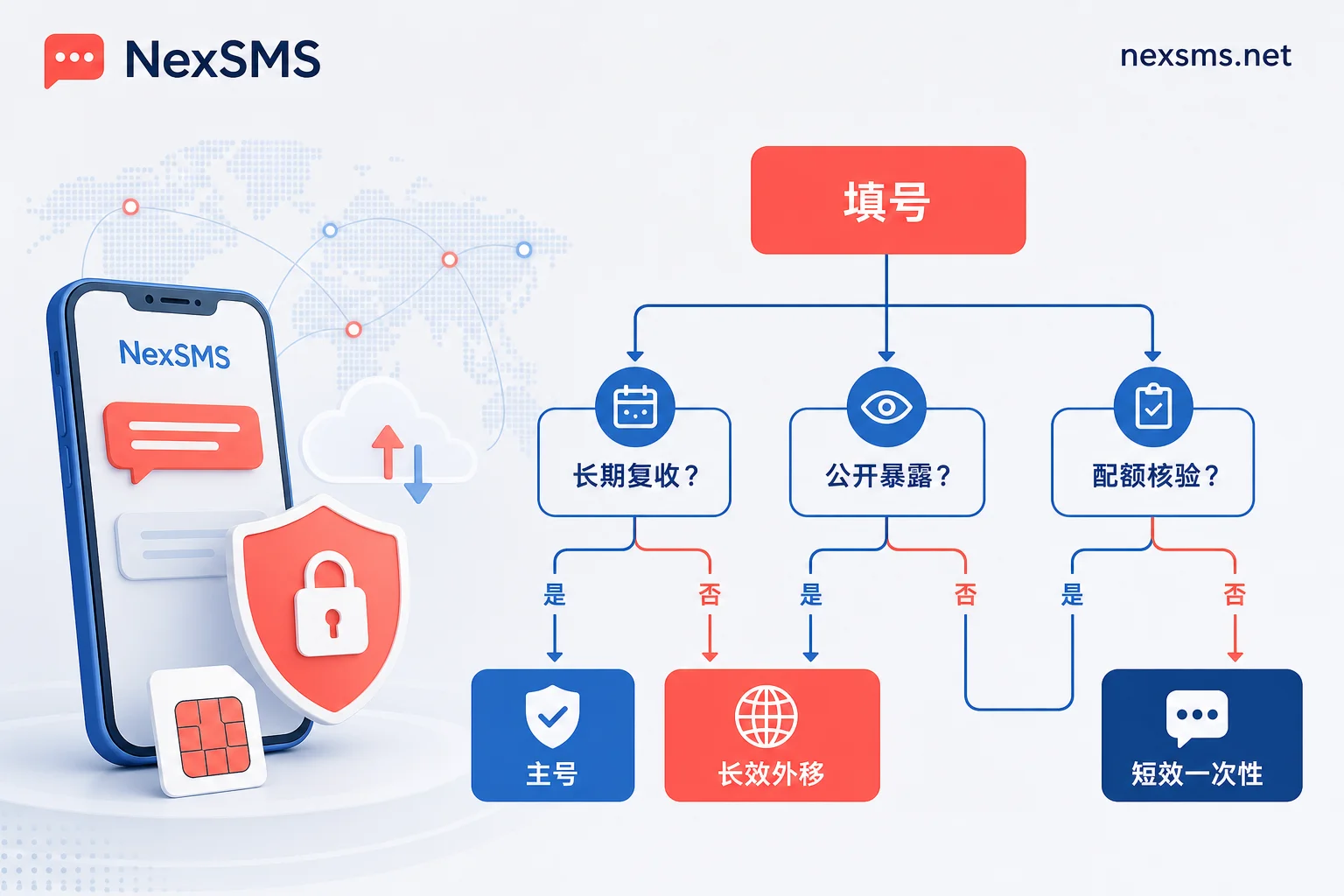
Three Questions Before Filling in Your Number: Should the Main Number Be Used Here?
Before deciding to provide a phone number to any platform, evaluate it quickly along these three dimensions, which form the decision basis for number tiering:
- Long-term recovery need: Will this number be needed in the future for login, two-step verification (2FA), or password recovery? If so, it must be a number you control long-term.
- Public exposure risk: Will this number appear on public pages or be seen directly by strangers or potential scammers?
- Platform quota verification: Does the platform impose strict limits on the number of bindings for the same number?
The combination of these three questions determines whether the position should be classified as a 'primary number slot', a 'long-term external number slot', or a 'short-term one-time slot'. Starting from recovery needs rather than platform names is because different platforms treat the same number very differently, and policies can change at any time.
Branch One: Platform Quota and Line Attribute Verification Depleting Binding Rights
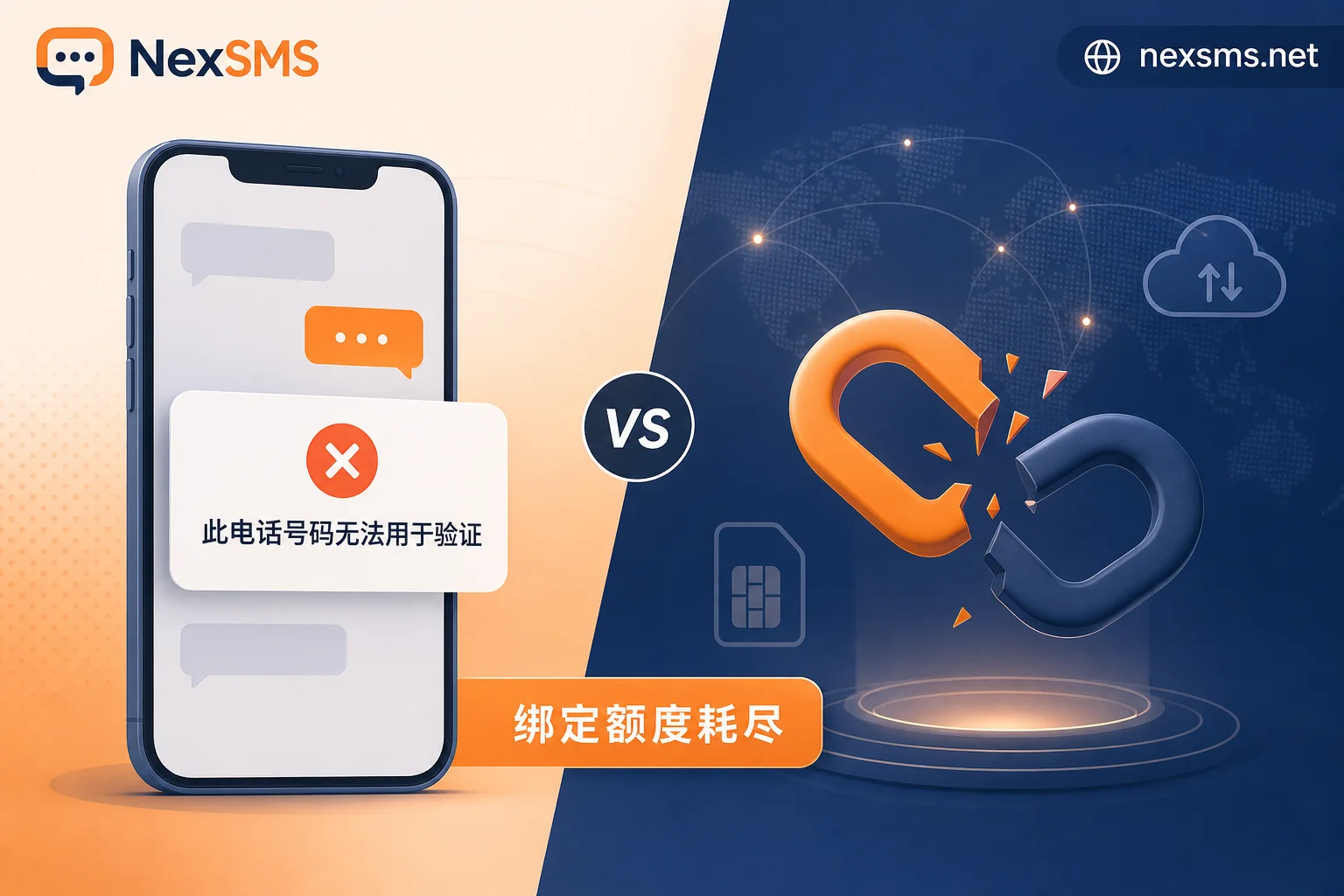
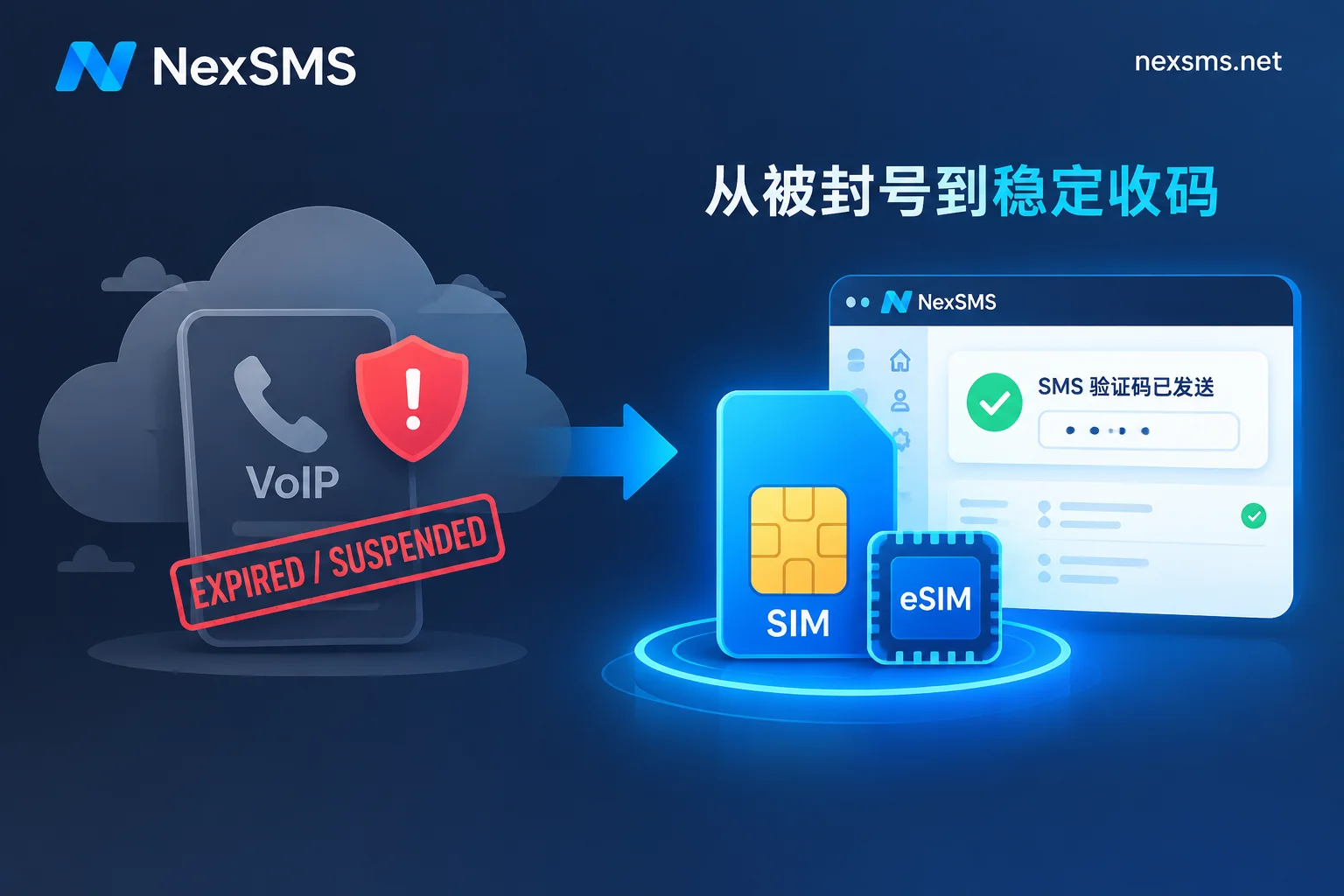
When the system says 'This phone number cannot be used for verification' or 'This phone number has been used for verification too many times', it usually triggers an anti-abuse mechanism. Google's official documentation notes that this is a hard limit on the number of accounts that can be created and verified with a single phone number, and may also include risk controls for untrusted networks and certain line types (like VoIP).
| Recognition Signal | Interpretation | Potential Consequence |
|---|---|---|
| Message: 'Used for verification too many times' | Single-number account quota limit triggered | New account registration fails; need a completely new number |
| Message: 'Cannot be used for verification' | Number reputation low or restricted number segment | Even if the quota is not reached, it may be rejected |
| Repeated similar errors | Main number's binding quota within that ecosystem exhausted | Future banking, government, and other irreplaceable scenarios may be blocked |
The binding quota of your main number is actively consumed. If used for bulk registrations or non-core testing, once the cap is hit, recovery is extremely difficult. Note that using virtual numbers does not bypass platform risk controls, especially for explicitly prohibited bulk registration. Refer to the Google account SMS verification mechanism to understand how platforms determine number validity.
Branch Two: Second-Hand Transactions and Strangers Seeking Numbers to Hijack Binding Rights
The US Federal Trade Commission (FTC) details a common scam: attackers on second-hand platforms ask for SMS verification codes under the guise of 'verifying you're not a bot'. In reality, the victim's code is used to complete the application and binding of a Google Voice virtual number.
This loss goes beyond nuisance calls. Once your main number is used to register Google Voice, its legitimate binding rights in mainstream services are compromised, and may even lead to identity theft. When leaving contact information publicly, the correct approach is to provide a recoverable external number, never the main number, and never forward any received verification codes.
Slots the Main Number Must Guard vs. Exposure Positions That Must Be Externalized
Based on the above risks, we need to strictly classify number usage scenarios. Main phone number privacy isolation is not just technical, but a resource management strategy. We divide scenarios into three categories:
| Number Type | Suitable Scenarios | Rationale |
|---|---|---|
| Primary number (real SIM) | Banking/payments, carrier accounts, government real-name, core account final recovery entry | Switching costs are extremely high; some services do not accept non-personal real-name numbers |
| Long-term external number | Long-term platform login, 2FA slots | Needs to receive codes long-term, but no need to bind personal real identity |
| Short-term/one-time number | Public contact numbers on public listings, second-hand transaction communication, one-time registrations/trials | Prevents strangers from snooping, reduces social engineering attack risk |
Exposure positions also need further subdivision: 'one-time' means use-and-discard; 'requires long-term recovery' demands a number with renewal capability. For how to prevent your primary phone number from leaking online, the key is to sever ties between the main number and unnecessary platforms.
Recovery Sequence: Remediation Logic When the Main Number Is in Trouble
If you face the situation where your main number is already tied to many platforms or has been leaked, blindly acting may lead to total account loss. The remediation process should follow a causal sequence: first, take stock of the current situation by listing all services bound to the main number; second, handle by category—retain the main number for irreplaceable slots (banking, government) and strengthen monitoring, replace replaceable slots with external numbers one by one, and fully unbind or deactivate abandoned accounts; finally, execute the swap—always add backup verification methods (like backup email, authenticator apps, recovery codes) before deleting the old phone number to avoid breakage. If the number was hijacked, you can only follow the platform's appeals and account security check procedures, and the outcome is not decided solely by you. Note that changing numbers does not immunize against carrier-side social engineering or SIM swapping.
Position-by-Position Checklist: Which Number Type for Each Form Field
To ensure execution, review your current filling habits against this checklist:
- Banks, payments, carriers, government, core recovery entry: Must use primary number.
- Long-term platform login, 2FA: Use a renewable long-term local number.
- Second-hand transaction contact, one-time registrations, temporary trials: Use short-term numbers or one-time phone numbers.
Before purchasing an external number, verify: whether the target country matches the platform, whether the number supports future recovery, whether it is exclusive rather than from a shared pool, and whether unbinding or renewal is completed before expiry. For users with higher requirements for virtual number privacy protection, independent dedicated numbers are better than shared pool numbers.
FAQ
Can I give my phone number when a buyer messages privately?
It is not recommended to provide your primary number directly. In public or semi-public scenarios like second-hand transactions, use a short-term or one-time number for initial communication. If the other party insists on a verification code to 'verify identity', it is likely a Google Voice hijacking scam; immediately terminate the transaction and report.
Where should real phone numbers and virtual numbers be used respectively?
Real phone numbers should only be used for strong real-name scenarios like banking and government. NexSMS offers virtual numbers split by purpose: short-term numbers for one-time registrations and public contact, and renewable long-term local numbers for platform logins requiring repeated code reception. Choose numbers based on the target platform's country and ensure legal and compliant use.
How to unbind a phone number already used to register Google Voice?
This situation is a serious security incident. There is no guaranteed recovery path; instead, you must proceed through the platform's current appeals and account security check process. Specifically, contact Google support to submit an appeal proving it was not your action, and simultaneously check and change passwords and security settings for all associated accounts. Since the FTC notes that such hijacking may lead to the main number being permanently blacklisted on some services, and recovery is not guaranteed, it is advisable to prepare account migration and backup verification methods while appealing to reduce business disruption risk.
When running multiple stores, how should phone numbers be allocated for cross-border multi-account operations?
Use a 'pyramid' structure: a small number of primary numbers at the top for core assets only; a middle layer of long-term virtual numbers for daily operational accounts; and a bottom layer of short-term or one-time numbers for registration testing and public exposure. Ensure numbers from different layers are never mixed to maximize risk isolation.
Start by reviewing your current phone number filling habits against the checklist to identify which slots must be externalized. When there is indeed a long-term recovery need, visit NexSMS to select short-term or long-term numbers based on the target country, and use them legally and compliantly.


Comments(0)