 NexSms官方博客
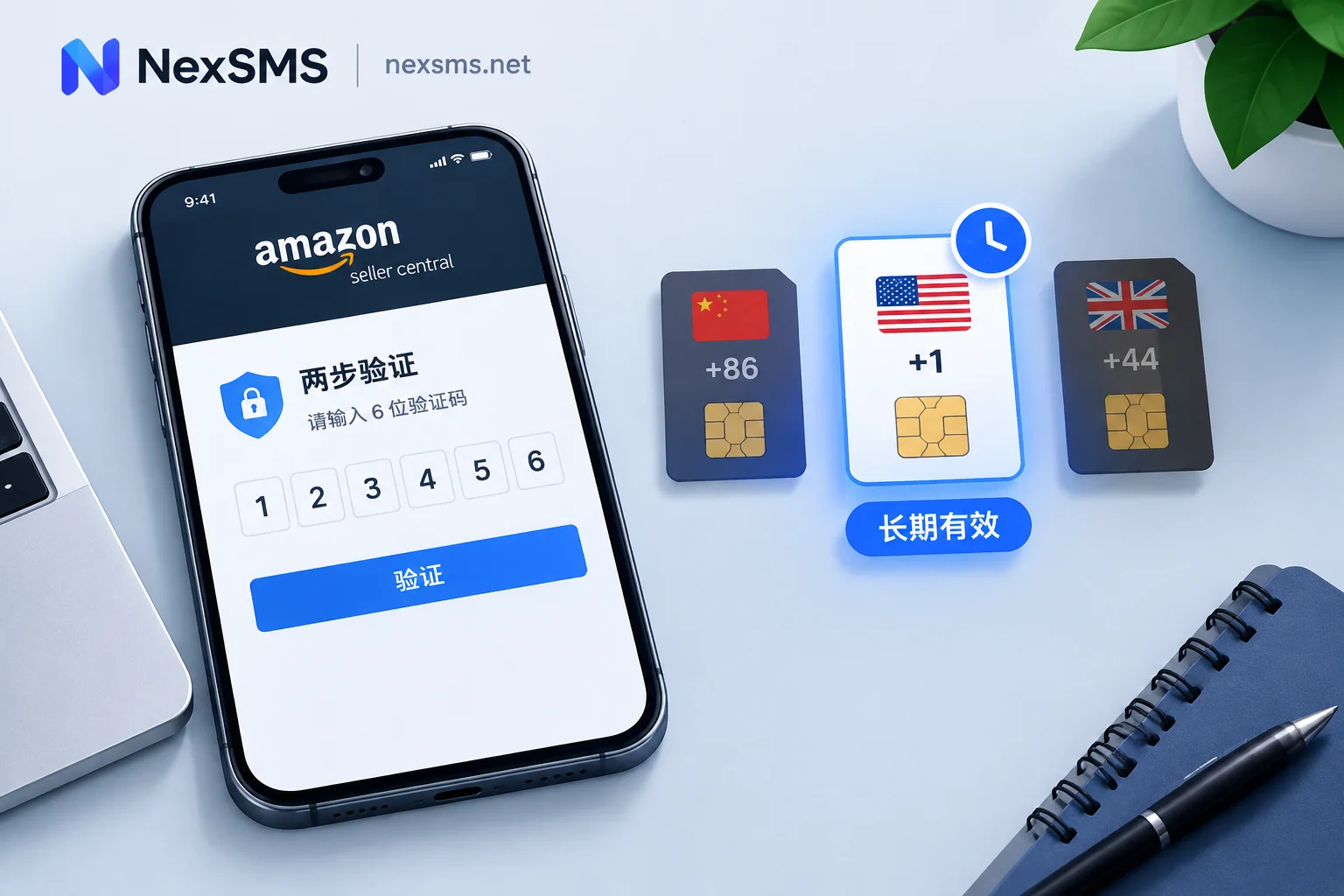
Let's get straight to the point: Amazon Seller Central does not impose a mandatory country restriction on the phone number bound to two-step verification (2SV). The settings page supports prefixes from most countries and regions worldwide—Mainland China +86, US +1, UK +44, Japan +81 are all included—and it does not require the number's country to match the marketplace you sell on. Using a Chinese number for the US site or a US number for the European site is allowed by the rules.
So the claim that "Amazon sellers must use a US number" doesn't hold. What really determines whether you can keep using this number is three other things:
- Can you hold this number long-term without it being unexpectedly suspended or reclaimed?
- Can you use the same number to receive a code again in the future?
- Has it been used by another Amazon account?
Below we'll expand on these three points and also clarify the operational requirements when binding and the fallback options if problems arise.
Why Some Sellers Still Switch to a Local Marketplace Number
The rules don't restrict it, but that doesn't mean the actual experience is the same. Cross-border SMS goes through international gateways and multiple carrier relays. The longer the path, the more points of failure—carrier blocking policies, gateway congestion, delivery delays—can turn an OTP that should arrive in seconds into minutes, or not at all. Using +86 to receive Amazon verification codes is usually fine, but occasional failures do happen.
This is why many long-term cross-border sellers prepare an additional real carrier number from the marketplace country (e.g., US, UK) as a long-term 2SV method. This is a trade-off for stability, not an Amazon requirement.
Conversely: if your +86 mobile number is under your own name, won't be suspended, and has consistently received Amazon codes over the years, then keep using it. There's no need to switch just to "look local." Switching numbers is itself a risky operation, and doing it without an actual problem yields zero benefit.
When it's worth switching or adding an overseas number:
- Your current number has repeatedly failed to receive Amazon verification codes, and after troubleshooting it's confirmed not your fault;
- The SIM card is not fully under your control (using someone else's number, a company shared number range, or one that could be reclaimed at any time);
- You need to log in from abroad long-term, and the card is unstable for receiving codes while roaming.
Number Type Matters More Than Country
Most people don't get the country selection wrong. The real pitfall is the number type.
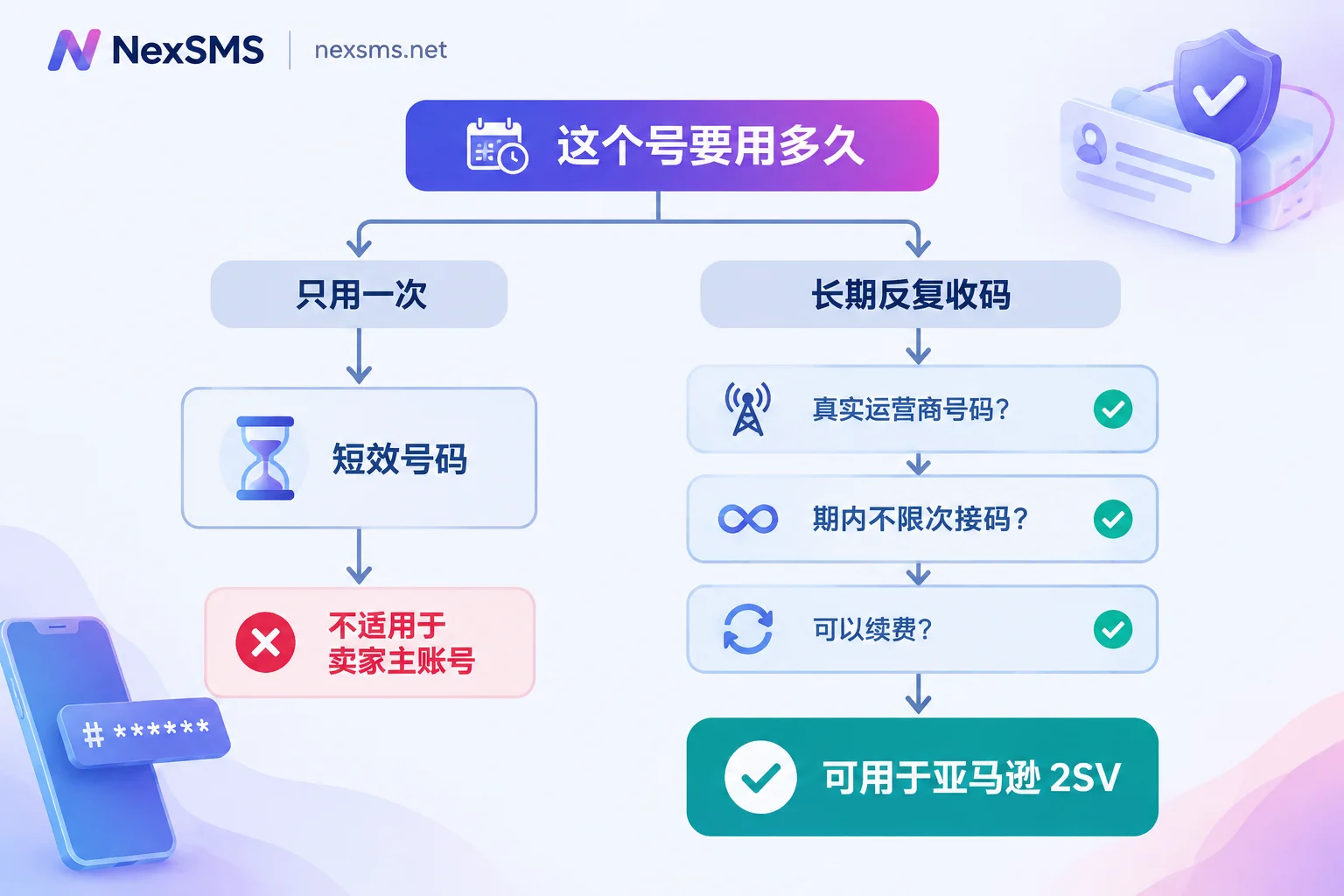
The biggest difference between 2SV and one-time registration is: it's meant to be used repeatedly. New computer, cleared browser data, changed network environment, Amazon triggers risk control requiring re-verification—each time it will ask for a verification code again. The number you bind must still be in your hands six months or a year later, and still able to receive codes.
By this standard, consider several types of numbers:
Short-term one-time numbers: Validity is usually only minutes to tens of minutes, and it's over after receiving one code. Fine for registering an account you don't plan to maintain long-term, but absolutely unsuitable for binding to a seller main account's 2SV—next time Amazon asks for a code, that number is long gone. For the distinction between these two types, see How to Choose Between Short-Term and Long-Term Premium Numbers.
Free public numbers: SMS are publicly displayed, anyone can see them. Security aside, many platforms already restrict sending codes to these number ranges. Why Free Public Receiving Numbers Don't Get Verification Codes explains that most of the time the code was never sent.
Virtual local numbers (VoIP): Platforms check the line type before sending codes, but different platforms use different criteria. It's common for the same number to work on Platform A and be rejected by Platform B. For details, see What's the Difference Between Real Carrier Local Numbers and Virtual Local Numbers.
Real carrier local numbers (physical SIM or eSIM), renewable, unlimited receipts within validity: This is the type you should use for seller main account 2SV.
One Number for Only One Seller Account
This deserves its own section because the cost is highest.
If you legitimately hold multiple Amazon seller accounts (i.e., multi-account situations permitted by Amazon), do not let the same phone number appear in the verification information of two accounts. Phone numbers are one of the most direct association identifiers on the platform side; sharing them triggers association determination.
A common misconception is "If I use an Authenticator App as the primary verification, the number isn't involved." Not true: when first setting up 2SV, you usually still need to specify a backup method, which generally requires binding a valid number that can receive SMS or voice calls. That number will still be recorded. In other words, even with an authenticator app, anti-association still matters.
Also, a boundary note: the number layer solves code reception. Multi-account browser environment isolation belongs to NexBrowser, network egress to NexIP, email and identity to NexMask. These layers are separate—don't expect changing a number to solve all association problems.
How to Choose and Bind Specifically
Follow this order:
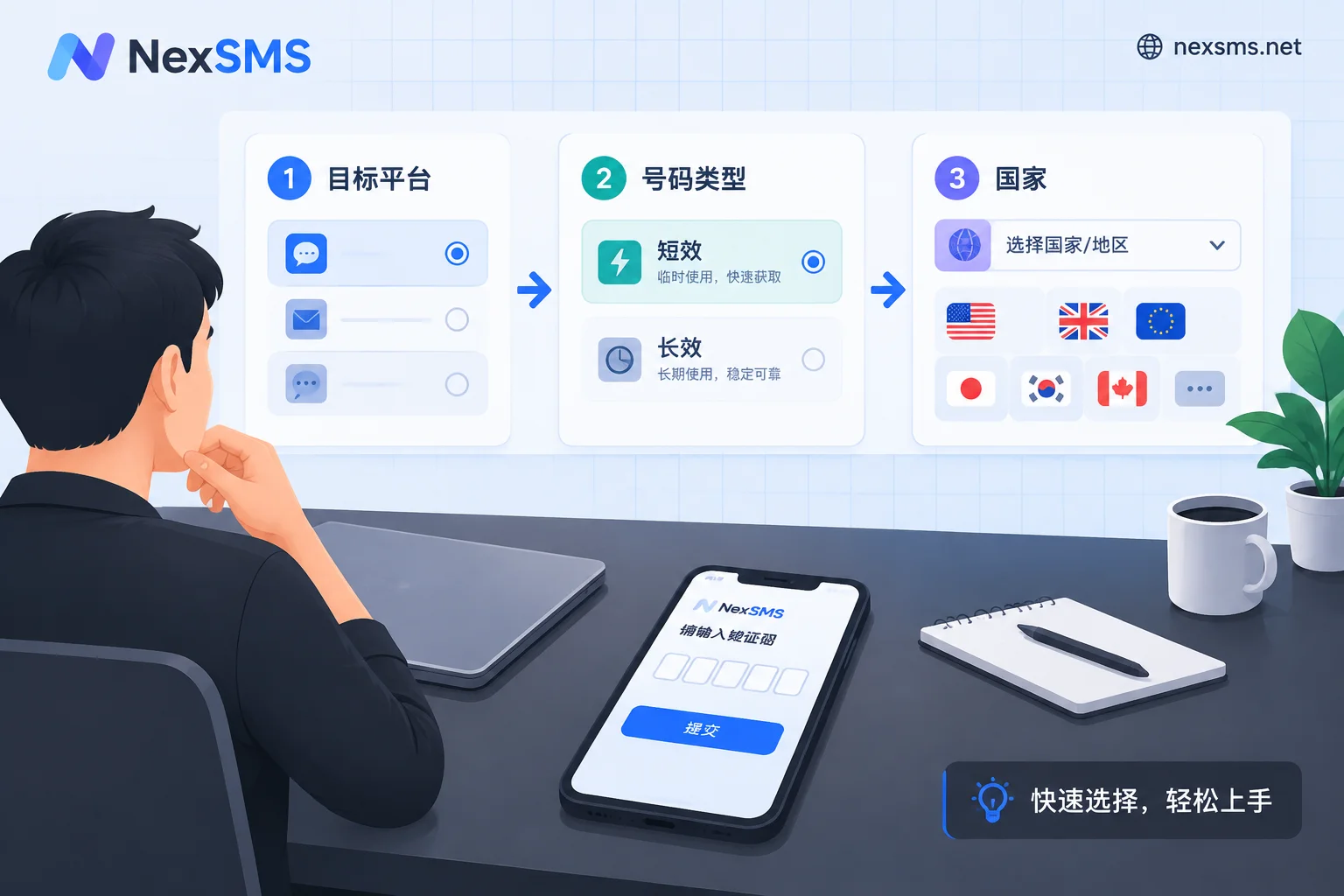
Step 1: First answer "How long will I use this number?" For seller main accounts, the answer is basically "forever," so short-term numbers are immediately excluded.
Step 2: Decide the country. Prioritize the marketplace country or a country consistent with your daily login environment; if you already have a stable, controllable local number that receives codes normally, that's the best solution. Before paying, confirm the target country's numbers are actually usable for the platform you need. For a checklist, see Before Paying for a Number by Country, Confirm These Four Things.
Step 3: Confirm number attributes and renewal rules. Confirm three things: Is it a real carrier number? Can it receive unlimited verification codes within the validity period? Can it be renewed upon expiration? NexSMS long-term premium numbers are built on this logic—real carrier local numbers (physical SIM and eSIM, not virtual local numbers), renewable, unlimited code receipts within validity, real-time code viewing on the web. Specific countries can be switched to your marketplace on the number selection by country page. Note: Whether you pass Amazon's verification is ultimately determined by Amazon's rules at the time; no platform can promise results on its behalf.
Step 4: Test receiving another code with this number before binding. Don't leave the first code reception to Amazon's binding page.
Step 5: Set up both primary and backup methods. Amazon usually requires two different verification methods when first setting up 2SV. A stable combination: primary is an authenticator app (Google Authenticator, Microsoft Authenticator, etc. TOTP), backup is the long-term number above. Authenticators don't rely on SMS channels and are unaffected by carrier and network fluctuations; the number serves as backup for when you change phones or lose the authenticator.
Step 6: Record backup methods immediately after binding. Store the authenticator's recovery key and backup number in two separate places, not on the same device.
Remember to Renew Before the Number Expires—Don't Cut It Close
Long-term numbers require renewal before expiration to continue holding. It's best to renew 3–5 days in advance, not on the expiration day—processing, activation, and status synchronization take time. Cutting it close risks disconnection. After disconnection, the number may be reclaimed, and getting the same number back is usually impossible—and that number is bound to your 2SV. For specific timing, see How to Renew Long-Term Numbers Before Expiry Without Disconnection.
Another easily confused point: receiving a code a second time with the same number is completely different from using that number to register a second account, and platforms handle them differently. This distinction is explained in Can the Same Number Be Used for a Second Verification.
What to Do If You Really Can't Receive the Code
Troubleshoot in order first—don't just spam resend. Too many resends can trigger rate limits on some platforms, making it worse. Basic order: confirm the number and country prefix are correct → confirm the number is currently able to receive → wait long enough (a few minutes is normal for cross-border SMS) → try another verification method (voice call, authenticator) → then consider changing the number. For the complete layered troubleshooting approach, see How to Troubleshoot When You Haven't Received SMS After Submitting Your Number.
If all verification methods fail, be prepared: Seller Central forces all logged-in users to enable two-step verification. It does not support permanent disabling, and customer service cannot grant exemptions. At that point, you can only go through the official Account Recovery process, uploading business license or legal representative ID documents as required. Review usually takes 1–2 business days. During this period, the account is inaccessible, and orders and ads are paused.
This is why we repeatedly emphasize "the number must be holdable long-term"—choosing the wrong 2SV number doesn't just cost a few extra dollars; it costs days of store downtime.
Final Word
How to choose the country depends on where you log in and which card is more stable; how to choose the number type depends on how long you need to maintain the account. For a seller main account, the answer is certain: a long-term, exclusive, renewable, repeatedly receivable real carrier number, paired with an authenticator app as primary verification. To select such numbers by marketplace country, go directly to the corresponding country page to see current availability. Prices and stock are subject to the official website.


Comments(0)