 NexSms官方博客
In cross-border business operations, Playwright/Puppeteer end-to-end (E2E) automated testing, and the recently emerging AI Agent automated execution workflows, SMS verification codes (OTP) are often the last hurdle that stalls the automated pipeline. When registering one or two accounts, manually opening a webpage to copy and paste is manageable; but when a team needs to handle dozens or hundreds of verification requests daily, or run unattended scripts at night, integrating number acquisition and code reception into programs via SMS verification API becomes a necessity for developers.
However, the API SMS environment in 2026 is undergoing a dramatic reshuffle. On one hand, the decade-old platform SMS-Activate officially shut down at the end of 2025, forcing a large number of previously stable CI/CD pipelines and automated scripts to urgently find alternative interfaces; on the other hand, risk controls on major overseas platforms have escalated to deep verification of line types (VoIP detection) and usage patterns. Choosing the wrong SMS verification API not only wastes balance on a few API calls but also causes frequent interruptions in the entire automation process.
This article, from a practical development and operations perspective, outlines the core pain points of integrating SMS verification APIs in 2026, number resource tiering strategies, and how to build a highly available code reception solution that "runs automatically by program and can be taken over by humans at any time."
1. Three Common Pitfalls Developers Face When Integrating "SMS Verification APIs" in 2026
When evaluating how to choose an SMS verification platform, the assessment criteria for API scenarios are completely different from pure manual web-based code reception. Manual code reception only needs to care about "whether this one can receive"; programmatic calls require "predictability, low latency, and clear status." Recently, developers migrating interfaces most commonly encounter the following three types of problems:
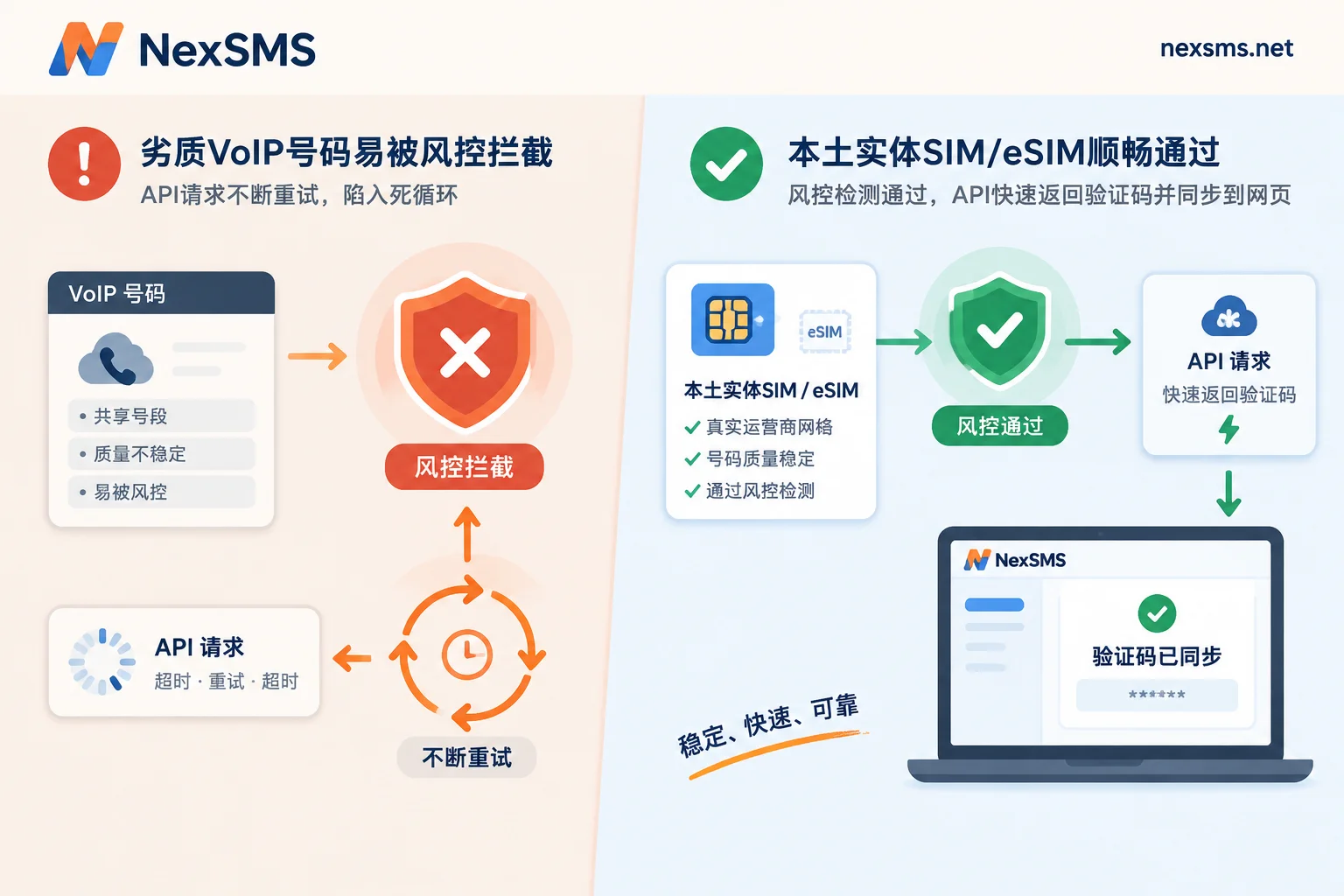
1. Blindly pursuing low-cost interfaces, falling into a "polling timeout—code swallowing—retry" dead loop
Some cheap alternative platforms compatible with old protocols, although offering extremely low per-call prices, have high response latency under concurrent requests, and often experience delays of up to two minutes or silent code swallowing. For automated scripts, if the verification code is not retrieved within the set polling time, the script will determine a timeout and cancel the order to retry. An interface that seems to cost a few cents per call, if it takes four or five attempts to succeed once, not only doubles the actual financial cost but also directly drags down the execution cycle of browser automation scripts.
2. Ignoring the underlying number attributes, verification codes are blocked before they are even sent
Today, platforms like Google, OpenAI, and Claude complete screening of the number's line type the moment "Send verification code" is clicked. If the API is backed entirely by cheap traditional VoIP virtual numbers, the front-end page often directly pops up "This number cannot be used for verification" or requires an additional SMS fee (refer to Telegram registration SMS Fee popup and Claude rejecting virtual numbers avoidance guide). No matter how perfect your retry logic is in code, if the underlying number source is blocked by risk control, the API can only return empty results.
3. Running as a black box throughout, making it difficult for manual intervention when complex exceptions occur
In actual production environments, automated agents or scripts often encounter unexpected situations—for example, the target website suddenly changes its front-end DOM structure, pops up additional human verification, or triggers risk control re-verification. If the code reception process is completely locked in the API command line of the backend terminal, without intuitive web-based synchronous display, operations personnel will find it very painful to troubleshoot "whether the target platform didn't send the code or the script parsed the verification code incorrectly," and cannot quickly take over manually to rescue high-value accounts.
2. The Core Basic Skill Behind the Interface: Tiering Numbers by Business Scenario
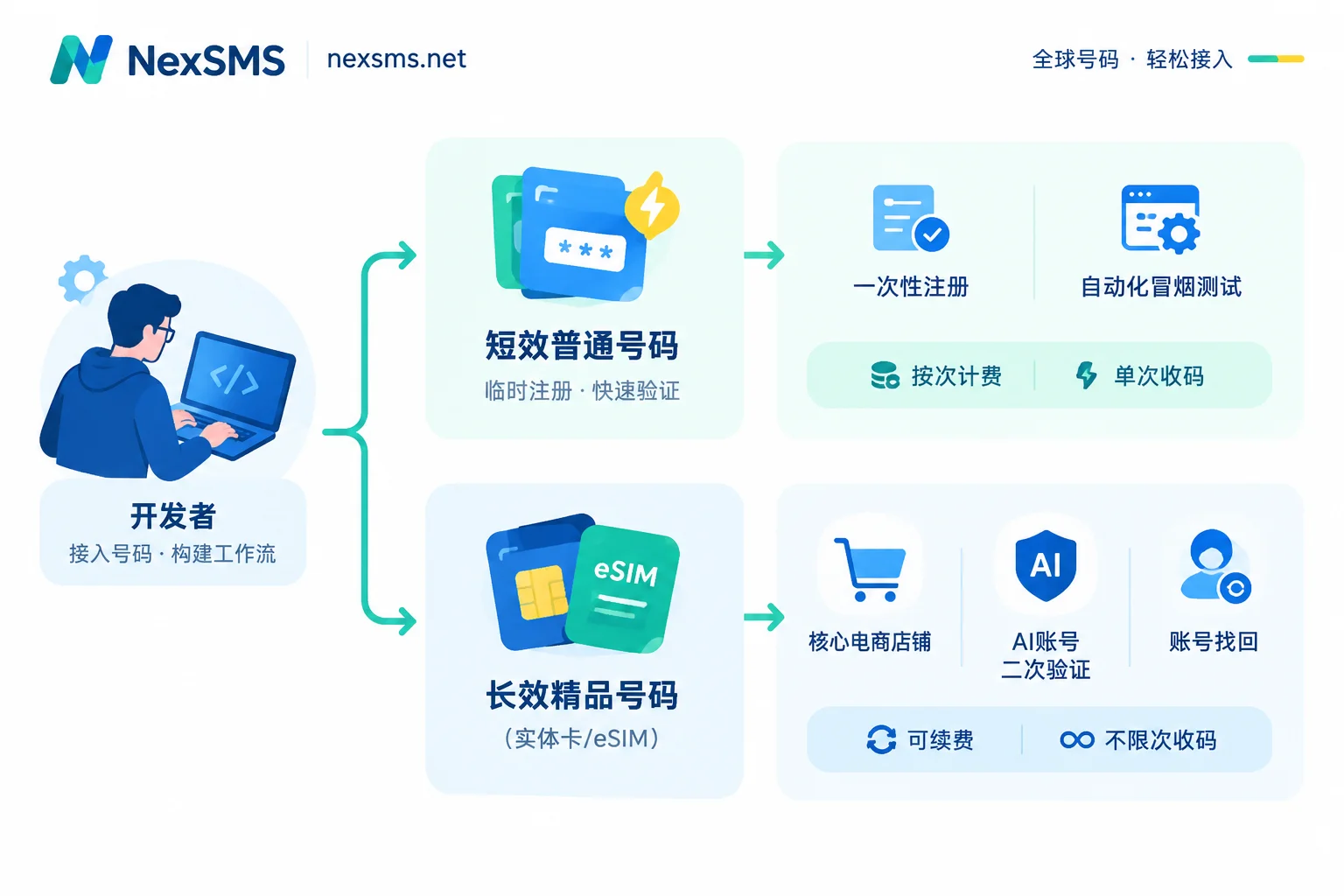
Calling the SMS verification API only changes the interaction method for obtaining numbers and reading SMS; the core of verification success is still the number itself. Before designing automated processes, developers need to divide numbers into two categories in their business logic (for detailed comparison, see NexSMS product features):
1. One-time registration and temporary testing: Call short-term ordinary numbers
If your program is performing one-time batch registration, smoke testing of new features, or temporary tasks that are discarded after registration, you should request short-term ordinary numbers in the API.
- Billing and rules: Pay-per-use, short validity period, one number receives one verification code only, cannot be renewed, and cannot receive a second code with the same number.
- Applicable logic: Script acquires number → fills form → polls to read verification code once → task ends and number is released immediately. This mode has clear costs and is suitable for running high-volume single verification pipelines.
2. Core business and high-frequency re-verification: Bind long-term premium numbers
If you maintain cross-border e-commerce stores (such as Amazon, PayPal), core AI developer accounts (such as OpenAI, Claude), or social media matrices that need long-term survival, relying only on one-time short-term numbers will bury huge risks. Once the platform triggers remote login re-verification or two-factor authentication (2FA) a few days later, the expired short-term number will directly lead to asset lockout (further reading: Why keep a long-term SMS number as a fallback even with an authenticator).
- Underlying advantages: NexSMS's long-term premium numbers use real carrier local numbers (local physical SIM cards and eSIMs, not virtual landing numbers), which can effectively reduce the first-verification rejection rate on strict platforms.
- Renewal and reuse: Within the validity period, the same number can receive verification codes unlimited times; renewing before expiration allows continued ownership, very suitable for two-factor authentication, account recovery, and compliant multi-platform binding.
3. Why "API + Web Code Reception in Parallel" Better Fits Practical Teams?
Many technical teams and operations teams work collaboratively: programmers write scripts to complete initial account setup or automated inspections, while subsequent daily maintenance, rebinding, or exception handling is followed up by operations personnel (refer to How cross-border teams collaboratively manage multiple business phone numbers).
For this mixed demand, NexSMS provides a mechanism for parallel developer API and web code reception:
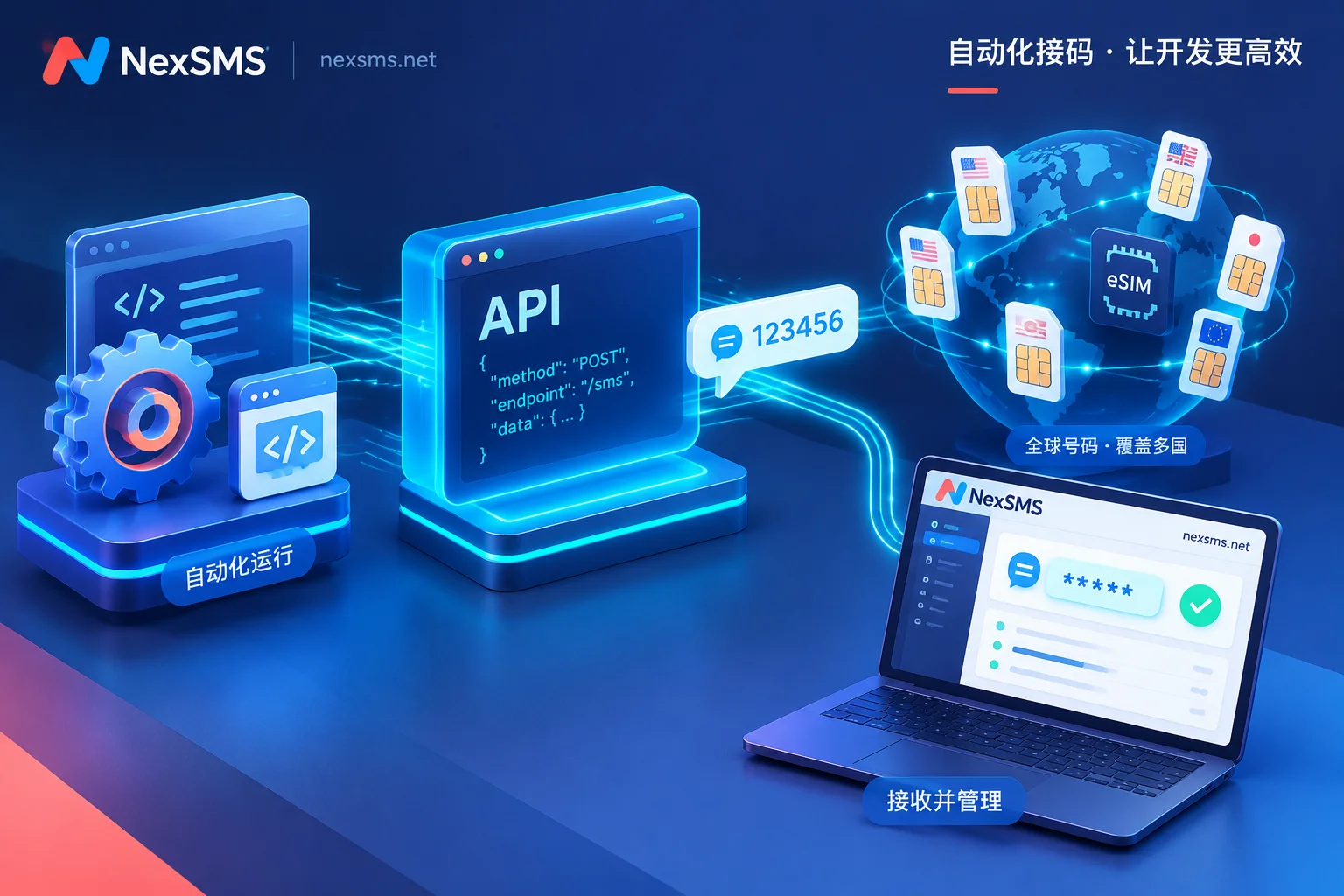
- Programmatic number acquisition and code reception: Developers can integrate number acquisition and code reception directly into their automated programs, reducing repetitive manual clicking.
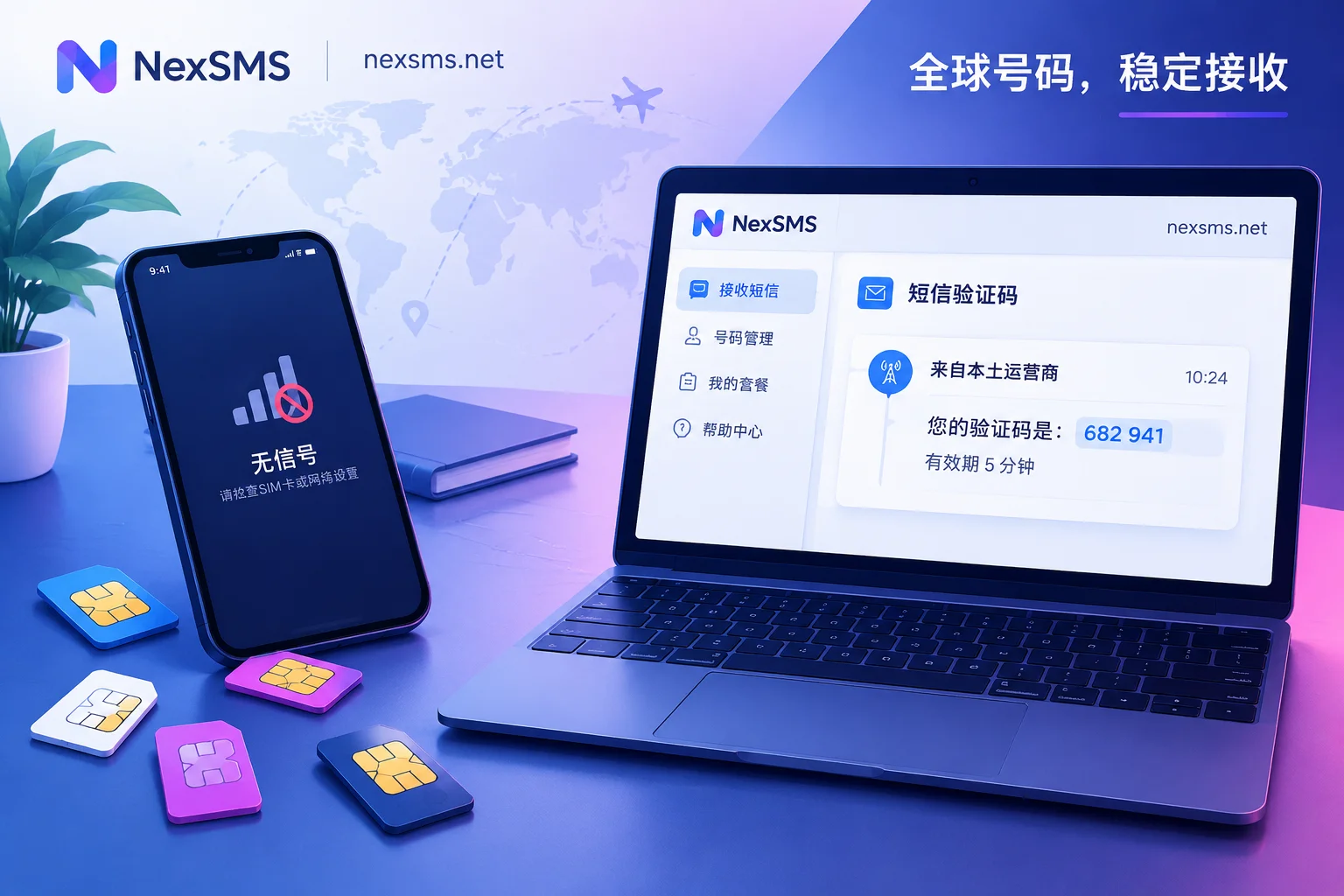
- Real-time synchronous display on the web: Even if the number is managed programmatically or used for daily business, received verification codes are still displayed in real-time on the NexSMS user backend web. When automated scripts pause due to target website changes or abnormal pop-ups, operations personnel do not need to dig through cumbersome server logs; they can simply log into the web to see the real-time arriving verification code and immediately take over manually.
- Flexible filtering and cost estimation: Before formally writing batch tasks, developers can first check the number selection page by country (for example, view US SMS verification details) to understand specific country codes and common verification uses, or go to application SMS verification description pages and price and inventory query page to check current starting prices and available number quantities by application, and confirm sufficient inventory before launching script tasks. (Note: The official website also provides free public numbers for login experience, but verification codes received by public numbers are visible to everyone; never use them for important accounts or formal production environments.)
4. Practical Tips for Developers Integrating NexSMS API
To ensure the security of API calls and targeted support, NexSMS currently does not have public API documentation. If you or your team have programmatic number acquisition and code reception needs, you can proceed quickly with the following steps:
- Step 1: Clarify business parameters and contact customer service
Outline your target verification platforms (such as Google, Telegram, X/Twitter, etc.), preferred countries/regions, and whether you need short-term ordinary numbers or long-term premium numbers. Directly go to the official website contact page to find the 24/7 online Telegram customer service and obtain specific API integration methods and technical support. - Step 2: Move fast in small steps, design script fault tolerance
No SMS verification service can guarantee 100% verification success on all platforms; final success depends on the target platform's risk control rules at that time. Therefore, when writing code, be sure to set reasonable polling intervals and timeout exit mechanisms to avoid dead loops consuming quota. - Step 3: Plan account balance reasonably
NexSMS supports top-ups via cryptocurrency (USDT/BTC), Alipay, and WeChat, and account balances do not expire (non-transferable). It is recommended to run small-scale tests before executing automated batch tasks, confirm that the pass rate for the current target application and country number source meets expectations, and then expand concurrency.
Conclusion
In the risk control environment of 2026, a stable SMS verification API workflow is no longer just about "getting an HTTP interface to work," but a comprehensive reflection of interface response stability, real carrier number source quality (Non-VoIP), and manual fallback flexibility. By tiering short-term and long-term premium numbers and making good use of NexSMS's parallel API and web code reception capabilities, developers and cross-border teams can reduce costs and increase efficiency while safeguarding the security bottom line of core account assets.
If you are ready to integrate SMS verification into your automated programs, feel free to contact NexSMS Telegram customer service for API integration solutions, or go directly to the NexSMS workspace to start testing.


Comments(0)