 NexSms官方博客
In early July, a comprehensive industry guide once again thrust SMS fraud into the spotlight: global losses from SMS fraud are projected to reach $71 billion by 2026. Meanwhile, temporary virtual number services are rapidly expanding in many regions, allowing users to receive verification codes online without exposing their personal numbers. These developments are directly tied to everyday registration and verification scenarios. Below is a full reconstruction of a real OTP scam process from mid-July, from the problem's emergence to resolution, and finally to the specific operations of SMS platform, helping you understand the chain risks of exposing your primary number.
New Trends Behind the $71 Billion SMS Fraud Data
The SMS fraud guide released around July 9 clearly cited data: global losses are projected at $71 billion by 2026 (approximately ¥5000 billion, often discussed as the 71 billion level), though down slightly from the previous year, the attack methods are more sophisticated. AI-driven phishing SMS has click rates exceeding 50%, and SMS pumping (also called artificial traffic inflation) has become the biggest threat to enterprise A2P SMS budgets.
In pumping attacks, scammers use automated scripts to flood verification interfaces with numbers, triggering a large volume of OTP messages. These numbers are often temporary or virtual, tied to high-revenue operators; each message costs the enterprise money, with the scammers taking a cut. The guide points out that temporary virtual numbers and sequential number ranges are common tools. For individual users, once a primary number is scattered across e-commerce and social platforms, data breaches easily turn it into a precise phishing target. The recent expansion of virtual number services exactly matches the need "not to fill in your personal number on every platform."
Complete Process of a Real OTP Scam in Mid-July
Around July 12, a 26-year-old flight attendant fell victim to a targeted attack during a 6-hour layover. After landing, she saw missed calls and a text: "Suspicious login detected on your account. Please call this number immediately to protect your funds."
She called back. The other party accurately stated her full name, last four digits of her bank card, and the amount of her most recent transaction, sounding exactly like a bank representative. The caller asked her to "confirm identity" by reading out an upcoming OTP, claiming it was to "cancel the suspicious login."
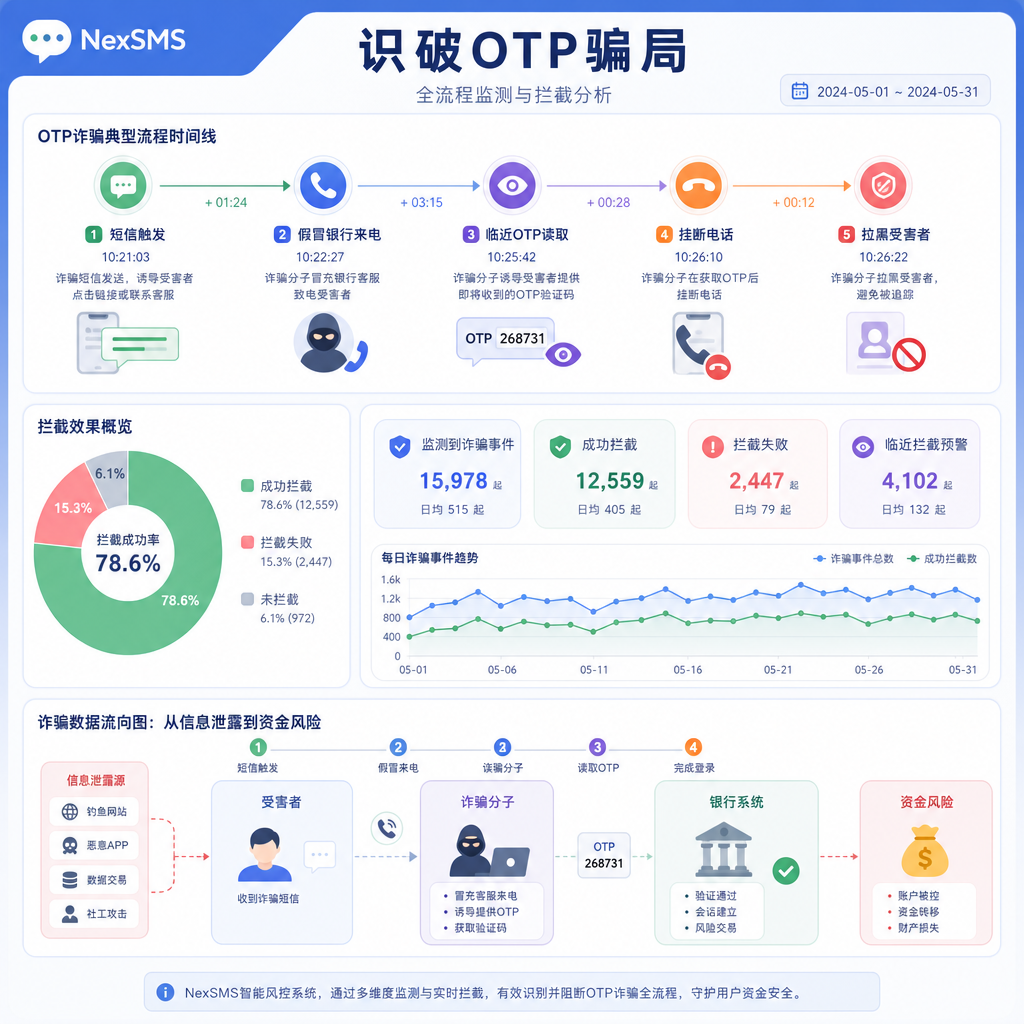
She almost complied. At a critical moment, she countered: "If it's really a suspicious login, why do you need an OTP to cancel it? OTPs are only used to authorize new transactions." The caller immediately hung up.
She then proactively contacted the bank's fraud hotline to report the number. The bank discovered that week, three other customers had reported the same script, with the source being a third-party e-commerce data breach. Because she reported early, the bank flagged and intercepted two attempted transactions before funds moved. The entire process, from SMS trigger to interception, took just a few hours. The key lesson is straightforward: OTPs only authorize operations, never for "cancellations" or "identity verification." Anyone asking you to read out an OTP to "stop losses" is the scam itself.
Primary Number Risks Exposed by the Case and the Entry Point for SMS Platforms
The starting point of this case was not sophisticated technology, but the primary number being scattered across multiple platforms. After an e-commerce breach, scammers obtained names, card information, and combined it with SMS and phone calls for high success rates. Similarly, virtual numbers are abused in pumping attacks, reminding us: if individuals fill their primary number into all non-essential verifications, they expand their attack surface.
Here, the role of SMS platforms is not to replace banks, but to reduce primary number exposure at the source. During daily registrations, tests, multiple accounts, or temporary service verifications, use temporary virtual numbers to receive SMS codes, reserving your primary number for high-value scenarios like banking. This way, even if a small platform leaks data, scammers won't have your real primary number, making targeted scripts difficult to launch. The expansion of virtual number services around July was precisely to meet the demand for "speed, privacy, and convenience."
Specific Operational Details of SMS Platforms in Privacy Isolation
Combining with the case, the operational level can be implemented as follows. First, clarify the scenario: for non-core account registrations or secondary verifications, prioritize virtual numbers.
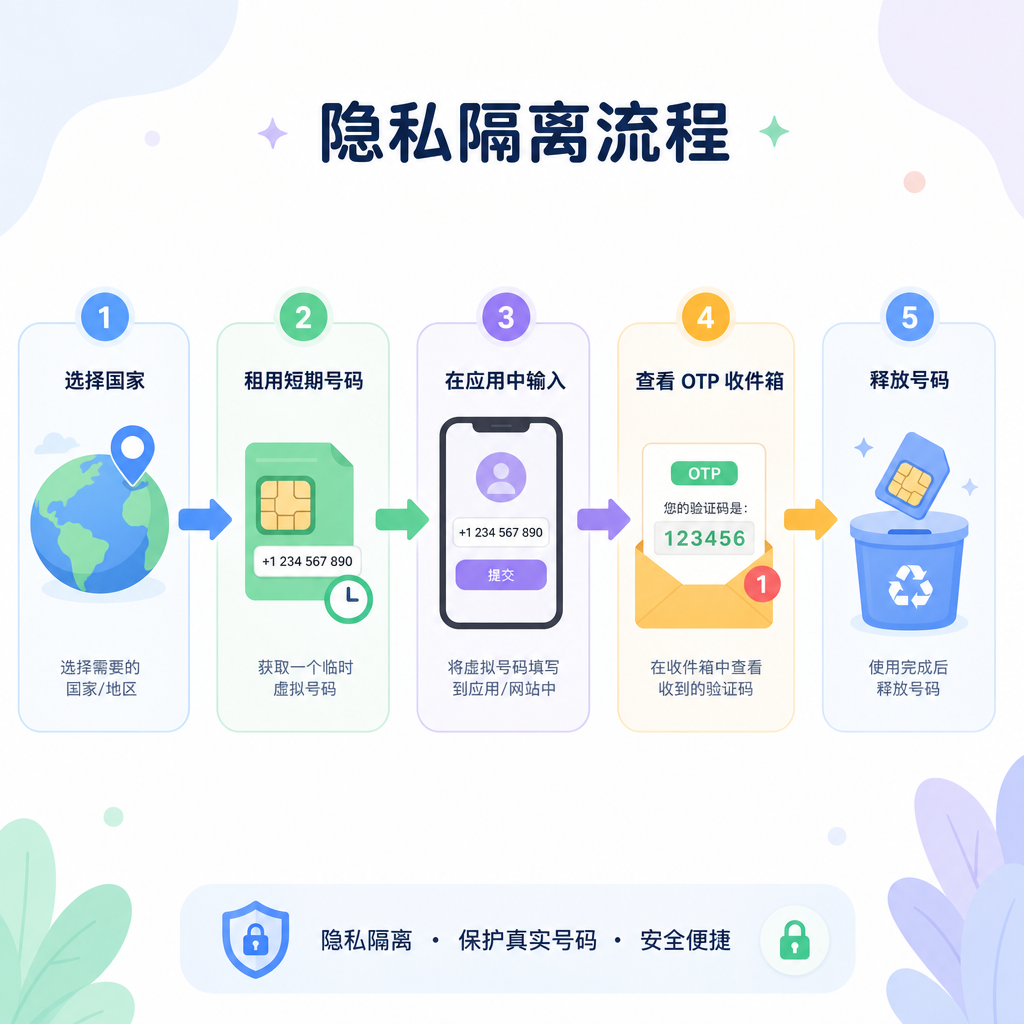
- Open the SMS platform, select a target country or region (prefer matching the platform for higher success rate).
- Choose a short-term or daily rental number as needed, pay, and get instant assignment.
- Fill the virtual number into the target app or website's phone field, triggering the verification code.
- Return to the platform to view the inbox in real time, copy the OTP to complete verification.
- After use, you can release or keep the number to avoid long-term binding.
- Record which services used virtual numbers; use your primary number only for banking, official identity, etc.
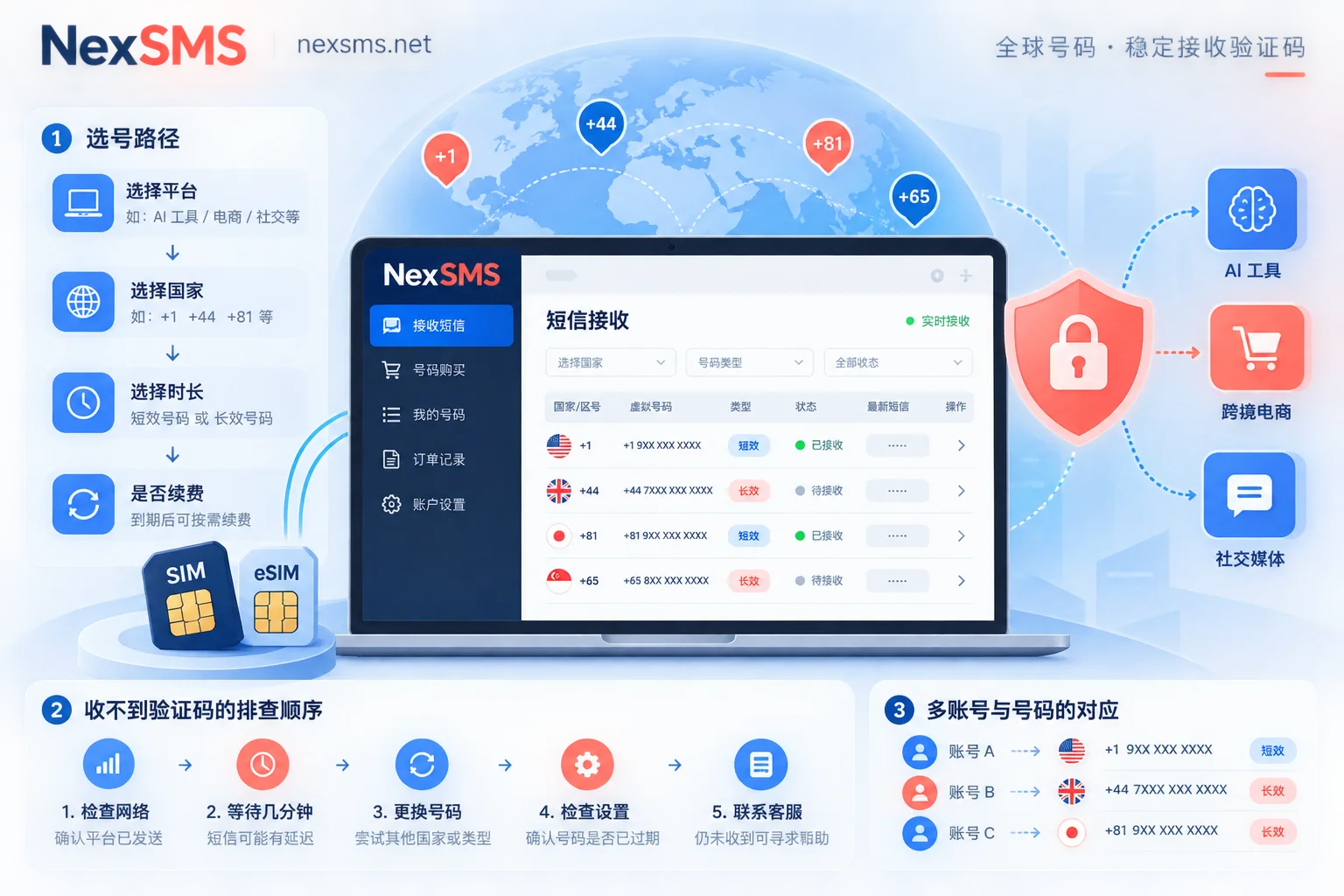
Taking NexSMS as an example: log in, directly select a number, fill it into the target service, and the verification code typically arrives in the inbox within seconds. The whole process requires no physical SIM swap and no exposure of your primary number to new platforms. In this case, if the individual had used similar isolation for non-banking services regularly, the leaked number from the e-commerce breach would not have been the primary number, breaking the chain of "full name + card info + primary number SMS."
Be mindful of platform risk control during actual use: some strict services will obviously block virtual numbers; prioritize numbers from real carrier lines; don't request too frequently to avoid being mistaken for pumping. Complete necessary settings quickly after successful verification to reduce the idle time of the number.
Looking at this mid-July flight attendant case, a clever question and timely report saved nearly six-figure losses, but the fundamental protection is still to minimize running around with your primary number. Under the $71 billion fraud scale, SMS verification remains a high-frequency entry point. SMS platforms turn temporary reception into a standardized operation, making isolation a few daily clicks from an idea. Before your next registration, ask yourself: does this service deserve my primary number? If not, go directly through the virtual channel.


Comments(0)