 NexSms官方博客
At 3 PM on July 21, our R&D team's project group suddenly exploded. The overseas node configuration and developer API verification scheduled for that day were all stuck at the final step: receiving a verification code via phone number. Whether employees tried using personal phone numbers or backup temporary numbers, the system either prompted "Verification code sending failed" or directly warned with a pop-up: "This number has been used too many times or is not supported."
Within half an hour, multiple colleagues triggered the system's frequency control strategy due to consecutive resend attempts, and their accounts were temporarily blocked. This sudden disruption prompted us to conduct an in-depth investigation and reconstruction of our internal SMS verification process.
The Unexpected Verification Fuse: A Double Blow from Technical Risk Control and Network Routing
To identify the root cause of the verification failure, the technical team simultaneously investigated global telecom links and the platform's risk control logic.
According to data released by public communication service providers, on July 21, A2P SMS gateways of mobile operators in several European countries experienced phased delivery delays and packet loss. Although many verification codes were shown as "sent" on the platform side, they were actually stuck at the operators' international routing nodes and could not be delivered to the terminal in time.
On the other hand, major platforms generally upgraded their identity verification interfaces in mid-July. After integrating the Carrier Lookup mechanism, the system instantly verifies the number attributes when the user submits a number. Traditional VoIP virtual numbers generated in bulk via software are directly marked as high-risk by the platform and rejected for verification codes. The overlap of telecom link fluctuations and tightened platform risk control directly led to the collapse of the verification chain.

Finding a Way Out: From Temporary Response to Screening Real Operator SIM Cards
Facing the dual challenges of network latency and API interception, we needed to re-establish a reliable SMS reception solution.
When evaluating different number sources, we established three hard standards:
- Must be based on real mobile operator (Non-VoIP) physical SIM card resources to ensure passing platform risk control checks.
- Must have multi-node routing auto-switching capability to instantly cut traffic when a specific region's communication gateway fails.
- Must support number exclusivity and single-use isolation to prevent associated account bans due to number reuse.
After comparing multiple access channels, we introduced technical support from NexSMS. Their SIM card pool is directly mounted under the networks of real operators in multiple countries, effectively avoiding identification filtering for VoIP number segments, providing a foundation for subsequent batch verification.
Practical Implementation: Four Steps to Restore Business Registration and Two-Factor Authentication
During the emergency rescue, the team summarized a standardized set of investigation and configuration steps, and within a few hours completed account restoration for all members:
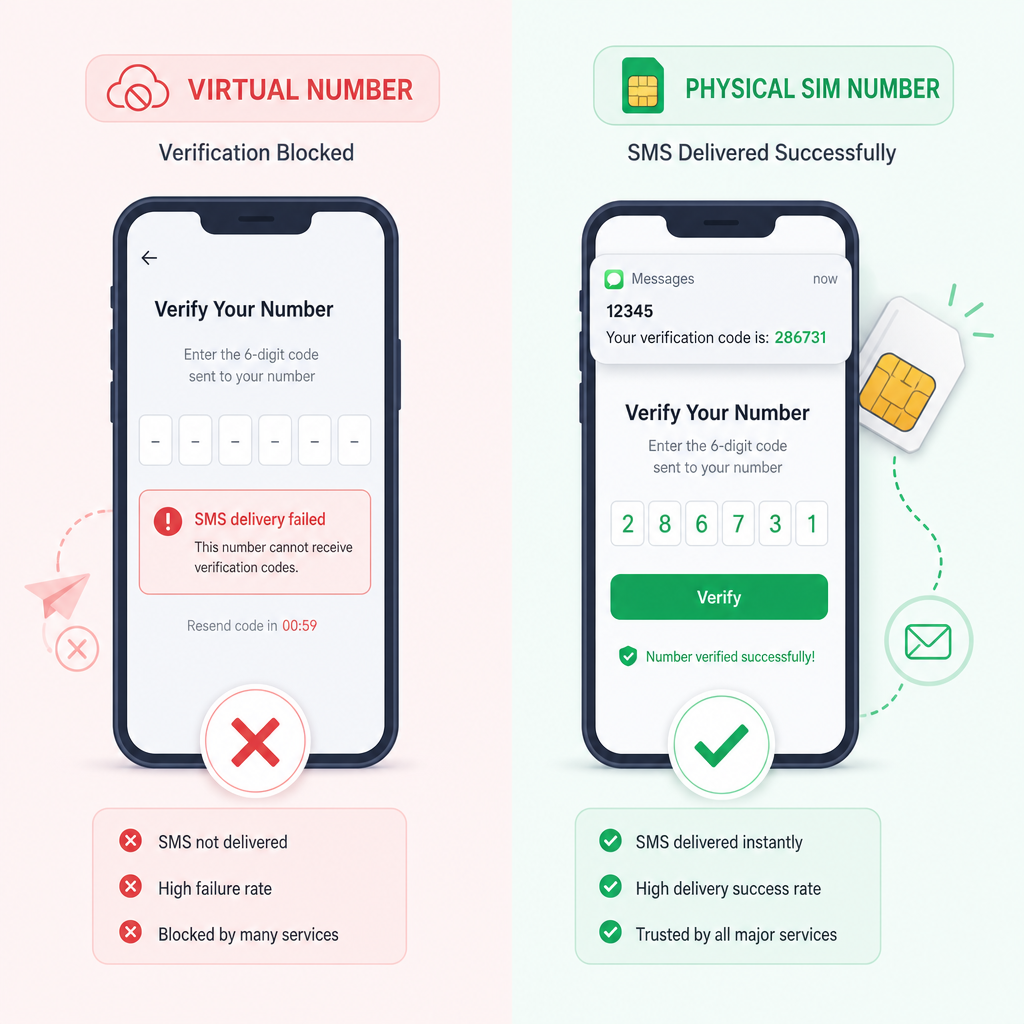
- Pre-check number attributes: Before submitting the number to the target platform, first analyze the platform's verification interface through packet capture to confirm whether it has hard requirements for operator cards.
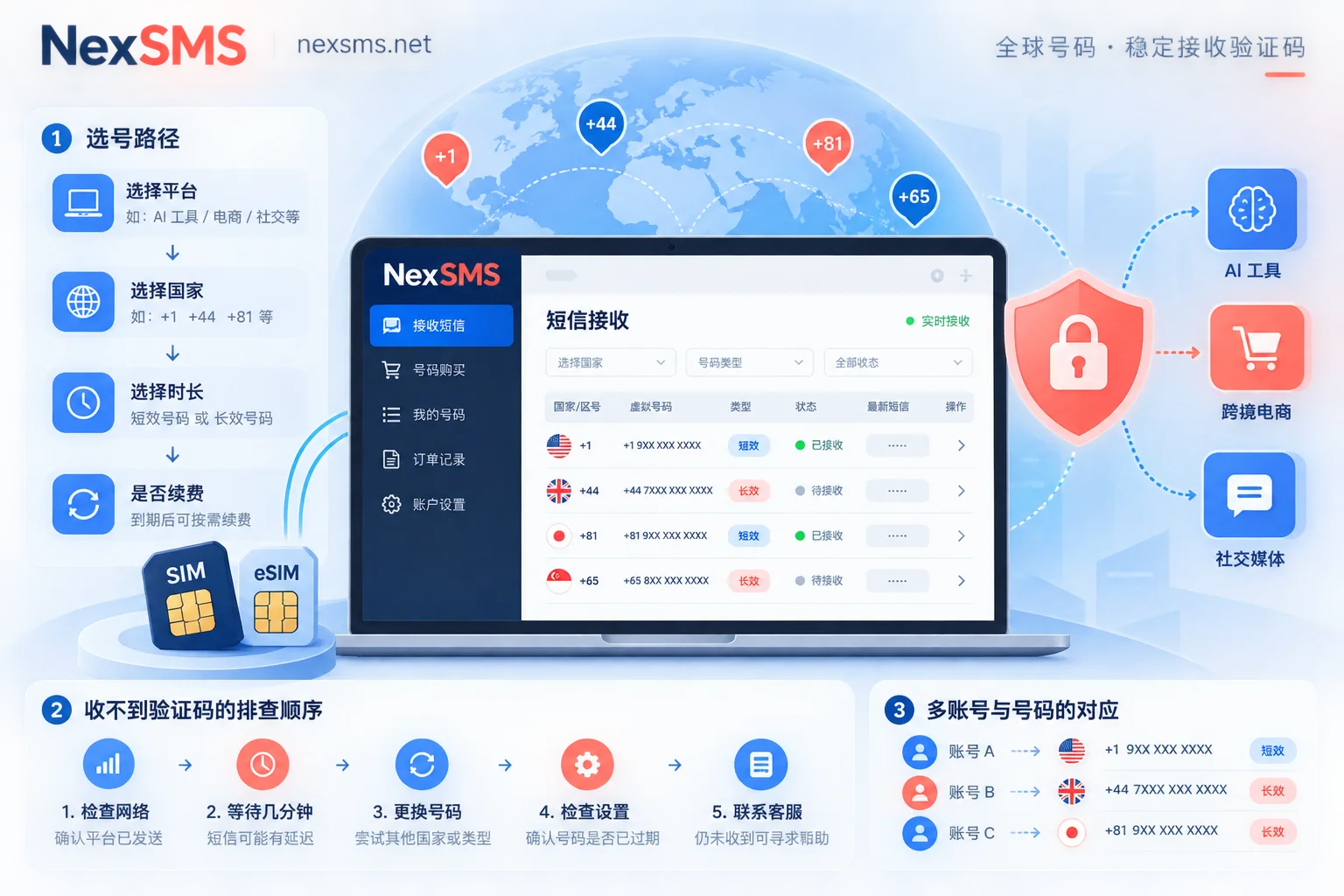
- Match corresponding regional number segments: Given that some platforms require consistency between the request IP and the number's home location, we selected local physical card number segments in the console based on the current node's IP country.
- Implement single-number isolated reception: Assign a unique exclusive number to each critical account to avoid triggering risk control rules due to multiple accounts sharing the same number segment in a short time.
- Establish a multi-channel backup mechanism: Configure automatic retry logic; once it detects that a country's gateway has not returned an SMS receipt within 30 seconds, immediately switch to a backup country's number segment and reinitiate the request.
With this precise adjustment strategy, the 12 key developer accounts that were stuck at the verification step all successfully received OTP verification codes by the evening of the same day, smoothly completing system access.
Building a Long-Term SMS Verification Protection Net
The sudden incident on July 21 was a vivid lesson. For teams engaged in cross-border business expansion, API integration, or multi-service operation, relying on a single channel or low-quality number sources carries extremely high risks.
Network routing fluctuations and platform risk control evolution are uncontrollable factors, but teams can enhance their ability to withstand risks by improving the quality of number sources. Using NexSMS services with real operator qualifications and multi-line automatic failover can ensure a high success rate of the verification process and maintain continuous business operation in complex network environments.



Comments(0)