 NexSms官方博客
When registering for a new app, claiming a coupon, trying an AI tool, or placing an order on an e-commerce platform, services often require phone number verification. If you provide your real number, you'll soon be flooded with spam messages and marketing calls, and the risk of data leakage increases. Temporary virtual numbers solve this problem—they act like digital mailboxes, specifically for receiving verification codes. Use them once and discard them, keeping your main number clean.
First, let's see how real the demand is. The global virtual number market reached $8.2 billion in 2025 and is expected to hit $16.8 billion by 2034, with a compound annual growth rate of about 8.9%. Driving factors include the rise of remote work, increased privacy awareness, and people not wanting to tie their personal number to every service. Research also shows that the volume of SMS messages received by temporary numbers surged from thousands in 2018 to millions in 2023, mainly used for social media, messaging, payment, and email registrations. Many people use them simply to avoid exposing their real identity.
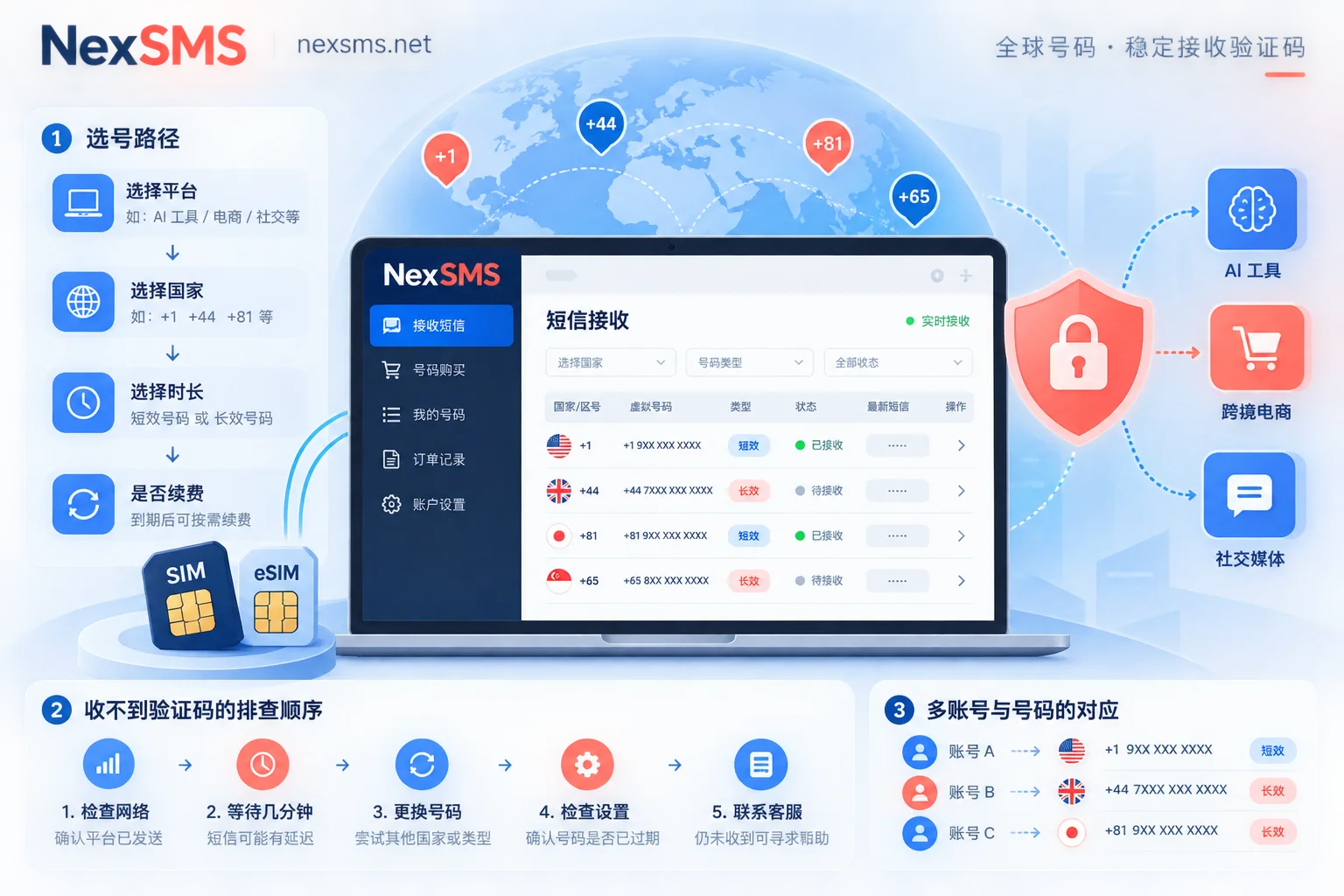
The operation is straightforward. Open a SMS reception service, select a number from a country or region (common ones include the US, UK, Europe, and multiple Asian countries), copy it into the registration page, and wait for the verification code to appear on the platform's dashboard. The whole process takes a few seconds to tens of seconds—no physical SIM card insertion or swapping required. Once you receive the code and complete verification, you can discard the number. Services like NexSMS provide stable reception capabilities, helping you quickly get codes without touching your main number.
Scenario 1: New environment or traveling to a destination. Upon arriving in a new country, you first install several local apps—food delivery, ride-hailing, cashback, marketplace—each requiring a phone number. If you give your real number, within a week your main number ends up on various lists. Instead, use a virtual number to receive the code, verify, and discard. Your main number remains undisturbed. Many people have tested this habit and found a significant reduction in subsequent harassment.
Scenario 2: Online shopping and coupon claiming. For discount registrations, membership cards, or limited-time promotions, platforms often ask for a number to send codes. Using a virtual number lets you get the offer without worrying about your number being sold to third parties. Once verified, cut off the connection, and subsequent promotions won't reach your real phone.

Scenario 3: Trying new tools or AI services. Many AI platforms, communities, and beta versions require SMS verification. Use a temporary number to quickly pass through without permanently binding your main number or exposing it to unknown databases. Developers often use this trick when testing apps to isolate personal communications.
However, not just any free public number will do. Publicly shared numbers, after repeated use, are easily blacklisted or reclaimed by platforms, resulting in low success rates. Google, some social media, and financial services are increasingly sensitive to VoIP or temporary numbers and may outright reject them. A better approach is to choose services with private or fresh number pools—numbers from real SIM networks that haven't been heavily abused—ensuring higher delivery rates. Paid per-use or short-term rentals are usually more reliable than free options because providers maintain number quality.
Common pitfalls to avoid. First, using the same virtual number for all important accounts—if the number is reclaimed, someone else might receive your subsequent codes. For important services, either change the number after use or choose a dedicated number that can be rented for days or weeks. Second, expecting it to work for bank or strictly regulated financial verification—many such platforms explicitly restrict virtual numbers; if it fails, don't force it and try other methods. Third, ignoring privacy policies—prioritize services that automatically delete messages and don't store data long-term. Fourth, using numbers en masse without testing—first verify on a small scale whether the target platform accepts them.
Add a few more practical tips. When selecting a number, prioritize the country commonly used by the target platform—for example, use +1 for US services, local numbers for European regions. After receiving the code, screenshot or copy it immediately; don't delay, as some numbers have time limits. If the code doesn't arrive, refresh the dashboard or try a different number—don't re-submit repeatedly to trigger risk controls. If you need a number long-term, you can rent a fixed virtual number as a second line, but for daily one-time registrations, temporary is more lightweight. When used with anti-detection browsers and clean IP, success rates are higher, but for basic scenarios, direct use suffices.
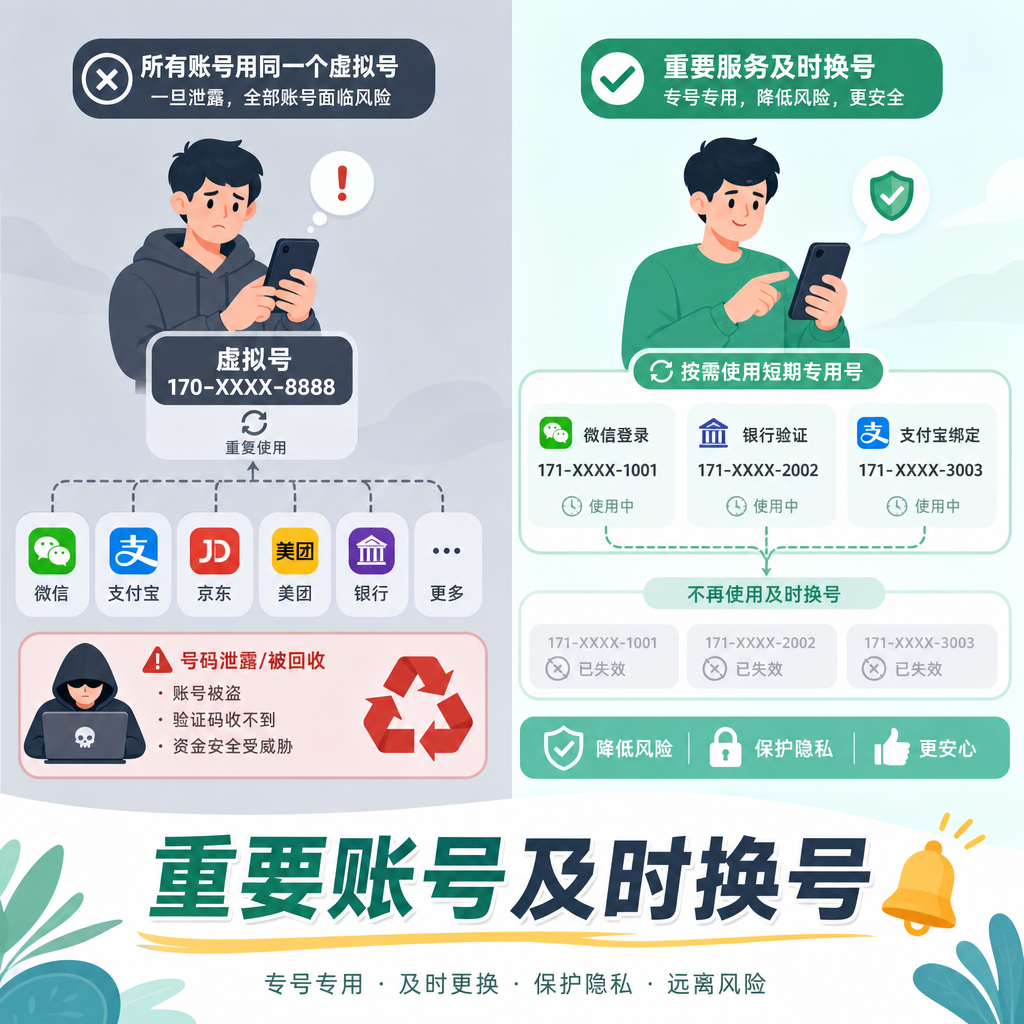
Security aspects are also worth noting. Once your real number is leaked, it could be used for SIM swap attacks—hackers obtaining your number can receive OTPs and reset your bank or email accounts. Virtual numbers isolate this risk—the verification chain doesn't involve your main number, reducing the attack surface. Of course, virtual numbers themselves are not absolutely secure; choose reputable platforms and avoid binding sensitive accounts to shared numbers.
Once you form the habit of using virtual numbers for registrations, code claims, and trials, and only using your real number for banks, family, and core communications, you'll find your main number much quieter. Services like NexSMS are designed to help users complete this step reliably, receiving verification codes quickly across multiple regions, suitable for individuals and light batch needs. No need to fuss with complex setups—open, select number, receive code, done—a three-minute isolation task.
Final reminder: A virtual number is a tool, not a master key. Comply with platform rules; don't use it for fraud or unauthorized multi-accounting. The core of privacy protection is reducing unnecessary exposure, and temporary numbers lower that threshold to a minimum. After a few tries, you'll develop the habit of thinking before each registration: Is this service worth my real number? Often, the answer is no.


Comments(0)