 NexSms官方博客
Just landed in a new country, connected to WiFi, and all the food delivery, ride-hailing, local shopping, cashback platforms, and even hotel membership apps are queuing up for registration. Each requires phone number verification, with SMS codes coming one after another. Use your real number? Within days, marketing texts and spam calls will flood in, ruining your real number indefinitely. Worse, some platforms demand local numbers, and your international number won’t work. That’s when temporary virtual numbers become the hassle-free solution.
Privacy protection trends are increasingly clear. WhatsApp started allowing username reservations at the end of June, letting users add friends or join groups via username instead of exposing their phone number to strangers. Officially, this closes a privacy loophole—numbers are no longer the default identity identifier. Signal and Telegram already went this route. The entire industry is emphasizing "don’t easily give out your real phone number." Virtual numbers fill this gap: verification needs a number, but it doesn’t have to be your real one.
The virtual phone number market is expanding rapidly. In 2025, the global market reached $8.2 billion, projected to grow to $16.8 billion by 2034, with a CAGR of about 8.9%. Driving forces include remote work, cross-border business, traveler demand, and enterprise needs for localized communication. For individual users, the biggest benefit is getting a clean number anytime to receive SMS, then discarding it or renting short-term, keeping your real number isolated.
In practice, it’s quite simple. Upon arrival, open a SMS reception platform, select the target country’s number—food delivery and ride-hailing apps usually have higher success with local numbers. Many services support instant purchase or short-term rental (one day, one week, one month). Enter the number and wait for the verification code to appear on the platform page or app notification. After use, discard if no longer needed; for services requiring re-login or password recovery, choose extendable numbers to keep the same digits.
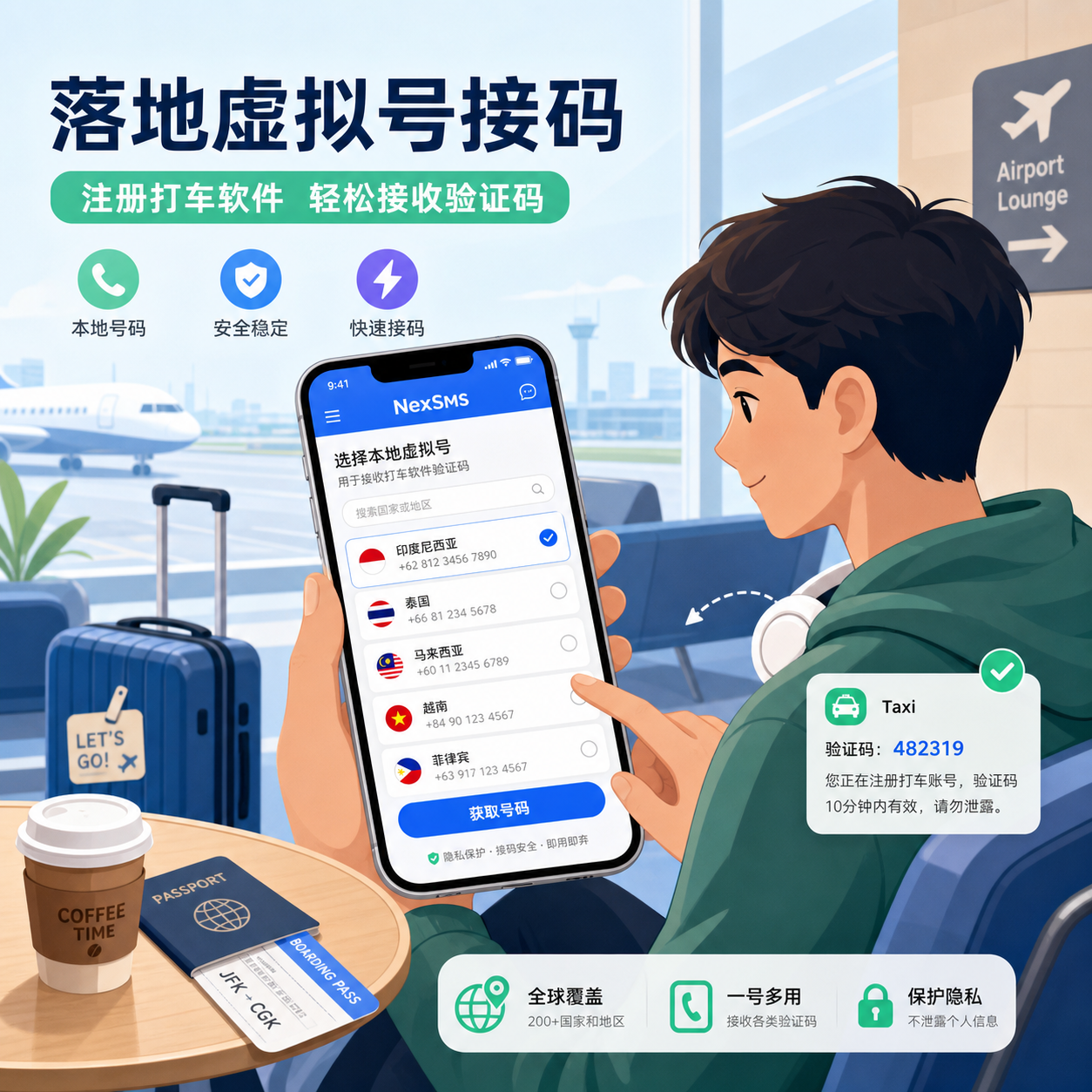
Common scenarios travelers encounter include: registering local food delivery and ride-hailing apps upon arrival (done in minutes); joining local second-hand markets or short-term rental platforms without exposing your personal number to many strangers; verifying services that only support specific country numbers, e.g., some US or European tools; creating temporary WhatsApp or Telegram test accounts without contaminating your main number. Industry practitioners share similar experiences: before lunch in a new country, complete five registrations all using virtual numbers, keeping your real number clean and avoiding subsequent harassment.
When choosing a platform, pay attention to practical details. Prioritize number type—some apps block obvious VoIP numbers, so real operator numbers (non-VoIP) have higher success rates. Ensure sufficient inventory for popular countries to avoid competition during peak hours. Success rate feedback and failure refund mechanisms are critical, especially as major platforms tighten verification. Free public numbers are numerous but heavily shared; often used by many, they can be flagged as "already used," causing verification failure. Paid short-term rental or one-time codes are more reliable, typically arriving in seconds to a couple of minutes.
Common pitfalls to avoid: First, not all virtual numbers work universally. Banks, payment systems, and some social apps have strict risk control and may reject temporary numbers—try switching country numbers or using long-term rental numbers. Second, neglect to clean up after use. If the platform supports viewing message history, delete sensitive information promptly. Third, using the same environment for multiple accounts. Use separate browsers or device fingerprints to reduce correlation risk. Fourth, over-reliance on a single service. The market changes fast; for example, when some large SMS reception platforms shut down, users lost balances and continuity. Spreading usage across multiple services is safer.
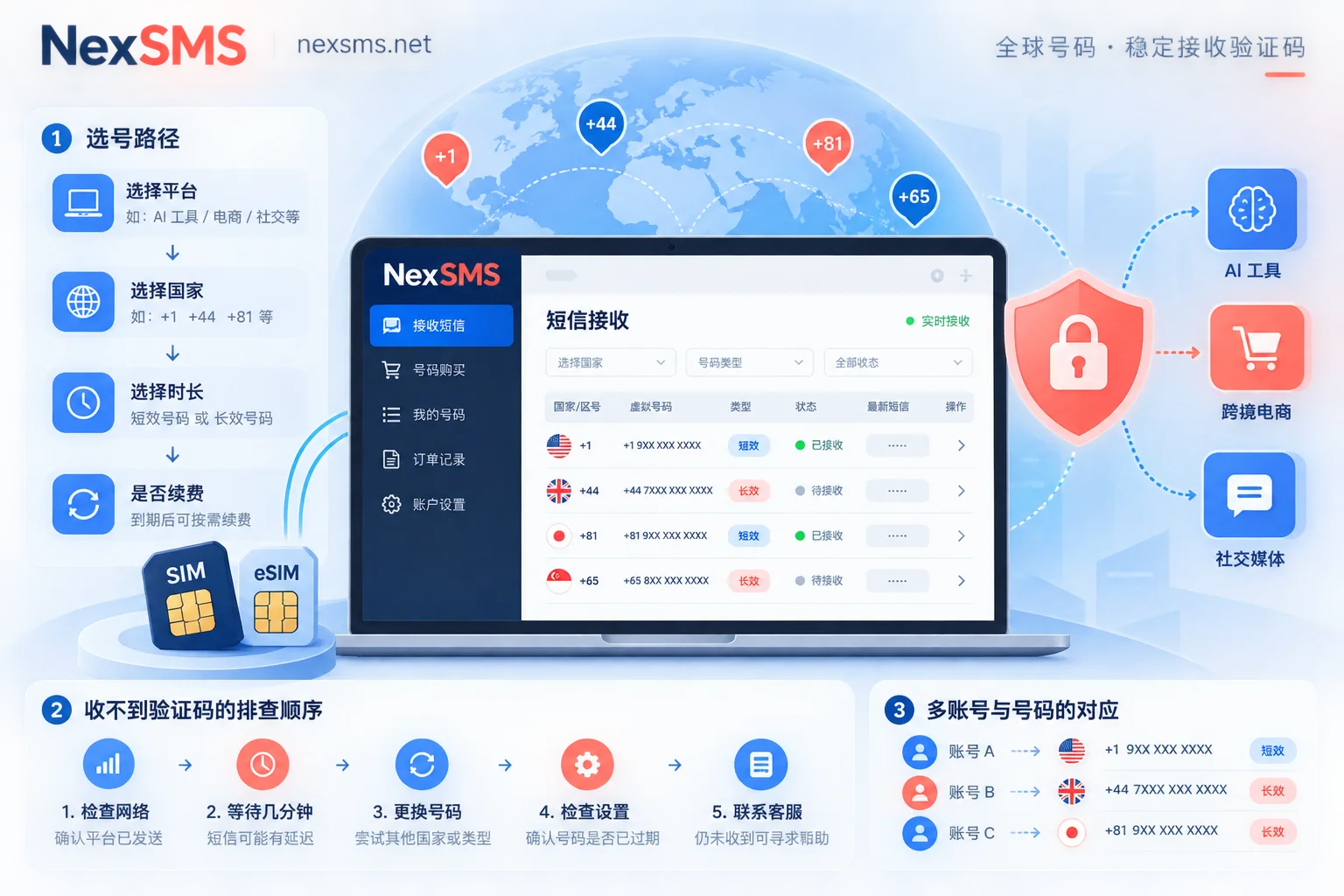
Platforms like NexSMS cover these needs, offering multi-country virtual numbers for quick SMS verification across various apps, with an intuitive interface suitable for temporary travel use. The process is: select country, select service type, get a number, paste the verification code—done in a few steps. For scenarios requiring ongoing use, such as repeatedly logging into local services during a short stay, choose extendable options to avoid frequent number changes.
Extra tips to boost success: Register using a clean network (local WiFi or eSIM data) to avoid severe mismatches between VPN and number country. If a verification code times out, immediately switch to a new number instead of retrying the same one. For WhatsApp, after verification, quickly set a username and additional keys to further hide your real number. For cross-border e-commerce or side hustle accounts, virtual numbers can serve as a "work line" completely separate from personal life.
Privacy protection isn’t a one-time effort. With WhatsApp usernames, chat-level exposure decreases, but registration, login, and recovery still involve SMS verification via phone numbers. Virtual numbers provide that flexible buffer. As travel, digital nomads, and cross-border entrepreneurs increase, this demand will only grow. Instead of agonizing over whether to expose your real number each time, develop a habit: need verification? Use a virtual number; done with the code? Move on. Keep your real phone number clean, reduce future harassment, and add a layer of security.
In practice, virtual numbers are far more than just "receiving codes." They let you quickly integrate into local services in unfamiliar environments while maintaining personal boundaries. Before your next trip, familiarize yourself with one or two reliable platforms so you can use them upon arrival. Services like NexSMS perform stably in these scenarios, with multi-country coverage and instant availability, making travel much easier. Leave your real number for truly important contacts; let virtual numbers handle the rest. Simple operation, immediate effect.



Comments(0)