 NexSms官方博客
When registering for apps, food delivery, ride-hailing, or social tools, you are often required to bind a phone number. Once your primary number is exposed, spam messages and advertising promotions follow. More troubling is the real security risk of SIM swap attacks: attackers use social engineering to transfer your number to a card they control, directly intercepting verification codes, potentially draining your bank and cryptocurrency accounts. Losses in 2025 still reached tens of millions of dollars, and NIST has labeled SMS verification as "restricted," recommending authentication apps or hardware keys instead.
Virtual numbers fill this gap. They are not tied to a physical SIM or personal carrier account; they receive SMS via cloud routing and can be discarded after use. Platforms use VoIP technology to assign temporary numbers from a pool, allowing users to see verification codes in a web page or app. Many people use them to protect privacy: unimportant registrations, testing, short-term verifications all use virtual numbers, keeping the primary number clean.
But platforms are becoming smarter. They maintain databases of known temporary numbers by crawling public SMS sites, subscribing to commercial lists, and cross-referencing historical data, flagging VoIP or recyclable numbers in real time. HLR lookups and carrier type identification can also distinguish "virtual" from "real mobile" numbers. Public free shared numbers are used most often and quickly blacklisted, drastically reducing success rates. Research shows that SMS volume to temporary numbers grew from thousands in 2018 to millions in 2023, mainly targeting social, payment, email, and AI tools for bulk account creation or free credit farming. For legitimate users, this means careful number selection: prefer non-VoIP numbers from real SIM pools, those with few uses and fresh availability, which yield higher success rates.
eSIM is a perfect partner here. eSIM is a programmable chip embedded in devices; scanning a QR code downloads carrier profiles to access local data traffic without swapping physical SIMs. It solves "cheap internet and fast switching," while virtual numbers solve "number privacy and flexible verification." They are not conflicting but complementary.
Consider a cross-border or new city scenario. Arriving in a new place, you activate a local eSIM for data and immediately need to register for ride-hailing, food delivery, local payment, and membership cards. Each requires SMS verification. If you use your primary number, within days it ends up in various marketing databases. Switch to virtual numbers: select a temporary number for the country, receive the code, complete registration, then discard. Your primary number remains tied only to banking, important social accounts, and two-factor authentication. eSIM handles low-cost high-speed internet, virtual numbers handle one-time identity verification, and the primary number stays completely isolated. This practice is common among travelers, digital nomads, and multi-account operators—five or six registrations in a new environment, virtual numbers discarded after use, real number always clean.
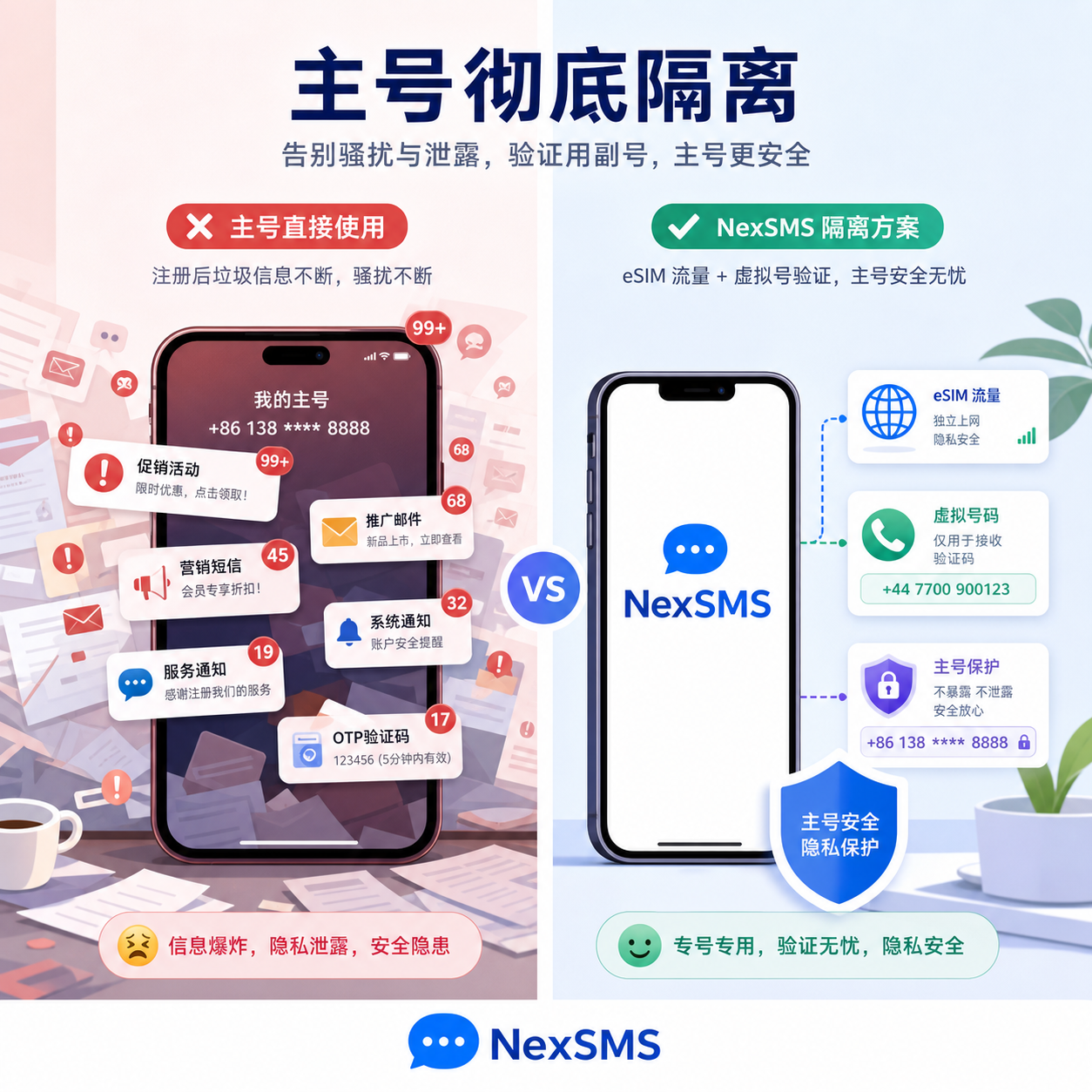
Daily multi-app management is similar. For shopping sites, forums, games, AI tools—anything not involving money—use virtual numbers exclusively. For important accounts (email, payment, work), switch to authenticator apps to reduce SMS dependency. If a service only supports SMS, use a quality virtual number rather than a random public shared one. Non-VoIP numbers are more accepted by many platforms because they resemble real mobile lines and are less likely to be filtered.
On the security front, virtual numbers have clear advantages. They are not tied to your personal carrier account, so attackers cannot perform SIM swaps via social engineering. Even if your primary number is swapped, verification codes and temporary accounts on virtual numbers remain safe. Modern providers also use encrypted transmission (TLS/SRTP), real-time fraud monitoring, and behavioral analysis to prevent abnormal traffic. Of course, security is not absolute; choosing reputable services with encryption and account protection is critical. Data center physical security, access controls, and compliance (GDPR, etc.) are bonuses. Do not bind virtual numbers to banks or government portals—many financial and identity verification systems directly reject virtual lines for fraud prevention, which is normal.
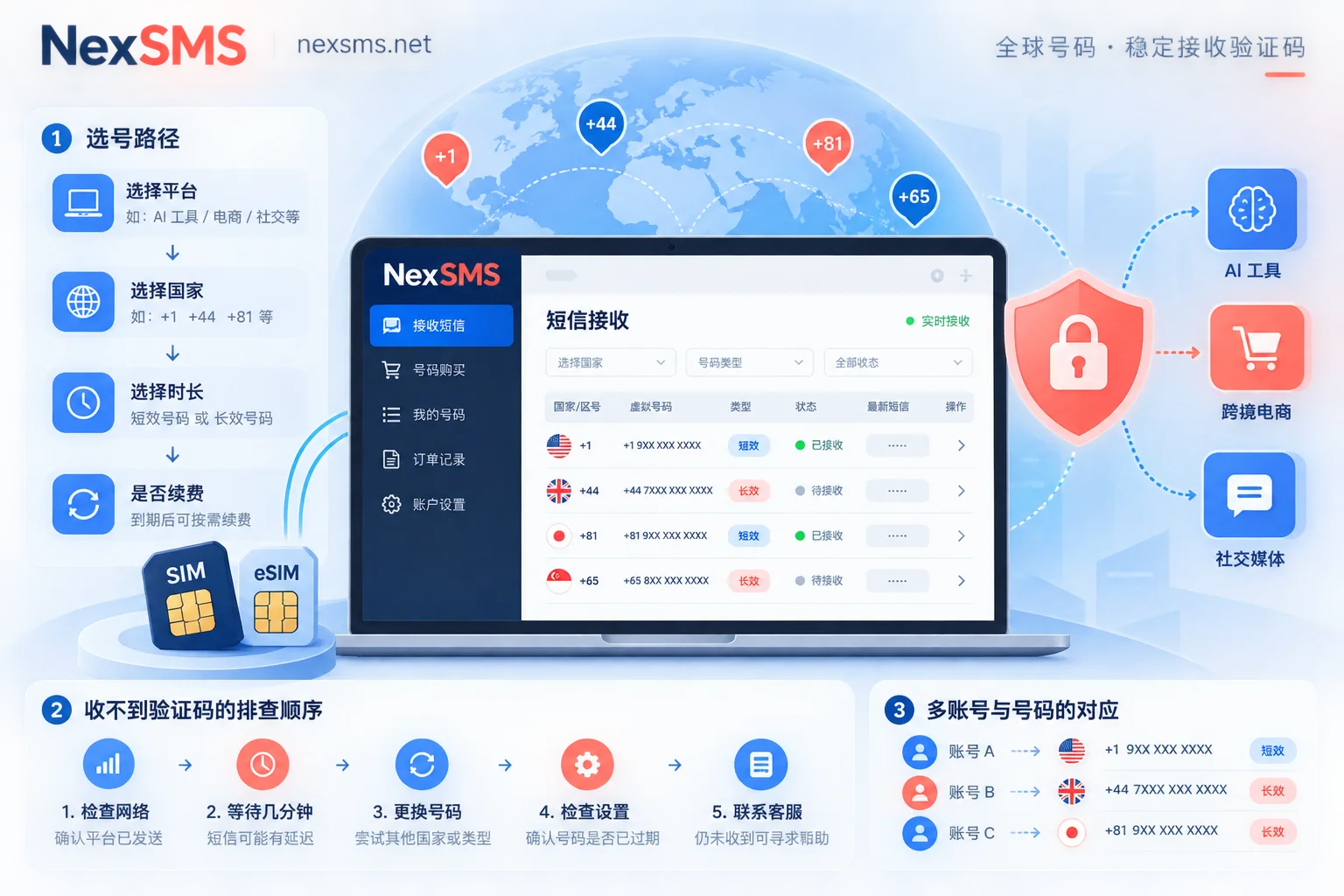
Practice requires attention to details. First, check the target platform's stance on virtual numbers: social and most tools usually allow them, while financial and strict services may block them. When selecting a number, consider country match, freshness, and compatibility with the target app. Use the code quickly after receiving it; do not leave it pending. If it fails, switch numbers and retry; many services automatically forfeit credits on failure. For long-term needs, you can rent a number for a period, but for temporary verification, one-time use is sufficient. For eSIM, download the profile in advance so it's ready upon arrival, avoiding reliance on roaming.
Common misconceptions abound. First, don't be cheap and use fully public shared numbers; they are reused frequently, platform blacklists update fast, success rates are low, and account association risks increase. Second, don't bind too many important services to one virtual number—if it's recycled, someone else could reset your old accounts. Third, don't ignore the network environment; use a stable proxy or clean device fingerprint when using virtual numbers to reduce extra risk. Fourth, not all virtual numbers are the same; VoIP and real SIM pool-based numbers differ greatly, and the latter is more stable. Fifth, don't rely solely on SMS; remember to back up authenticators or hardware keys.

Putting it all together, this is a lightweight digital identity management system: primary number for core services, eSIM for connectivity, virtual numbers for edge verification and privacy isolation. Services like NexSMS, a code reception platform, offer multi-country virtual number support, making it easy to obtain temporary numbers for verification with an intuitive interface, suitable for daily use and cross-border scenarios. Using it with eSIM smoothens the registration process and reduces strain on your primary number.
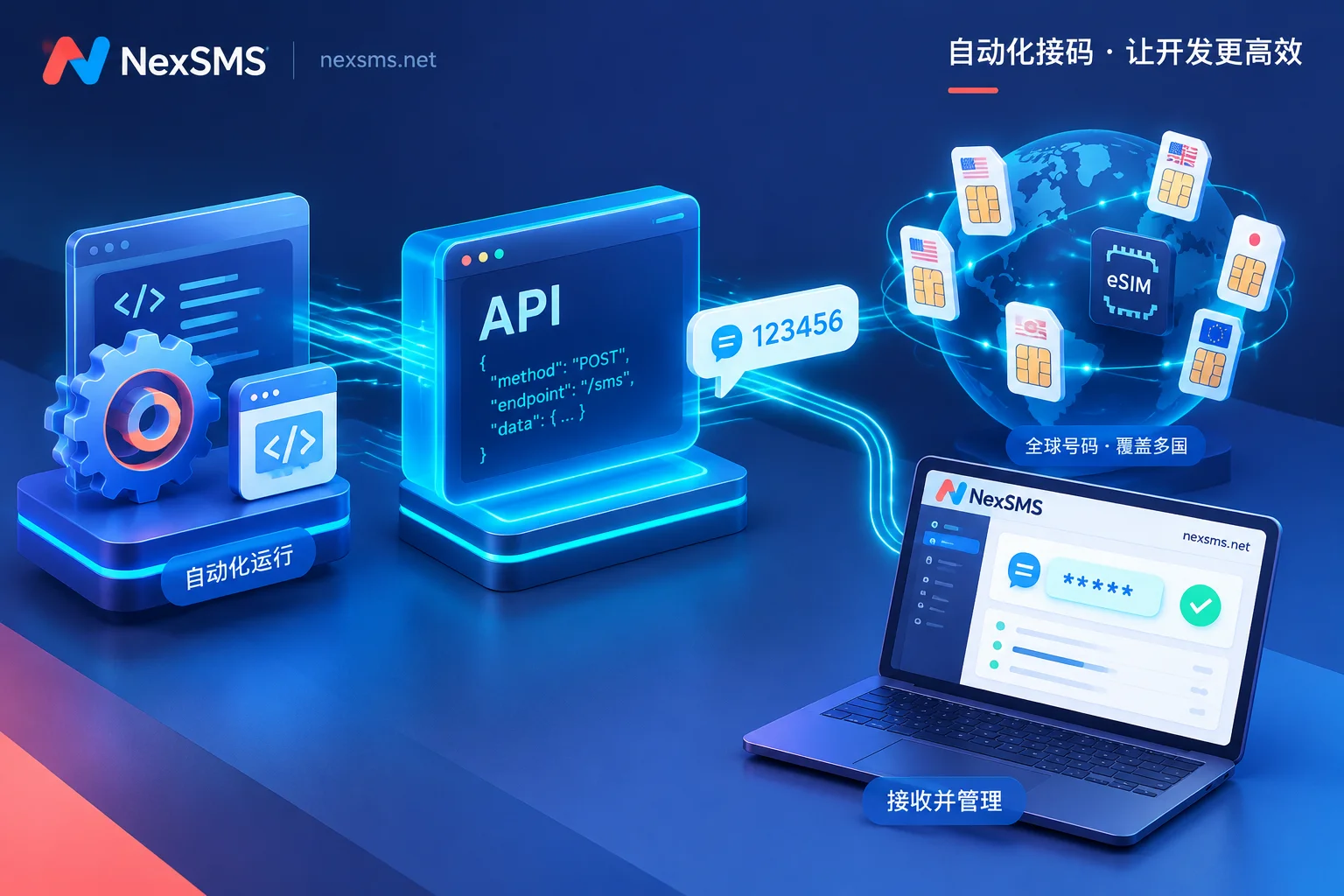
Getting started is simple. If your phone supports eSIM, first buy a data plan for the target region and activate it. When verification is needed, open the code reception service, select a number for that country, enter it in the target app, wait for the SMS, and input the code. After verification, immediately check if you need to keep the number; if not, release it. Regularly clean up unused virtual associations to avoid accumulation. For batch or automated needs, check if there is an API interface for scripting.
This combination is not a silver bullet but covers most privacy and convenience pain points. As platform detection becomes stricter, clean numbers and reasonable usage strategies become more important; SIM swap risks persist, making isolation of the primary number more necessary. A few tries will show that daily registrations no longer cause anxiety, and your primary number stays clean. When stable virtual number support is needed, NexSMS is ready to use, making the verification step more hassle-free.


Comments(0)