 NexSms官方博客
Nowadays, registering for food delivery, ride-hailing, local services, AI tools, or social accounts almost always requires phone number verification. Once you give out your real number, spam messages and marketing calls quickly follow. More troubling is that exposing your primary number in too many places increases the risk of SIM swap attacks. Hackers only need your number to intercept OTPs, reset email, bank accounts, or even crypto wallets. Recent industry discussions repeatedly mention that the phone number has become the "master key" to digital life, and one of the most direct ways to protect it is to isolate low-risk daily verifications.
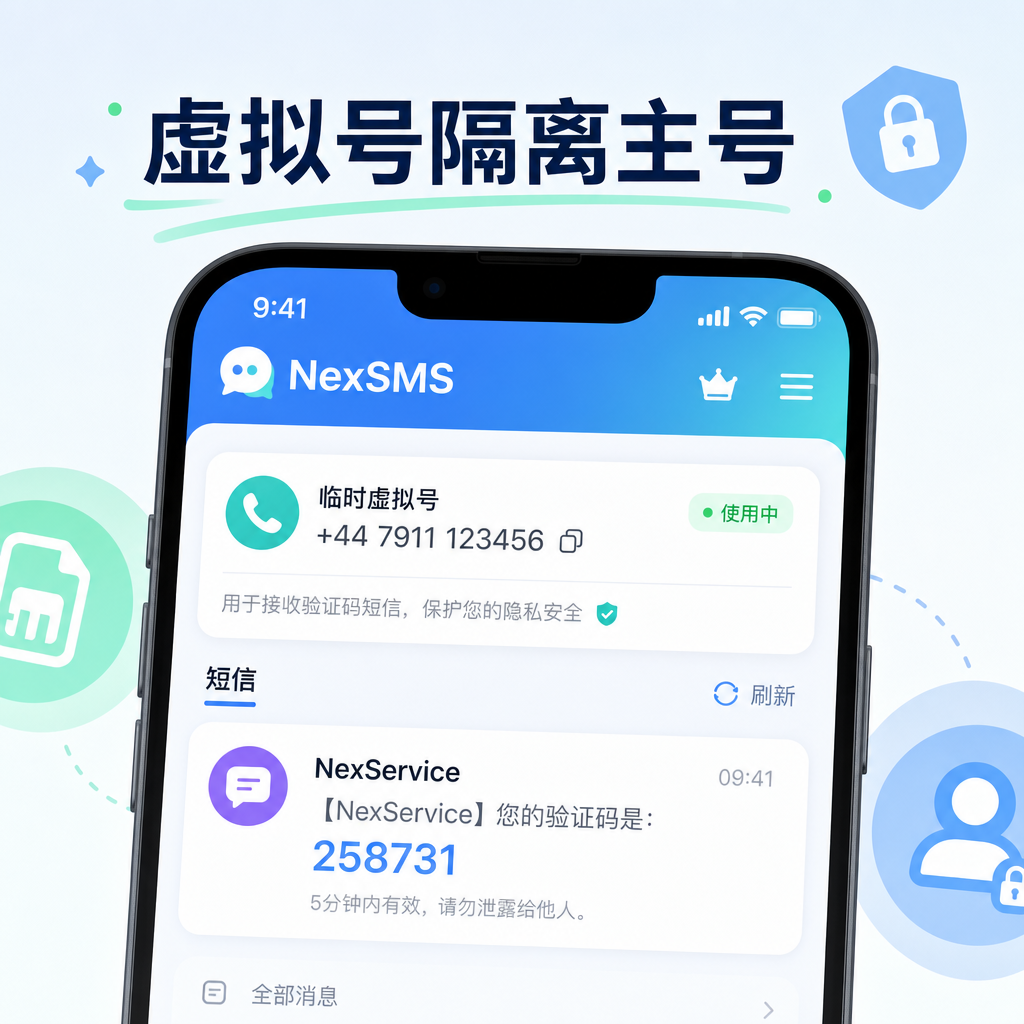
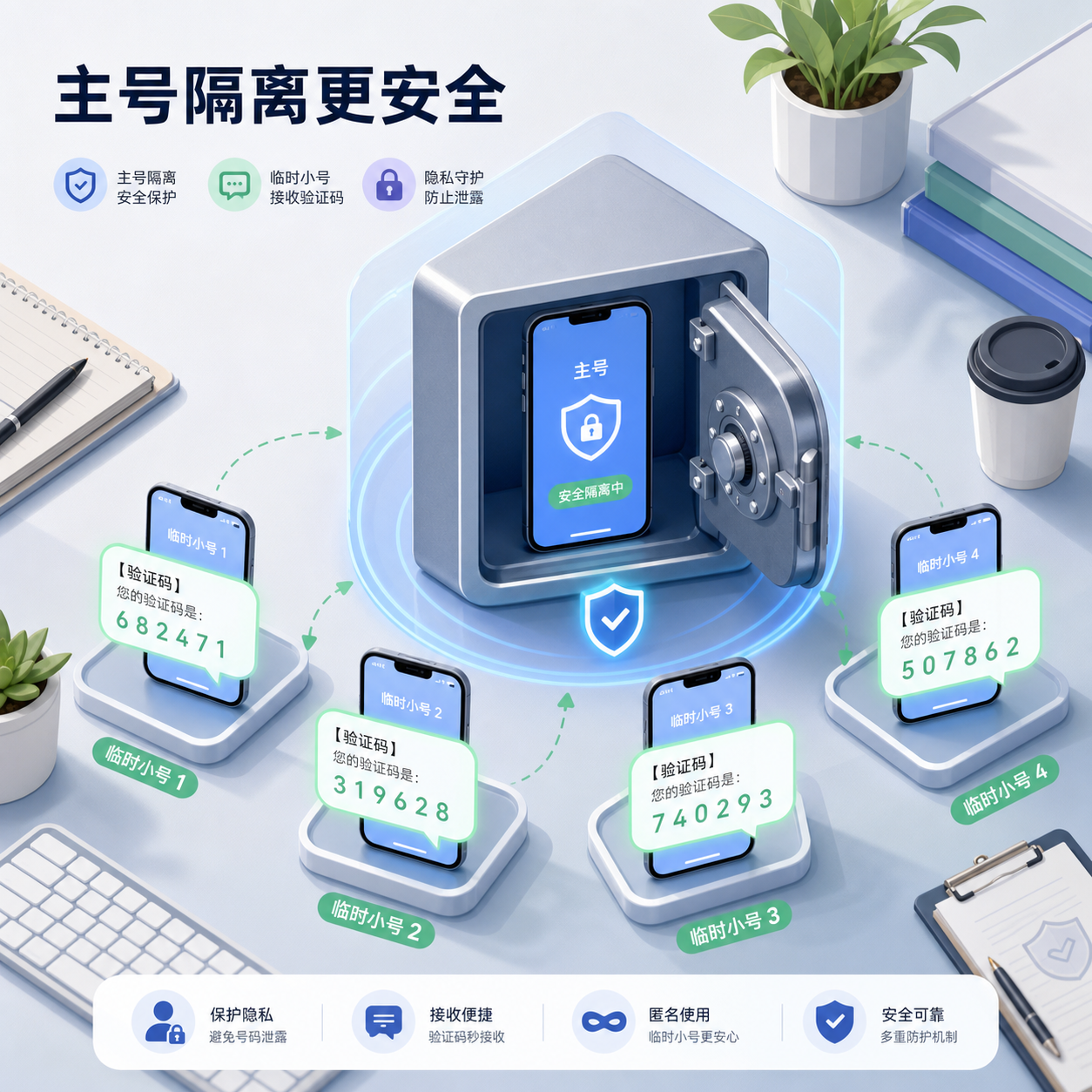
Virtual numbers are perfect for this job. They are not tied to a physical SIM, route over the network, and can be used to receive verification codes or for temporary registrations. Once used, you can discard or replace them. Your primary number stays clean, reserved only for family, banking, and truly important services. This reduces spam and significantly shrinks the attack surface for SIM swapping—because virtual numbers lack the traditional carrier's physical card process that can be socially engineered.
Let's look at a practical scenario. When you go to a new place or open multiple apps daily, delivery, transportation, cashback, and second-hand markets all require a number. If you give out your real number everywhere, your SMS inbox will be a mess within a week. Switch to a virtual number, receive the code, and discard it; your primary number remains clean. AI tool registrations also often require SMS verification, and using a temporary number can quickly handle it without contaminating your main number. In the long run, hanging shopping, social, and testing accounts on virtual numbers compartments your identity: if one is compromised, others are unaffected.
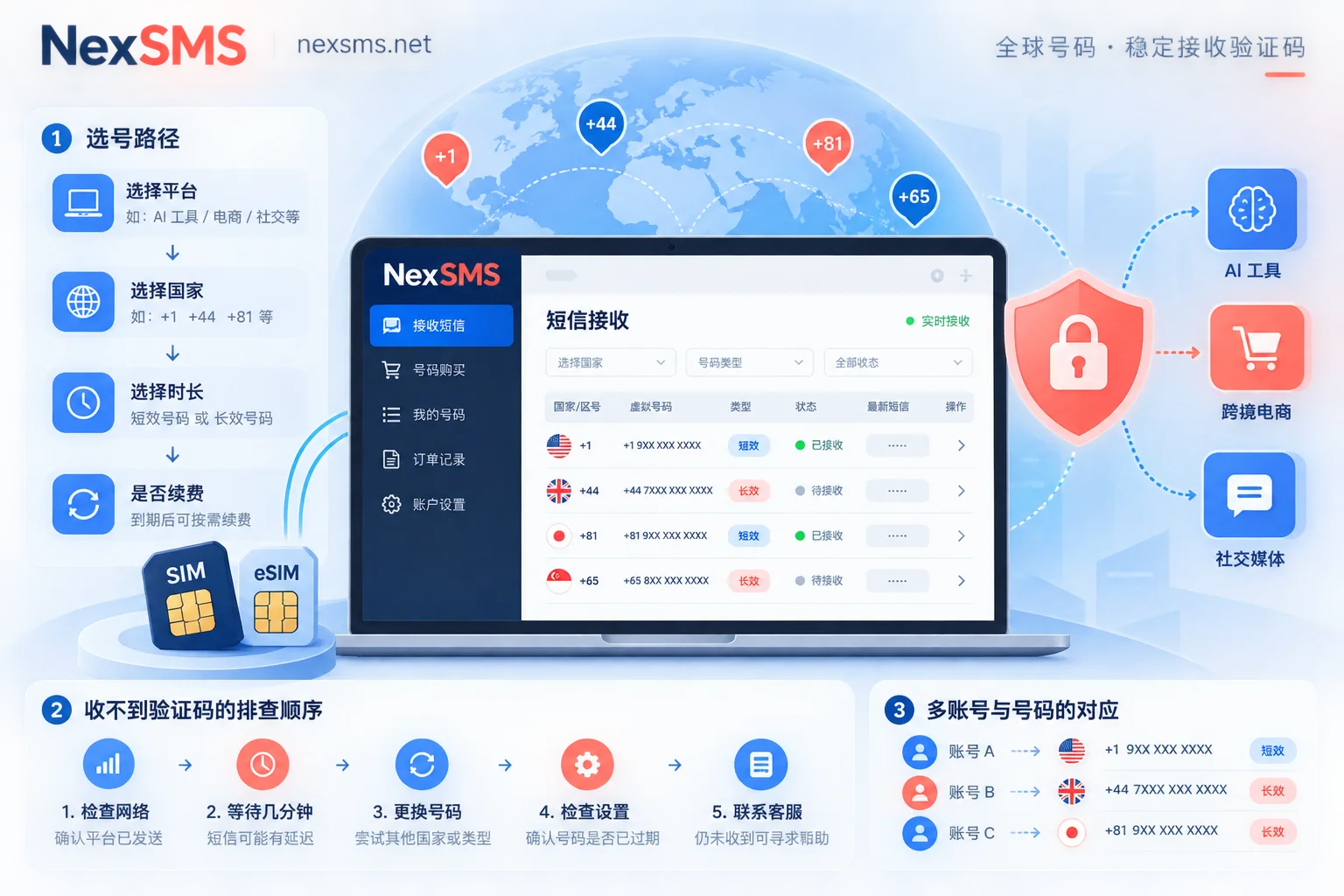
How to operate reliably? First step: distinguish usage. High-value accounts (bank, primary email, crypto) should firmly use your primary number with an authenticator app or hardware key, and try to remove SMS as a recovery method. For daily registrations, tests, and temporary services, directly use a virtual number. Second step: choose the right type. Some platforms recognize and block obvious VoIP numbers, so prioritize numbers with high success rates and coverage of your target country, and keep a few spares to switch. Third step: the code-receiving process is simple: select the country and service type on the platform, get a number, fill it in, wait for the verification code to appear on the page, and copy it. Use short-term numbers and discard after use; if you need to log in repeatedly, consider renting for a longer period.
Common mistakes to avoid. First, don't treat a virtual number as a permanent primary number; many shared number pools have been used by others, or platforms may trigger risk controls later. Second, don't rely solely on SMS 2FA; whether for primary or virtual numbers, switch to an authenticator app whenever possible. Third, don't neglect carrier-side protections: enable port lock or SIM protection on your primary number—it's a free basic step. Fourth, be mindful of information leaks; avoid sharing your birthday or address publicly on social media to reduce social engineering material. Fifth, account security itself: use strong passwords and app 2FA for your virtual number service login, so the attack surface doesn't shift from the carrier to the platform account.
On the security front, modern virtual number services commonly use encrypted transmission (TLS, SRTP, etc.), and cloud infrastructure has monitoring and fraud detection, offering better control than traditional phone networks. Of course, nothing is absolutely secure; the key is to reduce exposure of your primary number. By stripping away daily verifications, even if an app is breached, hackers only get a disposable number and cannot touch your bank OTPs.
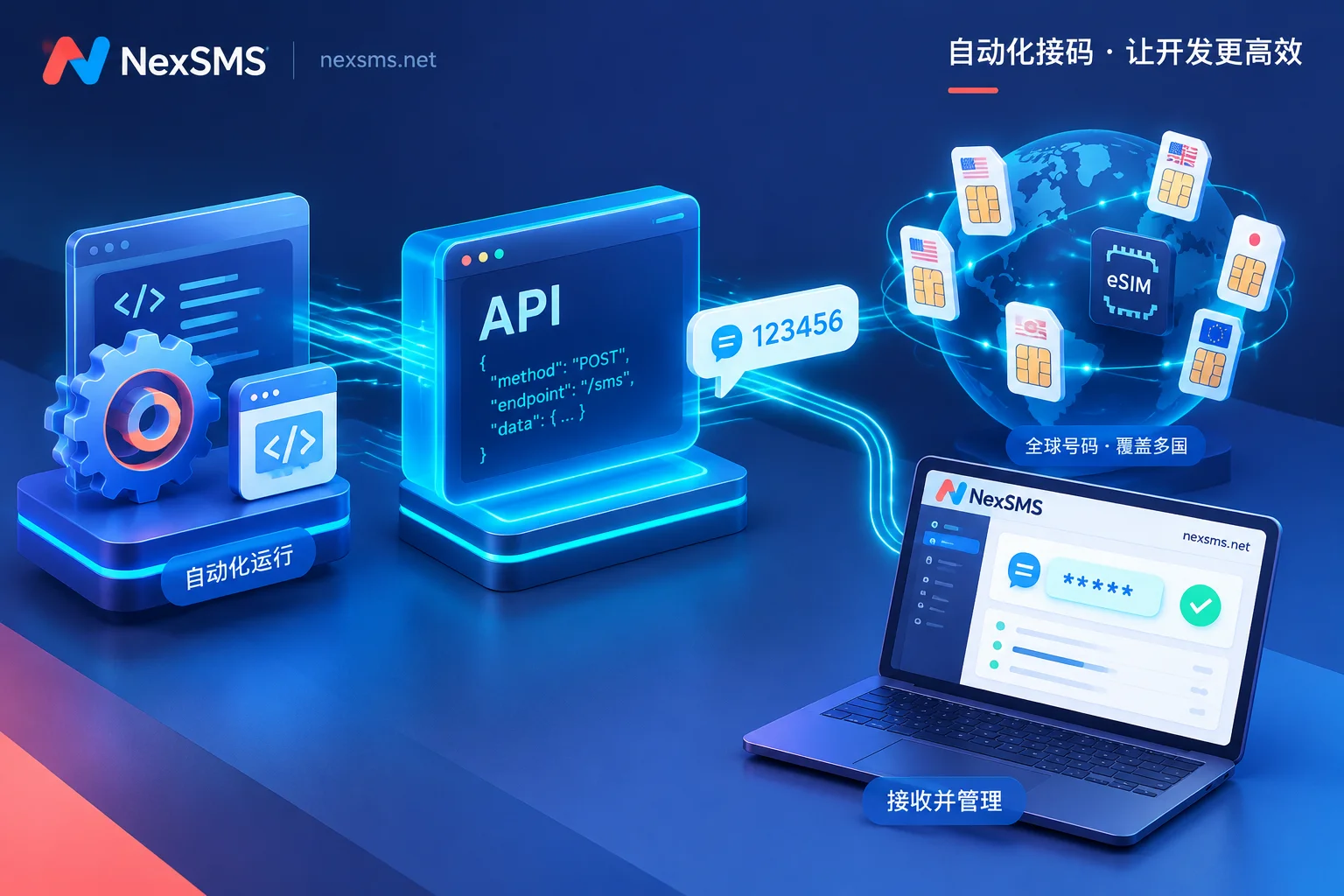
Practical tips: For batch registration or automated scenarios, choose a platform with API support for easy SMS retrieval; peak hours may cause delays, so prepare extra numbers in advance; when testing, start with low-value services to confirm the target platform accepts the numbers before using them formally. If you don't receive a code, switching country codes or refreshing the number usually resolves it. Over time, your primary number's SMS volume and spam will noticeably decrease.
Platforms like NexSMS, a code reception service, can stably provide various virtual numbers for SMS verification, covering multiple countries, and are suitable for daily isolation needs. Using it to receive codes is straightforward—just get the code and leave; your primary number stays untouched. Combined with carrier lock and authenticator migration, the entire setup is low-cost and effective.
Final reminder: virtual numbers are a tool, and compliance is most important. Don't use them for illegal multi-accounting or fraud; adhere to platform rules and local laws. Freeing your primary number from the "verify everywhere" state is a true long-term security habit. Try using a virtual number for one daily registration, and you'll immediately feel your inbox is much cleaner.


Comments(0)