 NexSms官方博客
The SMS verification industry has seen significant changes in the last six months. Many long-time users are still searching for familiar large platforms, only to find shutdown notices. The market hasn't disappeared—it has become more fragmented. Demand for SMS verification is still rising, with some service providers reporting a several-fold increase in new registrations since the start of the year. Platforms are getting stricter, VoIP numbers are increasingly rejected, and demand for real SIM channels is growing. For ordinary users registering accounts, handling cross-border tasks, or testing accounts, this step is unavoidable. How to use virtual numbers stably and securely during this period of change is a practical priority.
First, let's clarify what virtual numbers actually solve. Almost all mainstream apps and websites now require phone number verification for registration. Using a real number directly leads to spam messages and marketing calls quickly. Statistics show that over 70% of users experience a noticeable increase in骚扰 after verifying with their real number. More seriously, there's SIM swap attacks. Scammers use social engineering or internal vulnerabilities to transfer your number to a card under their control, directly intercepting verification codes and taking over bank, email, and cryptocurrency accounts. Such cases have increased significantly in recent years. Virtual numbers isolate verification from your real identity; after receiving the verification code, you can discard or change the number, keeping your real main number clean. When traveling or on business abroad, local food delivery, ride-hailing, and market apps all require numbers. Using a virtual number for SMS reception and then discarding it keeps your main number free from local spam. This is already a daily routine for many.
However, virtual numbers are not a panacea. The biggest pitfall is free public numbers. These numbers are shared by multiple people, and SMS content may be visible to others. Someone might use it to register a sensitive account, only to have someone else reset the password and take over the account. Public numbers are recycled quickly; you might succeed in registration but later find the number is already used by someone else, causing login failures. Another category is pure VoIP numbers. Many platforms can now identify the carrier type and directly intercept non-real mobile numbers. WhatsApp, Telegram, and some social and financial services are increasingly sensitive to such numbers. Success rates fluctuate, wasting time and money. There's also the issue of number recycling. Carriers reassign a large number of deactivated numbers each year. A newly obtained number may still be associated with the previous user's accounts. You might receive someone else's bank alerts or reset codes; conversely, your own accounts could be hijacked by the new owner. These risks are real and cannot be ignored.
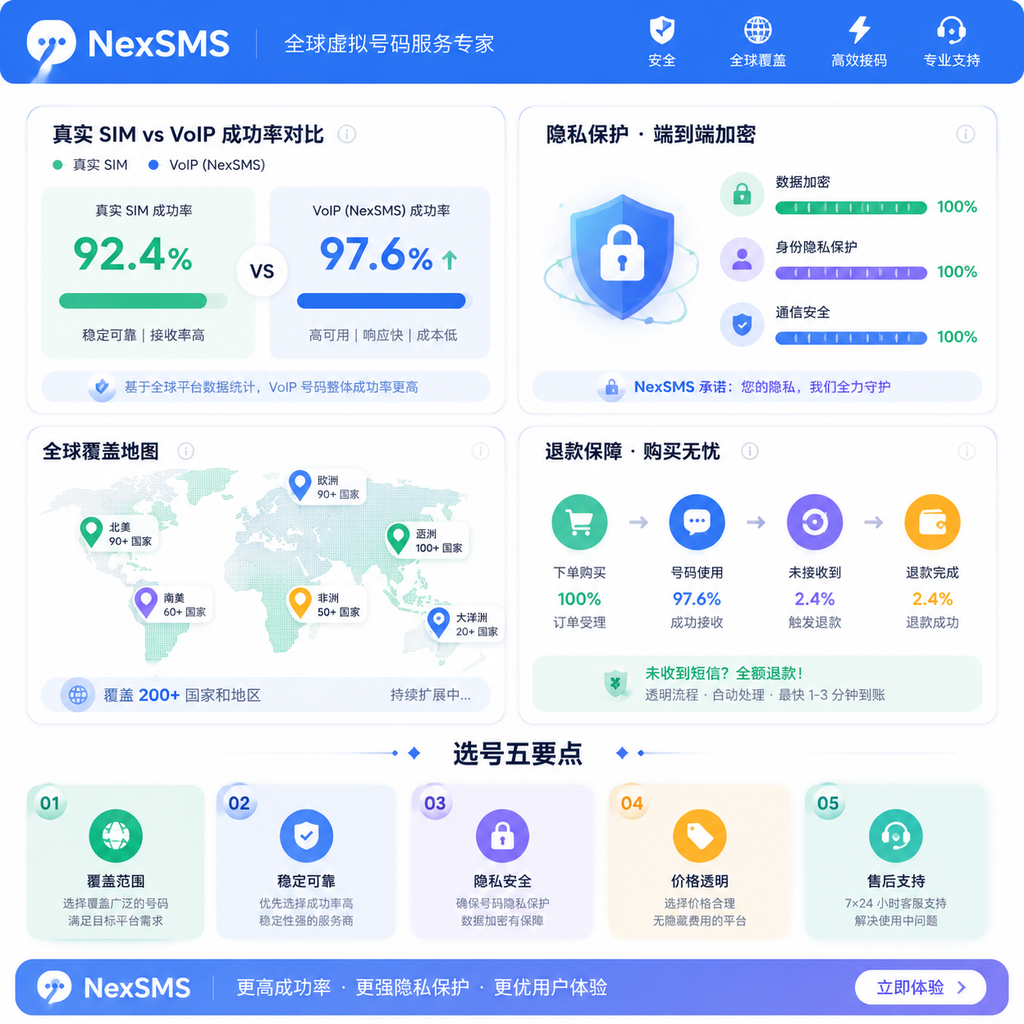
When choosing a service, prioritize several things. First, number type. Prefer real SIM channels or hybrid solutions over pure VoIP numbers. Real numbers connected directly via carriers have higher pass rates on platform verification, especially for strict services. Second, privacy protection. Check if messages are encrypted in transit, automatically deleted, and if private numbers are assigned instead of a shared pool. Free public services are only suitable for completely unimportant tests; never use them for important accounts. Third, country coverage and success rate. If you need numbers from a specific country, ensure stable supply. Fourth, after-sales mechanism—whether automatic refunds on failure and prompt customer support. Fifth, don't focus only on the cheapest option. Extremely low prices often correspond to poor number quality, frequent recycling, or instability. Recharge a small amount first to test the target platform, and only scale up after confirming reliable SMS reception.
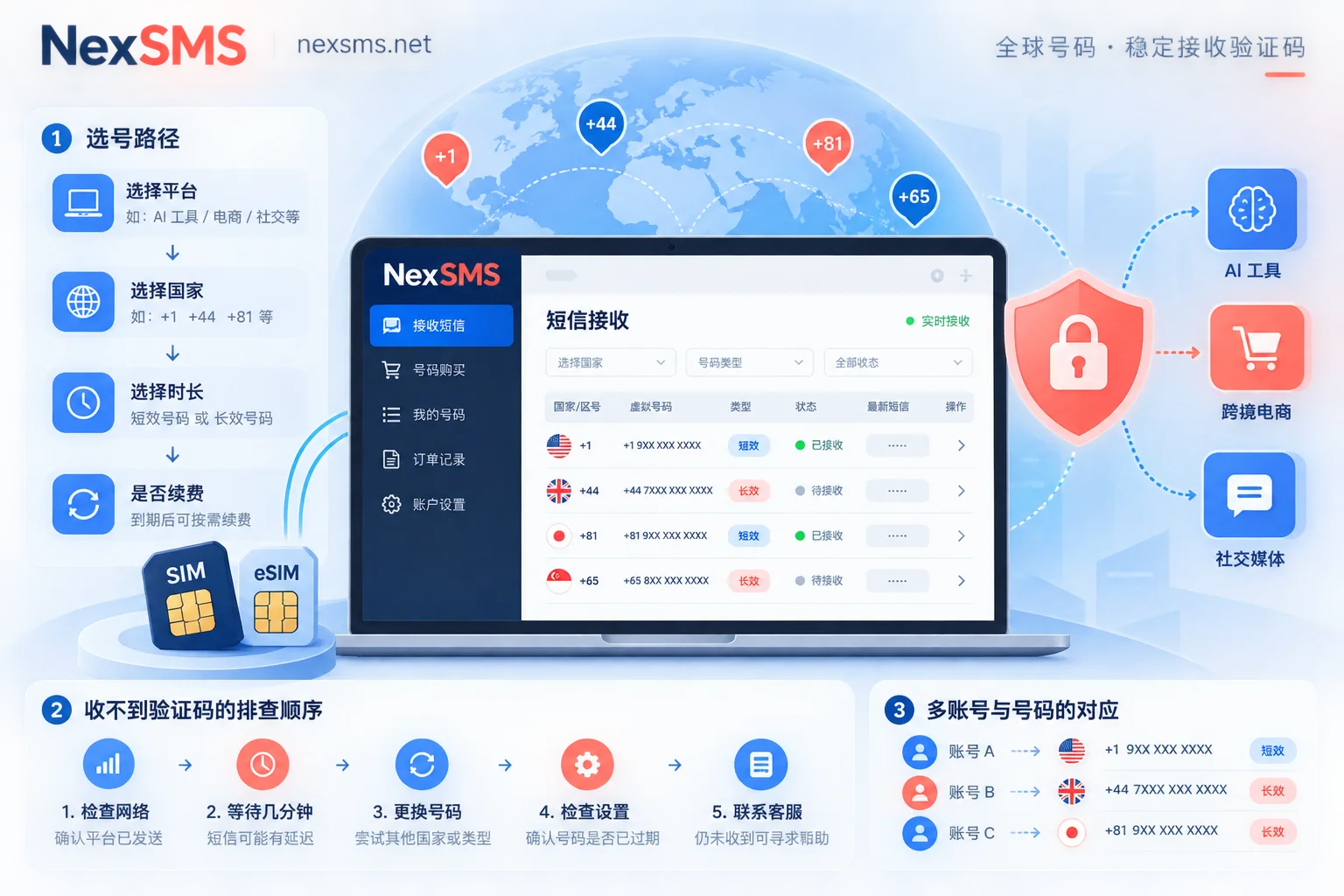
The actual operation can follow this process. First, determine the use case. For one-time registration, choose a short-term activation number; for long-term binding or multiple logins, consider numbers that can be rented for a period. On the platform, select the corresponding country and service type, obtain a number, and enter it in the target app. Keep the page open while waiting for SMS; most reliable services receive it within tens of seconds. Once received, complete verification immediately without delay. After successful verification, if it's a one-time use, discard the number directly. Do not stack too many important accounts on the same number to avoid cross-contamination. It's recommended to isolate the verification environment, use a separate browser configuration or clean network, to avoid fingerprint linking. When paying, use temporary methods and avoid binding main payment channels.
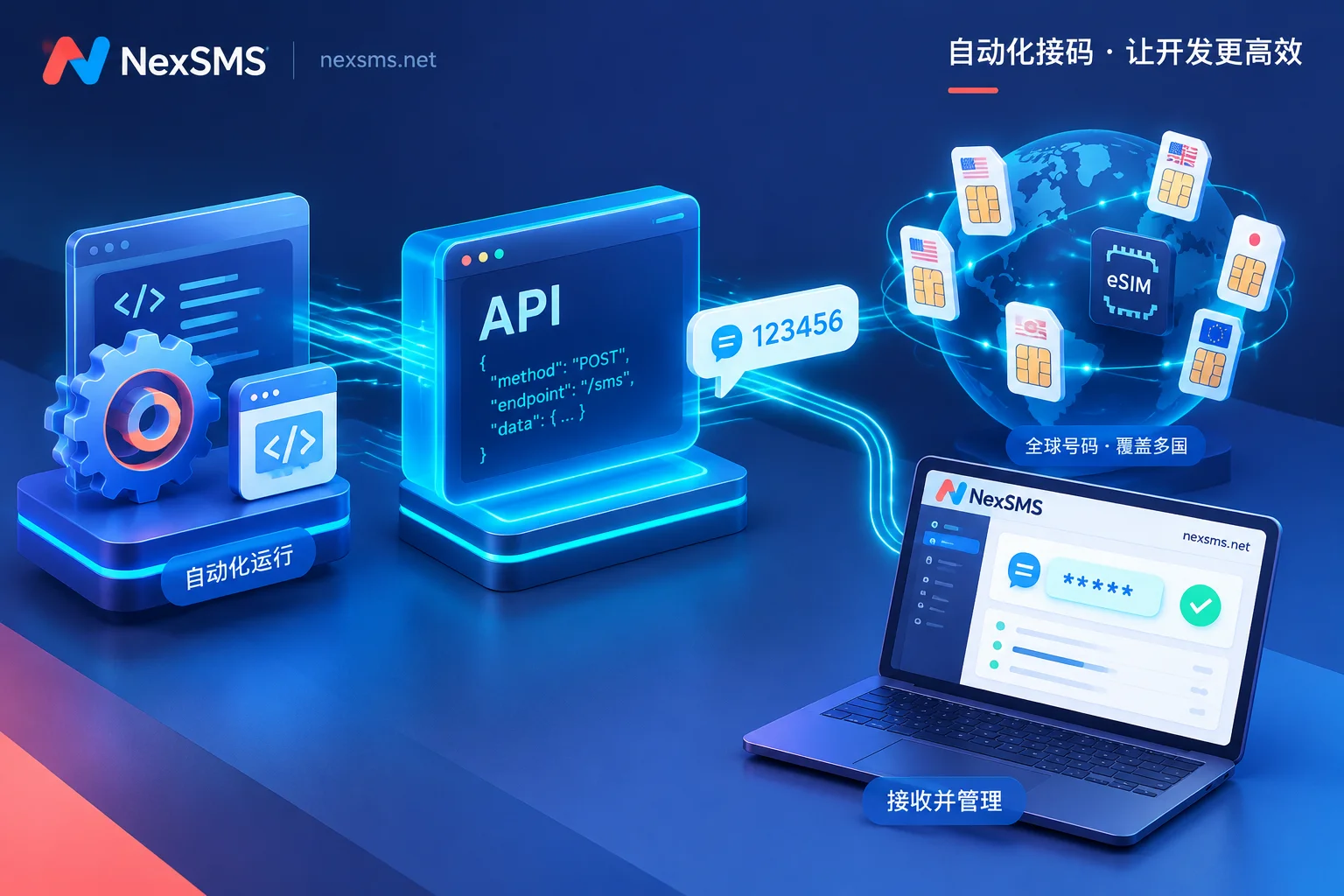
Several common scenarios can be directly applied. Freelancers or small teams operating multiple platforms can use independent virtual numbers for each project, avoiding main number exposure and account association. Cross-border users, upon arrival, can use local virtual numbers to register for local services, while the main number is reserved only for core banking and emergency contacts. For development testing, batch SMS reception combined with API automation greatly improves efficiency. Privacy-sensitive individuals can route all non-essential verifications through virtual channels, using their real number only where real-name authentication is mandatory. Platforms like NexSMS, focusing on SMS reception, provide multi-country virtual number capabilities to receive verification codes, covering these daily and business scenarios with simple operation and quick onboarding.
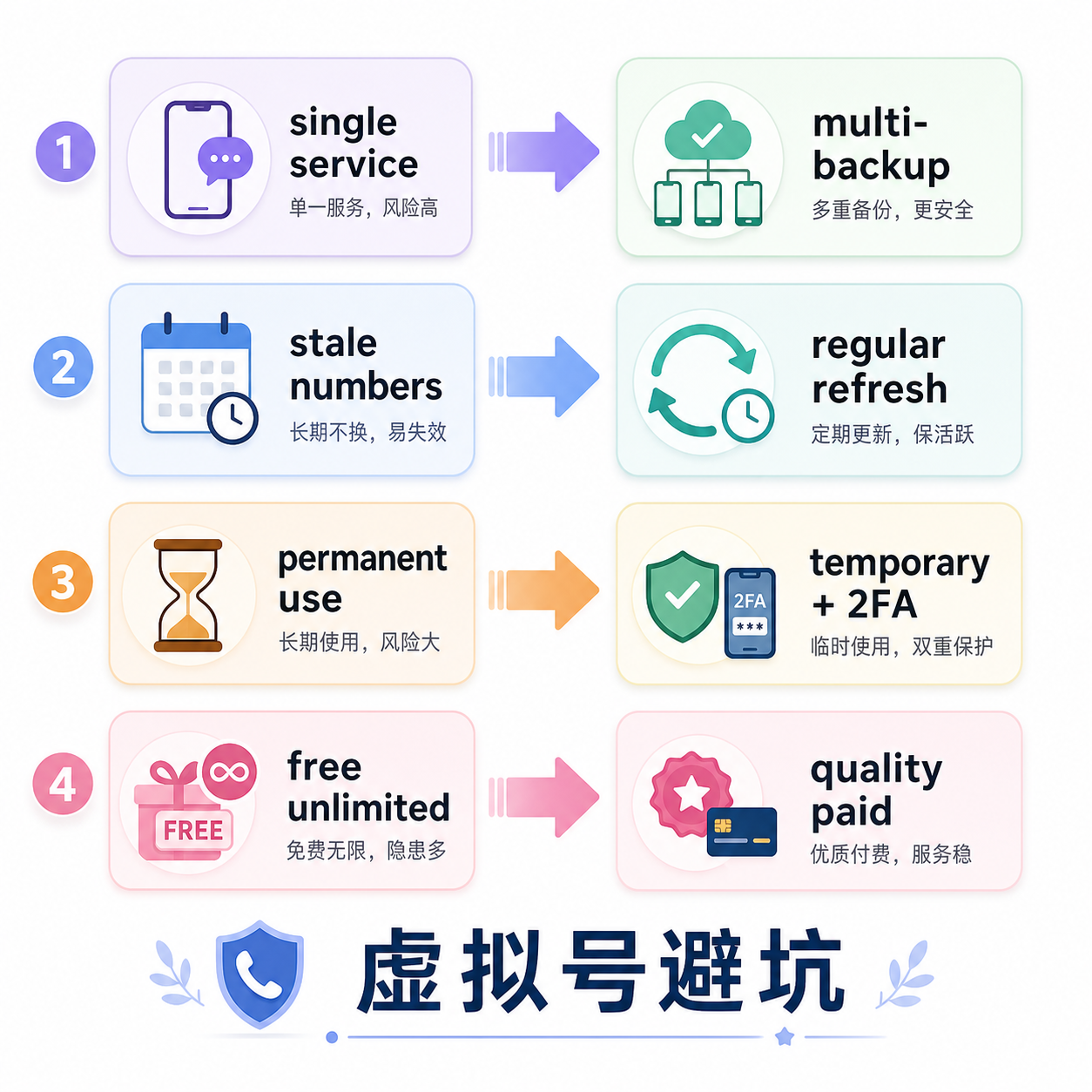
There are several common misconceptions to avoid. First, over-reliance on a single service. The industry changes rapidly; a problem with one platform can directly affect your accounts. Prepare two or three backups to spread risk. Second, ignoring number freshness. Repeatedly using the same batch of old numbers can get them flagged. Regularly replace numbers. Third, treating virtual numbers as permanent main numbers. Virtual numbers are suitable for verification and temporary communication; for truly important long-term accounts, it's better to combine in-app authenticators or hardware keys for secondary protection. SMS itself lacks end-to-end encryption and should not be the sole security measure. Fourth, rushing to "free unlimited SMS reception." Free often means poor quality and high risk, leading to greater account loss in the long run.
The trend for 2026 is clear: platform scrutiny is tightening, compliance pressure is increasing, and relying solely on cheap VoIP is becoming harder. Users need to pay more attention to number quality, privacy isolation, and operational habits. Choosing the right service and using it correctly makes virtual numbers still an effective tool for protecting main numbers and improving efficiency. NexSMS provides stable virtual number SMS reception support suitable for daily verification and multi-scenario switching. The key is to stay clear-headed: don't blindly trust free offers, don't chase cheap prices, and don't put all eggs in one basket. Test on a small scale first, confirm stability, then expand use. Only then can you truly reduce risks and retain convenience.
In practice, you'll find it becomes easy once you develop the habit. Before registering, first think whether this account is worth using your real number; if not, go directly to a virtual channel. It takes a few minutes, your main number stays clean, and your accounts remain stable. The industry is still evolving, but the core logic hasn't changed—use isolation to protect privacy, use reliable channels to improve success rates. Follow the steps above, and you'll basically avoid most pitfalls.


Comments(0)