 NexSms官方博客
When many overseas users are still accustomed to receiving One-Time Passwords (OTP) via mobile phone to complete logins, the rules in the communication and technology sectors have already taken a substantial turn. In mid-July 2026, Microsoft officially notified its enterprise identity management system that starting September, it will set Passkey as the default verification option and gradually phase out native support for traditional carrier SMS verification. Echoing the tech giant's move, multiple telecom regulatory authorities in Europe and the US also intensively launched strict measures against SMS traffic over the network in the same week.
This wave of governance upgrades targeting the underlying communication infrastructure has made many users who are used to using phone numbers as their primary identity feel the change. Against the backdrop of heightened risk control in public cellular networks and frequent interception of verification codes, understanding these rule changes and reasonably leveraging SMS verification platforms to protect personal number privacy has become a common challenge for cross-border developers and ordinary users.
Telecom Regulators and Tech Giants Tighten SMS Verification in Tandem
In its security technology roadmap released on July 13, Microsoft emphasized that as AI-based phishing attacks and SIM Swapping costs have significantly decreased, SMS verification codes transmitted in plaintext can no longer meet current security requirements. In the subsequent plan for its identity management service, traditional voice call and SMS multifactor authentication (MFA) will gradually be phased out, replaced by passwordless verification solutions that combine device hardware capabilities.
Regulatory restrictions were also implemented around the same time. On July 15, the UK telecom regulator Ofcom issued new rules requiring mobile network operators to deploy stricter information filtering systems to intercept fraudulent sender-name enterprise SMS and abnormal traffic at the source. Similarly, the US Federal Communications Commission (FCC) voted on July 22 to pass new regulations strengthening verification of voice and SMS routing databases, aiming to cut off paths for non-compliant service providers to transmit massive amounts of junk information over the public network.
The successive actions of major regulatory agencies and tech giants indicate that the past practice of casually binding personal phone numbers to various online services not only bears higher security risks but also increasingly suffers from verification interruptions due to direct interception by communication channels.
Delivery Bottlenecks and Interception Risks in Traditional Number Verification
The strict governance of communication channels by various regulatory agencies has directly changed the cost and channel success rate for enterprises sending verification SMS. As telecom operators significantly increase the sensitivity of filtering algorithms, identity verification codes sent by many multinational internet platforms are easily blocked midway. Users often encounter the embarrassing situation of clicking the "Send Verification Code" button but never receiving the SMS.
Besides the decline in success rate, the privacy risks from excessive exposure of personal primary numbers cannot be ignored. Entering real phone numbers on various small and medium-sized websites, forums, or temporary applications can easily make personal identity information a target in data breaches. Once hackers obtain the correspondence between personal numbers, names, and emails, they can launch precise social engineering attacks, or even attempt to tamper with phone card bindings through operator customer service.
Under this contradiction, many users are beginning to seek decoupling of identity information from basic communication capabilities. Rather than exposing personal real numbers to databases of unknown security levels, it is better to use isolation measures when registering for non-core services, thereby cutting off attack paths while completing verification.
Technical Details to Consider When Choosing an SMS Verification Platform
In an increasingly stringent telecom regulatory environment, to stably receive verification information from overseas platforms, higher requirements are placed on the service quality of the verification channel. Ordinary free numbers are often blacklisted by target platforms due to heavy reuse, or directly discarded by operators due to lack of compliant routing. At this point, choosing a reliable SMS verification platform becomes crucial.
When evaluating and selecting relevant verification receiving services, the following key indicators are typically considered:
- Cleanliness of resource number segments: Whether the platform has abundant and regularly updated real number resources to avoid direct rejection by target applications due to using low-quality number segments.
- Reception response and parsing speed: Whether the system can accurately capture and display OTP content under high concurrency in a short time to prevent verification failure due to timeout.
- Communication routing stability: Whether the service provider can maintain a stable SMS delivery rate unaffected by risk control blocks, considering operator policies in different countries and regions.
- Session isolation and privacy protection: After receiving verification information, whether the platform can properly isolate and clean up session records to prevent information leakage.
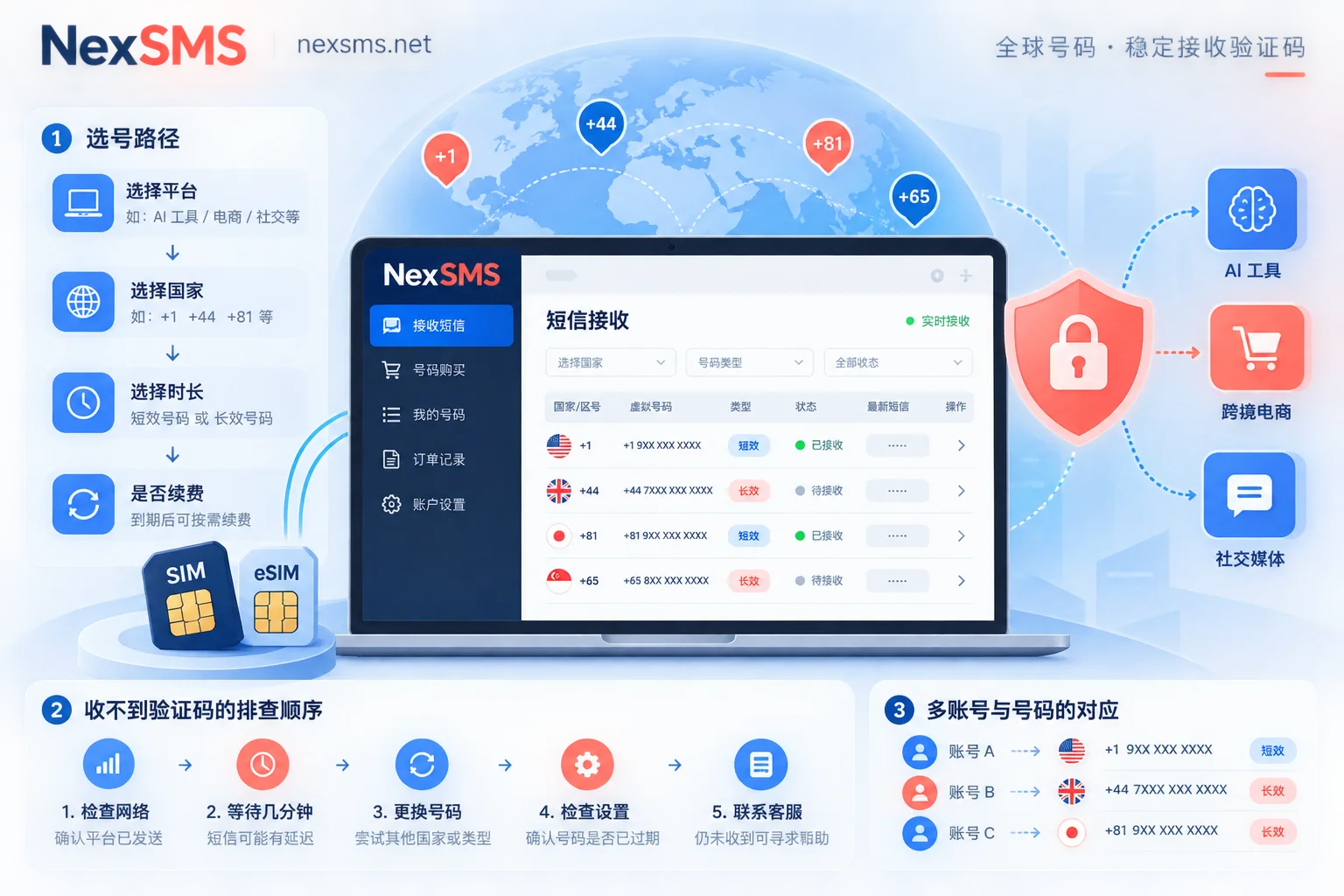
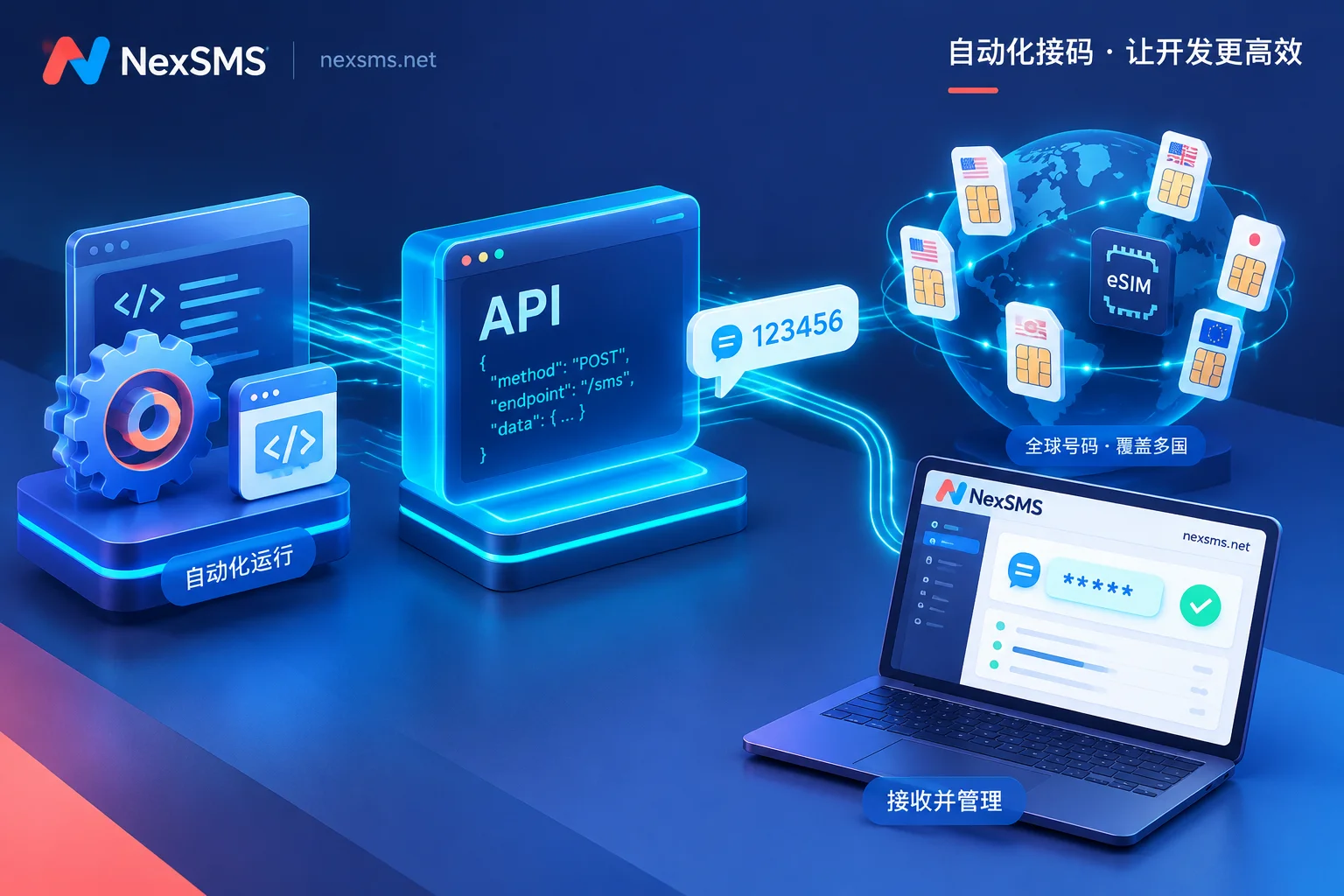
In actual handling of overseas account registration or multi-service verification, services like NexSMS, which focus on channel delivery rates and resource updates, can help users avoid many reception issues caused by operator risk control, enhancing verification efficiency while ensuring security.
Establishing an Account Isolation Strategy Adapted to the Current Communication Environment
Faced with the reshaping of global telecom network security rules, adjusting personal account management habits is more critical than simply relying on a certain technical solution. Treating high-value assets and edge test services with different levels is a practical choice to address current security challenges.
For accounts involving financial security, core workflows, primary email, and important social accounts, priority should be given to responding to security standard changes by enabling passkeys or hardware security keys as soon as possible. These verification mechanisms based on public key encryption are directly bound to physical devices, effectively resisting phishing sites and channel interception.
When facing scenarios such as temporary service trials, cross-border e-commerce account registration, or AI tool experience, using an independent SMS verification platform or virtual number segment for identity isolation is a more reasonable approach. As advocated by NexSMS's anti-spam philosophy, routing communication needs for non-core businesses through isolated channels can satisfy platform compliance checks while ensuring that personal primary phone numbers remain within a secure boundary.
Rule changes often signal an increase in security thresholds. With operators' filtering becoming stricter and tech giants gradually phasing out traditional SMS MFA, clarifying the pros and cons of different verification methods and establishing a clear awareness of number isolation is essential to enjoy online services while protecting personal digital assets.


Comments(0)