 NexSms官方博客
On April 30, 2026, the U.S. Federal Communications Commission (FCC) adopted a Notice of Proposed Rulemaking to strengthen "Know Your Customer" (KYC) requirements, which was published in the Federal Register on May 26. Although this document, titled "Enhancing Know-Your-Customer Requirements," is still in the proposal stage, the regulatory direction it signals is clear: for overseas teams, the choice of country for virtual numbers is no longer just about pricing and coverage—it directly affects how long a number remains usable and how stable verification will be.
Regulatory Winds Shift: What the FCC's 2026 KYC Proposal Demands from Number Sources
According to the FCC's April 30, 2026 announcement on fcc.gov and the May 26, 2026 Federal Register publication of "Enhancing Know-Your-Customer Requirements," the new rules propose that voice and VoIP service providers must strictly verify the true identity of customers before providing service, including name, physical address, government-issued ID, and a backup phone number. Crucially, addresses that cannot be verified as true physical locations—such as virtual office addresses, shared spaces, or hosted servers—would be excluded from valid addresses.
Additionally, the FCC proposes per-incident penalties for non-compliant providers and, in collaboration with industry organizations, aims to crack down on SIM Box bulk number reception, grey routing, and unauthorized VoIP batch number ranges. These measures target the "gray" supply chain in the current virtual number market—those low-quality number ranges that rely on virtual address registration and bulk number reception—and will face greater compliance pressure.
Please note: this is currently a proposed rule (FNPRM) and not yet in effect, but the signal it sends is clear: regulation is shifting from "governing nuisance calls" to "governing the number sources themselves."
Why Source Governance Directly Determines How Long Your Numbers Last
When number sources must be traceable to real identities, low-quality number ranges that use virtual address registration, SIM Box bulk reception, or grey routing are more likely to be reclaimed or blocked by upstream carriers. On the user side, this manifests as:
- Numbers suddenly fail, unable to receive SMS;
- Verification codes never arrive, or two-step verification (2FA) always times out;
- Platforms flag accounts as "high-risk" and require additional verification.
This is the mystery behind why virtual numbers suddenly stop working. The cause lies not in the number itself, but in whether the source behind it is compliant. When regulations tighten, upstream providers, to protect themselves, prioritize clearing out number ranges that lack true traceability, resulting in "accidental" cancellation of downstream users' numbers.
So, when choosing a country for virtual numbers, your first consideration should not be "which country is cheapest" but "whether the number source in that country is traceable and able to withstand compliance review."
The First Variable: Business Target Market and Platform Geographic Alignment Determine Country Choice
For cross-border e-commerce and overseas social media operations, the primary variable in choosing a country for virtual numbers is the alignment between the business's target market and the platform's geographic context. Simply put, if your business primarily targets the U.S. market, and your payment accounts, logistics warehouses, and customer service audience are all in the U.S., then a U.S. local number is more "coherent" than an African or Eastern European number when registering on platforms.
Platform risk control systems assess the logical consistency of registration information. A Chinese store owner using a UK number for a U.S.-based platform account, while business address and payment info are in China, may face additional verification due to geographic inconsistency, increasing account maintenance costs. Therefore, the answer to "which country is best for virtual numbers" is not one "safest" country, but the country that best matches your business context. The choice for cross-border e-commerce account verification depends on the store entity, payment, and logistics locations, not a one-size-fits-all list.
Here's how to decide:
- List all region-specific information required by your platforms (store location, payment account, logistics address, customer service language).
- Align the virtual number's country with the "primary region" of this information.
- If your business is diversified, consider separate numbers for different markets rather than one number for everything.
This is the core logic for judging overseas virtual number country recommendations: anchor on business goals, not blindly pursue "free" or "cheap."
The Second Variable: Number Type and Local Attributes—Quality Varies Within the Same Country
After determining the target country, different number ranges within that country can vary significantly. The FCC's proposal specifically mentions cleaning up unauthorized VoIP batch number ranges and grey routing, meaning the "background" of a number range is crucial.
When selecting, consider the following:
- Local Number Range: Local number ranges align with the business location, complete the information chain, and are generally more trusted by platforms.
- Dedicated vs. Shared: Shared numbers may have been used by others on the same platform, increasing the risk of verification anomalies when reused.
- Clear Source: Can the provider clearly state the carrier and registration method of the number? Those that cannot are likely "gray" batch numbers.
The FCC's direction on batch numbers tells you: try to choose numbers with traceable sources and that are not bulk-shared. While not guaranteed to pass all platform verifications, they are more stable probabilistically. Before ordering, directly ask the provider: Is this a local number range or an international forwarding number? Is it dedicated? Can the source be explained?
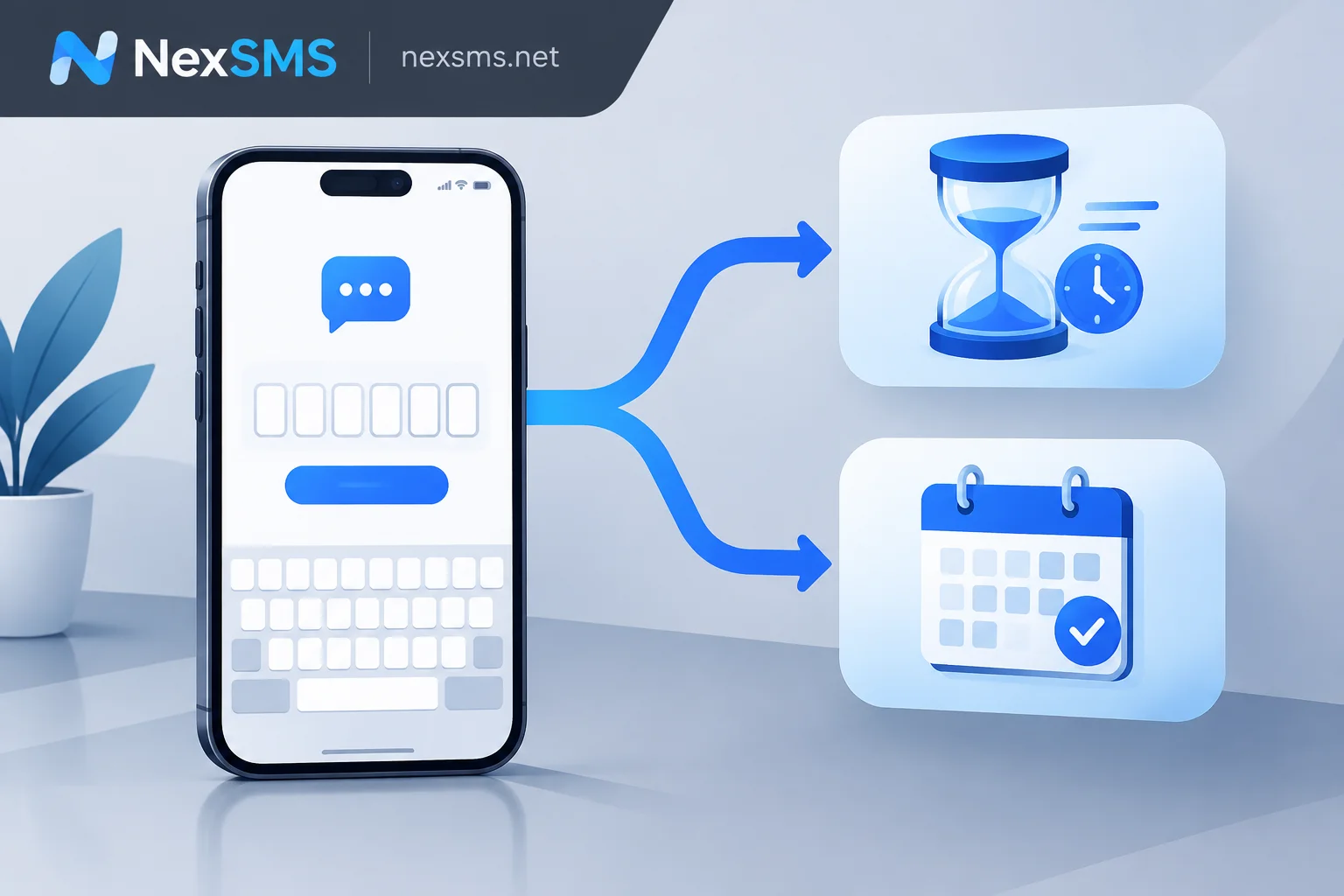
The Third Variable: Usage Cycle—How to Divide Duties Between Short-Term One-Time Numbers and Renewable Long-Term Local Numbers
Your usage needs determine whether to choose a short-term or long-term number.
- Short-Term Numbers: Suitable for one-time registrations and low-value trial scenarios. For example, registering a minor forum account or receiving a one-time verification code. These numbers are used and discarded, cost low, but should not carry any long-term value.
- Long-Term Local Numbers: Suitable for primary business accounts that require frequent login, two-factor authentication, account recovery, or customer service callbacks. These numbers must be renewable, and their location should be your primary business market.
A common mistake is using short-term numbers for long-term accounts, only to have the number expire months later and face difficulties recovering the account due to inability to receive verification codes. For "how to choose a long-term overseas number," the core principle is: your primary business account must use a renewable, recoverable long-term number, with backup arrangements (like a backup email) set up in advance. When choosing the country for virtual numbers, align the long-term number's location with your business target market.
Pre-Order Checklist: Traceable Source, Dedicated Use, Renewable and Recoverable Paths
Before finalizing an order, confirm each item on this checklist:
- Does the provider clearly state the number's source and carrier?
- Is the number dedicated or shared? Are you aware of the shared risks?
- Does it support renewal? What is the recovery policy if renewal fails?
- Does it provide a web-based SMS reception interface to keep records of verification codes?
- Is there a backup number solution (e.g., a second number or email)?
- Is the primary business number isolated from personal numbers?
- Is it only used for legitimate business verification, not any prohibited purposes?
- Does the selected country align with your business target market?
This checklist directly corresponds to the three variables above and echoes the FCC's focus on source verification. Before the new rules take effect, adopting such self-check habits can significantly reduce the risk of number failure.
Putting It into Practice with NexSMS: Multi-Country Options and Isolation of Business Numbers
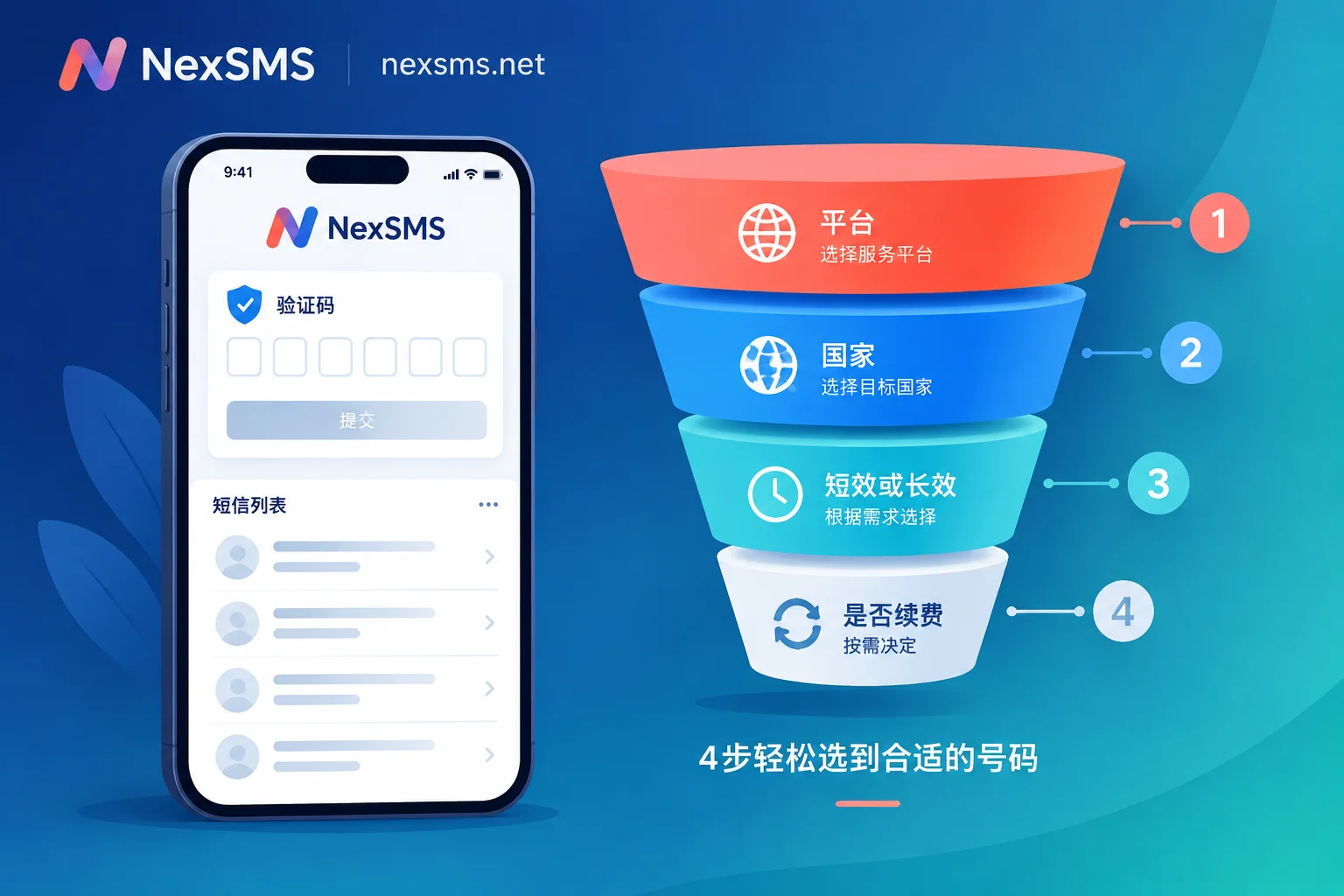
Once your checklist is fully checked, you need a reliable implementation tool. NexSMS's official website publicly offers multi-country number selection, supports web-based SMS reception, provides both short-term numbers and renewable long-term local numbers, and offers API interfaces for developers.
This means you can choose a number from the corresponding country on NexSMS based on your business target market, select short-term or long-term based on your usage cycle, and, if your team is larger, integrate verification code capabilities into your own system via API for more efficient number resource management.
Use renewable long-term local numbers for primary business accounts that need long-term login and recovery, use short-term numbers for one-time verifications, and manage costs by usage volume—all while keeping business verification separate from personal primary numbers. For cross-border e-commerce and overseas social media teams, this is a compliant and secure number management practice.
First, determine the target country and usage cycle based on the three variables in this article, then choose the corresponding short-term or long-term number on NexSMS. Keep business verification separate from personal numbers. This way, amidst tightening regulations, virtual numbers can truly safeguard your business.


Comments(0)