 NexSms官方博客
When Phone Verification Is Required
OpenAI's official policy has changed: regular users creating an account or using standard ChatGPT no longer require mandatory phone verification. However, verification is still mandatory in the following scenarios:
- First API key generation on the API platform: When creating your first API key at platform.openai.com, SMS verification is required. Subsequent keys do not require it.
- Triggering security risk control checks: High-risk network environments or abnormal login behavior will require additional verification.
- Specific client authorization: Some Codex or desktop applications may require verification during login.
- Phone-number-only registration path: When choosing a phone number as the primary account identifier, verification is required.
If you just want to use ChatGPT for chatting, you basically won't encounter verification requirements now. But to access the API or maintain a developer account, phone verification is an unavoidable first step.
Which Countries' Numbers Are Supported
OpenAI only provides services to its list of supported countries and regions. The official dropdown defaults to the United States. Full support includes:
- United States, Canada
- United Kingdom and most European countries (Germany, France, Italy, Spain, etc.)
- Japan, South Korea, Singapore, Australia, and other Asia-Pacific regions
- Over a hundred other countries and regions
Explicitly unsupported regions:
- Mainland China
- Hong Kong, China
- Russia
- Other countries not on the official list
Using numbers from unsupported regions will not receive verification SMS, and forcefully submitting may even lead to account suspension or ban. Before choosing a number, confirm the target country is on OpenAI's supported list.
What Types of Numbers Are Rejected
OpenAI officially blocks the following number types:
VoIP network phone numbers: Google Voice, Skype numbers, various virtual landline numbers, and other telephone services provided over internet protocols. These are completely banned due to their high association with online fraud and abuse.
Fixed landline numbers: Landline-type numbers do not support SMS reception or lack mobile network characteristics, so they cannot pass verification.
Premium numbers: High-rate special number ranges such as Premium Numbers are considered high-risk types.
Number types that must be used:
- SMS receiving capability provided by real mobile phone networks (Mobile Phone Numbers)
- Local numbers from physical carriers in supported countries (including physical SIM cards and eSIM)
- WhatsApp verification may be available in some supported regions
OpenAI has not publicly disclosed detailed carrier network blacklists/whitelists; it only states that VoIP is rejected. Whether virtual operator (MVNO) number ranges from some obscure countries will be misjudged requires actual testing.
How Many Accounts Can One Number Bind To
In the initial API verification step, OpenAI sets a binding limit for a single phone number: the same phone number can be used for initial API key generation verification on at most 3 OpenAI accounts.
This means:
- If you need to maintain multiple developer accounts, a single number can only help you complete the first API activation for the first 3 accounts.
- More than 3 accounts require additional eligible phone numbers.
- Generating new API keys on already verified accounts later does not consume this quota.
For individual developers or small teams, the quota of 3 accounts is usually sufficient. Bulk account needs require planning number resources in advance.
Which Country's Number Is Recommended
Considering availability, stability, and geographic match, the top recommendations are:
US (+1) or UK (+44) numbers: These two countries are core OpenAI service regions, with ample number supply and mature carrier networks, and the lowest probability of being misjudged as VoIP.
Other considerations:
- Network node matching: If you access OpenAI through a network node in a specific country, choosing a number from that country reduces the likelihood of triggering risk control.
- Future usage scenarios: If you only need one-time API activation, a short-term number is sufficient; if the account will be operated long-term and may encounter secondary security checks, a long-term carrier number that can be renewed offers more security.
- Price and inventory: Prices and availability of numbers from different countries change; refer to the platform's real-time inventory.
Avoid choosing obscure countries or regions with weak network infrastructure, as these number ranges are more likely to be flagged by OpenAI's anti-fraud system.
Short-Term vs. Long-Term Numbers
Short-term numbers (pay-per-use) are suitable for:
- One-time completion of the first API platform verification
- Limited budget and no intention to hold the number long-term
- Confirming that no secondary verification or security check will be triggered later
Note that short-term numbers have a very short validity period and are used up once. They cannot handle subsequent security verification or account recovery needs.
Long-term premium numbers (renewable) are suitable for:
- Core business accounts that need long-term stable holding
- Scenarios where login anomalies, device changes, etc., may trigger secondary verification
- Needing unlimited verification code receptions within the validity period
Long-term numbers are real carrier local numbers (physical SIM and eSIM, not virtual landline numbers) and can be renewed to extend holding time. Whether they pass OpenAI verification is determined by its platform rules. Long-term numbers must be renewed before expiration to continue holding.
Choose the number type based on account purpose and budget. If unsure, you can first use a short-term number to complete the initial verification, observe whether additional verification requirements arise during subsequent use, and then decide whether to switch to a long-term number.
Where to Choose Numbers and Receive Codes
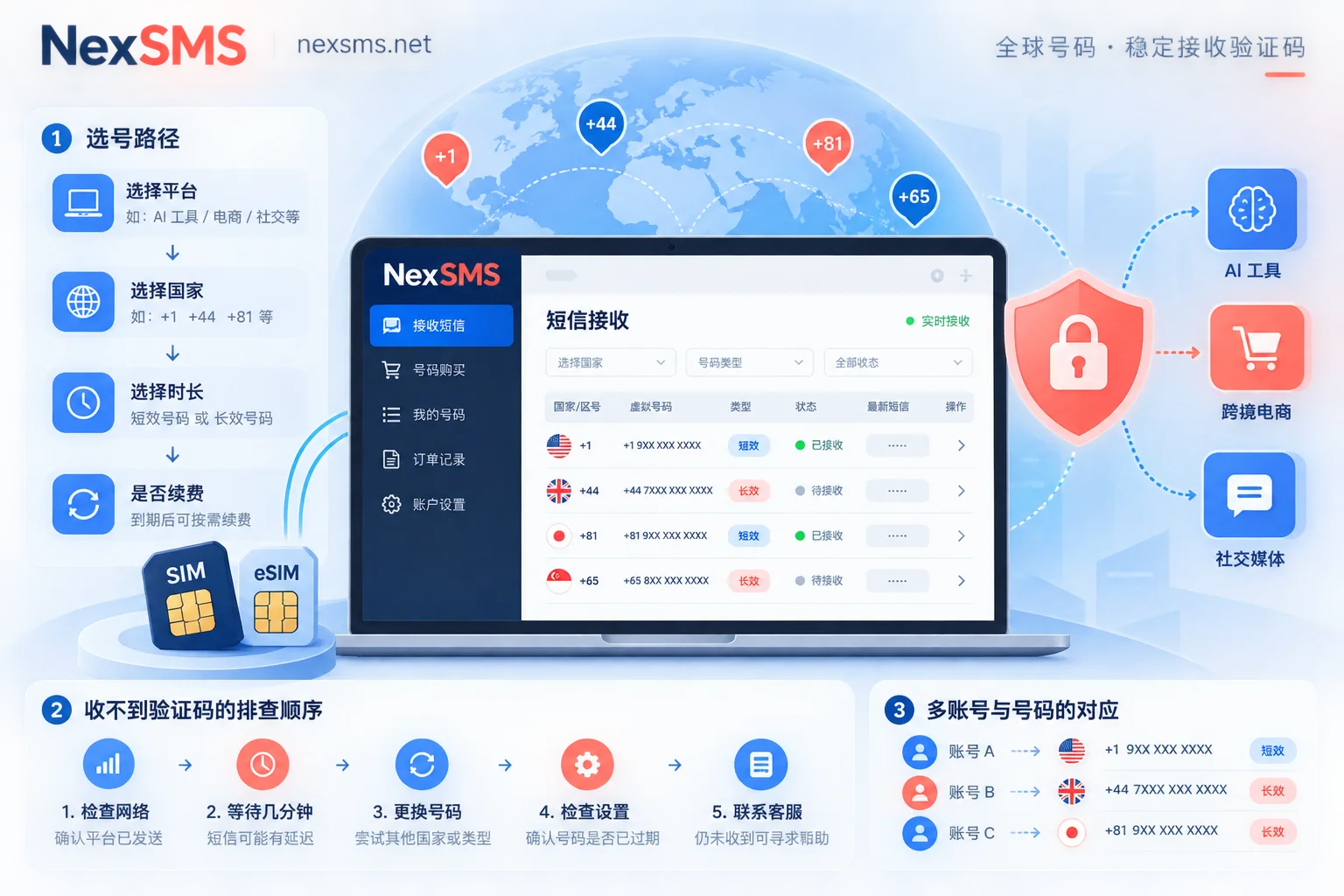
If you need real carrier numbers that meet OpenAI requirements, you can use NexSMS to select short-term or long-term numbers by target platform and country, with real-time verification code display on the webpage. Specific steps:
- Confirm whether to choose short-term or long-term, and understand renewal conditions: Feature Comparison page
- Choose numbers by country: US Numbers page etc. /sms/{country}/ country pages
- Check current prices: Pricing page
- Free trial once: Public Numbers page
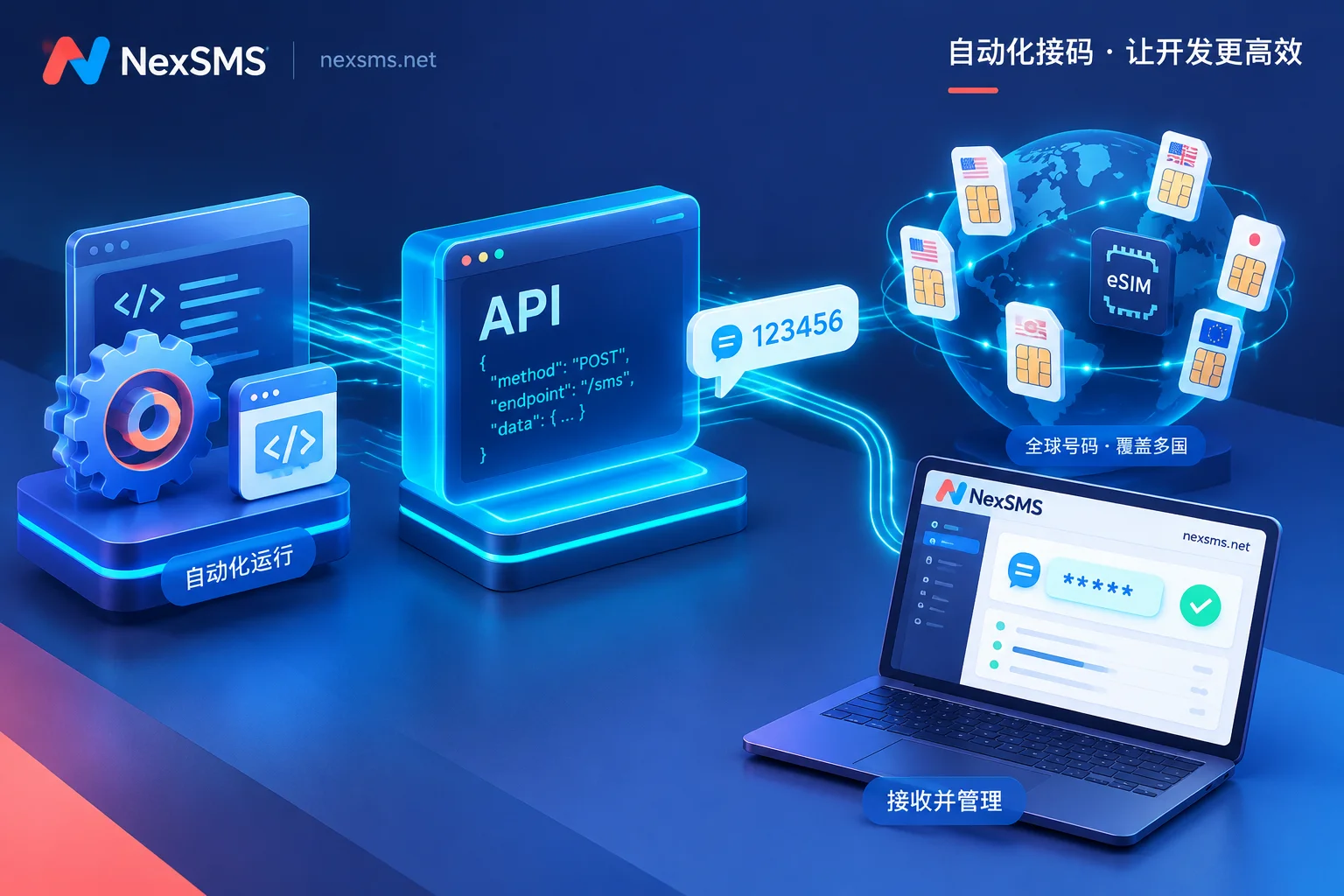
The platform provides a developer API, and the free public US number page requires no registration. Whether a number passes verification on a given platform is determined by that platform's rules. Long-term numbers must be renewed before expiration to continue holding.
What to Do If You Don't Receive the Verification Code
If you don't receive OpenAI's verification SMS after submitting your number:
- Confirm the number's country: Check whether you selected a country supported by OpenAI. Numbers from unsupported regions like mainland China, Hong Kong, and Russia cannot receive codes.
- Verify the number type: Confirm it is not VoIP, landline, or premium. It must be a real mobile network number.
- Check your network environment: If your current network node differs greatly from the number's registered location, it may trigger risk control interception.
- Wait for delay: Some carrier networks may have delays. Wait 1-2 minutes and refresh.
- Change the number: If the configuration is confirmed correct but you still don't receive it, try a different carrier number range in the same country.
If a long-used account suddenly requires verification, refer to ChatGPT Suddenly Requires Phone Verification: Number Switch Path.
Notes
- OpenAI's verification rules may change at any time; refer to the latest official help center instructions.
- Do not use the same number to register more than 3 accounts that require API verification.
- Avoid frequently changing numbers or repeatedly submitting verification in a short period, as this may trigger anti-fraud detection.
- Long-term numbers need renewal before expiration, otherwise you lose the holding right.
- This article only discusses legitimate personal account verification needs, and does not involve bulk registration or receiving verification codes for others.


Otp view gmail