 NexSms官方博客
To understand the difference between short-term and long-term numbers, you only need to consider three conditions: whether your account will need to receive a verification code again, whether you need long-term login or account recovery, and whether you'll hand the number to someone else. These three conditions determine whether you should buy a cheap one-time short-term number or a renewable long-term local number.
Two Hard Indicators: Retention Period and Ability to Receive a Second Verification Code
The above conditions stem from two fundamental differences. The most essential distinction between short-term and long-term numbers isn't price but two things:
First, the duration of number occupancy. Short-term numbers are occupied once; after registration, the transaction ends. Long-term local numbers are "rental-based," meaning the number remains under your control for as long as you renew. The exact retention days and renewal fees vary by platform, so refer to the purchase page for specifics rather than relying on a "general validity period."
Second, the ability to receive a second verification code. The value of a short-term number lies in its "use-and-discard" nature. If the platform sends you an SMS after registration (login verification, unusual activity, password change confirmation), you likely won't receive it. Long-term numbers can receive codes repeatedly throughout the renewal period.
To put it simply: a short-term number is like a disposable paper cup—use it and throw it away; a long-term number is like your own mug—as long as you don't discard it, you can keep using it.
These two points directly link "cheap" with "risk." Below are criteria for four real-world scenarios.
Use Case 1: One-Time Registration Only—Where Short-Term Numbers Suffice
If you register on a platform and never need that number to receive codes again—for example, the platform allows email login, supports Passkey, or you immediately rebind to another number—then a short-term number is sufficient and cost-effective. You can also refer to the matching approach for temporary phone numbers, but note the premise is "use-and-discard."
However, the "one-time registration" premise is being quietly changed by more and more platforms. Many apps now perform "device trust + SMS re-verification" during login. If you switch devices or clear cache, the app may look up the number used during registration. Your short-term number has likely expired, and the second verification step fails completely.
So the boundary is clear: if there's any chance the account will require you to receive an SMS later, don't use a short-term number.
Use Cases 2 & 3: Accounts Needing Second Login Verification or Long-Term Recovery Must Use Long-Term Local Numbers
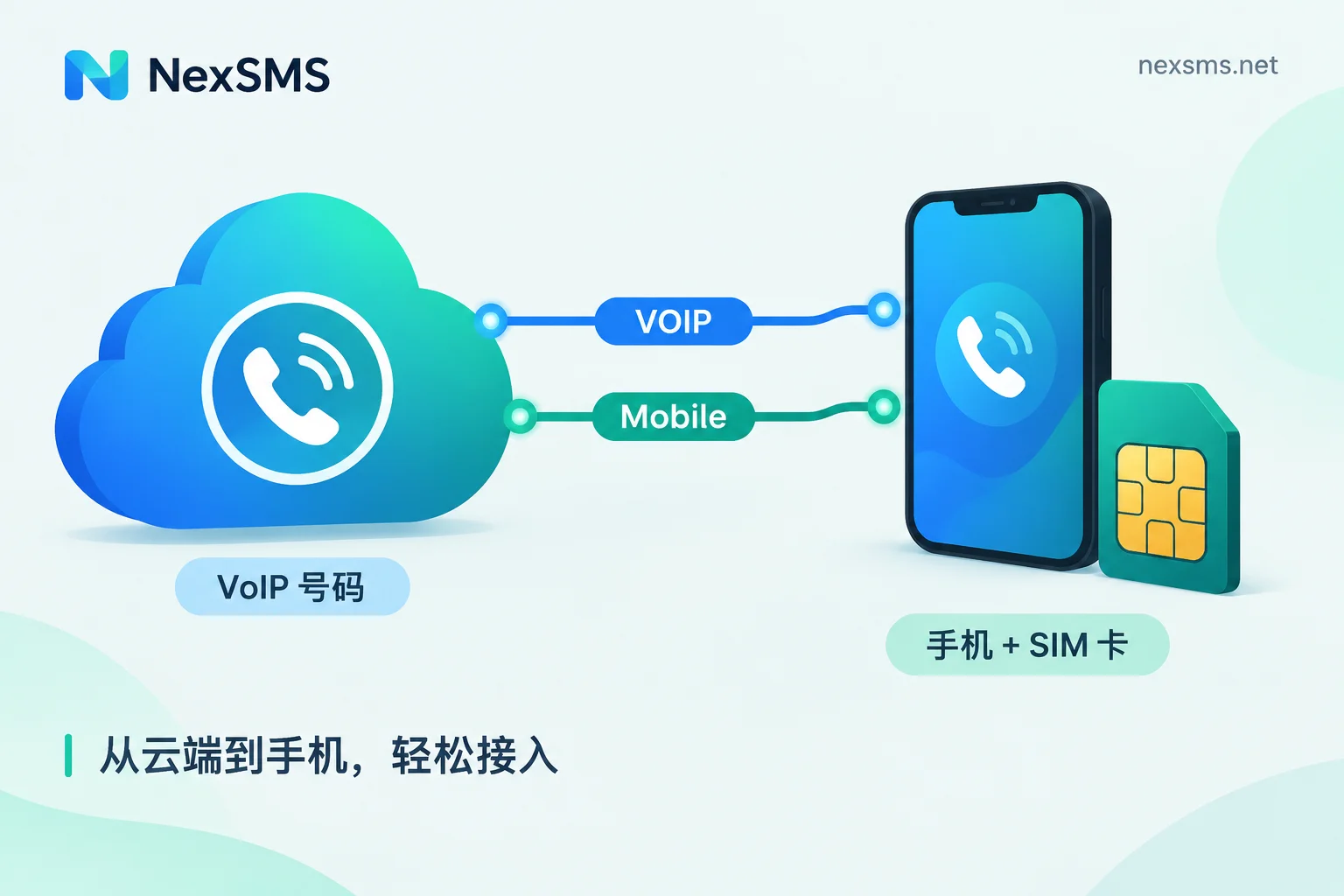
Take WhatsApp as an example: its official rules clearly state that VoIP, free, and premium numbers cannot be used to register personal accounts. If you try an invalid number range, the system directly shows "Unsupported phone number" without giving you a chance to enter the verification code. In other words, whether the number "looks like a real mobile number" is already a threshold at registration. Additionally, before registering, you should understand the applicable boundaries of WhatsApp virtual numbers to avoid choosing the wrong number range.
More critically, accounts like WhatsApp have their identity anchored to the number in the long term. You need codes to switch devices, to appeal, and for two-step verification. Once the number is reclaimed, it's like losing your keys.
Therefore, for "asset-type" accounts like e-commerce stores, payment accounts, and main social media accounts, you must use renewable long-term local numbers that can receive codes repeatedly and have clear provenance. This is using a fixed small renewal cost to hedge against the large risk of permanent account loss.
Use Case 4: Team Sharing and Handover—How to Handle Number Ownership
Team operations (customer service, operation accounts, ad accounts) often involve one person registering and multiple people logging in. Short-term numbers have two inherent flaws here:
- No handover capability: If the registering employee leaves, the number disappears, and the successor can't receive verification codes;
- Unclear ownership: Multiple accounts sharing the same short-term number can be flagged for association by risk control, leading to mass restrictions.
A more stable approach is "one business account corresponds to one renewable number." Consider configuring enterprise business numbers and maintaining a ledger with the number, owner, and expiration date. Then, staff changes only require updating the ledger if the number is still renewed.
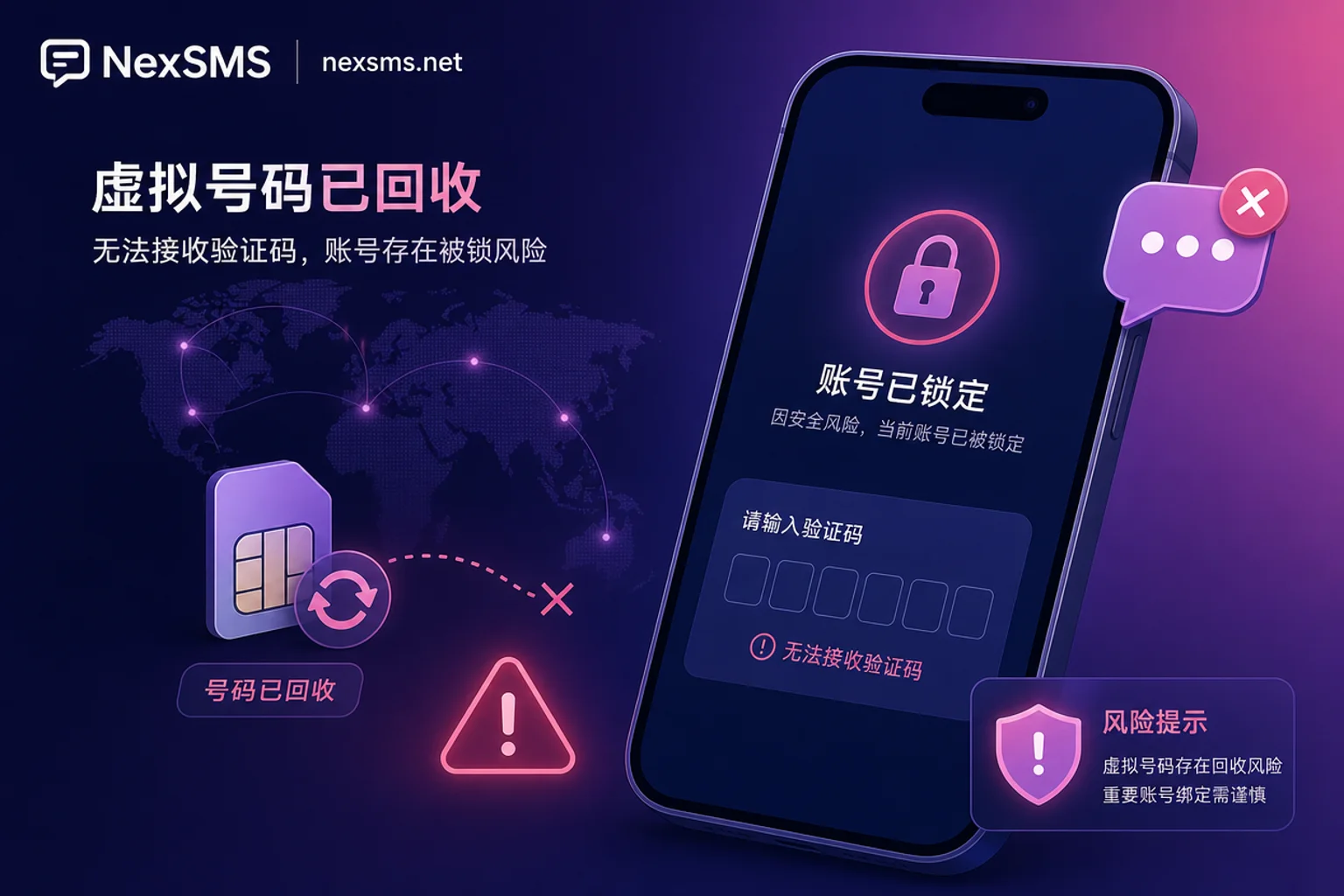
What Happens When a Virtual Number Expires and Is Reclaimed: Where Account Recovery Fails
A common question is "Can I still log in after a one-time number expires?" The answer depends on the platform. However, the chain reaction after reclaim can be broken down into three steps to clearly see the risk:
- Cannot receive second verification code for login: The account is active, but you can't get in;
- Recovery process requires the original number: The platform asks to send a code to the registration number, but it has been reclaimed;
- Appeal requires proof of number control: Some platforms ask you to provide proof of number ownership, and with a short-term number, even customer service can't help.
Rules vary by platform; refer to the official help documentation. But the pattern is universal: once you lose control of the number, the account recovery path breaks at the second step. So a reliable practice is to add backup recovery channels like email or Passkey early in your account settings—don't put all your eggs in one virtual number basket.
Why Cheap Shared Short-Term Numbers Are Dying Off: Regulatory Trends from FCC's KYUP Proposal
In May 2026, the U.S. FCC adopted a Notice of Proposed Rulemaking (FNPRM) targeting voice service providers, strengthening "Know-Your-Upstream-Provider" (KYUP) obligations—requiring providers to collect identity information, conduct regular checks, and monitor upstream number sources.
It's important to note: this rule is currently in proposal stage and not yet enforced. But the direction is clear: regulators want to cut off unverified anonymous shared number ranges upstream. This means cheap short-term numbers relying on "shared pools" may either be intercepted earlier or have shorter lifespans.
For your number choice, the actual impact is that the "cheapness" of short-term numbers includes a higher risk of mid-term failure. Long-term local numbers, due to clearer provenance and traceability, are less affected by regulatory changes.
Comparison Table for Four Use Cases and Pre-Purchase Checklist
The table below maps the difference between short-term and long-term numbers to four types of account uses for easy reference.
| Account Type | Recommended Number Type | Needs Renewal | Main Risk |
|---|---|---|---|
| One-time registration (forums, promotions, testing) | Short-term one-time number | No | Can't receive a second code |
| Needs second login verification (apps, email) | Long-term local number | Yes | Login fails if service disconnects |
| Asset-type (e-commerce, payment, main social media) | Long-term local number | Yes | High loss cost |
| Team sharing and handover (customer service, operation) | Long-term local number + ledger | Yes | Chain breaks on personnel changes |
Before purchasing, go through the following 6 questions:
- Will this account need a second SMS verification after registration?
- If the number is completely lost, how much would the account loss be?
- Will the account have multiple logins or handovers?
- Does the target platform explicitly restrict VoIP or virtual number ranges?
- Do you need a number for a specific country/region? Refer to virtual number country selection if needed.
- Can your budget cover a year or longer of renewals?
How to Implement: Assign Different Accounts to Different Carriers
After understanding the differences, you don't need to go "all-in" on short-term or all-in on long-term. A more reasonable approach is to split by use case:
- Test registrations, temporary verifications → use short-term one-time numbers, discard after use;
- E-commerce stores, payment accounts, main social media → use renewable long-term local numbers, and enable email/Passkey backup channels;
- Team-shared accounts → long-term local numbers + internal ledger.
If you need both types, consider NexSMS—it offers both short-term one-time numbers and renewable long-term local numbers, supports multiple countries, allows receiving verification codes directly on the web, and developers can use APIs for batch management. Note: success rates and reclaim policies depend on the platform and number source; confirm the target platform's number range requirements before purchasing. With the above allocation, NexSMS's web page is suitable for occasional verification, while the API is better for team batch scenarios.
FAQ
How long can a short-term virtual number be used?
There is no fixed number of days. The availability of a short-term number is determined by the provider, and it varies greatly among providers and number types. The only reliable basis is the occupancy duration and reclaim rules stated on the purchase page; be sure to confirm them item by item before ordering. Its value lies in "one-time code reception," not long-term occupancy.
Can I still log in after a one-time number expires?
It depends on whether you rely on that number to receive verification codes. If the account is bound to email or Passkey, you might still log in; if the platform mandates SMS re-verification, you may be unable to log in. It's recommended to add backup recovery channels like email immediately after registration.
Do long-term virtual numbers require continuous renewal?
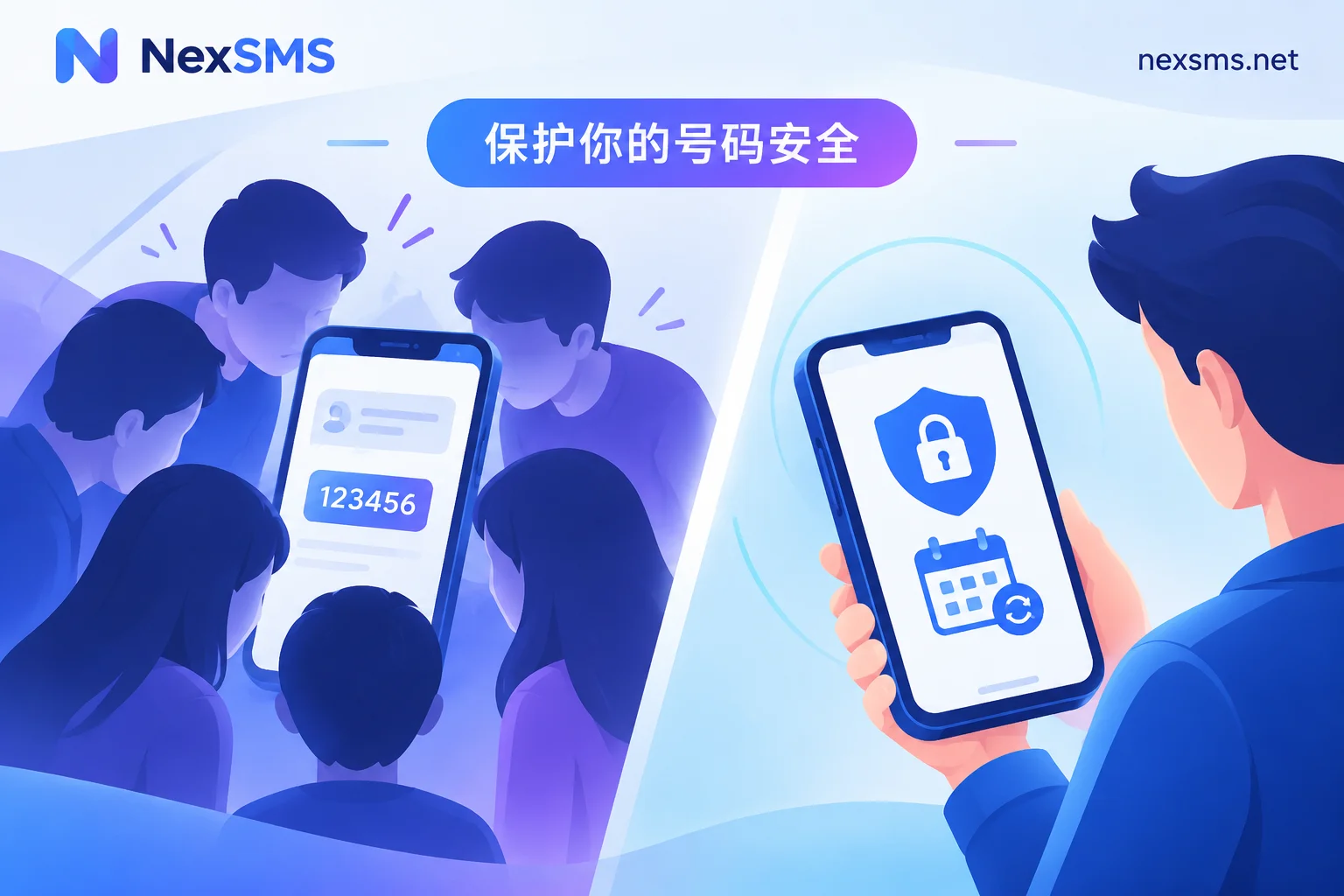
Yes. Long-term numbers are essentially "rental." If you don't renew, they will be reclaimed. It's advisable to enable auto-renewal and note the expiration date on your calendar to avoid losing number control due to forgotten renewal.
What should I do if I can't receive a verification code after registering with a short-term number?
First, check if your account is bound to a backup email or authenticator. If not, you may have to go through the account appeal process, but many platforms require the original number to receive codes—which short-term numbers cannot fulfill. Whether you can recover the account depends entirely on the platform's appeal rules, so refer to its official help documentation.
What happens when a virtual number expires and is reclaimed?
The number is released for other users. If your account is still bound to it, login, recovery, and second verification will all fail, potentially making the account inaccessible. The risk increases with the account's value.


Comments(0)