 NexSms官方博客
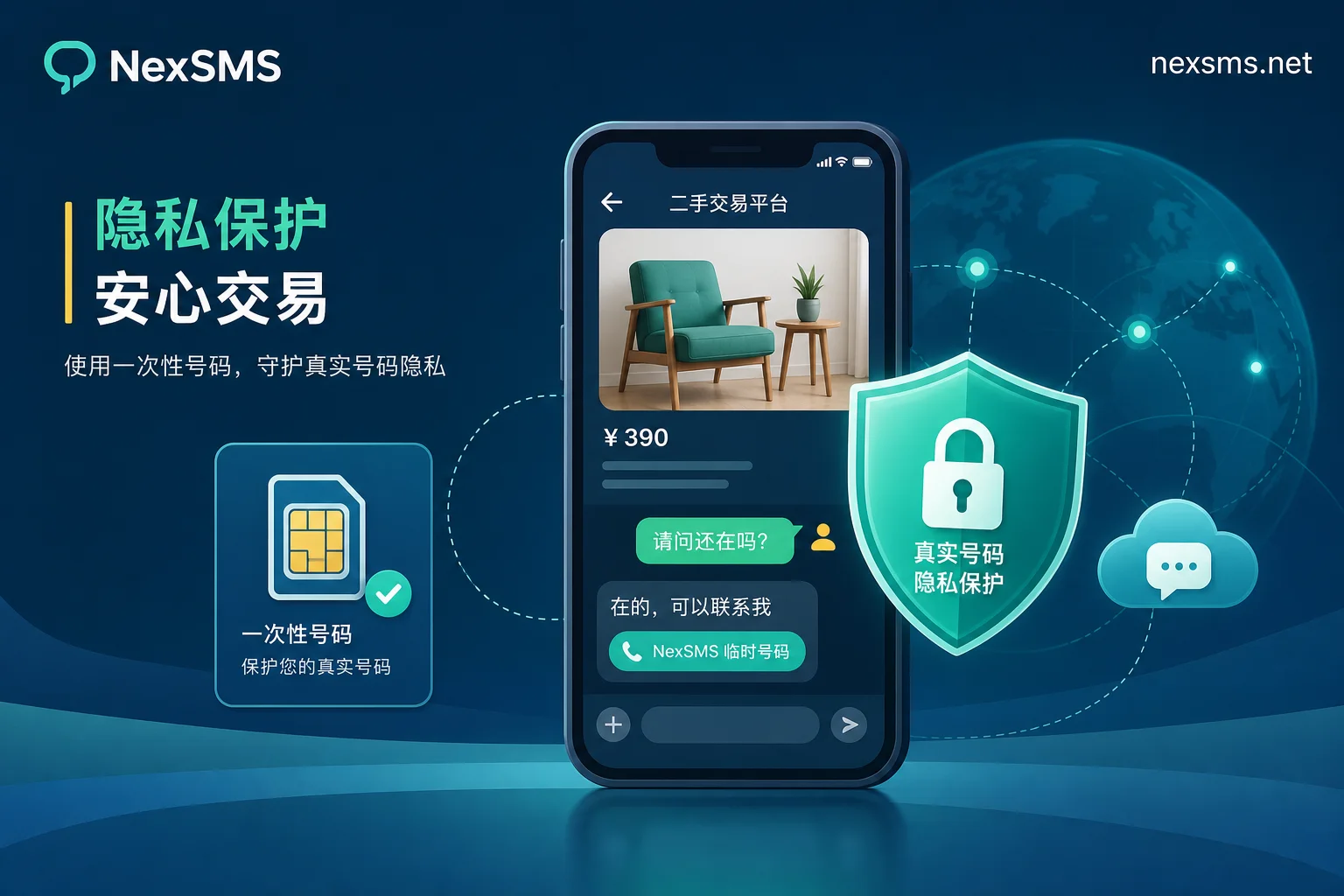
Disposable phone numbers are only suitable for “use-and-discard, outward exposure” situations, not for any account position requiring long-term SMS receipt—they are for exposure, not hosting. Selling on a second-hand platform, a buyer asks for your phone number to “confirm your real identity.” Do you give it? The U.S. Federal Trade Commission (FTC) consumer anti-fraud guide published in 2021 clearly warns that in second-hand transactions on Craigslist, Facebook Marketplace, etc., scammers often exploit your concern about authenticity to ask for a verification code. Once you hand over your main number's SMS, it could be used to bind a fake identity. So once your main number enters a conversation with a stranger, it becomes a risk entry point.
Position 1: Long-term login and account recovery—where the chain breaks after number recycling
If you register an account with a disposable number, expecting to log in or recover your password later, you'll likely get stuck at “can't receive SMS.” Disposable numbers have a validity period, the exact duration is publicly stated by the provider, and after expiry, the number is recycled. Any verification requiring re-receipt of SMS—password changes, remote login re-authentication, account recovery—will break directly.
At this point you might ask: Can I still recover an account registered with a disposable number? The answer is pragmatic: if the account is bound to a short-lived number and it's recycled, and you haven't switched to another number in advance, the recovery process is basically impossible. So for long-term login and recovery, you need a number that can be renewed and held long-term, not a short-lived number that gets recycled. See multi-account number management for a layered approach.
As for how long a disposable phone number lasts, again, it depends on what the provider publicly states. Before choosing, ask yourself: Will this number be required to receive codes again in the future? If yes, switch to a hosting position.
Position 2: Platform-retained external contact number and customer service entry
Numbers filled in store profiles, order contacts, after-sales entrances need to be “reachable long-term.” A buyer might ask about after-sales three days later; platform risk control might call back a week later to confirm transaction details. If you fill in a disposable number here, once recycled, buyers can't reach you, and platform review can't get through. When disputes escalate, you won't even have a chance to explain.
Here you need to distinguish two needs: “one-time communication” and “long-term reachability.” For private confirmation of transaction details with a single buyer, a disposable number is fine; but as a store's listed contact number, you must use a long-term number. Don't mix temporary communication numbers with long-term business identity.
Position 3: Steps requiring re-receipt—two-step verification and withdrawal re-verification
Can I bind two-step verification with a temporary number? Short answer: no. Any step where you'll repeatedly be asked for codes after initial binding—2FA, withdrawal review, risk control re-verification—must never be attached to a number that will be recycled.
NIST's SP 800-63B Rev 4 digital identity guidelines, released in August 2025, classify SMS/voice OTP transmitted over the public switched telephone network as “restricted authenticators,” requiring platforms to inform users of risks and provide anti-phishing alternatives like Passkeys/FIDO2. While not a mandatory ban on SMS verification, it clearly tells you: SMS verification itself is not a high-security hosting option. For core accounts, prioritize Passkeys/FIDO2; if SMS is necessary, use a number that can be held long-term, not a short-lived disposable one.
Position 4: OTP receiving requiring exclusive secrecy—why public number pools are out
On free code-receiving platforms' public number pools, SMS content is visible to all visitors. The verification code you receive when registering on some platform can be seen by any third party lurking on the same pool, potentially hijacking the account you're binding. Can others see the verification code received on a free public number? Yes, and easily. It's a product mechanism of public pools—the page is open to all visitors, no permission needed to view.
So, even for “one-time use,” if the SMS content is sensitive (like binding verification codes), you must use a private exclusive number. The key here is distinguishing “disposable” from “public shared” as two dimensions: disposable refers to timeliness, public shared refers to exclusivity. You can have a private disposable number, but never a public shared one. This aligns with the difference between exclusive virtual numbers and shared numbers. If you need to receive bank 2FA, choosing a virtual number type that supports bank short codes also requires private exclusivity.
Where it should actually be used: three scenarios—stranger transactions, temporary registration, and use-and-discard
After saying “don't touch” four times, where should disposable numbers actually be used? Three scenarios fit best:
| Scenario | Typical Use | Decision Mnemonic |
|---|---|---|
| External contact in second-hand/local transactions | Privately arranging meetings with buyers/sellers, confirming product details | Will this number be asked to receive codes again later? No → usable |
| Temporary registration with no long-term value | Short-term events, one-time downloads, test accounts not needing recovery | Account loss doesn't matter? Yes → usable |
| One-time inquiries and trials | Contacting customer service, registering for a trial, receiving one-time notifications | Will identity need re-verification later? No → usable |
The decision mnemonic is basically one sentence: Will that number be required to receive codes again in the future? If yes, switch to a hosting position. In second-hand transactions, try to communicate within the platform; using a temporary number to isolate your main number reduces exposure but doesn't replace your basic judgment of “don't give codes casually.”
Analyzing verification code solicitation tactics: why “send me the code to confirm” should never be agreed to
The FTC's warning breaks down the tactic clearly: scammers pretend to be buyers/sellers in second-hand transactions, ask for a verification code to “confirm authenticity,” but actually use your real number to complete a binding, then create fake identities to scam the next person.
So, is a stranger buyer asking for a verification code a scam? Most likely. Anyone asking for a verification code sent to your phone should be refused outright. Number isolation reduces exposure but doesn't replace the bottom line of “never send verification codes externally.” Whether you use your main number or a disposable one, once a verification code is sent, you've handed over the temporary key to your account. To systematically narrow exposure, you can check how to prevent your main mobile number from leaking online item by item.
Implementation: use short-lived numbers for exposure, long-term local numbers for hosting
Apply the criteria to practice: for external communication and temporary registration, use short-lived numbers; for long-term login, recovery, two-step verification, and customer service retention, use renewable long-term local numbers. You can also choose numbers by target platform's country, receive verification codes directly on the web, and for bulk registration scenarios, use developer APIs.
Taking NexSMS as an example, short-lived numbers correspond to “exposure positions” (stranger communication, temporary registration, use-and-discard), while long-term local numbers correspond to “hosting positions” (long-term login, recovery, customer service retention, re-receipt verification). For specific categorization, see the four-question checklist below.
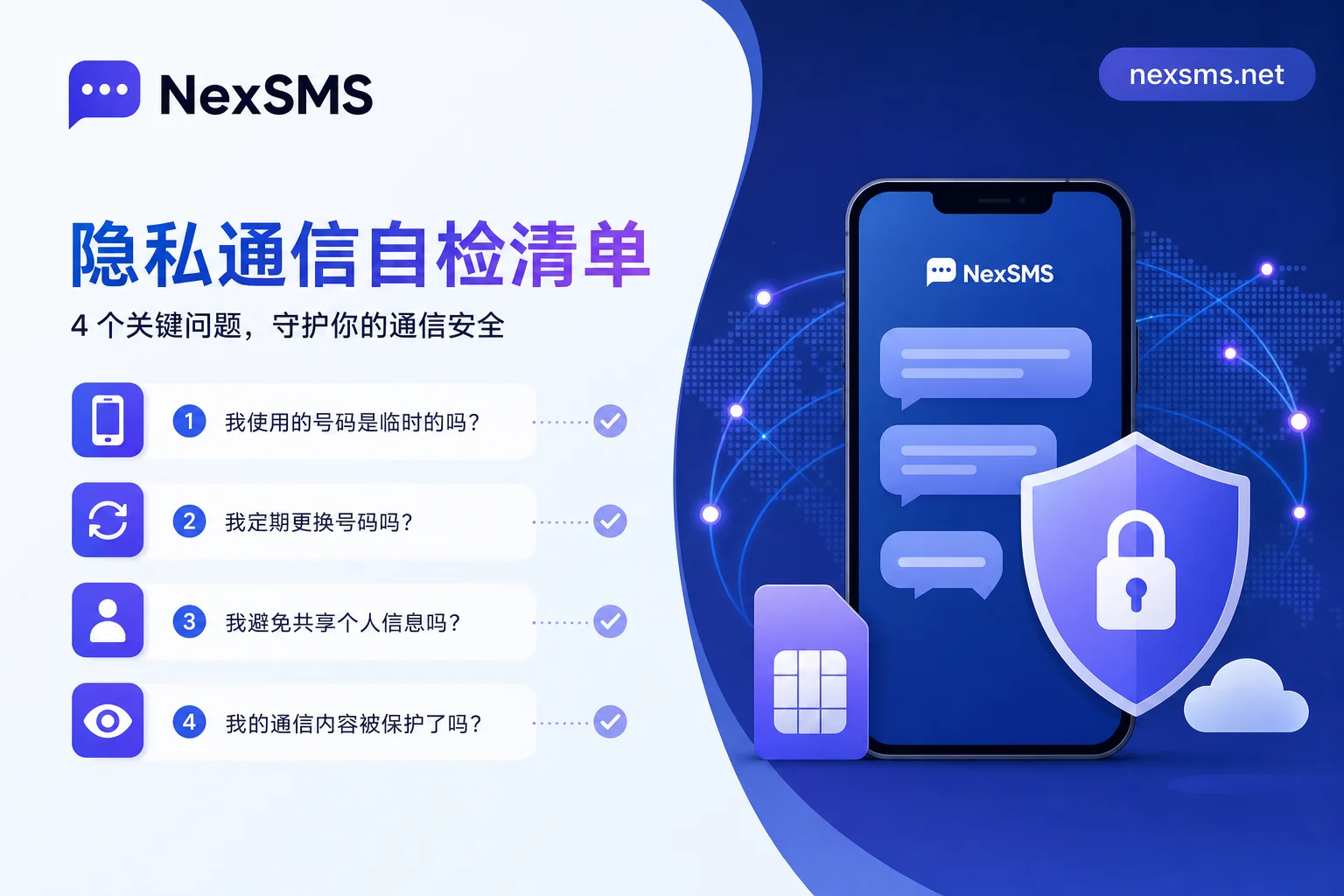
Pre-use self-check checklist: four questions decide whether you can use a disposable number in that position
- [ ] Will this number be asked to receive codes again in the future?
- [ ] Can the account still be recovered after recycling?
- [ ] Does the other party need to reach me long-term?
- [ ] Can the received SMS content be seen by others?
If any of the four answers is “yes”, “can't recover”, “yes”, or “can be seen”, then this position requires a hosting number, not an exposure number.
FAQ
Where can I get a disposable phone number?
You can obtain them from commercial virtual number services that provide private exclusive numbers; you can also use free code-receiving platforms, but public number pools have privacy risks. Commercial numbers are typically paid per use or per period, offering private exclusive short-lived or long-term numbers.
How long do disposable phone numbers last?
The specific duration depends on what the provider publicly states. Free public numbers are usually the shortest; commercial short-lived numbers have clear expiry and recycling times; long-term local numbers support renewal for long-term holding.
What to do when second-hand trading requires a phone number?
Try to communicate within the platform and don't leave it; if you must leave a number, use a disposable or virtual number to isolate your main number. Remember, never send verification codes to so-called “buyers” outside the platform.
Is a stranger asking for a verification code a scam?
Most likely. This is a repeatedly warned-about classic tactic: scammers ask for a verification code, then use your number to bind a fake identity. Any request for a verification code should be refused outright.
Can I recover an account registered with a disposable number?
If the number has been recycled, recovery is difficult. It's recommended to use a long-term number at registration, or immediately switch to a long-term number after registration. If the account is already bound to a short-lived number, switch within the validity period as soon as possible.
Can others see the verification code received on a free public number?
Yes, they can. SMS from free public pools is open to all visitors; anyone can view the verification code you receive. So sensitive verification codes must use private exclusive numbers.
Can I bind two-step verification with a temporary number?
No. Two-step verification requires long-term, stable SMS reception; temporary numbers will cause verification failure after expiry. NIST also recommends prioritizing alternative authenticators like Passkeys/FIDO2 over SMS codes.


Comments(0)