 NexSms官方博客
If you plan to use an overseas account for a long time, ask two questions when choosing a number: Does the platform recognize this number? And when the account requires re-verification six months later, will you still be able to receive the code? By these two criteria, VoIP virtual numbers and one-time short-term numbers are not suitable for long-term binding. The truly viable options are two: an overseas physical SIM/eSIM that you own, or a real carrier number hosted in the cloud that you can renew periodically. The difference between them mainly lies in how they are maintained.
First, Clarify Which Type of "Virtual Number" You Mean
In everyday language, "overseas virtual number" often mixes several completely different things:
- VoIP virtual numbers: such as Google Voice, TextNow, etc., which use internet telephony lines, and their line type is registered as VOIP in telecom databases.
- Owned overseas physical SIM or roaming eSIM: for example, prepaid cards like UK giffgaff, US Tello, Ultra Mobile, etc. The number is on a real mobile network and kept by you.
- Cloud long-term carrier numbers: service providers host numbers from real carriers' local physical SIMs or eSIMs. You view codes on a web page or via API, and hold them by renewing on time.
- Short-term temporary numbers: billed per use, valid for a very short time, and end after receiving one code.
Among these four, only VoIP is truly an "internet number." The other three are mobile numbers (Non-VoIP) in the eyes of platforms; the difference is whether the number can stay in your hands long-term.
Comparing the Four Solutions Together
| Solution | Easy for platforms to recognize? | Can receive codes again later? | Main maintenance cost |
|---|---|---|---|
| VoIP virtual number | High-risk platforms often block before sending codes | Yes, provided the platform is willing to send | Low cost, but may be rejected at any time |
| Owned physical SIM/eSIM | No different from local users | Yes | Device, SIM slot, top-up to retain number, roaming and replacement |
| Cloud long-term carrier number | Belongs to mobile number range | Yes during rental period; need to renew before expiry | Periodic renewal, remember expiry date |
| Short-term temporary number | Belongs to mobile number range | No | Almost none, but the number is lost after use |
Below, I'll explain the reasons and exceptions behind each row.
VoIP Numbers: Cheap, but the Problem Occurs Before the Code Is Sent
Many platforms, such as financial payments, WhatsApp, some social and e-commerce platforms, call number lookup services like Twilio Lookup or TeleSign before sending verification codes to check the line type. If it detects VoIP or a virtual number range, the platform will simply not send, or silently block. So not receiving a code with a VoIP number is often not due to network delay, but because the code was never sent. For specific mechanisms, see Why VoIP virtual numbers cannot register for ChatGPT.
VoIP numbers are not unusable everywhere; services that don't check line type can still receive. The problem lies with important accounts: such accounts require long-term binding and trigger 2FA, and just because you can receive a code today doesn't mean the platform won't tighten rules later. For differences in number attributes, see What's the difference between real carrier local numbers and virtual landing numbers.
Short-Term Numbers: Pass Registration, but Can't Handle Later Verification
Short-term numbers are mobile numbers themselves, so one-time registration usually works. Their shortcoming is that they cannot receive codes again. When the account later encounters secondary verification for remote login, device change, or security audit, the platform will send a code to the original number, which no longer belongs to you. If the account has no other recovery method, you may lose access.
Therefore, short-term numbers are suitable for one-time registration and testing scenarios where no further verification is needed. When unsure, first ask yourself, "Will I need to receive a code again later?" For more detailed judgment, see How to choose between short-term numbers and long-term premium numbers.
Owned Overseas SIM/eSIM: Most Stable, but Also Most Troublesome
Buy an overseas prepaid card yourself, and the number is on a real cellular network. Platforms recognize it no differently from a local user, and the success rate for receiving codes is the highest among these solutions. The cost lies in maintenance:
- You need to have the physical card mailed, or have an unlocked phone that supports eSIM;
- It occupies a SIM slot or eSIM profile long-term;
- Each carrier has its own number retention rules; you usually need to top up regularly or buy a basic plan, or the number may be suspended or deactivated. Check clearly before purchasing;
- You may encounter signal dead zones when roaming; if the card is lost or damaged, cross-border replacement is often troublesome.
If you only have one or two important accounts, live in the country often, or can easily maintain the card, this is a very reliable choice. With many accounts, the cards, phones, and top-up reminders themselves become extra work.
Cloud Long-Term Carrier Numbers: No Card Needed, but Remember to Renew
The fourth approach is to let a service provider handle the "holding a card" part. Take NexSMS's long-term premium numbers as an example: the numbers come from real carriers' local physical SIMs and eSIMs, not virtual landing numbers. You don't need to prepare a phone or enable roaming; you can view codes in real time on the web page, and also integrate via developer API. Unlimited verification code reception during the rental period, and renewing before expiry lets you continue to hold the same number.
Before using, be clear about two prerequisites:
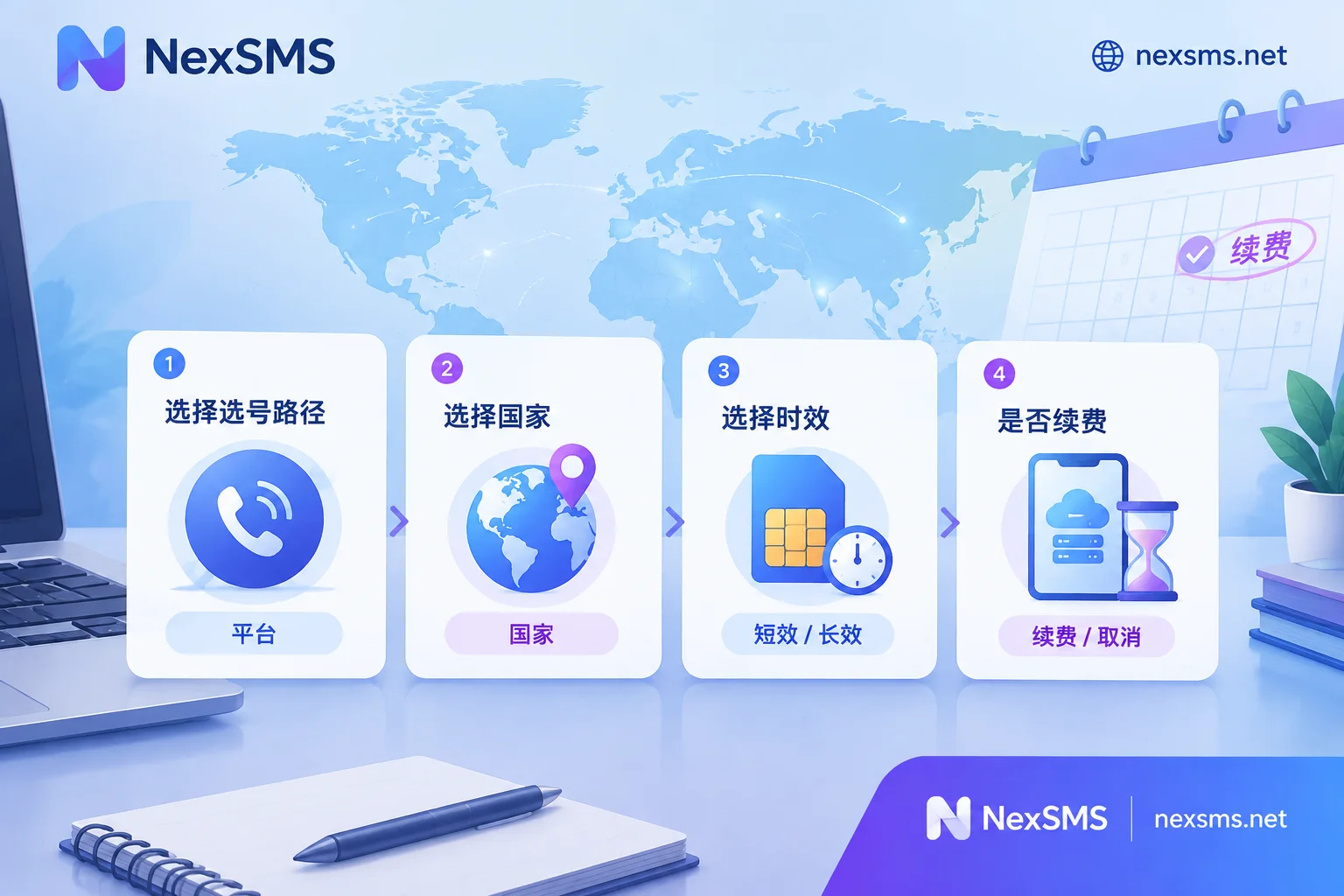
- Renewal is the condition for holding the number. If you don't renew before expiry, the number no longer belongs to you, and subsequent verification will also fail. It is recommended to handle it a few days in advance, not on the expiry date itself. For operational details, see How to renew long-term numbers before expiry to avoid disconnection.
- Being in a mobile number range does not guarantee passing. Whether it passes depends on the target platform's rules at the time.
For specific differences between short-term and long-term numbers, and renewal conditions, you can compare in NexSMS feature description.
Choose Based on Your Situation
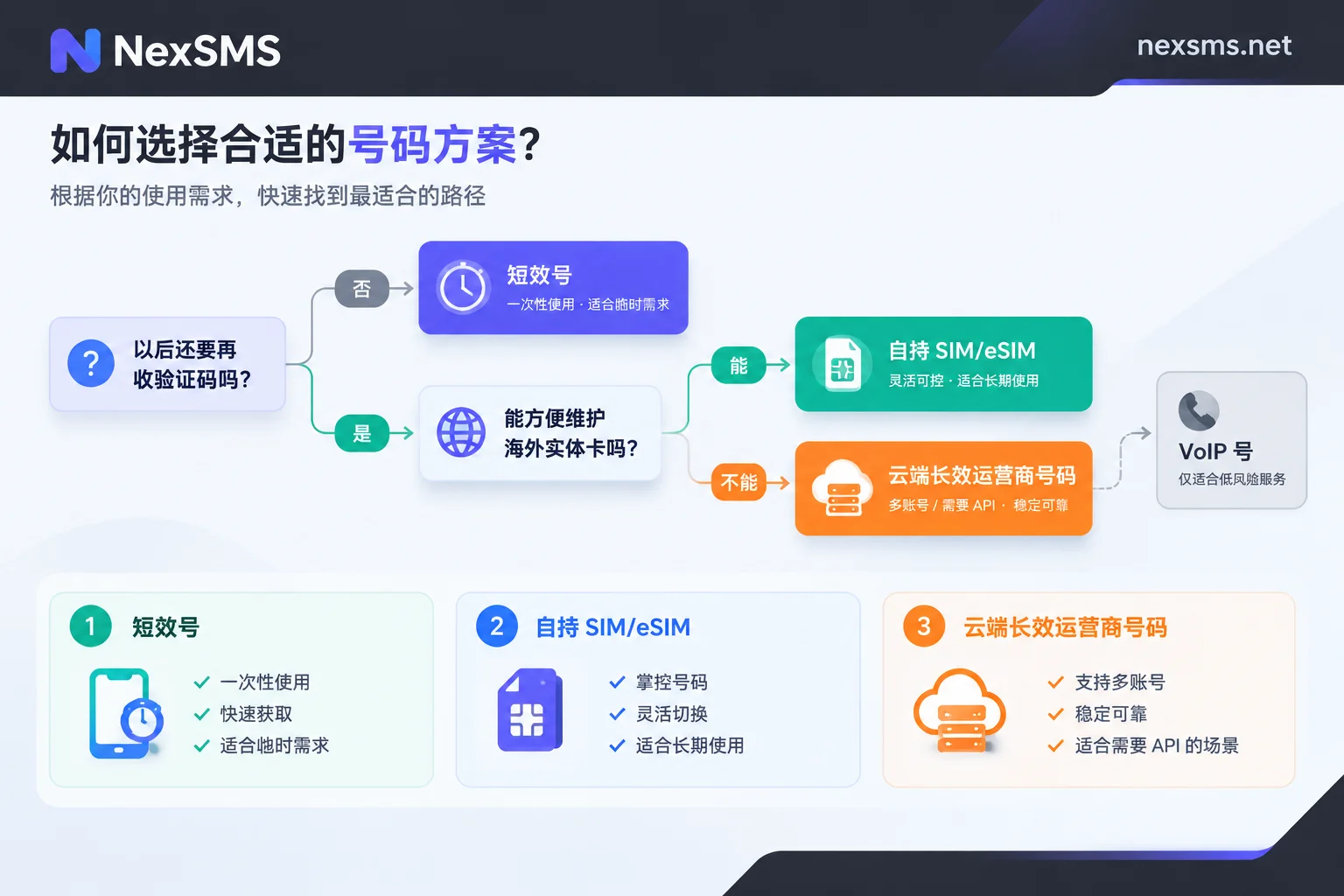
- Personal use, one or two core accounts, can easily maintain a phone: Choose an owned physical SIM/eSIM, provided you are willing to top up on time to retain the number.
- Inconvenient to hold an overseas card, or accounts spread across multiple countries: Choose a cloud long-term carrier number, and mark the expiry date in your calendar.
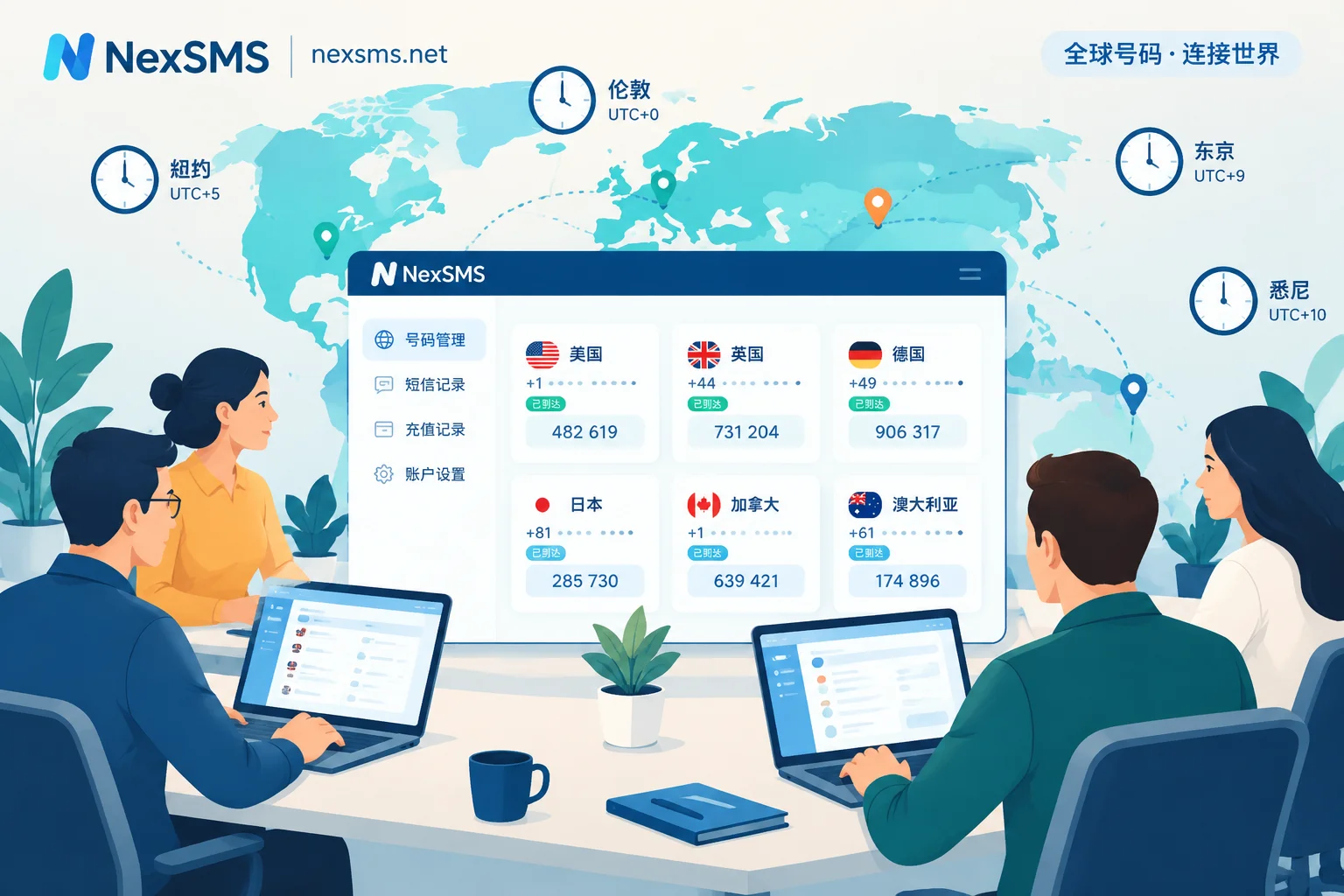
- Team maintaining multiple accounts, needing centralized code viewing or programmatic code retrieval: Cloud long-term numbers with API save manpower. For how to layer numbers and who is responsible for renewal, see How cross-border teams collaboratively manage multiple business phone numbers. Browser environment isolation and network egress for multiple accounts are separate issues; tools like NexBrowser and NexIP can handle them, while the number only handles code reception.
- Register once, no further verification: A short-term number is enough.
- VoIP number: Can be left for services that don't check line type and whose loss is not a pity; not recommended as the sole verification phone number for important accounts.
A Few Habits for Long-Term Holding
- After binding, if the platform offers backup recovery codes or an authenticator app, enable them too. Don't let the phone number be the only recovery path.
- Use a table to record which accounts each number is bound to, and the expiry date or number retention deadline.
- When you can't receive a code, first determine whether the platform didn't send it or the number didn't receive it, then decide whether to resend or change numbers. For troubleshooting order, see What to do when cross-border SMS verification codes are not received.
After choosing a solution, you can check the current prices of long-term numbers on the NexSMS pricing page. Prices and inventory change, so refer to the page display.


Comments(0)