 NexSms官方博客
On July 14, 2026, Microsoft announced that its enterprise identity management system Entra ID will stop supporting phone-based multi-factor authentication (MFA) from February 2027. Previously, the Central Bank of the Philippines also enacted a regulation completely banning SMS verification codes for financial transactions. Against the backdrop of global giants gradually abandoning traditional SMS verification, many newcomers are starting to worry: Do the SMS reception platforms we commonly use still have a future?
In fact, this does not mean the complete demise of the SMS verification mechanism, but rather a trend toward layered security protection levels. Understanding the logic behind this industry change can help us more rationally evaluate and use various account registration tools.
Why Are Microsoft and Regulators Phasing Out SMS Verification Codes?
First, it's important to clarify that SMS (Short Message Service) was not designed as a secure encrypted communication protocol from the start. It uses the Signaling System 7 (SS7) protocol, which has inherent vulnerabilities and is very susceptible to interception during transmission. For enterprise-level accounts or large financial transactions, this security risk is unacceptable.
Second, attacks targeting phone numbers have proliferated in recent years. The most typical is the SIM Swap attack. Attackers impersonate the victim or collude with carrier channels to transfer the victim's phone number to their own SIM card, easily intercepting all received verification codes.
Additionally, there are man-in-the-middle proxy attacks against SMS one-time passwords (OTP). These vulnerabilities have driven Microsoft and financial regulators in countries like the UAE and Singapore to push banks and large enterprises to transition to more secure biometric or dynamic token verification.
Can SMS Reception Platforms Still Be Used in the Wake of Criticism?
Although high-security financial and enterprise accounts are abandoning SMS verification, SMS OTP remains mainstream in consumer-level internet and everyday applications. For the vast majority of websites, social media, e-commerce, and AI assistant tools, it is still the lowest-cost and most widely adopted mechanism for preventing spam and bot registrations.
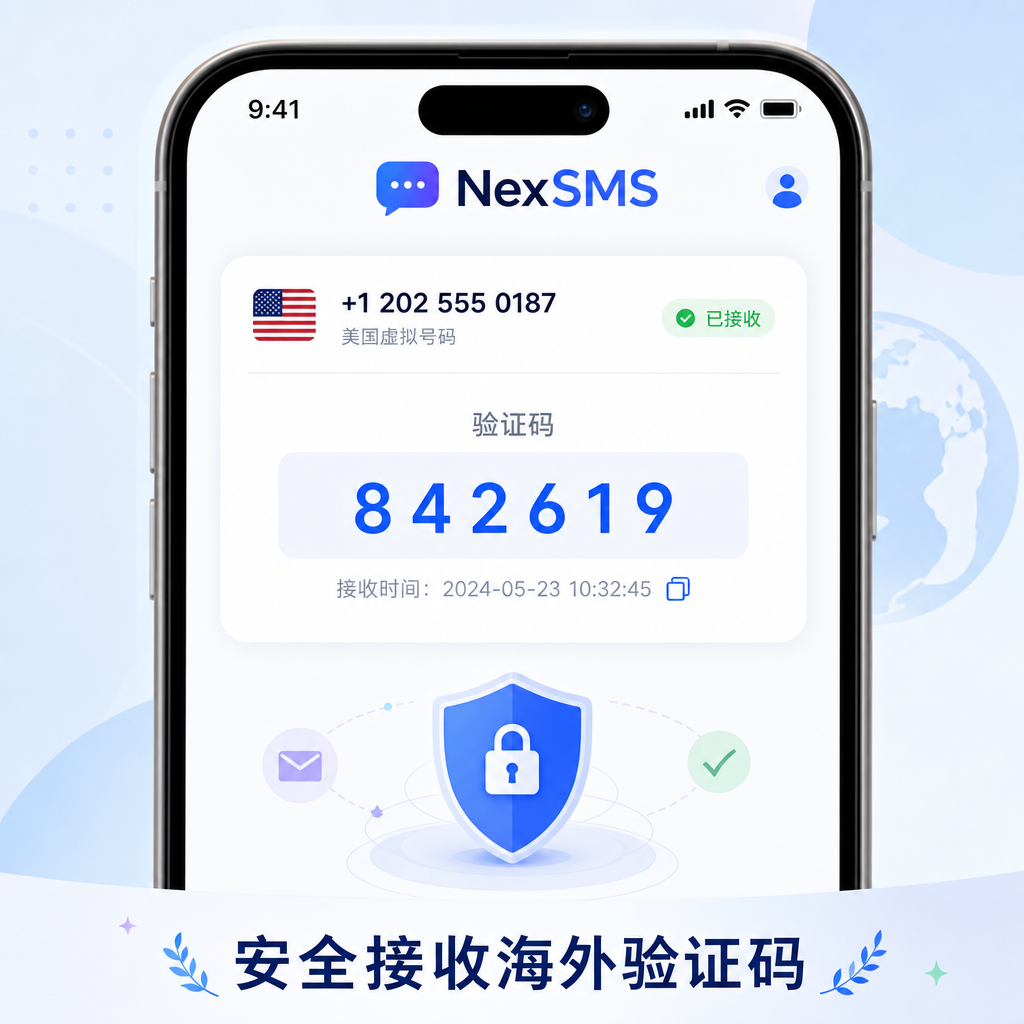
This means SMS reception platforms have not lost their survival ground. On the contrary, as major platforms continuously upgrade their risk control rules to prevent fake accounts, ordinary users' demand for clean, trusted virtual numbers for registering overseas accounts and protecting personal privacy is not decreasing but increasing.
Therefore, for newcomers in internet marketing or foreign trade, SMS verification codes remain a hurdle that must be crossed. As long as target platforms still use phone numbers for registration, the value of SMS reception platforms will not disappear.
What Types of Virtual Numbers Are Used to Receive Verification Codes?
To obtain verification codes safely and efficiently, it is necessary to understand the types of virtual numbers that provide verification services. Not all numbers can smoothly pass various platforms' verification risk controls. Common numbers are mainly divided into the following three types:
- VoIP Numbers: These are based on internet protocols and extremely low cost. Since they are not tied to a physical entity, they are easily identified as spam numbers and blocked by some mainstream platforms.
- Non-VoIP Virtual Numbers: These are provided by compliant virtual telecom operators. Their number ranges are cleaner in system identification compared to VoIP numbers, offering high cost-effectiveness and passing verification for most social and office software.
- Real SIM Numbers: These use physical SIM cards for receiving codes. Such numbers have the highest weight in a platform's risk control system and are extremely difficult to block, making them the best solution for registering on high-risk platforms.
For newcomers, if registering for ordinary social accounts or tools, choosing cost-effective non-VoIP virtual numbers is sufficient. For registering on strictly risk-controlled financial or mainstream AI platforms, priority should be given to real SIM numbers.
How Should Newcomers Choose an SMS Reception Platform Amid Tightening Security?
When the risk control environment becomes increasingly stringent, randomly finding a free public SMS reception website online often wastes time. Public numbers have been used by thousands of people, easily leading to newly registered accounts being banned instantly. Choosing a high-quality SMS reception platform is crucial.
Newcomers can consider the following key dimensions when selecting an SMS reception platform:
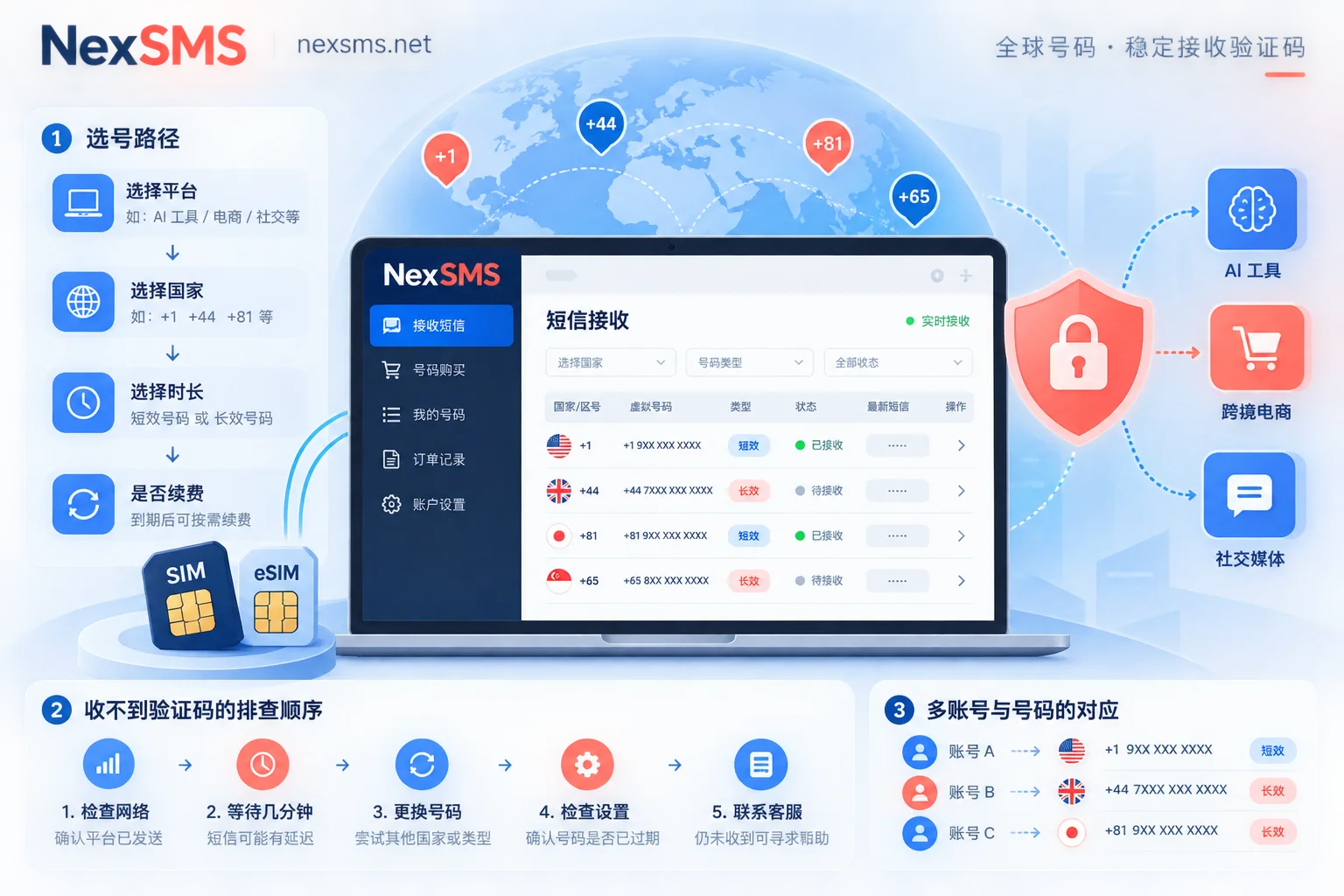
First is the diversity and update frequency of number sources. A good platform should have a wide range of number reserves across different countries and update numbers frequently to avoid batch account bans.
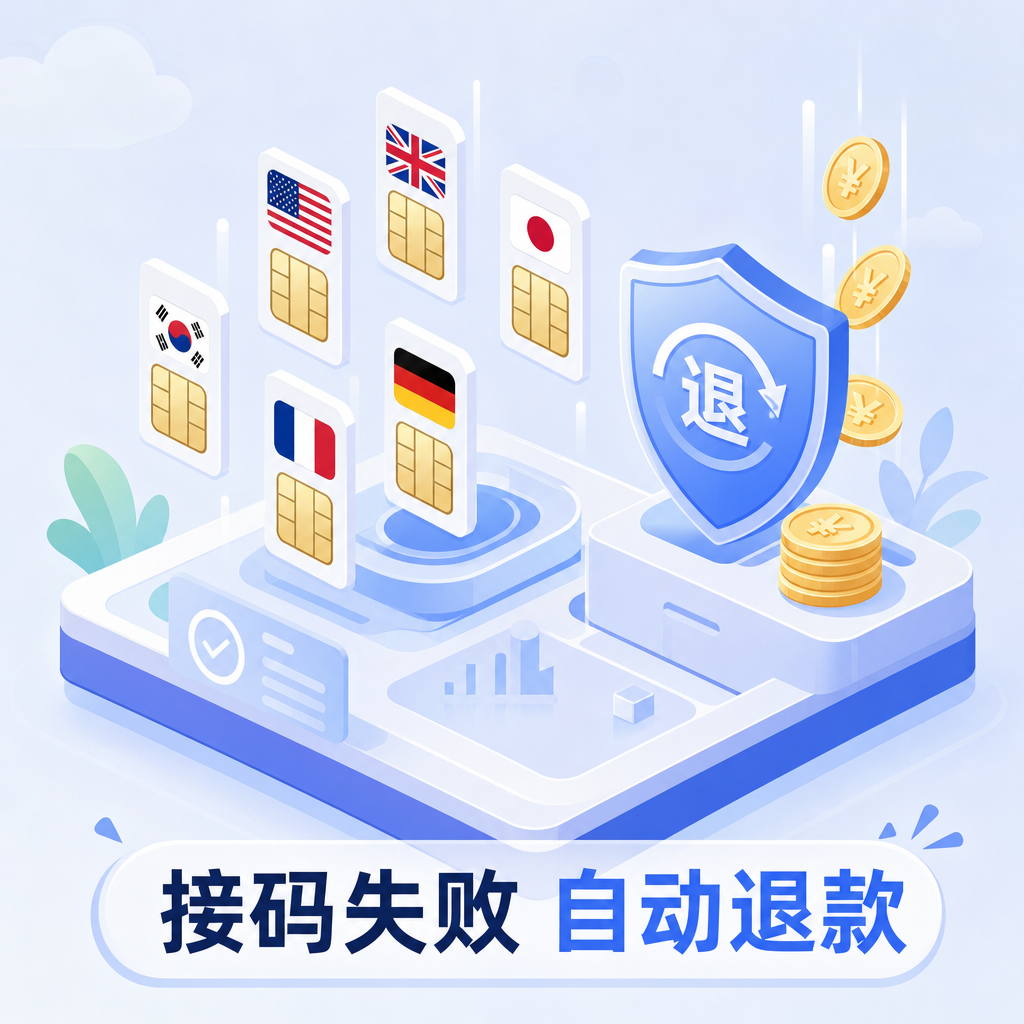
Second is the charging mechanism. Reliable platforms typically adopt a "no charge if verification code not received" policy. This way, even if a code fails to arrive due to number risk control, users do not incur financial losses.
For example, platforms like NexSMS not only support on-demand purchase of dedicated virtual numbers from different countries but also provide transparent automatic refunds for failed code reception, greatly reducing the trial cost for newcomers. Newcomers can start with a small deposit, test with temporary numbers provided by NexSMS, and then decide whether to use it long-term after becoming familiar with the process.
At the same time, it is recommended to pay attention to the platform's customer support. When encountering large-scale failures to receive codes for numbers in certain countries, being able to contact customer service promptly for a refund or switch to another number range is very important for improving business efficiency.


Comments(0)