 NexSms官方博客
Shopping Registration Always Requires a Phone Number? Giving Your Real Number Leads to Trouble
When you open an e-commerce app to register for membership and claim coupons, list items on a second-hand platform, or create a new international site account, the system almost always prompts for phone verification. Many people directly enter their primary number, the verification code arrives instantly, and it feels quite convenient. But a few days later, marketing SMS messages start flooding in, promotional pushes become harassment, and after another platform data leak news breaks, you feel even more anxious. Once your phone number is exposed, it acts like a digital fingerprint that can link your shopping habits, address preferences, and even be used for SIM hijacking or phishing.
This is not an overreaction. It is common for e-commerce platforms to collect phone numbers, both for delivery notifications and subsequent marketing. Once the data enters the database, it is difficult to completely delete. Using a temporary virtual number can cut this chain: it only needs to receive the verification code once, can be discarded after use, and your primary number never gets involved. Demand for such services in the industry has been rising because privacy awareness has increased, and people no longer want to use their real numbers in exchange for discounts or to complete transactions.
How Do Virtual Numbers Work, and Are They Safe?
A virtual number is not tied to a physical SIM or fixed device; it forwards SMS through cloud-based VoIP or dedicated routing. You select a number, and the platform displays the verification code on a webpage or app dashboard within seconds. Unlike traditional landlines, it is entirely software-driven and can incorporate multiple layers of protection.
Modern services commonly use encrypted transmission, such as TLS for channel protection, SRTP for encrypted voice and message streams, and AES-level protection for storage. Combined with real-time fraud detection, access controls, and data center physical security, the overall risk is often manageable. Device independence is a major advantage: the number can be routed to a computer, phone, or any endpoint without exposing your real line. From a privacy standpoint, it helps isolate personal data, preventing multiple platforms from sharing the same identifier through a single registration.
Of course, security depends on the implementation. Public free numbers are often shared by many users, leading to high blacklist rates and low success rates; dedicated private lines (based on real SIM pools) are cleaner and more accepted by platforms. When choosing a service, prioritize support for multiple country numbers, instant delivery, and minimal logging. With proper encryption and monitoring, it offers more control than traditional phone systems, especially for handling sensitive transactions.
How to Use It in E-commerce Scenarios
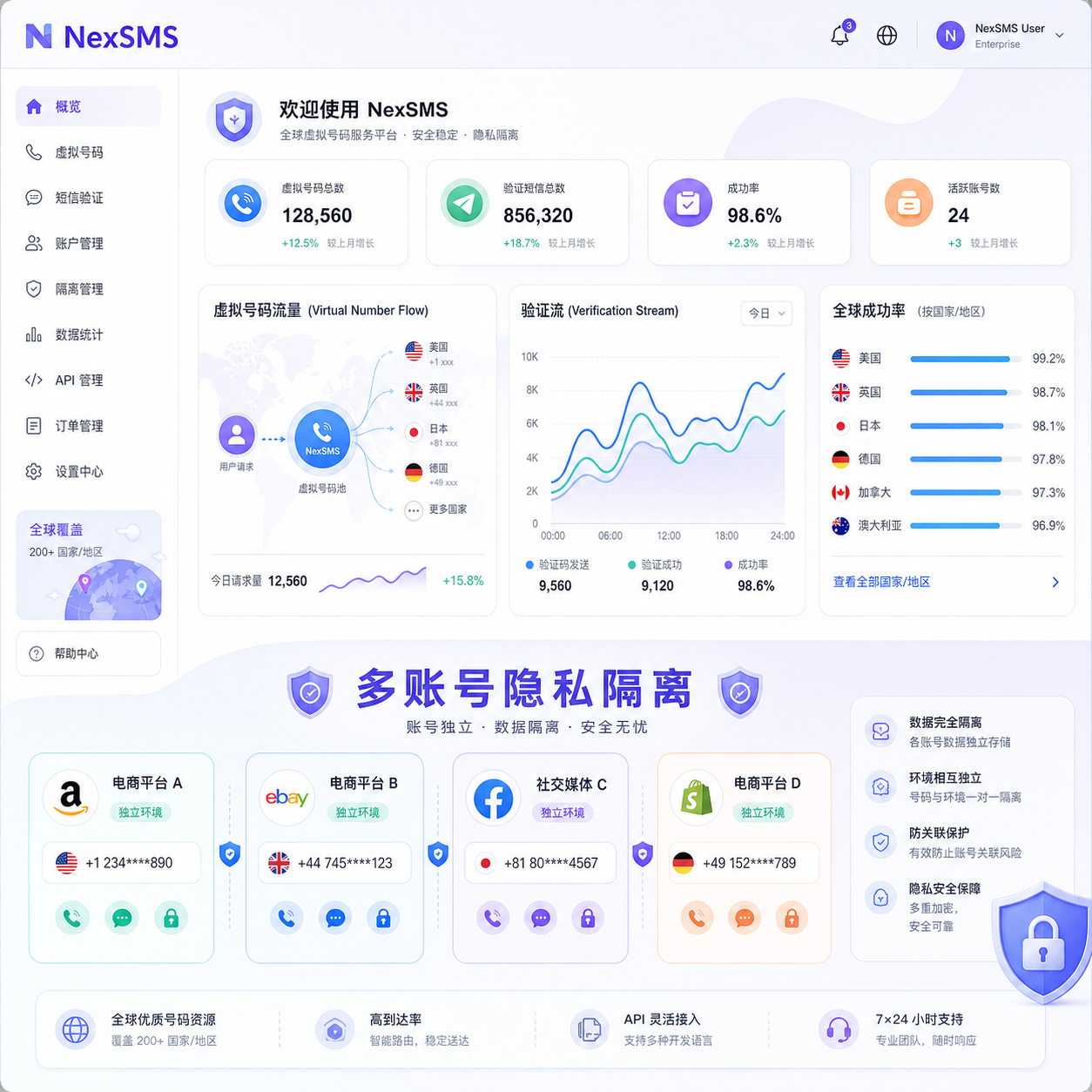
Let's start with claiming coupons and registration. Many sites use the phone number as a membership credential; giving your real number means subscribing to unlimited marketing. Switch to a virtual number: open the SMS activation platform, select the corresponding country number, copy it to the registration page, wait for the verification code to appear on the dashboard, fill it in, and you're done. The discount is obtained, the number expires afterward, and your primary number remains clean. The same applies to trying new apps, subscribing to newsletters, or participating in sweepstakes, avoiding long-term binding.
Second-hand trading and marketplaces are even more practical. When listing items for sale or buying used goods, the other party asks for contact information. Giving your real number carries high risk, as it may lead to subsequent harassment or even scams. Use a virtual number as a temporary communication channel, discard it after the deal is finalized, and cut off further contact. International shopping or cross-border platforms are similar: when you land in a new country, you need to register for food delivery, ride-hailing, and local shopping malls quickly; using your real number puts it into the local marketing database. Use a virtual number for verification and then discard it, keeping your primary number clean.
It is also convenient for multi-account management. Separate personal shopping from business procurement, and use different numbers for different platforms to prevent data cross-linking. It can also be used for return communication or customer service inquiries without leaving your primary number with third-party sellers.
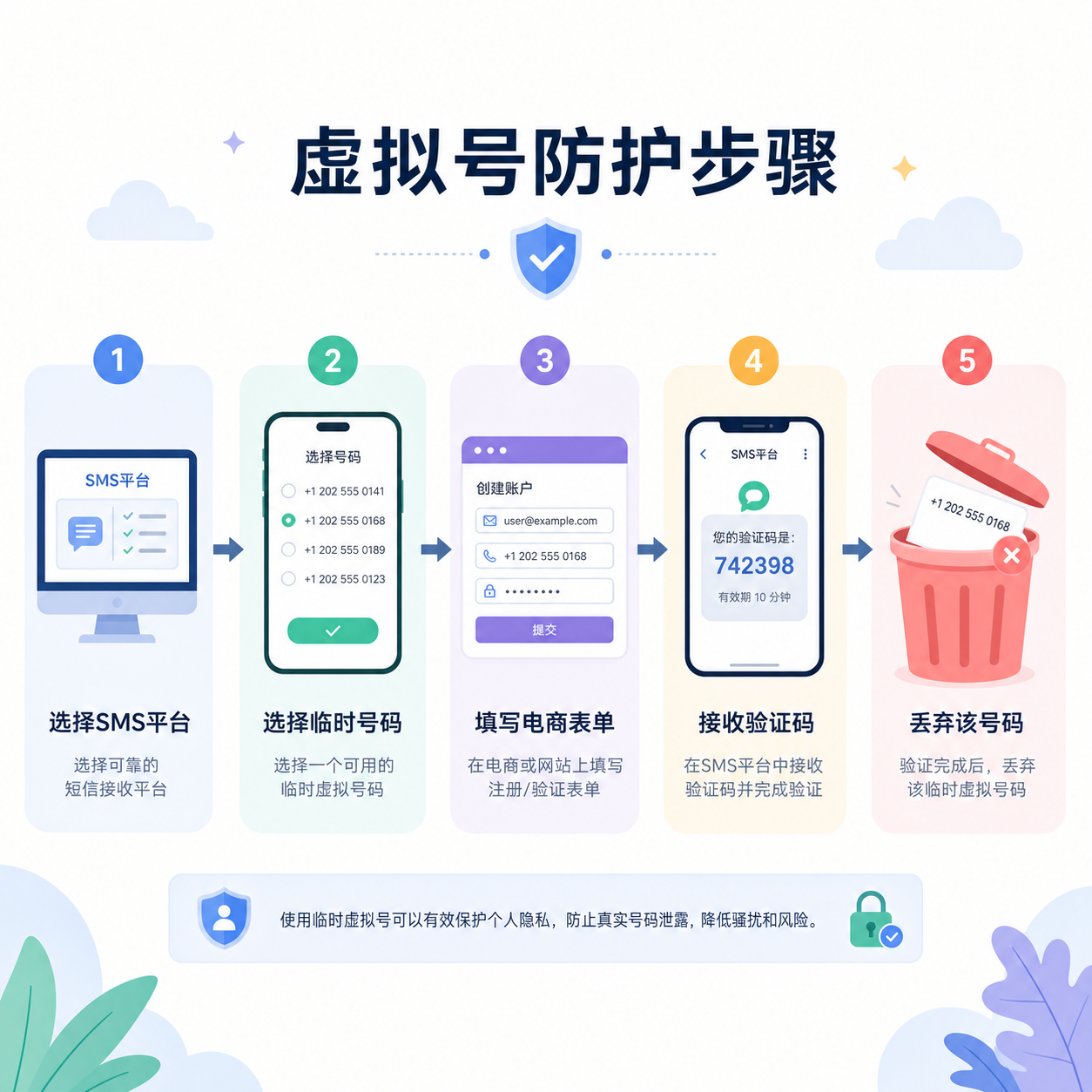
The practical process is straightforward:
- Choose a reliable SMS activation platform, preferably one that supports the target country with stable success rates.
- Select a one-time or short-term rental number as needed (one-time is suitable for single registration, short-term for repeated verifications).
- Enter it on the e-commerce page and trigger the SMS.
- Receive the code instantly on the dashboard and complete verification.
- Mark it as discarded or wait for expiration after use; do not reuse the same number for multiple high-risk sites.
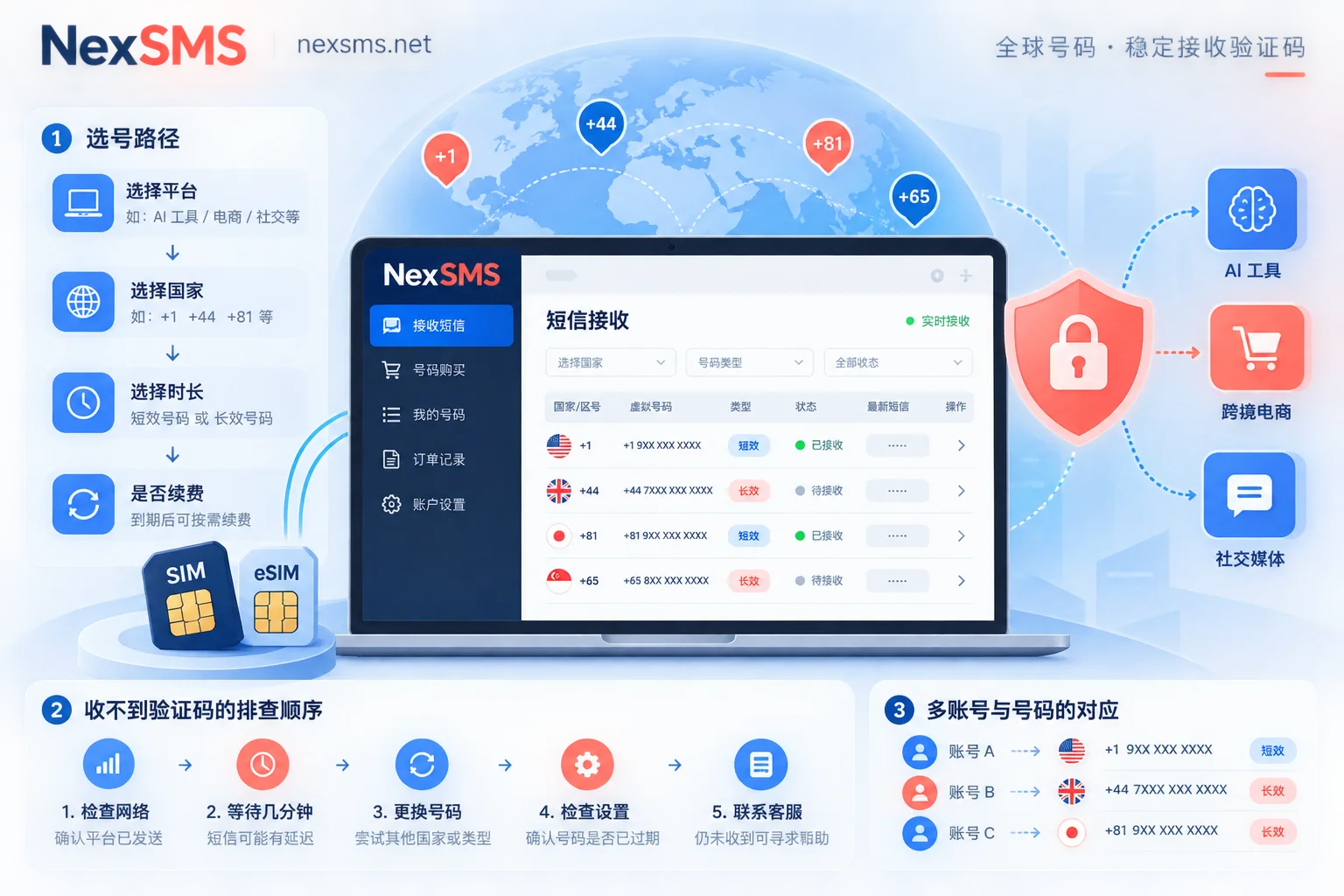
During the process, ensure a stable internet connection. If the code is delayed occasionally, request a resend. Avoid using obviously public shared numbers, as they are easily identified and blocked by platforms.
Common Misconceptions and Practical Tips
Some people think virtual numbers are "fake numbers" that will be strictly scrutinized. In fact, legitimate services provide real routed numbers, and many platforms accept them normally. The key is the freshness and type of number. VoIP-based numbers are sometimes blocked, while those supported by physical SIMs are more stable. Another misconception is that "free is good" — public pool numbers are used frequently, quickly land on blacklists, and waste time. Paid private numbers, though a small cost, have higher success rates and are generally more hassle-free.
Privacy is not about hiding; it's about having a choice. Using a virtual number when shopping adds a buffer for your data: the platform can only reach the temporary channel, isolating your primary number and real identity. If a site suffers a breach, only the temporary number is exposed, and you can simply get a new one and continue.
For tips, try to separate numbers by scenario: one for promotional registrations, one for transaction communications, and another for long-term memberships. Combined with anti-detection browsers or clean devices, but the foundation is number isolation. When cross-border, prioritize local country numbers for higher acceptance rates. If the payment link also supports virtual cards, adding that layer provides even more completeness.
What to Look for When Choosing a Service
Reliability comes first: instant delivery, high success rate, support for target platforms. Privacy policy should be transparent, with minimal logging. Wide country coverage to facilitate international scenarios. Simple operation, with the ability to view codes on a webpage without installing complex tools. Platforms like NexSMS focus on quickly receiving verification codes via multi-country virtual numbers, suitable for daily shopping registrations and temporary verification needs, straightforward without complicated configurations.
Users who have tried it report that after keeping their primary number clean, harassment significantly decreases, and shopping decisions become more relaxed. No more agonizing over "should I enter it or not" — the privacy cost is reduced, and the experience improves.
In recent industry discussions, privacy protection has increasingly been treated as a basic operation. Whether to prevent marketing bombardment or to cope with potential leaks, virtual numbers have become a daily tool for e-commerce. Next time you register or make a transaction, try opening a temporary number first. Keep your primary number for truly important contacts; isolate everything else — simple and effective. Services like NexSMS can help you quickly obtain a number and receive codes, making the entire process smooth. Stick with it, and your digital life will become much cleaner.


Comments(0)