 NexSms官方博客
Mid-July last week, Vodafone officially launched Number Verify 2.0 simultaneously in Germany, the Netherlands, and the UK. This marks the global rollout start of the company's next-generation phone number verification API, with the clear goal of using mobile network-based SIM verification to gradually replace the decade-old SMS OTP. As news broke, many users relying on SMS verification for multi-account or privacy isolation began reassessing their toolchain. For those frequently using verification platforms, this is not distant European news but a real change directly affecting verification success rates and account stability.
What Number Verify 2.0 Actually Changes
Simply put, it no longer sends that 6-digit SMS. After user consent, the service provider directly confirms via the operator's network whether the number is currently bound to the SIM and device making the request. Verification uses the operator's core network Home Subscriber Server and the SIM's encrypted token (based on TS.43 specification), supporting mobile data and Wi-Fi, even roaming scenarios. Initially deployed on Android devices, it is based on the CAMARA international standard for future cross-operator interoperability.
Vodafone points out that traditional SMS OTP only proves "someone received the code and entered it," but cannot confirm it's the actual subscriber, nor does it prevent phishing, social engineering, or large-scale fake traffic attacks. Number Verify 2.0 directly verifies the correspondence between number and SIM at the network layer, effectively combating SIM swap attacks—even if the number is illegally transferred to an attacker's SIM, the encrypted token won't match, and verification fails immediately. For businesses, it also reduces SMS costs and improves conversion rates by eliminating manual entry and waiting.
Almost simultaneously, similar network verification services supported by multiple major US operators have also launched, likewise based on the CAMARA framework. Operators globally are accelerating the shift from "sending SMS" to "checking the network" for number verification.
Actual Impact on Daily Users of Verification Platforms
The impact is limited for regular registration users, but for those heavily relying on virtual numbers for isolation, multi-accounting, or cross-border businesses, the changes are direct.
- Pure VoIP or low-quality virtual numbers will almost certainly fail: such numbers lack real operator SIM binding, and network queries will fail directly.
- Platforms still using the SMS channel are temporarily unaffected, but once banks, payments, major social networks, and e-commerce adopt this, verification success rates will noticeably drop.
- The need for privacy isolation will increase, not decrease: main numbers must be more carefully protected because network verification ties numbers more tightly to real identities.
- Cost structures may change: demand for high-quality numbers with real line attributes will rise, while the value of cheap one-time numbers will decline.
- Testing and switching costs increase: the same service may switch verification methods in different regions or versions, requiring constant verification of which channel is available.
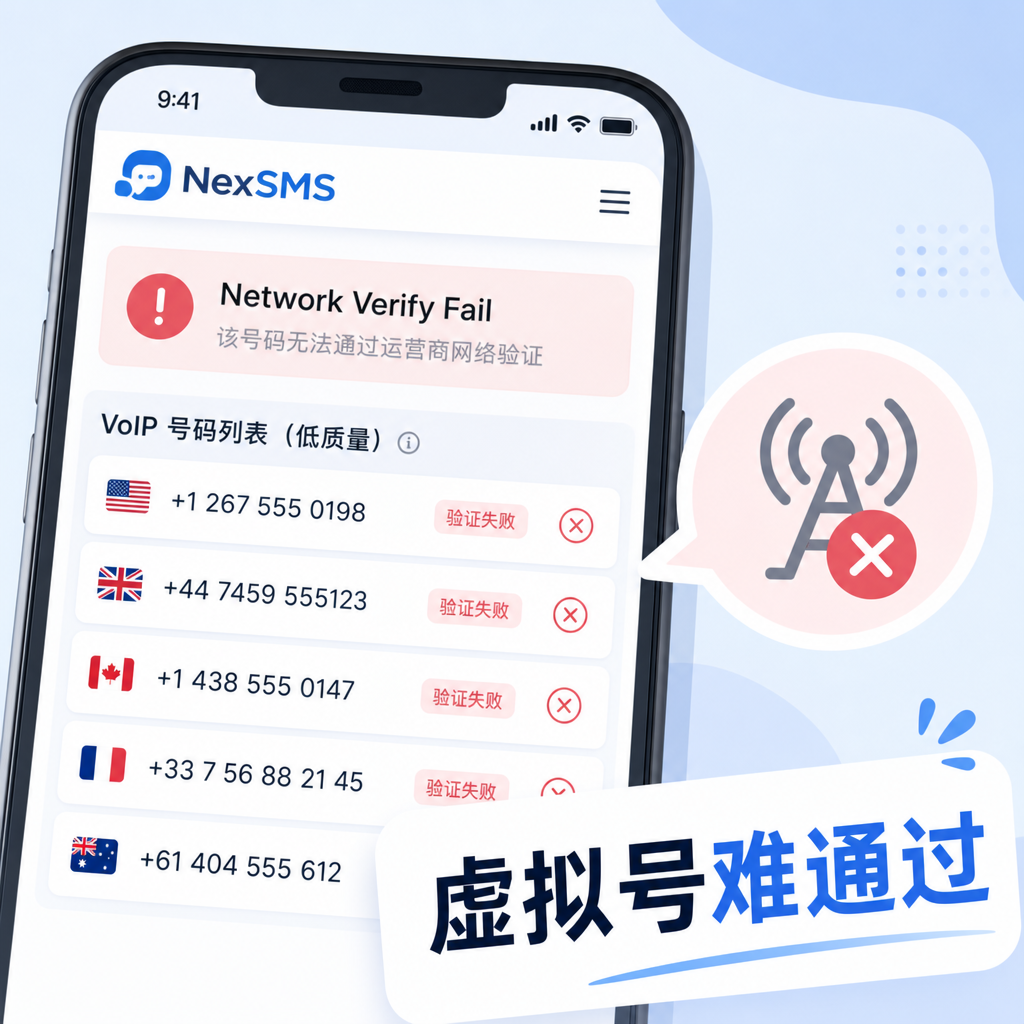
Since the mid-July launch, some practitioners have observed rising verification failure rates for European-facing services, especially those that previously coasted on public virtual number pools. With $15.9 billion in fraud losses reported by US consumers in 2025, businesses are also being pushed to adopt such solutions faster.
What Verification Platform Users Can Do Now
Don't panic, and don't abandon them outright. The practical approach is to handle it layer by layer.
First, identify the verification method of your target service. Before registering or logging in, note whether it still sends an SMS OTP or has silently switched. Many platforms roll out changes gradually; the same app may behave differently in different countries.
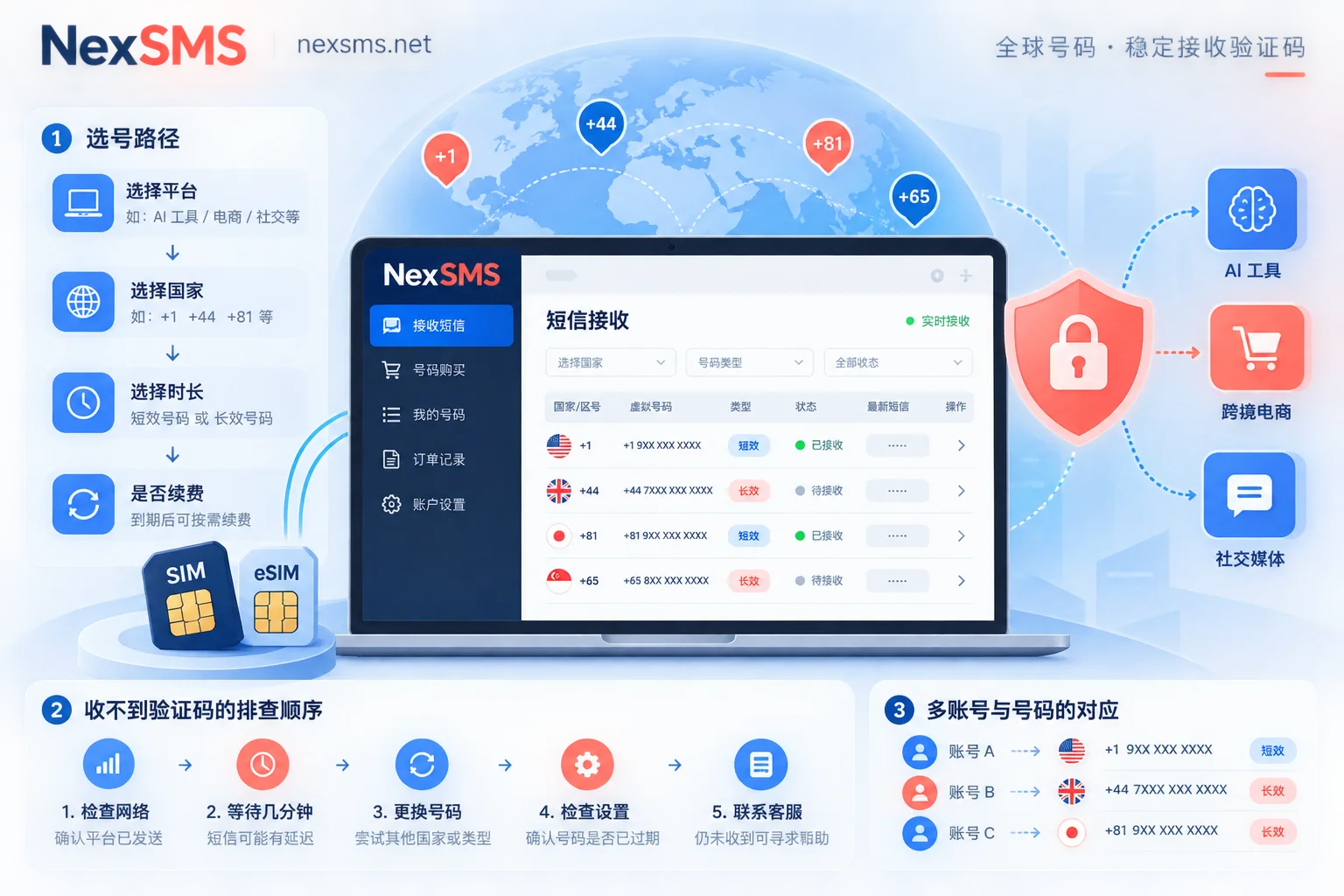
Keep SMS verification capability as a fallback. Platforms like NexSMS can still quickly provide multi-country virtual numbers for services that haven't switched to network verification, or for scenarios requiring temporary notifications or password recovery. In practice, you can first select a number on NexSMS to receive a test SMS, confirm channel stability, then use it for formal accounts.
At the same time, prepare real line backups. Consider legitimate eSIM or physical SIM cards, especially overseas operator plans supporting long-term number retention and low monthly fees. Such numbers are more likely to pass network-layer checks. Strictly isolate them from virtual numbers: use real numbers for main business, virtual numbers for testing, marketing, and secondary accounts.
Establish simple monitoring habits. Record verification changes for frequently used platforms. Once you notice a service starting to push network verification, migrate or change number strategies early. Don't put all your eggs in one number pool.

Finally, strengthen device and environment isolation. Even if the number passes, IP, device fingerprints, and behavioral traces can still be linked. Virtual numbers are just one link in the privacy chain, not the whole thing.
Usage Rhythm Suggestions for Verification Platforms in Late 2026
The global operator rollout targets broader coverage by mid-2027, and the CAMARA standard already covers the vast majority of mobile connections. SMS OTP won't disappear overnight, but it will shift from "default" to "alternative" or "specific scenario." For verification platform users, this means tools need to be more flexible: able to quickly obtain virtual numbers for residual SMS needs while also supporting real lines for strict verification.
NexSMS is practical in specific scenarios—for instance, when managing several overseas tool accounts, use it to batch acquire numbers from different countries for initial verification and daily reception, while binding core financial or primary identity accounts to independent real numbers. This reduces main number exposure risk while avoiding total shutdown due to a single verification method failure.
Industry debate is also heating up: network verification improves security but gives operators more logs of "who logged into what service at what time," raising privacy boundaries that need ongoing attention. For individual users, the safest approach is still minimal exposure and multi-channel backup.
Over the next few months, watch for more operators following suit and update logs from mainstream apps. Adjusting early is much easier than firefighting after the fact. Verification platforms won't become obsolete; only the usage posture needs to evolve alongside verification technology.



Comments(0)